

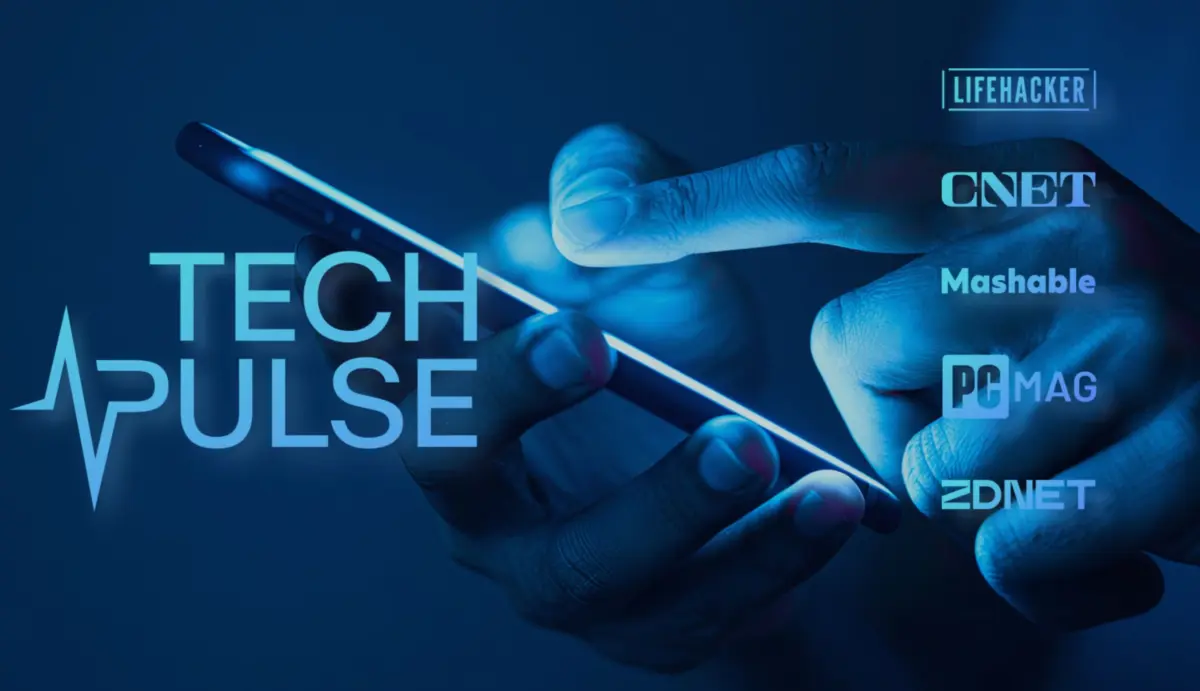
The CNET Group has officially announced the launch of TechPulse, a centralized mobile application designed to aggregate real-time technology news, expert reviews, and video content from five of the industry’s most prominent publications. Available now on both iOS and Android platforms, the application serves as a unified digital hub for ZDNET, CNET, PCMag, Mashable, and Lifehacker. This strategic move by parent company Ziff Davis represents a significant shift in digital media distribution, aiming to provide a direct-to-consumer "firehose" of information that bypasses the traditional constraints of algorithmic feeds and fragmented browsing habits.
The Architecture of TechPulse: A Solution to News Fragmentation
In an era where digital content is increasingly siloed or dictated by opaque social media algorithms, TechPulse is positioned as a return to chronological, source-driven news consumption. The application allows users to access a comprehensive stream of content from across the CNET Group’s portfolio without requiring a subscription. This "full firehose" approach is specifically designed for power users, industry professionals, and technology enthusiasts who require immediate access to breaking news as it happens.
The user interface of TechPulse prioritizes customization and transparency. Upon installation, users are presented with a unified feed that integrates articles and videos. A critical feature of the app is its granular filtering system, which permits users to toggle specific publications on or off. For instance, a professional focused on enterprise technology may choose to prioritize ZDNET, while a consumer looking for lifestyle hacks and general tech news can include Lifehacker and Mashable. This level of user-controlled curation is a direct response to the growing dissatisfaction with AI-driven discovery engines that often prioritize engagement metrics over editorial relevance.
The Strategic Context: Human Journalism in the Age of AI
The launch of TechPulse comes at a pivotal moment for the digital publishing industry. As major search engines like Google integrate "AI Overviews" and generative summaries into their results pages, traditional publishers are facing a dual challenge: a potential decline in referral traffic and the dilution of brand identity. By consolidating five high-authority brands into a single, proprietary app, CNET Group is attempting to fortify its direct relationship with its audience.
Elyse Betters Picaro, Editor in Chief of ZDNET, noted that the current media landscape often forces readers to choose between tedious manual browsing of multiple homepages or relying on algorithmic feeds that may not align with their specific interests. The TechPulse initiative is built on the premise that there remains a robust market for human-led journalism. Every article, review, and video delivered through the app is produced by professional journalists and subject matter experts, a distinction the company is highlighting as AI-generated content becomes more prevalent across the web.
A Chronology of Consolidation: From Independent Outlets to the CNET Group
To understand the impact of TechPulse, one must look at the historical trajectory of the brands involved. The aggregation of ZDNET, CNET, PCMag, Mashable, and Lifehacker represents decades of journalistic heritage in the technology sector:

- PCMag (Founded 1982): One of the oldest names in technology publishing, PCMag established the standard for rigorous laboratory testing and hardware reviews.
- ZDNET (Founded 1991): Originally part of Ziff Davis, ZDNET evolved into a primary source for IT professionals and business decision-makers, focusing on enterprise tech and global trends.
- CNET (Founded 1994): As a pioneer of digital-native news, CNET became the go-to destination for consumer electronics reviews and general tech news.
- Lifehacker (Founded 2005): Launched during the blog boom of the mid-2000s, Lifehacker carved out a niche in productivity, software, and "DIY" tech solutions.
- Mashable (Founded 2005): Originally a blog focused on social media, Mashable expanded into a global multi-platform media company covering tech, digital culture, and entertainment.
The acquisition of CNET by Ziff Davis (the parent company of ZDNET and PCMag) in late 2020 set the stage for this technological integration. TechPulse is the most visible product of this consolidation to date, merging the editorial strengths of these formerly competing or disparate entities into a singular user experience.
Supporting Data: The Shift in News Consumption Patterns
The development of TechPulse is supported by broader trends in digital media consumption. According to data from the Pew Research Center, a growing number of Americans are turning to mobile devices as their primary source of news. However, the same data suggests a "news fatigue" occurring when users are forced to navigate multiple apps or websites to get a complete picture of a specific industry.
Internal metrics from Ziff Davis and CNET Group suggest that while their web traffic remains high, the "stickiness" of a dedicated mobile application offers a higher lifetime value per user compared to transient search engine traffic. By offering a free, non-subscription model, the group aims to capture a larger share of the "daily habit" market. Industry analysts suggest that if TechPulse can successfully convert even 5% of the combined monthly unique visitors of these five sites into daily app users, it would create one of the most powerful direct-to-consumer tech news platforms in the world.
Technical Features and User Experience
TechPulse is not merely a mobile browser for existing websites; it is a purpose-built environment designed for speed and multimedia integration. Key technical features include:
- Integrated Video Player: Recognizing the shift toward video-first consumption, the app allows users to watch expert reviews and hands-on demonstrations directly within the feed, without redirecting to external sites like YouTube.
- Zero-Algorithm Feed: The default view is strictly chronological. This ensures that breaking news is seen immediately, rather than being buried by a "recommended" algorithm.
- Cross-Publication Search: Users can search for a specific product or topic—such as "iPhone 16" or "Generative AI"—and see results from all five publications simultaneously, providing a multi-perspective view of the subject.
- Offline Reading and Saving: The app includes functionality to save long-form investigative pieces or deep-dive reviews for later reading, catering to professional users who consume content during commutes or travel.
Industry Implications and Competitive Landscape
The launch of TechPulse creates a new competitive dynamic in the tech media space. Traditionally, tech news has been fragmented across independent sites like The Verge (Vox Media), TechCrunch (Yahoo/Apollo), and Wired (Condé Nast). By bundling five major brands, CNET Group is creating a "scale play" that is difficult for smaller, independent outlets to replicate.
Furthermore, this move signals a defensive strategy against the "platformization" of news. For years, publishers have been at the mercy of changes to Facebook’s news feed or Google’s search algorithms. TechPulse represents an attempt to reclaim "platform sovereignty." If successful, it could serve as a blueprint for other media conglomerates—such as Hearst or Dotdash Meredith—to consolidate their niche publications into unified vertical apps.
Analysis: The Future of the "Human Firehose"
The success of TechPulse will likely hinge on its ability to maintain the distinct editorial voices of its constituent brands while providing a seamless unified experience. There is a inherent tension in media consolidation: the risk that ZDNET’s enterprise focus might be diluted by Mashable’s culture-heavy content, or vice versa. However, the inclusion of robust filters suggests that CNET Group is aware of this risk and is leaning into user agency as the solution.

From a business perspective, TechPulse allows Ziff Davis to offer advertisers a more cohesive and targeted audience. Instead of buying ads on five different sites, a B2B software company can now target the enterprise-focused segment of the TechPulse audience across the entire portfolio. This efficiency is critical as the digital advertising market continues to face headwinds from privacy changes and the phase-out of third-party cookies.
Official Responses and Availability
The CNET Group has confirmed that TechPulse will remain a free service for the foreseeable future. There are currently no plans to implement a paywall, as the platform is supported by integrated advertising and affiliate commerce—a model that has proven successful for the group’s web properties.
"I’m looking forward to spending less time clicking between sites and hunting through homepages for the latest stories, reviews, and videos," stated Elyse Betters Picaro. "I hope TechPulse becomes my go-to for a quick scan of what’s happening in my industry."
TechPulse is now available for download on the Apple App Store for iPhone users and the Google Play Store for Android users. As the app evolves, CNET Group has indicated that further integrations, including personalized alerts and community features, may be introduced based on user feedback.
In summary, TechPulse represents more than just a new app; it is a strategic pivot by one of the world’s largest media companies to consolidate its influence in the technology sector. By prioritizing human journalism, chronological delivery, and user customization, CNET Group is making a high-stakes bet that the future of news is not in the hands of AI, but in the hands of the readers themselves.
