

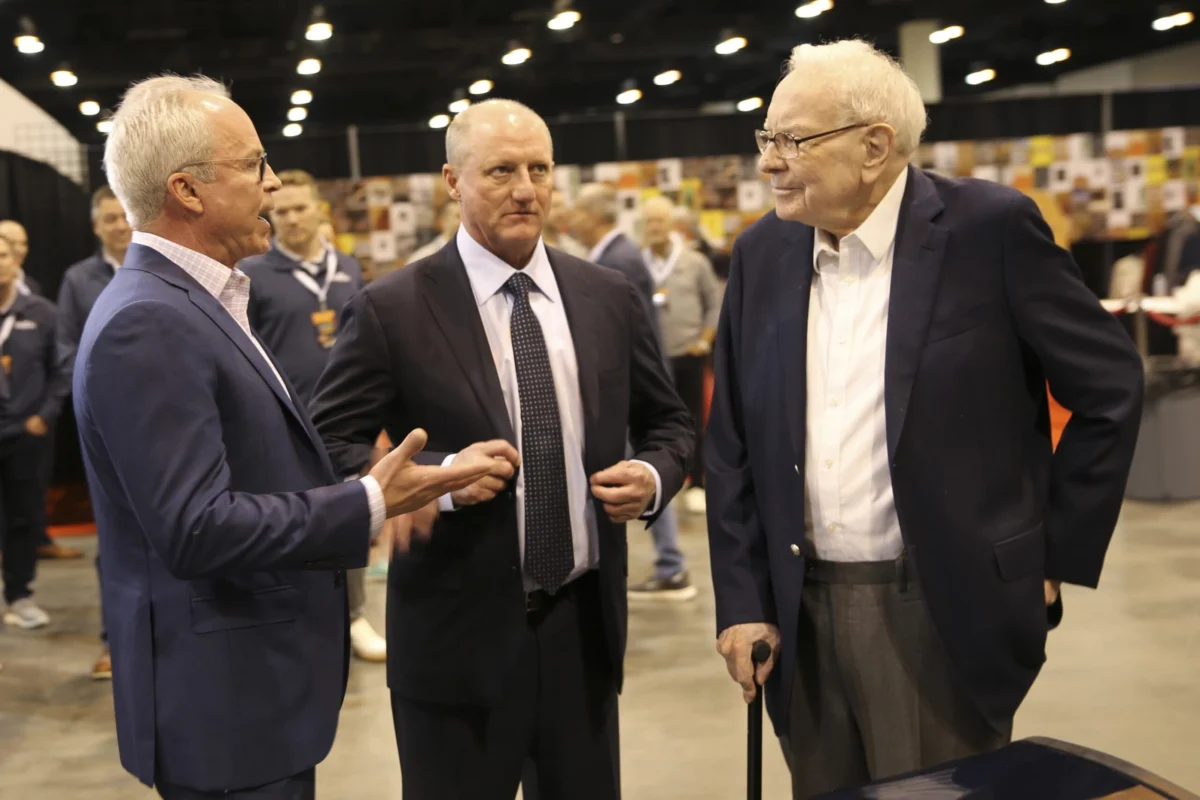
Omaha, NE – Berkshire Hathaway, the sprawling conglomerate helmed by newly appointed CEO Greg Abel, has unveiled a series of significant portfolio adjustments in its latest quarterly regulatory filing, sending ripples through the market and providing one of the clearest indications yet of the investment strategy under its new leadership. The filing, a mandatory 13F disclosure detailing equity holdings as of the end of the first quarter, revealed a substantial re-engagement with the airline sector through a major new stake in Delta Air Lines, a foray into department store retail with Macy’s, and a notable increase in its position in Alphabet, the parent company of Google. These moves, coupled with the strategic divestment of several holdings previously associated with former portfolio manager Todd Combs, underscore a dynamic period of transition and strategic recalibration for the Omaha-based investment giant.
The market’s immediate reaction was palpable, with shares of Delta Air Lines surging by more than 3% in early Monday trading following the disclosure, reflecting investor enthusiasm for Berkshire’s endorsement. Macy’s also saw a modest climb of over 1%, signaling a positive reception to its unexpected inclusion in the prestigious portfolio. The meticulous analysis of these filings offers a crucial window into the evolving investment philosophy at Berkshire Hathaway as it navigates a post-Warren Buffett era, even as the legendary investor maintains a significant advisory role.
The New Era at Berkshire: Abel’s Emerging Investment Strategy
The first quarter of the year marked a pivotal moment for Berkshire Hathaway, as Greg Abel officially assumed the role of CEO, succeeding Warren Buffett in a long-anticipated leadership transition. While Buffett remains Chairman and continues to play an active role, particularly in larger capital allocation decisions, the quarterly 13F filing serves as the initial tangible evidence of Abel’s direct influence on the conglomerate’s vast equity portfolio. These filings, submitted to the U.S. Securities and Exchange Commission, are a critical transparency mechanism for institutional investment managers, offering a backward-looking snapshot of their publicly traded U.S. equity holdings. For Berkshire, given its immense size and market influence, these disclosures are scrutinized globally by investors, analysts, and market participants seeking clues about future market trends and the intrinsic value of companies.
The recent filing covers the period ending March 31, 2026, and its release provided the market with its first comprehensive look at the portfolio’s composition since Abel’s formal ascension. This transition is not merely a change in title but represents a generational shift, with Abel, a seasoned executive who previously oversaw Berkshire’s non-insurance operations, now entrusted with upholding and evolving the company’s storied investment legacy. His approach is expected to blend Berkshire’s foundational principles of value investing with a pragmatic adaptation to contemporary market dynamics, potentially embracing sectors or companies that might not have fit Buffett’s strict historical criteria.
Aviation Re-engagement: The Delta Air Lines Bet
Perhaps the most striking move disclosed in the latest filing was Berkshire Hathaway’s significant new investment in Delta Air Lines. The conglomerate acquired 39.8 million shares of the airline, a stake valued at approximately $2.6 billion as of the end of March. This substantial position immediately catapulted Delta into Berkshire’s 14th largest holding, demonstrating a profound renewed conviction in the airline industry.
This investment marks a dramatic return to a sector that Warren Buffett famously exited just six years prior. In May 2020, at the height of the COVID-19 pandemic’s initial economic shockwaves, Buffett announced that Berkshire had divested its entire U.S. airline portfolio. This included major stakes in Delta, United Airlines, American Airlines, and Southwest Airlines, totaling over $4 billion. At the time, Buffett articulated his belief that the pandemic had fundamentally and permanently altered consumer travel habits and, consequently, the long-term economics of the airline industry. He described the airline business as "very tough" and prone to "disasters," acknowledging his previous investment as a "mistake."
The context of Buffett’s 2020 decision is crucial for understanding the significance of Abel’s current move. Buffett’s initial entry into airlines in 2016-2017 had itself been a departure from his long-held skepticism about the industry, which he famously labeled a "death trap for investors" in 2007. His 2020 exit was seen as a definitive rejection of the sector’s viability. Abel’s re-entry, therefore, suggests a revised perspective on the industry’s recovery and future prospects.
Since 2020, the airline industry has indeed experienced a turbulent but ultimately resilient recovery. While business travel remains below pre-pandemic levels, leisure travel has rebounded strongly, driven by pent-up demand and a global relaxation of travel restrictions. Airlines have also undertaken significant cost-cutting measures, optimized routes, and managed capacity more prudently. Furthermore, advancements in vaccine distribution and a greater understanding of managing public health crises have instilled more confidence in sustained travel. Berkshire’s new Delta stake could be interpreted as a bet on the continued normalization of global travel, the strengthening of airline balance sheets, and potentially, a more rational competitive landscape. Delta, in particular, has been lauded for its premium brand, strong operational performance, and diversified revenue streams, making it a potentially attractive target for a value investor looking for a high-quality player in a recovering sector.
Retail Revival: A New Stake in Macy’s
Beyond the headline-grabbing airline investment, Berkshire Hathaway also initiated a new position in Macy’s, the iconic department store chain. The filing indicated a stake valued at approximately $55 million at the end of the first quarter. While a smaller investment relative to Delta, the Macy’s stake is noteworthy for several reasons.
The retail sector, particularly traditional department stores, has faced immense pressure over the past decade from e-commerce giants and changing consumer preferences. Macy’s, like many of its peers, has struggled with declining foot traffic, intense competition, and the need to adapt its business model for the digital age. The company has been actively pursuing strategies to revitalize its brand, optimize its real estate portfolio (which includes valuable properties), and enhance its omnichannel capabilities.
Berkshire’s investment in Macy’s could signal a belief that the company’s turnaround efforts are gaining traction, or that its underlying asset value, particularly its real estate holdings, is undervalued by the broader market. It aligns with a classic value investing approach of identifying fundamentally sound companies that are temporarily out of favor or undergoing significant restructuring, where the market may not fully appreciate their long-term potential. This move suggests that Abel and his team might be exploring opportunities in sectors perceived as "old economy" but possessing significant tangible assets or undergoing strategic transformation that could unlock value. The relatively modest size of the initial investment might also suggest a cautious, exploratory approach, allowing for increased positions if the turnaround gains further momentum.

Tech and Energy Rebalancing: Alphabet’s Rise, Chevron’s Trim
The portfolio adjustments extended beyond new stakes, encompassing shifts within existing, significant holdings. Berkshire Hathaway significantly increased its relatively new position in Alphabet (GOOGL, GOOG), the parent company of Google, making it the conglomerate’s seventh-largest holding. This expansion of a tech-sector stake is particularly telling. While Berkshire has historically favored "old economy" businesses, its recent investments, including a substantial stake in Apple (which remains its largest holding), have demonstrated a willingness to embrace technology companies that possess strong competitive advantages and predictable cash flows. Alphabet, with its dominant search engine, vast advertising ecosystem, cloud computing division (Google Cloud), and myriad other ventures, fits the profile of a company with a formidable economic "moat" – a concept central to Berkshire’s investment philosophy. The increased stake underscores a continued confidence in the enduring power of digital advertising and cloud services, and Alphabet’s ability to innovate and expand its market leadership.
Conversely, Berkshire trimmed its stake in Chevron, one of its largest energy holdings. While the specific reasons for this reduction were not detailed, it could be attributed to several factors. The energy sector has experienced significant volatility in recent years, with oil prices fluctuating dramatically. Berkshire had significantly built up its Chevron position during a period of rising energy prices, likely capitalizing on what it perceived as an undervalued asset with strong cash flow generation. Trimming the stake could represent a strategic decision to lock in profits after a period of strong performance, rebalance sector exposure, or perhaps a slight re-evaluation of the long-term outlook for fossil fuels amidst global energy transition trends. It’s a common practice for large investors to rebalance positions to manage risk and optimize returns, especially in cyclical industries like energy.
The Combs Connection: Strategic Exits and Portfolio Streamlining
A notable aspect of the first-quarter filing was the extensive list of stock sales, many of which appear to be linked to the departure of portfolio manager Todd Combs at the end of 2025. Combs, along with Ted Weschler, was personally recruited by Warren Buffett to manage portions of Berkshire’s vast equity portfolio, bringing a more modern and diversified approach than Buffett’s traditional, highly concentrated investments. Combs has since joined JPMorgan, necessitating a reorganization of the portfolio positions he managed.
The sales included significant exits from Mastercard and Visa, two payment processing giants that were early investments by Combs, reflecting positions from his former hedge fund. These companies are leaders in their respective fields, but their divestment suggests a strategic cleanup or a reallocation of capital away from holdings directly associated with Combs’ specific investment mandate. Similarly, Berkshire fully exited its position in Amazon, another tech giant widely believed to be a Combs-managed holding. While Amazon remains a powerhouse in e-commerce and cloud computing, its sale could be part of the same streamlining effort, or a decision to reallocate capital to other high-conviction ideas within the tech space, such as the increased Alphabet stake.
Other notable divestments included UnitedHealth Group, Aon, Pool Corporation, Domino’s Pizza, and Charter Communications. These exits further underscore a broader effort to consolidate and refocus the portfolio following Combs’ departure. Such a restructuring is a natural consequence when a key portfolio manager leaves, as the remaining team reassesses the alignment of these holdings with the overarching investment strategy and risk profile under the new leadership structure. It allows Abel and Weschler to imprint their vision more clearly on the portfolio, potentially favoring a more concentrated approach or focusing on specific sectors they believe offer better long-term value.
The Enduring Oracle: Warren Buffett’s Continued Influence
Despite the clear indications of Greg Abel’s growing influence on Berkshire’s investment strategy, the continued presence and counsel of Warren Buffett remain a critical factor. Abel himself affirmed this dynamic earlier in the year, stating that he continues to consult the 95-year-old Buffett on investment decisions. "He’s in the office every day, so we’re talking every day if I’m in Omaha, we’re always connecting," Abel said in March. "If I’m traveling, like I was yesterday, I often check in just to catch up on what he’s seeing, what he’s hearing, what am I feeling. So if it’s not every day, it’s every couple days."
This ongoing dialogue highlights a carefully managed leadership transition designed to ensure continuity while gradually empowering the next generation of leadership. Buffett’s unparalleled experience, deep understanding of market cycles, and unwavering commitment to Berkshire’s long-term success provide an invaluable resource. Abel’s ability to tap into this wisdom, even as he carves out his own strategic path, is a unique advantage for Berkshire Hathaway. It suggests that while the specific holdings may evolve, the core principles of disciplined value investing, a focus on strong businesses with durable competitive advantages, and a long-term horizon will likely remain central to Berkshire’s investment philosophy.
Broader Market Implications and Investor Sentiment
The revelations from Berkshire Hathaway’s latest 13F filing carry significant implications for the broader market and investor sentiment. For the airline industry, Berkshire’s re-entry, particularly into Delta, could be seen as a powerful vote of confidence, potentially encouraging other institutional investors to reconsider the sector. It suggests that, despite past challenges, major airlines are increasingly viewed as viable long-term investments, having navigated unprecedented disruptions and emerged with more resilient business models.
Similarly, the Macy’s investment, though smaller, could spark renewed interest in the struggling traditional retail sector, prompting analysts to re-evaluate the intrinsic value of companies with significant asset bases undergoing transformation. In the tech sphere, the increased Alphabet stake reinforces the notion that even in a high-growth sector, quality and dominance remain paramount for long-term investors. The trimming of Chevron, while potentially tactical, could also contribute to ongoing discussions about the future of energy investments and portfolio diversification in an era of energy transition.
From an internal perspective, the portfolio adjustments signal a clear effort by Greg Abel to put his stamp on Berkshire Hathaway’s investment strategy, albeit in close consultation with Warren Buffett. The strategic exits linked to Todd Combs suggest a streamlining and consolidation, perhaps aiming for a more cohesive and focused portfolio managed by Abel and Ted Weschler. This period of transition is crucial for Berkshire, as it demonstrates its ability to evolve and adapt while maintaining its core strengths. Investors will continue to watch future filings closely, seeking further clarity on the long-term strategic direction under Abel’s leadership, as he navigates market opportunities and challenges in the years to come.
