

Quantum computing stocks experienced a significant surge this week following the announcement that the U.S. government had acquired equity stakes in nine companies, including technology giant IBM. This move represents a continuation of President Donald Trump’s administration’s evolving strategy to directly invest in private sector companies, marking a notable shift in American industrial policy. As markets absorb the implications of these new government holdings, attention is now turning to which companies might be next in line for federal investment, with traders on the prediction market platform Kalshi actively placing wagers on potential future targets.
The Genesis of a New Industrial Policy: Government as Shareholder
The Trump administration’s foray into direct equity investments began to take clearer shape well before the recent quantum sector announcement. This strategy, which deviates from traditional government grants, subsidies, or loan guarantees, aims to secure critical supply chains, bolster national security, and accelerate innovation in strategically vital industries. The rationale behind this approach often centers on fostering domestic capabilities, particularly in areas where geopolitical competition, notably with China, is intense.
By February 2026, the administration’s equity portfolio had already seen substantial growth, signaling a long-term commitment to this unconventional form of industrial policy. The move is often framed as a proactive measure to ensure U.S. leadership in emerging technologies and to de-risk essential sectors by providing a more direct form of capital infusion and oversight. Proponents argue that equity stakes align government and corporate interests more closely, incentivizing long-term growth and domestic resilience rather than short-term project completion. Critics, however, raise concerns about potential market distortion, conflicts of interest, and the government’s role in corporate governance. This new paradigm suggests a re-evaluation of the traditional separation between state and market, particularly in sectors deemed critical for national interest.
Quantum Computing: A Strategic Frontier for Federal Investment
The recent announcement of equity stakes in quantum computing companies underscores the U.S. government’s recognition of this technology as a critical strategic frontier. Quantum computing promises to revolutionize fields from medicine and materials science to cryptography and artificial intelligence, offering computational power far beyond classical supercomputers. Securing leadership in this nascent, high-risk, high-reward sector is considered paramount for future economic competitiveness and national security.
The news that the government had taken stakes in nine quantum firms, including industry stalwart IBM, sent ripples through the market. Shares of companies in the quantum space, even those not initially named, experienced significant upward movement. IonQ, a prominent pure-play quantum computing company, saw its stock jump more than 12% on the Thursday of the announcement, followed by an additional rise of over 7% on Friday. This reaction highlights the market’s sensitivity to government backing, perceiving it as both a validation of the technology’s potential and a significant de-risking factor for these often capital-intensive ventures.
On Kalshi, traders are assigning a 32% probability that IonQ will receive a U.S. government stake in 2026. This reflects an expectation that the initial round of investments may just be the beginning, with the administration keen to broaden its portfolio within this critical sector. The National Quantum Initiative Act, signed into law in 2018 and subsequently expanded, has already laid the groundwork for significant federal funding and coordination in quantum research and development. Direct equity stakes are seen by many as the next logical step to accelerate commercialization and ensure that U.S.-based companies lead the global race in quantum technology. The government’s investment strategy here is not merely about financial returns but about fostering an ecosystem that can deliver quantum supremacy, positioning the U.S. ahead of rivals like China, which has also invested heavily in its own quantum programs.
Anduril Industries: Innovating Defense with Government Backing
Another company drawing significant attention and speculation is Anduril Industries, a privately-owned defense technology firm based in California. Traders on Kalshi are assigning a 31% chance that Anduril will secure a U.S. government stake this year. This speculation is fueled by several factors, including the company’s rapid growth, its strategic importance in modernizing defense capabilities, and its well-documented close working relationship with the Trump administration.
Anduril, founded by Oculus VR creator Palmer Luckey, focuses on developing advanced defense systems, including AI-powered surveillance, autonomous systems, and counter-drone technology. Its innovative approach, often leveraging commercial technology development cycles, has positioned it as a key player in the evolving landscape of national security. Just last week, the company announced a new funding round that reportedly doubled its valuation to an astonishing $61 billion, underscoring investor confidence in its disruptive potential. This valuation places Anduril among the most valuable private defense contractors globally, a testament to its perceived ability to deliver cutting-edge solutions rapidly.
The company has been a crucial partner for the Trump administration on several high-profile projects, notably its involvement with the U.S. Space Force’s space-based interceptors for the proposed "Golden Dome" missile defense system. The "Golden Dome" initiative, first detailed in May 2025, aims to create a comprehensive missile defense shield using advanced sensors and interceptors. Anduril’s participation in such sensitive and strategically vital programs highlights its deep integration into the nation’s defense apparatus. A government equity stake in Anduril would further solidify this partnership, potentially providing capital for accelerated development and ensuring the continued alignment of the company’s strategic direction with national defense priorities. Such an investment would signal a clear intent by the government to support agile, innovative defense contractors that can deliver technological superiority in a rapidly changing global security environment. The move would also provide the government a direct voice in the strategic direction of a company critical to future defense capabilities, potentially streamlining procurement and development processes.
Micron Technology: The Semiconductor Imperative and AI’s Influence
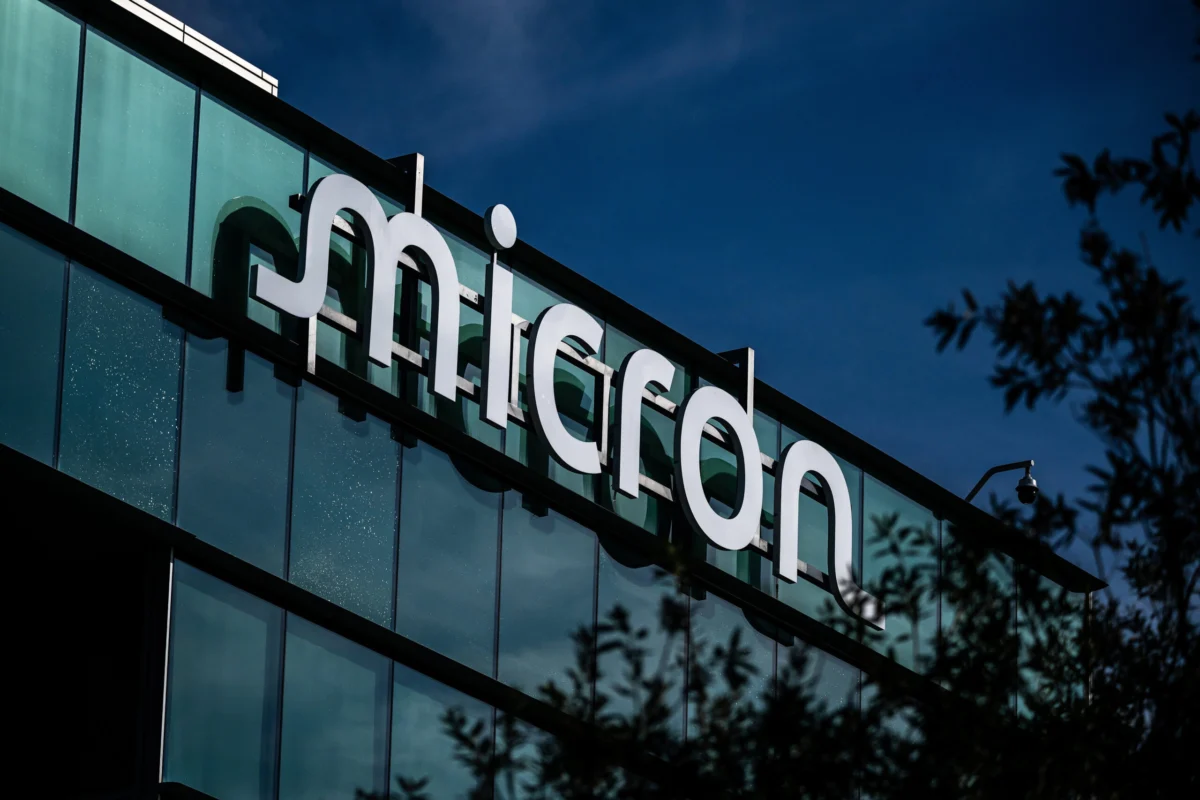
The semiconductor industry, the bedrock of modern technology, is another sector where government intervention through equity stakes is under intense scrutiny. Micron Technology, a leading U.S. memory chip manufacturer, is on Kalshi traders’ radar, with 28% odds placed on it receiving a U.S. government stake. Micron’s shares have experienced a phenomenal surge of over 160% in 2026, primarily driven by a global memory shortage exacerbated by the booming demand for artificial intelligence infrastructure. The buildout of AI capabilities requires vast amounts of high-bandwidth memory (HBM) and other advanced memory solutions, placing Micron at the heart of a critical supply chain.
The discussion around a potential government stake in Micron is not new. In August 2025, reports emerged about the government considering such an investment, around the same time the U.S. stake in Intel was first publicly revealed. The context for these considerations was the broader effort to bolster domestic semiconductor manufacturing and resilience, particularly following supply chain disruptions experienced during the pandemic and amid escalating geopolitical tensions over chip technology. The CHIPS and Science Act, signed into law in 2022, allocated billions of dollars in subsidies for domestic chip production, reflecting a national commitment to reduce reliance on foreign manufacturing.
However, the proposal for a Micron stake in 2025 did not materialize. At that time, the White House clarified its position, stating that it "wouldn’t seek stakes in chip companies" that were already increasing investment in the U.S. This stance aimed to avoid discouraging private sector investment by implying that government equity was a prerequisite for expansion. The current environment, however, presents a different calculus. The intensity of the AI-driven memory shortage, coupled with the strategic imperative to secure high-performance computing components, might lead to a re-evaluation of that earlier position. A government stake in Micron could be justified as a means to ensure domestic capacity for critical memory technologies essential for AI, cloud computing, and advanced defense systems, thereby safeguarding national technological sovereignty. Such an investment could also provide the government with a direct interest in accelerating next-generation memory development and manufacturing within the United States, further strengthening the domestic semiconductor ecosystem against global competitors.
The Kalshi Indicator: A Pulse on Government Policy Expectations
The active participation of traders on prediction market platforms like Kalshi in forecasting government equity stakes highlights a fascinating intersection of financial markets and public policy. Kalshi, regulated by the Commodity Futures Trading Commission (CFTC), allows individuals to bet on the outcome of future events, providing a real-time, aggregated assessment of collective expectations. The "contracts" on Kalshi for these government stakes are designed to resolve to "yes" only if an official announcement is made or verified by the company or a government agency, ensuring a factual basis for resolution.
The odds offered on Kalshi – 32% for IonQ, 31% for Anduril, and 28% for Micron – reflect a nuanced market sentiment. These are not certainty, but rather probabilities derived from the aggregated beliefs of numerous informed (and speculative) participants. The very existence and activity of such markets underscore the increasing public and financial sector interest in the government’s evolving role in the economy. They serve as a unique, if informal, barometer for gauging the market’s perception of the likelihood of specific policy actions, offering insights into which sectors and companies are most likely to be impacted by Washington’s strategic industrial agenda. This market dynamic adds another layer of complexity to corporate strategy and investment decisions, as companies must now consider not only traditional market forces but also the potential for direct government involvement.
Broader Implications: A Shifting Landscape for U.S. Industrial Policy
The Trump administration’s strategy of acquiring equity stakes in key technology and defense companies carries profound implications for the U.S. economy, its geopolitical standing, and the future of industrial policy.
Economic Impact: The direct injection of government capital, accompanied by an equity stake, could significantly alter market dynamics. For smaller, nascent industries like quantum computing, government backing can provide crucial validation and stability, potentially attracting further private investment and accelerating technological development. However, it also raises questions about market efficiency. Does government intervention distort capital allocation, favoring politically aligned companies over purely merit-based ones? The long-term impact on venture capital and traditional investment models remains to be seen. On the one hand, it could de-risk investments in strategically important but financially uncertain ventures. On the other, it might create an uneven playing field, where companies without government partnership struggle to compete.
Geopolitical Competition: This strategy is unequivocally intertwined with the broader geopolitical contest, particularly with China. By taking stakes in companies critical to quantum computing, advanced defense, and semiconductor manufacturing, the U.S. government aims to ensure domestic control over technologies deemed essential for national power. This is a clear defensive and offensive move in the technological arms race, seeking to maintain or gain a lead in critical sectors, secure supply chains from external vulnerabilities, and protect intellectual property. It signals a more assertive role for the state in guiding economic development towards strategic national objectives, moving away from purely free-market ideologies in critical sectors.
Corporate Governance and Oversight: When the government becomes a shareholder, new complexities arise concerning corporate governance. What level of influence will the government exert on company operations, strategic decisions, and executive compensation? While the aim is typically to align corporate goals with national interests, there is a delicate balance to strike to avoid stifling innovation or creating bureaucratic inefficiencies. The mechanisms for government oversight and accountability as a shareholder will be crucial in determining the success and acceptance of this policy. Transparency will be key to addressing concerns about potential political interference in private enterprise.
Future Outlook: The current actions suggest that this equity investment strategy is not a temporary measure but a fundamental shift in U.S. industrial policy. It indicates a willingness to use the full weight of governmental power, including direct capital investment, to shape the economic landscape in areas deemed vital for national security and prosperity. Other sectors that might be considered for future stakes could include advanced biotechnology, artificial intelligence infrastructure, cybersecurity, and critical minerals processing, all of which are central to modern economic and defense capabilities. This evolving approach reflects a recognition that in an increasingly competitive global environment, a purely hands-off economic policy may no longer suffice to safeguard national interests.
Official and Industry Reactions
While representatives for Micron, Anduril, and IonQ were not immediately available for comment, the inferred rationale from government officials for such investments would likely center on "securing national interests," "fostering domestic innovation," and "strengthening critical supply chains." They would emphasize that these investments are strategic, targeted, and designed to accelerate U.S. leadership in key technological domains. From an industry perspective, companies would likely welcome such partnerships, viewing government equity as a powerful endorsement, a source of stable capital, and a facilitator for accelerated growth and market access, particularly for defense-related contracts. The promise of direct federal support can be a significant draw, especially for companies operating in high-risk, long-development-cycle sectors.
In conclusion, the U.S. government’s expanding strategy of taking equity stakes in private companies marks a pivotal moment in American industrial policy. The recent investments in quantum computing firms, coupled with speculation around defense technology leader Anduril and semiconductor giant Micron, underscore a determined effort to steer critical sectors towards national strategic goals. This approach, while generating debate, signals a pragmatic and assertive stance in an era of heightened global competition, with profound implications for markets, innovation, and the very structure of the U.S. economy for years to come.
