

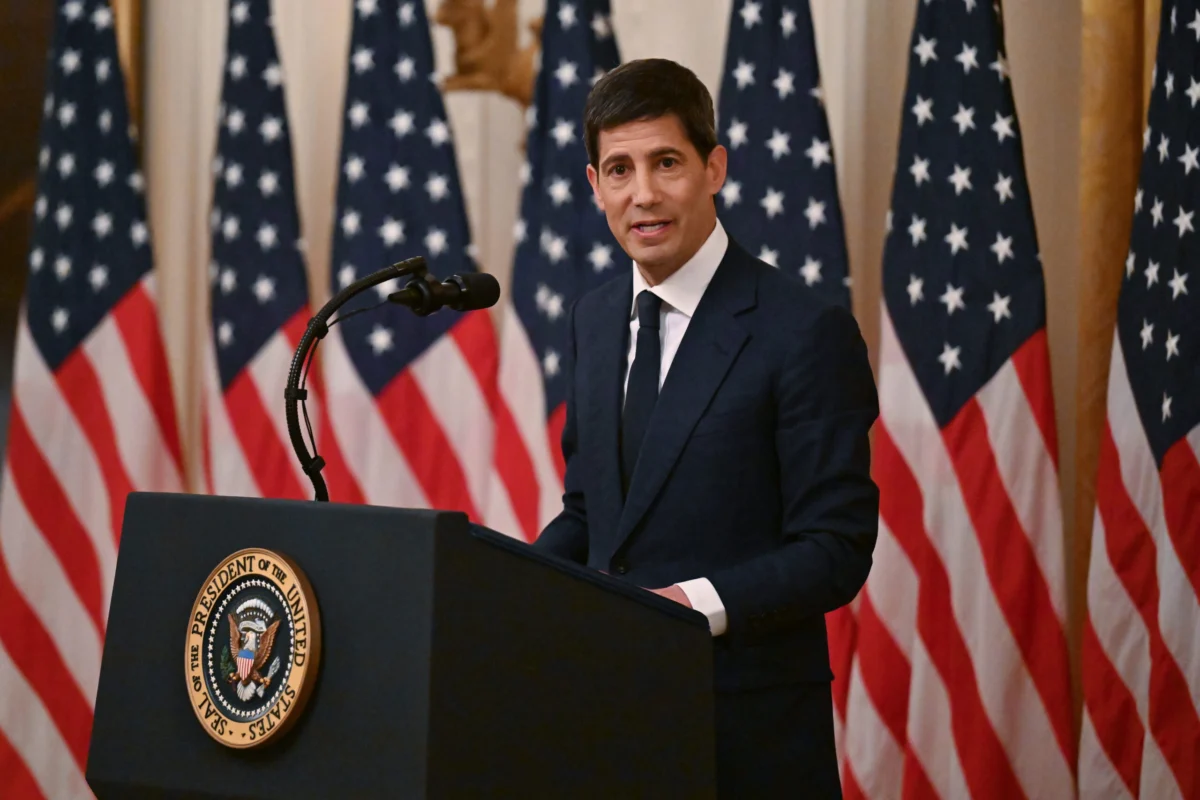
Kevin Warsh, recently confirmed as U.S. President Donald Trump’s nominee for Chair of the Federal Reserve, is set to embark on a significant mission to redefine the central bank’s operational framework, particularly concerning its colossal balance sheet. Following his confirmation hearing in the Dirksen Senate Office Building on April 21, 2026, Warsh’s impending leadership, effective this Friday, signals a potential "regime change" that has ignited widespread speculation across financial markets and economic circles. This envisioned shift could profoundly impact everything from the trajectory of interest rates and the central bank’s personnel to the fundamental mechanisms through which it manages the nation’s financial system and communicates its policy intentions.
At the heart of Warsh’s proposed reforms lies a critical reevaluation of how the Federal Reserve manages the intricate financial plumbing of the U.S. economy and the massive $6.8 trillion balance sheet it has amassed over nearly two decades of crisis intervention. Interviews with former Fed officials and leading economists, alongside a growing body of academic research, suggest that Warsh intends to guide the Fed towards a more circumscribed role in day-to-day financial market operations. Concurrently, he aims to establish clearer, more predictable rules governing the circumstances under which the central bank should intervene. The central debate revolves around whether the Fed’s balance sheet should continue to serve as a routine instrument for influencing financial conditions and supporting markets – a practice largely adopted since the 2008 financial crisis – or if its deployment should be reserved strictly for periods of severe market dysfunction and acute economic distress.
The Road to "Regime Change": Warsh’s Vision and Nomination
Kevin Warsh’s journey to the helm of the Federal Reserve began with his nomination by President Donald Trump, a decision that followed a period of sustained criticism from the White House regarding the Fed’s monetary policy under outgoing Chair Jerome Powell. President Trump, re-elected in 2024, had consistently advocated for lower interest rates, often publicly admonishing Powell and even nicknaming him "Too Late." This political backdrop underscores the heightened expectations and potential challenges Warsh inherits.
Warsh’s own critiques of the Federal Reserve’s post-crisis interventions are well-documented. In a Wall Street Journal op-ed published last year, he famously labeled the central bank’s balance sheet "bloated," asserting that it could be substantially reduced without hindering the Fed’s ability to lower interest rates when necessary. His confirmation hearing on April 21, 2026, served as a platform for Warsh to articulate his vision for a central bank that is less intrusive in financial markets, more transparent in its operations, and ultimately, more resilient. This philosophy aligns with a broader sentiment among some economists and policymakers who argue that the Fed’s expanded footprint has distorted market signals and fostered moral hazard. Warsh’s supporters believe his leadership could restore a sense of fiscal discipline and market-driven efficiency to the financial system.
The Federal Reserve’s Evolving Balance Sheet: A Historical Perspective

To fully appreciate the scope of Warsh’s proposed changes, it is essential to understand the dramatic evolution of the Federal Reserve’s balance sheet over the past two decades. Prior to the 2008 global financial crisis, the Fed operated with a relatively modest balance sheet, typically hovering around $800 billion. Its primary tool for influencing monetary policy was the federal funds rate, managed through targeted open market operations to adjust the supply of bank reserves.
The financial crisis of 2008 marked a watershed moment. Facing an unprecedented collapse in credit markets and a severe recession, the Fed initiated a series of unconventional monetary policies known as Quantitative Easing (QE). Through QE1, QE2, and QE3, the central bank aggressively purchased vast quantities of Treasury securities and mortgage-backed securities (MBS) from commercial banks. The rationale behind QE was twofold: to inject massive amounts of liquidity into the financial system, thereby stabilizing markets, and to exert downward pressure on long-term interest rates, stimulating borrowing, investment, and economic growth. These interventions caused the balance sheet to swell to approximately $4.5 trillion by the mid-2010s.
Following the initial crisis response, the Fed embarked on a cautious attempt at "quantitative tightening" (QT) in the late 2010s, allowing some of its asset holdings to mature without reinvestment. However, this period was relatively brief. The onset of the COVID-19 pandemic in 2020 triggered another round of aggressive asset purchases, as the Fed swiftly implemented emergency measures to stave off economic collapse. These included not only massive purchases of Treasuries and MBS but also the establishment of novel facilities to support corporate bond markets, municipal liquidity, and small businesses. This unprecedented expansion pushed the balance sheet to an all-time peak of nearly $9 trillion.
As of May 2026, the Fed’s balance sheet stands at approximately $6.8 trillion. This figure represents about 23% of the U.S. economy’s Gross Domestic Product, a stark contrast to its pre-crisis size, which was roughly seven times smaller. This substantial expansion has fundamentally altered the operational landscape for banks and financial markets, creating a system characterized by "ample" reserves rather than the "scarce" reserves that defined the pre-2008 era. The scale and composition of this balance sheet are now central to the debate about the Fed’s role and future direction under Kevin Warsh.
The Technical Debate: "Ample" vs. "Scarce" Reserves
The debate over the Fed’s balance sheet is highly technical, yet its implications are far-reaching. At its core is the distinction between two operational frameworks: a system of "scarce reserves" and a system of "ample reserves."
Under a "scarce reserves" framework, which prevailed before 2008, commercial banks held minimal excess reserves beyond what was required. The Fed influenced the federal funds rate – the interest rate banks charge each other for overnight lending of reserves – by making relatively small adjustments to the supply of reserves through open market operations. A slight increase in reserves would lower the federal funds rate, while a decrease would raise it. This system provided a precise and efficient mechanism for monetary policy transmission.

The post-2008 era, marked by massive QE programs, transitioned the system to one of "ample reserves." Banks now hold significant amounts of reserves in excess of their requirements, primarily as a result of the Fed’s asset purchases. In this environment, the federal funds rate is primarily controlled by the interest the Fed pays on reserve balances (IORB) and its overnight reverse repurchase agreement (ON RRP) facility. By adjusting the IORB, the Fed sets a floor for short-term interest rates, as banks have little incentive to lend reserves below what they can earn at the Fed.
Kevin Warsh has implied a strong preference for returning to a "scarce reserves" framework, arguing that it would reduce the Fed’s footprint in financial markets and allow for more natural market functioning. However, transitioning back presents considerable challenges. Reducing the balance sheet to a level consistent with scarce reserves would require substantial quantitative tightening, potentially impacting Treasury yields, mortgage rates, and other interest-sensitive areas of the economy. Moreover, the process must be carefully managed to avoid inadvertently destabilizing money markets or triggering unforeseen liquidity shortages.
Lou Crandall, chief economist at Wrightson ICAP and a seasoned Fed observer, emphasizes the need for a deliberate approach. "It’s a debate we’re going to be seeing later this year. But one thing that’s encouraging about all of this is that nobody, including Kevin Warsh, is arguing that any of this could be done rapidly," Crandall stated. "It’s got to be done carefully, and some of the changes would probably take time to implement. Everyone’s looking at this as a medium-term project rather than part of the day-one agenda."
Proposed Operational Shifts and Market Reactions
While Warsh has spoken in broad terms about reducing the Fed’s footprint, Wall Street analysts are already gaming out the specifics of what a new operating framework might entail. One provocative idea comes from Steve Blitz, chief U.S. economist at TS Lombard, who posits that a Warsh-led Fed could place greater emphasis on the overnight repo market. The repo market, a crucial short-term funding system that underpins the Treasury market’s function, could potentially see its rate become the de facto policy rate, rather than solely relying on the federal funds rate. This shift could create an unusual dynamic where Warsh might satisfy President Trump’s desire for lower headline interest rates while simultaneously maintaining tighter underlying financing conditions as policymakers contend with persistent inflation pressures.
However, such radical proposals are likely to encounter significant opposition from within the Federal Open Market Committee (FOMC) and the broader policymaking community. Fed Governor Michael Barr, in a speech delivered on May 14, 2026, articulated strong skepticism regarding the benefits and feasibility of significantly shrinking the balance sheet. "I think shrinking the balance sheet is the wrong objective, and many of the proposals to meet this objective would undermine bank resilience, impede money market functioning, and, ultimately, threaten financial stability," Barr asserted. He argued that focusing solely on the size of the balance sheet is too narrow; its composition and duration are equally critical. Neglecting these nuances, Barr warned, could lead to "perverse" consequences such as increased market volatility and a greater, rather than lesser, need for future Fed interventions. Furthermore, he cautioned against lowering reserve requirements for banks, suggesting it could destabilize the financial system.
On the other hand, Dallas Fed President Lorie Logan, who previously ran the New York Fed’s trading desk responsible for executing open market strategy, acknowledged the validity of reviewing the Fed’s framework. In an April 2, 2026 speech, Logan highlighted that the Fed possesses a range of tools to facilitate liquidity flow, suggesting a pragmatic approach that incorporates elements from both Warsh’s and Barr’s perspectives. She, like Crandall, emphasized the importance of gradual and carefully planned changes to the balance sheet.

Beyond the technical mechanics, Warsh is expected to prioritize clearer communication. Former Cleveland Fed President Loretta Mester pointed out a historical deficiency: "They’ve never really set up a framework for when to use quantitative easing… The Fed hasn’t done a very good job, I think, over time of distinguishing and explaining when it’s using asset purchases for a monetary policy reason." Warsh’s leadership could bring much-needed clarity, potentially diminishing market expectations that the Fed will automatically resort to aggressive asset purchases whenever Wall Street experiences jitters. This proactive communication would aim to allow markets to form "more sensible expectations about what would happen," as Crandall noted.
Warsh has also expressed support for efforts led by Michelle Bowman, the Fed’s vice chair for bank supervision, to ease certain banking regulations. These reforms could alter the types of assets banks can claim as reserves and utilize during crises, a development Logan also looks forward to seeing progress. Such changes could complement Warsh’s broader goal of reducing the Fed’s direct intervention in markets by empowering banks with greater flexibility and resilience.
Broader Impact, Political Realities, and the Path Ahead
The incoming Federal Reserve Chair inherits a complex economic landscape and a central bank facing not only persistent inflation pressures but also high political expectations. President Trump’s consistent attacks on outgoing Chair Jerome Powell underscore the political minefield Warsh must navigate. While former officials like Mester insist that "politics never enters that room" during FOMC meetings, the perception of political influence can still shape market sentiment and public trust. The challenge for Warsh will be to pursue his reform agenda while fiercely safeguarding the Fed’s institutional independence.
Internally, Fed officials are already preparing for an extensive debate. Central bank researchers have released several pertinent papers, including one titled "A User’s Guide to Reducing the Federal Reserve’s Balance Sheet." This research concluded that, within the current policy framework, reductions of up to $2.1 trillion are feasible, with further cuts possible should the Fed adopt a scarce reserves approach. Crucially, the paper also indicated that initiating such a process would take "at least a year and quite possibly several." This underscores the gradual nature of any significant balance sheet adjustments, echoing the sentiments of Crandall, English, and Logan.
The economic implications of these potential shifts are profound. A smaller, less interventionist balance sheet could lead to more volatile short-term interest rates if not managed impeccably. It might also alter the long-term yield curve, affecting borrowing costs for consumers and businesses, from mortgage rates to corporate investment. While proponents argue this would foster healthier, more efficient capital markets, critics warn of increased financial instability if the transition is mishandled or if the Fed is constrained in responding to future crises.
For all the talk of "regime change," former officials caution against expecting a dramatic overnight overhaul. The Federal Open Market Committee is built on a tradition of consensus, where major policy shifts typically unfold deliberately, only after exhaustive internal debate and careful consideration of economic data. Warsh’s ambitious goals will undoubtedly confront the institutional realities of the central bank. The task ahead for Kevin Warsh is not merely to shrink a balance sheet but to redefine the Federal Reserve’s very role in the U.S. economy, a medium-term project with long-lasting implications for financial stability and monetary policy effectiveness. Markets, having grown accustomed to the Fed’s expansive presence over the past 18 years, will be watching closely as this new chapter unfolds.
