

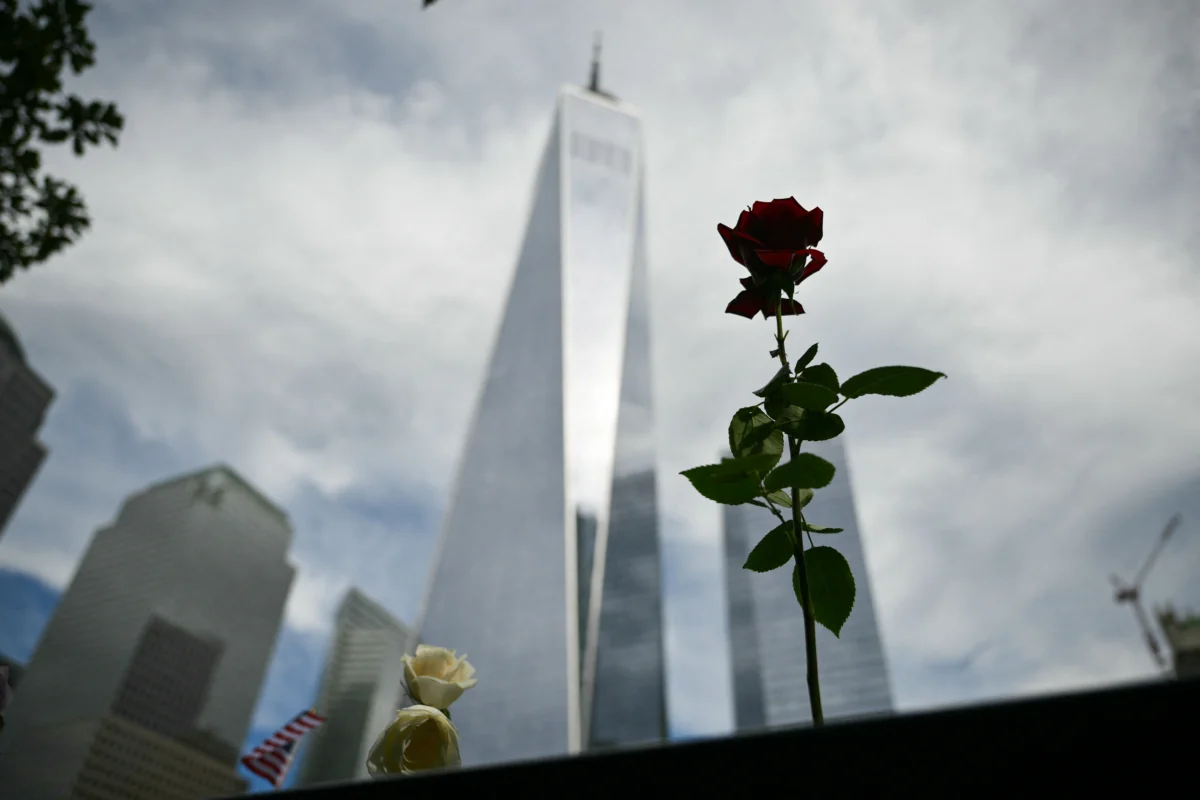
The United States paused in a collective moment of reflection on Friday to mark the 25th anniversary of the September 11, 2001, terrorist attacks, a milestone that underscores a generation of grief, resilience, and transformation. Across the country, from the hallowed grounds of Lower Manhattan to the corridors of the Pentagon and the quiet fields of rural Pennsylvania, citizens gathered to honor the memory of the nearly 3,000 individuals who lost their lives when hijacked commercial airliners were used as weapons of mass destruction. This silver anniversary serves as a somber reminder of the day that fundamentally reoriented American foreign policy, domestic security, and the national psyche.
The most prominent of the day’s observances took place at Ground Zero in New York City, the site where the Twin Towers of the World Trade Center once defined the skyline. For twenty-five years, the ritual has remained largely unchanged: a solemn reading of the names of the victims, punctuated by moments of silence marking the exact times the planes struck the towers and the moments they fell. Relatives of the deceased stood between the two massive reflecting pools that now occupy the footprints of the original buildings, their voices steady but often heavy with emotion as they recited the names of parents, siblings, and children lost in the carnage.
High-Level Commemorations at the Pentagon and Shanksville
In Arlington, Virginia, a separate but equally poignant ceremony was held at the Pentagon, where American Airlines Flight 77 struck the western facade of the building a quarter century ago, claiming 184 lives. United States President Donald Trump and Secretary of Defense Pete Hegseth led the observance, delivering remarks that focused on the enduring nature of the American spirit and the military’s role in the ensuing decades of conflict.
"In those harrowing days after the attacks, we saw the authentic spirit of our nation. We were all New Yorkers that day, every one of us," President Trump stated during his address at the Pentagon. "The 25 years since have shown us the even greater power of the American spirit to endure and prevail and to win." Secretary Hegseth echoed these sentiments, emphasizing the modernization of the U.S. military and the continued vigilance required to prevent similar tragedies in an increasingly complex global security environment.
Simultaneously, families and dignitaries gathered in Shanksville, Pennsylvania, at the Flight 93 National Memorial. This site honors the 40 passengers and crew members who fought back against hijackers aboard United Airlines Flight 93. It is widely accepted by intelligence officials and historians that the attackers intended to crash the aircraft into a high-profile target in Washington, D.C.—likely the U.S. Capitol or the White House. The revolt by those on board forced the plane into a nosedive into an open field, preventing further loss of life in the capital but resulting in the deaths of everyone on the aircraft.
Pennsylvania Governor Josh Shapiro ordered all flags in the Commonwealth to fly at half-staff, issuing a statement to honor "the bravery of the men and women who stood up to evil and ran towards danger while others were running away." The Shanksville ceremony included the ringing of the "Bells of Remembrance," a tribute to the heroism of the "citizen soldiers" who performed the first counter-offensive in the war on terror.
Chronology of a Day That Changed the World
To understand the weight of the 25th anniversary, one must look back at the precise and terrifying chronology of September 11, 2001. The coordinated attacks began in the early morning hours and unfolded with a speed that left the global community in shock.
- 8:46 AM ET: American Airlines Flight 11, a Boeing 767 carrying 81 passengers and 11 crew members, crashed into the North Tower of the World Trade Center between the 93rd and 99th floors.
- 9:03 AM ET: United Airlines Flight 175, another Boeing 767 with 56 passengers and 9 crew members, struck the South Tower between the 77th and 85th floors. The impact was captured live on television as news crews filmed the burning North Tower.
- 9:37 AM ET: American Airlines Flight 77 crashed into the western side of the Pentagon in Arlington, Virginia, killing all 64 people on board and 125 personnel inside the building.
- 9:59 AM ET: The South Tower of the World Trade Center collapsed in approximately 10 seconds, killing more than 800 people in and around the building.
- 10:03 AM ET: United Airlines Flight 93 crashed in a field near Shanksville, Pennsylvania, after passengers and crew attempted to retake the cockpit from four hijackers.
- 10:28 AM ET: The North Tower of the World Trade Center collapsed. The fall of both towers resulted in a massive debris cloud that covered Lower Manhattan in toxic dust.
The Long-Term Health Crisis and "The Second 9/11"
While the immediate death toll of the attacks was 2,977, the 25th anniversary has brought renewed focus to the ongoing health crisis affecting survivors and first responders. In the weeks leading up to the anniversary, New York City Mayor Zohran Mamdani released previously classified government documents suggesting that city and federal officials were aware of the severe risks of toxic exposure far earlier than was publicly admitted.
According to data from the U.S. Centers for Disease Control and Prevention (CDC) and the World Trade Center Health Program, an estimated 400,000 people were exposed to a "witches’ brew" of carcinogens, including asbestos, lead, mercury, and pulverized concrete. In the quarter-century since the attacks, the number of people who have died from 9/11-related illnesses—including rare cancers, respiratory diseases, and digestive disorders—is believed to have surpassed the number of people killed on the day of the attacks themselves.
As of 2026, more than 120,000 people are enrolled in the World Trade Center Health Program, receiving treatment for conditions directly linked to the dust and fumes. Advocates for the survivors argue that the 25th anniversary should serve as a catalyst for permanent funding of the Victim Compensation Fund, ensuring that those still suffering from the "invisible wounds" of 9/11 are not forgotten as the event recedes further into history.
Geopolitical Shifts and the Global War on Terror
The legacy of September 11 extends far beyond the borders of the United States. The attacks ushered in the "Global War on Terror," a multi-decade military and ideological campaign that redefined international relations. Within a month of the attacks, the U.S. led an invasion of Afghanistan to dismantle al-Qaeda and remove the Taliban from power. This was followed in 2003 by the invasion of Iraq, under the premise of eliminating weapons of mass destruction.
The human and financial costs of these conflicts have been staggering. Research from the "Costs of War" project indicates that the post-9/11 wars have cost the United States over $8 trillion and resulted in the deaths of nearly 1 million people globally, including service members, contractors, and civilians.
Domestically, the attacks led to the creation of the Department of Homeland Security (DHS) and the passage of the PATRIOT Act, which significantly expanded the government’s surveillance and investigative powers. While proponents argue these measures have been essential in preventing another large-scale attack on U.S. soil, critics point to the erosion of civil liberties and the normalization of mass surveillance as a complicated part of the 9/11 legacy.
Analysis of the 25-Year Milestone
As the United States moves past the quarter-century mark, the 9/11 anniversary is transitioning from a period of "living memory" into "historical memory." For a significant portion of the American population—those under the age of 30—the attacks are not a personal memory but a historical event learned through textbooks and documentaries.
This transition poses challenges for educators and policymakers who seek to maintain the "Never Forget" mantra. The 25th anniversary ceremonies highlighted a shift toward education and the preservation of personal narratives. The 9/11 Memorial & Museum has expanded its digital outreach, aiming to provide context to a generation that did not witness the smoke rising from Lower Manhattan in real-time.
Furthermore, the political landscape of 2026 provides a different backdrop for remembrance than the unified front of 2001. While the attacks initially sparked a period of intense national unity, the subsequent decades of war and political polarization have complicated the narrative. However, the events in New York, Virginia, and Pennsylvania on Friday demonstrated that, despite internal divisions, the collective grief of 9/11 remains a powerful, unifying force in American life.
As the sun set on the 25th anniversary, the "Tribute in Light"—two massive beams of blue light projecting four miles into the sky from Lower Manhattan—served as a silent sentinel. They represent not just the towers that fell, but the enduring memory of those lost and the transformed nation that continues to grapple with the legacy of a single Tuesday morning in September.
