

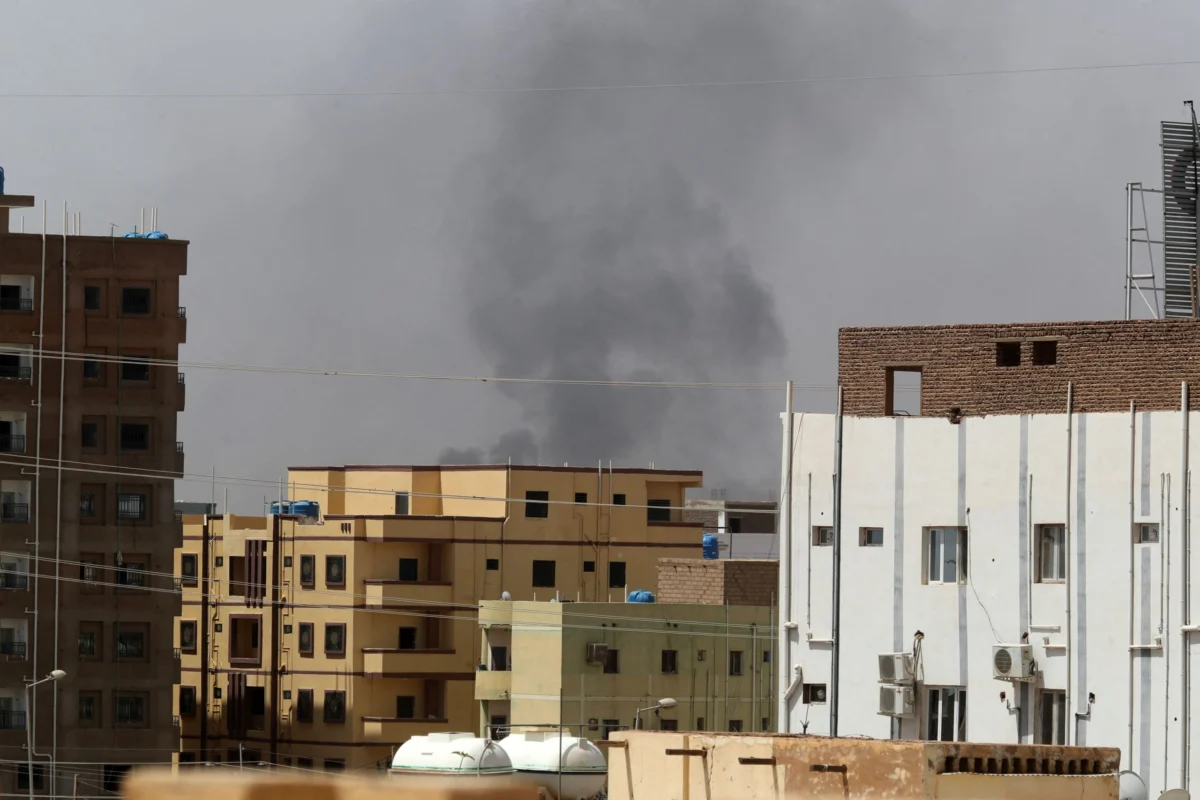
Sporadic fighting between Sudan’s warring military factions continued to resonate across the capital city of Khartoum on Sunday, even as a newly brokered deal for a week-long ceasefire, facilitated by Saudi Arabia and the United States, offered a glimmer of hope for a reprieve in the five-week-old conflict. The agreement, signed late Saturday in the Saudi port city of Jeddah, represents a significant diplomatic milestone, marking the first time since the outbreak of hostilities on April 15 that both the Sudanese Armed Forces (SAF) and the paramilitary Rapid Support Forces (RSF) have formally committed to a negotiated truce on paper.
Scheduled to take effect on Monday evening at 9:45 p.m. local time, the ceasefire is specifically designed to facilitate the delivery of desperately needed humanitarian assistance and the restoration of essential services. Unlike previous verbal commitments that were almost immediately violated, this agreement includes an internationally supported monitoring mechanism, comprising representatives from Saudi Arabia, the U.S., and the warring parties themselves. However, the atmosphere in Khartoum remains tense, as the sound of heavy artillery and small arms fire serves as a grim reminder of the challenges facing the implementation of any peace plan.
The Roots of the Confrontation
The current conflict is the violent culmination of a long-standing power struggle between General Abdel Fattah al-Burhan, the head of the SAF and Sudan’s de facto ruler, and General Mohamed Hamdan Dagalo, widely known as Hemedti, who leads the RSF. The two generals were once uneasy allies, having collaborated in the 2019 ousting of longtime dictator Omar al-Bashir following a popular uprising, and again in a 2021 military coup that derailed Sudan’s fragile transition toward democracy.
Tensions reached a breaking point earlier this year over a framework agreement intended to return the country to civilian rule. The primary point of contention was the integration of the RSF into the regular army. Disagreements over the timeline for this integration—the army pushed for two years while the RSF demanded ten—and the future chain of command led to a mobilization of forces that exploded into open warfare in mid-April.
What began as a localized struggle for control over military bases and strategic infrastructure in Khartoum quickly transformed into a full-scale urban war. The SAF has utilized its superior air power and heavy artillery to strike RSF positions, while the RSF has embedded its fighters within residential neighborhoods, hospitals, and schools, effectively using the civilian population as a shield.
A Chronology of Failed Truces and Escalation
The road to the Jeddah agreement has been paved with numerous failed attempts to halt the violence. In the first month of the conflict alone, at least six ceasefire announcements were made and subsequently ignored by one or both parties.
- April 15, 2023: Hostilities break out in Khartoum and quickly spread to other regions, including Darfur.
- April 18–20, 2023: Multiple 24-hour truces are announced during the Eid al-Fitr holiday, but fighting continues unabated.
- April 25, 2023: A U.S.-brokered 72-hour ceasefire is announced, allowing for the evacuation of foreign diplomats and citizens, though fighting persists in several sectors.
- Early May 2023: Representatives from the SAF and RSF arrive in Jeddah for "pre-negotiation talks" focused on humanitarian corridors rather than a permanent political settlement.
- May 11, 2023: The "Jeddah Declaration" is signed, a general commitment to protect civilians, but it lacks a specific ceasefire mechanism.
- May 20, 2023: The signing of the current seven-day short-term ceasefire agreement, which includes a formal monitoring and coordination committee.
Despite these diplomatic efforts, the reality on the ground has been one of constant escalation. On Sunday, witnesses in central and southern Khartoum reported sustained clashes. Safaa Ibrahim, a 35-year-old resident who has seen her family scattered by the violence, expressed the exhaustion felt by millions. "We’re tired of this war. We’ve been chased away from our homes," she told Reuters. "We want to return to normal life and safety. Al-Burhan and Hemedti have to respect people’s desire for life."
The Humanitarian Toll and Displacement Data
The human cost of the conflict has been staggering. According to the latest data from the World Health Organization (WHO), at least 705 people have been killed and over 5,287 injured. However, medical professionals and local activists warn that the true death toll is likely significantly higher, as many bodies remain uncollected in the streets or are buried in makeshift graves.
The displacement crisis is equally dire. The United Nations High Commissioner for Refugees (UNHCR) and the International Organization for Migration (IOM) report that approximately 1.1 million people have been forced to flee their homes. Of these, roughly 840,000 are internally displaced within Sudan, while more than 250,000 have crossed borders into neighboring countries, including Egypt, Chad, Ethiopia, and South Sudan.
The collapse of the healthcare system in Khartoum is nearly total. The Sudanese Doctors’ Union estimates that approximately 70% of hospitals in conflict zones are out of service. Those that remain open are operating with skeleton crews, facing critical shortages of oxygen, blood supplies, and life-saving medications. Mass looting of warehouses belonging to the World Food Programme (WFP) and other aid agencies has further exacerbated a food crisis in a country where one-third of the population already required humanitarian assistance before the war began.
Strategic Landscape and the Risk of Civil War
The nature of the fighting has raised concerns about a protracted conflict that could destabilize the entire Horn of Africa and the Sahel region. Analysts point out that neither General Burhan nor Hemedti appears ready to concede. Both leaders remained in Sudan during the Jeddah talks, signaling that their primary focus remains on a military victory.
A troubling development in recent days is the call for civilian mobilization. Senior army general Yassir al-Atta recently stated on Sudan state TV that while the army is not currently requiring civilians to take up arms, they have a "natural right" to defend themselves against RSF attacks in their homes. This rhetoric has sparked fears of the conflict devolving into a broader civil or ethnic war, particularly in regions like Darfur, where the RSF evolved from the Janjaweed militias accused of genocide in the early 2000s.
The RSF’s strategy of occupying residential areas has turned Khartoum into a maze of checkpoints and sniper nests. Meanwhile, the SAF’s reliance on aerial bombardment has caused extensive damage to civilian infrastructure, including the airport, power stations, and water treatment plants.
International Responses and Monitoring the Truce
The international community has reacted with a mixture of urgency and caution. The United States and Saudi Arabia, as the primary mediators, have emphasized that the success of the Jeddah agreement depends entirely on the "will" of the warring parties. The monitoring mechanism will involve daily reports and satellite surveillance to track troop movements and identify violations.
The African Union (AU) and the Intergovernmental Authority on Development (IGAD) have also called for an immediate cessation of hostilities, stressing that there is no military solution to the crisis. Regional neighbors, particularly Egypt and South Sudan, are wary of the spillover effects. Egypt, which shares a long border and deep historical ties with Sudan, is concerned about the influx of refugees and the potential for long-term instability on its southern flank.
U.N. Secretary-General António Guterres has repeatedly called for a permanent end to the fighting, warning that Sudan is on the brink of a "catastrophic" humanitarian collapse. The U.N. has also expressed concern over reports of sexual violence and the targeting of humanitarian workers.
Future Implications and the Path to Peace
The seven-day ceasefire is intended as a confidence-building measure. If it holds, mediators hope to transition into more substantive talks regarding a permanent end to hostilities and the eventual withdrawal of military forces from urban centers. However, the path to a lasting peace remains fraught with obstacles.
The primary challenge is the restoration of the transition to civilian rule. Pro-democracy groups and civilian political parties, who were sidelined during the initial phases of the Jeddah talks, insist that any permanent settlement must involve their participation. They argue that a deal between two generals will only result in a temporary pause in violence rather than a structural solution to Sudan’s governance crisis.
Furthermore, the economic impact of the war will take years to reverse. Sudan was already grappling with triple-digit inflation and a massive external debt. The destruction of Khartoum’s industrial base and the disruption of the agricultural season threaten to push millions more into extreme poverty.
As Monday evening approaches, the people of Sudan—and the world—are watching closely to see if the signatures in Jeddah will translate into silence on the streets of Khartoum. For activists like Mohamed Hamed, the priority is clear: "The people of Khartoum are waiting for the truce and the opening of humanitarian corridors. The health situation is getting worse day after day." Whether the generals will prioritize the survival of their citizens over their own political ambitions remains the defining question of the hour.
