

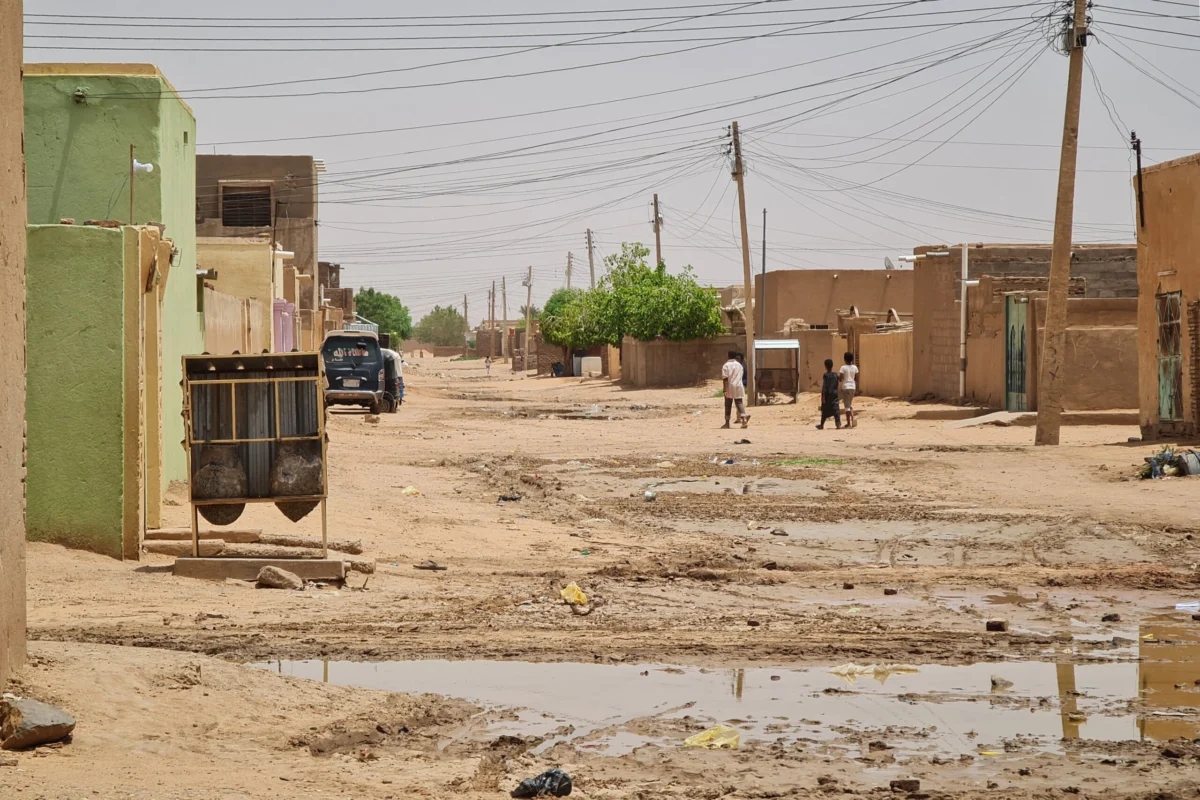
The Sudanese capital of Khartoum was struck by a devastating wave of violence on Saturday, June 17, 2023, as an aerial bombardment in the southern district of the city claimed the lives of at least 17 people. Among the deceased were five children, according to local health officials, marking one of the single deadliest incidents for non-combatants since the power struggle between Sudan’s rival generals erupted into open warfare two months ago. The strike targeted the Yarmouk neighborhood, an area that has become a flashpoint for intense urban combat due to its proximity to a major military industrial complex.
As the conflict between the Sudanese Armed Forces (SAF), led by General Abdel Fattah al-Burhan, and the paramilitary Rapid Support Forces (RSF), commanded by General Mohamed Hamdan “Hemedti” Dagalo, enters a more destructive phase, the civilian toll continues to mount. The Ministry of Health confirmed that in addition to the fatalities, dozens of residents were injured, and at least 25 homes were reduced to rubble or severely damaged by the blast. The incident highlights the increasingly indiscriminate nature of the fighting in densely populated urban centers, where the distinction between military targets and residential zones has become dangerously blurred.
Tactical Shifts and the Siege of Khartoum
The nature of the attack in the Yarmouk neighborhood remains subject to conflicting reports, reflecting the fog of war that has enveloped Khartoum. While the SAF possesses a significant advantage in airpower, including fighter jets and Chinese-made drones, the RSF has increasingly utilized man-portable air-defense systems (MANPADS) and its own surveillance drones to counter the military’s aerial dominance. Witnesses in the area reported hearing the screech of low-flying aircraft followed by massive explosions that shook the foundations of nearby buildings.
The RSF issued a swift statement accusing the military of carrying out the strike against "defenseless citizens." The paramilitary group also claimed to have shot down a military MiG fighter jet during the engagement, though this assertion could not be independently verified by international observers or satellite imagery. Conversely, the Sudanese military has frequently accused the RSF of embedding its fighters within residential neighborhoods and using civilians as human shields, thereby complicating aerial targeting and leading to collateral damage. A military spokesperson did not provide an immediate official comment on the Saturday strike, maintaining the SAF’s stance that it only targets "rebel hideouts" and logistical hubs.
The Yarmouk district is strategically significant because it houses a massive military-industrial facility that has been a primary objective for the RSF since the start of the hostilities. Control over such installations provides not only symbolic victory but also access to ammunition and heavy weaponry. As a result, the surrounding civilian infrastructure has been caught in a relentless cycle of shelling and airstrikes.
A Chronology of Escalation: From Transition to Civil War
To understand the current carnage in Khartoum, one must look at the rapid disintegration of the political transition that followed the 2019 ousting of longtime dictator Omar al-Bashir. The alliance between the SAF and the RSF, which jointly orchestrated a coup in October 2021 to sideline civilian pro-democracy groups, proved to be a marriage of convenience that eventually succumbed to internal rivalries.
The primary point of contention was the proposed integration of the RSF into the regular army—a key requirement of an internationally backed "framework agreement" intended to return Sudan to civilian rule. Disagreements over the timeline for this integration and the future chain of command led to a mobilization of forces in early April 2023. On April 15, the first shots were fired in Khartoum, quickly spreading to the presidential palace, the international airport, and military headquarters.
Since that date, the conflict has followed a grim trajectory:
- April 15–30: Initial battles for control of strategic sites in Khartoum; foreign nations begin emergency evacuations of diplomats and citizens.
- May 2023: Several short-lived ceasefires are brokered by the United States and Saudi Arabia in Jeddah. Both sides repeatedly violate these truces within hours of their commencement.
- June 2023: The fighting shifts from a struggle for government buildings to a war of attrition. The RSF solidifies its presence in residential areas, while the SAF relies on heavy artillery and airstrikes to dislodge them. The violence spreads significantly to the Darfur region, reviving ethnic tensions.
The Humanitarian Crisis: Data and Displacement
The human cost of the power struggle is staggering. According to the United Nations and various monitoring groups, the death toll has surpassed 1,000, though local doctors’ unions suggest the actual figure is likely much higher due to the inability of health workers to reach bodies in active combat zones. The Sudanese Ministry of Health reports that more than 5,000 people have been wounded across the country.
The displacement crisis is currently among the most severe in the world. As of mid-June 2023, more than 2.2 million people have been uprooted. This includes approximately 1.7 million internally displaced persons (IDPs) who have fled to relatively safer provinces like Al Jazirah or the Red Sea coast, and over 500,000 refugees who have crossed borders into neighboring Chad, Egypt, South Sudan, and Ethiopia.
In Khartoum, the infrastructure is nearing total collapse. Approximately 60% to 70% of hospitals in conflict-affected areas are out of service, either due to being bombed, occupied by military forces, or running out of essential medical supplies and electricity. The "Emergency Rooms"—grassroots volunteer groups formed by local residents—have become the only source of aid for many, organizing food kitchens and basic medical care despite the constant threat of violence.
The Descent of Darfur and the Assassination of Governor Abkar
While Khartoum remains the primary theater of the war, the situation in the western region of Darfur has taken an even more ominous turn. The conflict has reignited long-standing ethnic animosities between Arab and non-Arab communities. The RSF, which evolved from the Janjaweed militias notorious for atrocities in Darfur in the early 2000s, has been accused of leading a new wave of ethnic cleansing.
In Genena, the provincial capital of West Darfur, the violence has reached catastrophic levels. Just days before the Khartoum airstrike, the Governor of West Darfur, Khamis Abdalla Abkar, was abducted and killed. His death occurred shortly after he gave a television interview in which he accused the RSF and allied Arab militias of committing "genocide" against the Masalit people. The RSF denied responsibility for the assassination, blaming "uncontrolled elements," but the United Nations and international human rights organizations have pointed to credible evidence of the paramilitary group’s involvement.
The fall of Genena has triggered a mass exodus of tens of thousands of people toward the Chadian border. Reports from refugees describe "death corridors" where fleeing civilians are targeted by snipers and marauding militias based on their ethnicity.
International Responses and Geopolitical Implications
The international community has struggled to find leverage to stop the fighting. The Jeddah talks, facilitated by the U.S. and Saudi Arabia, were suspended after the SAF withdrew, citing the RSF’s failure to vacate civilian homes and hospitals. The African Union (AU) and the Intergovernmental Authority on Development (IGAD) have attempted to propose mediation roadmaps, but neither General Burhan nor Hemedti has shown a genuine willingness to negotiate a permanent settlement, with both leaders seemingly convinced of their ability to achieve a total military victory.
The implications of a protracted civil war in Sudan are profound for the Horn of Africa and the Red Sea region. Sudan occupies a strategic position, and its instability threatens to spill over into seven neighboring countries, many of which are already dealing with their own internal fragilities. There are also concerns regarding the involvement of external actors; the Russian mercenary group Wagner has long been associated with the RSF’s gold-mining interests, while regional powers like Egypt have traditionally supported the SAF.
Analysis: A State of Urban Siege
The Saturday airstrike in Yarmouk serves as a microcosm of the broader strategic deadlock. The SAF’s reliance on aerial bombardment is a desperate attempt to compensate for its lack of ground control in the capital. Conversely, the RSF’s tactic of occupying private residences and public utilities turns every street corner into a potential battlefield, ensuring that any military gain comes at the price of civilian lives.
The destruction of 25 houses in a single strike indicates a shift toward the use of larger munitions or a decrease in targeting precision. For the residents of Khartoum, the "Emergency Room" volunteers, and the millions of displaced, the future remains bleak. Without a significant shift in the diplomatic landscape or a decisive (and likely bloody) military breakthrough, Sudan faces the prospect of a fragmented state, where rival warlords control various fiefdoms, and the humanitarian catastrophe continues to deepen.
The international community now faces the challenge of not only brokering a ceasefire but also addressing the potential for long-term state failure. The killing of 17 civilians in southern Khartoum is a grim reminder that in the battle between two men for the soul of a nation, it is the people of Sudan who are paying the ultimate price. As the rubble is cleared in Yarmouk, the window for a peaceful resolution appears to be closing, replaced by the hardening realities of a full-scale civil war.
