

In an era defined by escalating geopolitical conflicts and the consequent re-evaluation of national security priorities, a critical question emerges: can the protection of our natural world be relegated to a secondary concern? The ongoing wars in the Middle East and Ukraine, alongside broader global economic anxieties, are compelling governments worldwide to bolster defense budgets and prioritize immediate economic growth. However, a closer examination of the intricate link between a healthy planet and a robust global economy reveals a stark reality: delaying investments in nature conservation would be a profound strategic error. Far from being a costly endeavor, meeting internationally agreed-upon biodiversity targets presents a significant economic opportunity, with the potential to add up to $450 billion to annual global GDP by 2050.
The urgency of this matter is underscored by the timing of major international convenings. As world leaders prepare to convene for crucial United Nations biodiversity and climate-change conferences this autumn, the interconnectedness of ecological health and economic prosperity must be at the forefront of their deliberations. The stark reality is that over half of the world’s total GDP is intrinsically dependent on the services provided by nature. This dependence is not abstract; it is woven into the very fabric of our global economic system.
The Economic Pillars of a Healthy Planet
The foundational role of nature in supporting global commerce is undeniable. Consider the agricultural sector, a cornerstone of human civilization and a multi-trillion-dollar industry. Healthy, fertile soils are the bedrock of a global food industry valued at approximately $9.5 trillion. The degradation of these soils, driven by unsustainable agricultural practices and climate change, directly threatens this vast economic engine. Similarly, the world’s forests, often referred to as the "lungs of the planet," are not merely ecological assets; they are vital economic engines, supporting the livelihoods of an estimated 1.5 billion people globally. These communities depend on forests for timber, non-timber forest products, and a host of ecosystem services that fuel local and regional economies.
The importance of natural water systems, such as rivers, cannot be overstated. Beyond providing essential freshwater resources, healthy river systems play a crucial role in mitigating the impacts of extreme weather events. They act as natural sponges, absorbing floodwaters and preventing devastating damage to infrastructure and communities. Furthermore, rivers are vital arteries for trade and transportation, underpinning a significant portion of global commerce. The disruption of these natural functions, whether through pollution, deforestation, or the impacts of climate change, carries direct and substantial economic costs. In essence, nature is not a peripheral concern; it is the indispensable backbone of the global economy. Consequently, its protection must be elevated to a paramount national and international priority, on par with defense and economic development.
Nature’s Crises Do Not Await Geopolitical Calm
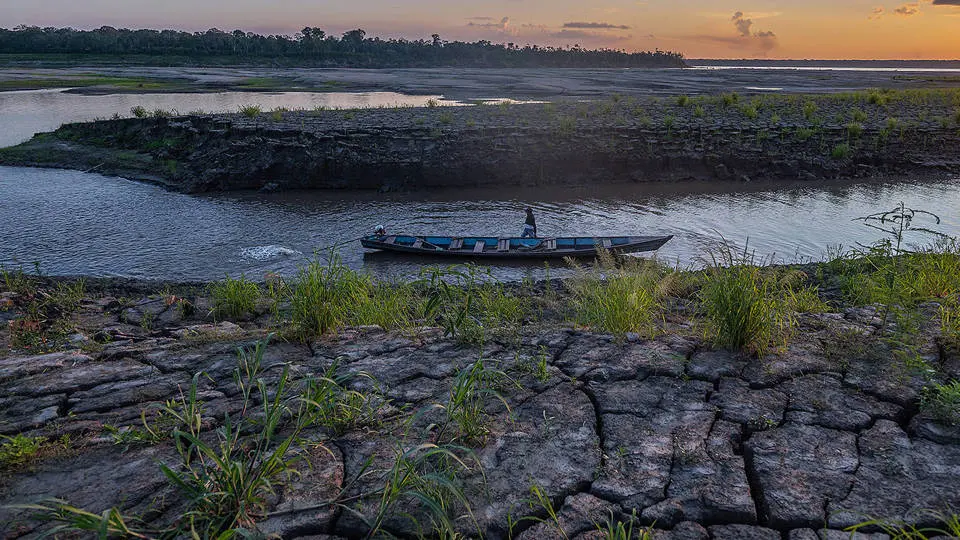
The notion that nature-related crises can be addressed once geopolitical tensions subside is a dangerous fallacy. The planet’s ecological systems operate on their own timelines, indifferent to human conflicts and economic fluctuations. This summer’s severe drought in Europe serves as a poignant example. The sweltering heatwaves and prolonged lack of rainfall resulted in an estimated $2 to $3 billion in crop losses across the continent. This was a devastating blow to farmers already grappling with the economic fallout from the war in Ukraine. The conflict’s disruption of global supply chains, particularly the closure of critical shipping routes and the subsequent surge in fertilizer prices – which rose by an alarming 71% – exacerbated the precarious situation for agricultural producers.
The confluence of armed conflict and extreme weather events has had a cascading effect on global food security and prices. The combined pressures have pushed global food prices to their highest levels since 2022, creating significant hardship for vulnerable populations and contributing to social and political instability in many regions. This illustrates a critical point: environmental degradation and conflict are not isolated issues; they are deeply intertwined and mutually reinforcing. A degraded environment can fuel resource scarcity and displacement, increasing the likelihood of conflict, while conflict can further damage environments and hinder conservation efforts.
The Economic Peril of Ecosystem Collapse
The scientific community has long warned of the catastrophic economic consequences of widespread ecosystem collapse. Projections from institutions like the World Bank indicate that a partial collapse of global ecosystems could inflict an annual economic cost of $2.7 trillion. This staggering figure highlights the profound financial risks associated with inaction. Even in the face of intense geopolitical instability and the temptation to focus on immediate threats, the long-term economic viability of nations and the global economy hinges on the health of the natural systems that support them.
This understanding lends critical weight to the global goal of protecting and conserving at least 30% of the world’s land and ocean by 2030, a target widely known as "30×30." Adopted by governments in 2022 under the landmark Kunming-Montreal Global Biodiversity Framework, this ambitious yet achievable goal represents a strategic investment in future economic resilience and global solidarity.
Investing in Resilience: The 30×30 Vision
The 30×30 initiative is more than just an environmental aspiration; it is a pragmatic economic strategy designed to bolster resilience and foster solidarity. By safeguarding natural ecosystems, nations can significantly enhance their food and water security, building a buffer against the increasing frequency and intensity of climate-related shocks. This, in turn, sustains livelihoods, improves public health outcomes, and underpins long-term economic stability. The framework acknowledges that the protection of nature is fundamental to providing these essential public goods, which are the very foundation of prosperous societies.
The ecological services provided by healthy natural environments are diverse and invaluable. For instance, coastal ecosystems like kelp beds, mangroves, and salt marshes act as powerful carbon sinks, absorbing significant amounts of atmospheric carbon dioxide and helping to mitigate climate change. These same ecosystems, along with coral reefs, provide natural defenses against storm surges and coastal erosion, protecting valuable infrastructure and human settlements. They also serve as critical habitats for an astonishing array of biodiversity, supporting complex and resilient food webs. On land, forests play a vital role in regulating rainfall patterns, ensuring consistent water availability for agriculture and human consumption, and supporting the livelihoods of indigenous and local communities. Healthy soils, rich in organic matter and microbial life, are essential for retaining water and nutrients, directly contributing to global food security and providing a natural buffer against flooding.
Progress and Persistent Gaps: A Tale of Two Realms
In the four years since the 30×30 goal was established, the world has witnessed significant strides in terrestrial conservation. New analyses from the Campaign for Nature indicate that approximately 20% of the planet’s land and inland waters are now designated as protected or conserved areas. Furthermore, if existing commitments made by governments are fully realized, this figure could rise to around 27% by 2030, closing a substantial portion of the gap towards the 30% target. This progress reflects a growing recognition among policymakers of the importance of land-based conservation.
However, the progress in marine environments has been considerably more sluggish, revealing a concerning disparity. Only about 10% of the world’s oceans are currently designated for formal conservation. Even if all existing commitments are met, this figure is projected to increase to a mere 12% by 2030, falling far short of the 30×30 objective. Compounding this issue, the latest "Ocean Protection Gap Report" from Together for the Ocean reveals a more alarming reality: a mere 3.5% of the ocean is considered effectively protected. In many areas designated as off-limits to extractive activities, harmful practices such as overfishing and destructive industrial activities continue unabated, undermining the very purpose of these conservation efforts. This suggests a critical need for more robust enforcement and genuine protection mechanisms in marine protected areas.
The Financial Imperative: Bridging the Funding Gap
With only four years remaining to achieve the ambitious 30×30 target, a defining global commitment of this decade, the world faces a critical juncture. The question is no longer whether to pursue this goal, but what will it take to accelerate progress and bridge the existing gaps, particularly in the marine realm.
A fundamental requirement is a dramatic increase in financing for nature conservation. Current annual spending on biodiversity conservation stands at approximately $24 billion. To effectively implement the 30×30 goal, an estimated $100 to $180 billion in annual funding will be required. While this figure may seem substantial, it is crucial to frame it as an investment rather than a mere expenditure. The economic returns on this investment are projected to be immense. Achieving the 30×30 targets could inject up to $450 billion into the annual global GDP by 2050 and support the creation of an estimated 4 to 7 million new jobs. This economic dividend underscores the fact that investing in nature is investing in long-term economic prosperity and stability.
From Commitment to Implementation: The Urgency of Action
Policymakers at all levels of government must transition from rhetoric to concrete action. As of May 2026, a significant number of countries – 116 in total – have submitted commitments to protect substantial portions of their land and inland water areas, with many aiming to conserve up to 27%. However, a critical shortfall exists: many of these commitments have yet to be translated into tangible, mapped, costed, and financed implementation plans. Commitments alone, however well-intentioned, will not safeguard the natural world. The gap between stated intentions and on-the-ground action remains a significant impediment to progress.
Beyond the designation of protected areas, a crucial aspect of the 30×30 strategy involves ensuring that these areas are not merely lines on a map but are effectively managed and deliver tangible benefits for both biodiversity and human well-being. This necessitates the establishment of robust, long-term funding mechanisms that are resilient to the vagaries of changing economic conditions and political cycles. Effective management requires sustained financial resources, dedicated personnel, and clear governance structures. Furthermore, the benefits derived from these protected areas, such as ecotourism, sustainable resource management, and ecosystem services, must be equitably shared with local communities to foster buy-in and ensure the long-term success of conservation initiatives.
A Global Outlook: Uncertainty and Opportunity
There is no denying that the current global outlook is characterized by profound uncertainty. The persistent conflicts in the Middle East and Ukraine, coupled with other geopolitical tensions, are indeed compelling governments to reallocate resources towards defense and to prioritize immediate economic stabilization. However, to view these pressing concerns as justification for placing nature conservation on the back burner would be a grave miscalculation. The protection of natural systems is not a niche interest for environmentalists; it is a fundamental prerequisite for global security, economic stability, and human well-being. Investing in the future of our planet’s biodiversity is, in the most profound sense, an investment in our own collective future. The time for decisive action is now, before the irreversible consequences of ecological decline render future economic recovery an unattainable dream.
