

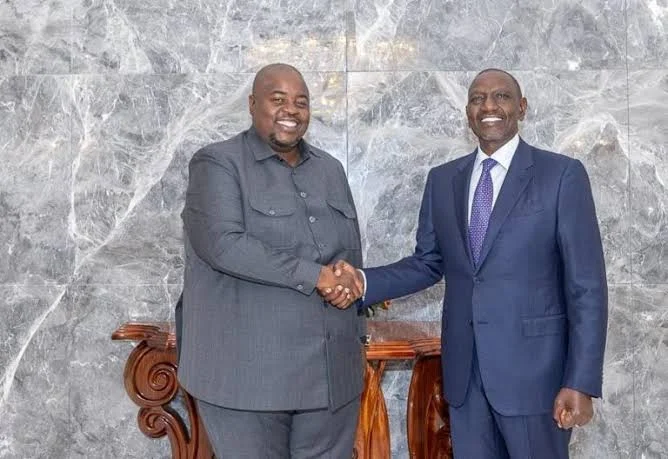
The Republic of Zimbabwe is reeling from the news of a catastrophic aviation accident that has claimed the lives of one of the nation’s most prominent and controversial business figures, Wicknell Chivayo. The high-profile businessman, widely known by his social media moniker "Sir Wicknell," was confirmed as one of six fatalities in a private helicopter crash on Wednesday. The incident, which occurred in a rural area east of the capital, also claimed the life of his wife, Lucy Muteke, and four other passengers and crew members whose identities are being verified by local authorities.
The tragedy unfolded in the Chikomba district, a region Chivayo called home and where he had been heavily investing in personal infrastructure. According to official reports from the state broadcaster, ZBC, the group had departed from Gandami on Wednesday afternoon. Chivayo and his wife had been visiting the site of a new residential estate they were constructing in the area, a project that symbolized his return to his roots. The flight was intended to be a routine journey back toward Harare, but it ended in disaster approximately 40 minutes after takeoff.
The Chronology of the Disaster
The timeline of the accident suggests a sudden and violent conclusion to the short flight. The helicopter, a private charter frequently used by the businessman for his regional travels, took off from Gandami under initially clear conditions. However, as the aircraft approached Kudenga Farm near Marondera—a transit town located roughly 70 kilometers (45 miles) southeast of Harare—witnesses and flight data indicate that the vessel encountered significant distress.
At approximately 40 minutes into the flight, the helicopter went down. Preliminary reports from the scene indicated a total loss of life. Government spokesperson Nick Mangwana utilized the social media platform X (formerly Twitter) to relay the grim news to the public, stating definitively that there were "no survivors" at the crash site. The wreckage was discovered in a wooded area of the farm, with emergency services and local residents reaching the scene shortly after the impact.
By Thursday morning, the site was cordoned off as forensic experts and aviation investigators from the Civil Aviation Authority of Zimbabwe (CAAZ) arrived to begin the arduous task of recovering remains and determining the cause of the crash. The seriousness of the incident was underscored by the scheduled visit of Transport and Infrastructural Development Minister Felix Mhona, who was tasked with overseeing the state’s response to the aviation disaster.
Technical Analysis and Preliminary Findings
While a full investigation by the CAAZ is expected to take several months, George Mashababe, the director-general of the authority, provided an initial assessment to the press. Early indications from the wreckage pattern suggest that the helicopter’s tail rotor or tail boom struck the ground first. This type of impact is often catastrophic, as it can lead to a loss of directional control and structural disintegration of the aircraft.
According to Mashababe’s statement to the Zimbabwean newspaper The Herald, the force of the impact caused a massive rupture in the aircraft’s fuel tanks. The resulting fire was not contained to the fuselage but followed the path of the spilled fuel across the ground, incinerating much of the debris and making the recovery process significantly more difficult for forensic teams. Investigators are currently looking into whether the tail strike was the result of mechanical failure, pilot error, or environmental factors such as low-altitude turbulence or obstacles.
The CAAZ has committed to a transparent inquiry, with Mashababe noting that a comprehensive statement would be issued once the flight data recorders (if available) and maintenance logs of the aircraft have been thoroughly reviewed.
The Life and Legacy of Wicknell Chivayo
Wicknell Chivayo was a figure who loomed large over Zimbabwe’s economic and social landscape. In his 40s at the time of his death, Chivayo was the founder and managing director of Intratrek Zimbabwe, a diversified firm with significant interests in the energy sector. He was perhaps most famous—and occasionally infamous—for his involvement in the 100-megawatt Gwanda solar project. The project, intended to alleviate Zimbabwe’s chronic power shortages, became a focal point of national debate due to various delays and legal disputes, though Chivayo remained a staunch defender of his company’s performance and capacity.
Beyond his business dealings, Chivayo was a master of public persona. He cultivated a "larger-than-life" image, frequently sharing glimpses of his opulent lifestyle with hundreds of thousands of followers on social media. His posts often featured fleets of luxury vehicles, designer clothing, and first-class international travel. He was known for his philanthropic—and sometimes flamboyant—gestures, which included gifting high-end vehicles to musicians, religious leaders, and political associates. A 2025 report by The Standard estimated that Chivayo had spent upwards of $9.3 million on such gifts, a figure that sparked both admiration for his perceived generosity and criticism regarding the source and display of such wealth in a developing economy.
Regional Influence and Political Ties
Chivayo’s influence was not confined to the borders of Zimbabwe. He was a quintessential "connected" businessman, maintaining close ties with political elites across Southern and East Africa. His diplomatic reach was solidified in June when King Mswati III of Eswatini granted him citizenship and a diplomatic passport. This move was followed by Chivayo’s announcement of a massive 300MW solar initiative in the Eswatini kingdom, signaling his intent to become a regional energy mogul.
The depth of his international connections was evident in the immediate aftermath of his death. Kenyan President William Ruto was among the first foreign heads of state to issue a public tribute. Ruto described Chivayo as a "dear friend" and a man whose "warmth touched many people." In a poignant post on X, President Ruto lauded Chivayo’s belief in the potential of the African continent and extended his deepest condolences to Zimbabwean President Emmerson Mnangagwa and the Chivayo family.
In Zimbabwe, Chivayo was often seen in the company of the highest-ranking government officials, and his business ventures were frequently aligned with national strategic goals, particularly in infrastructure and renewable energy. His death leaves a significant void in the network of private-sector players who act as intermediaries between government policy and industrial execution.
Broader Implications and Analysis
The death of Wicknell Chivayo is likely to have several ripple effects across Zimbabwe’s business and political sectors. Firstly, the future of Intratrek Zimbabwe and its ongoing projects, particularly the Gwanda solar project, now hangs in the balance. While the company is a corporate entity, Chivayo’s personal brand and political capital were central to its operations. Investors and government stakeholders will be watching closely to see if the firm can maintain its momentum without its founder’s leadership.
Secondly, the accident brings renewed scrutiny to the safety of private aviation in the region. As more wealthy businessmen and officials opt for private helicopters to bypass Zimbabwe’s often-challenging road infrastructure, the oversight capabilities of the CAAZ will be under the microscope. The investigation into the Marondera crash will need to provide definitive answers to reassure the public and the business community about the safety of domestic air travel.
Finally, the social impact of Chivayo’s passing cannot be understated. To his supporters, he was a symbol of "black excellence" and a man who proved that a Zimbabwean could compete on a global stage. To his detractors, he represented a system of patronage and conspicuous consumption. Regardless of the viewpoint, his absence will fundamentally alter the social media and philanthropic landscape of the country.
Official Statements and Mourning
The Chivayo family, represented by spokesperson Herbert Chivayo, has requested privacy as they navigate the loss of both Wicknell and Lucy. In a brief statement to ZBC, Herbert Chivayo confirmed the family was in a state of deep shock and was working with authorities to facilitate the return of the remains for burial.
As the nation waits for the final report from the Civil Aviation Authority, the site at Kudenga Farm remains a somber reminder of the fragility of life, even for those who seem most invincible. The government of Zimbabwe has expressed its condolences to all the families affected by the crash, noting that the loss of six lives is a "national tragedy."
The investigation continues, with technical teams expected to remain on-site for the remainder of the week. For now, the story of "Sir Wicknell"—a journey from a rural boy in Chikomba to a diplomatic passport-holding tycoon—has come to an abrupt and tragic end in the very fields where it began.
