

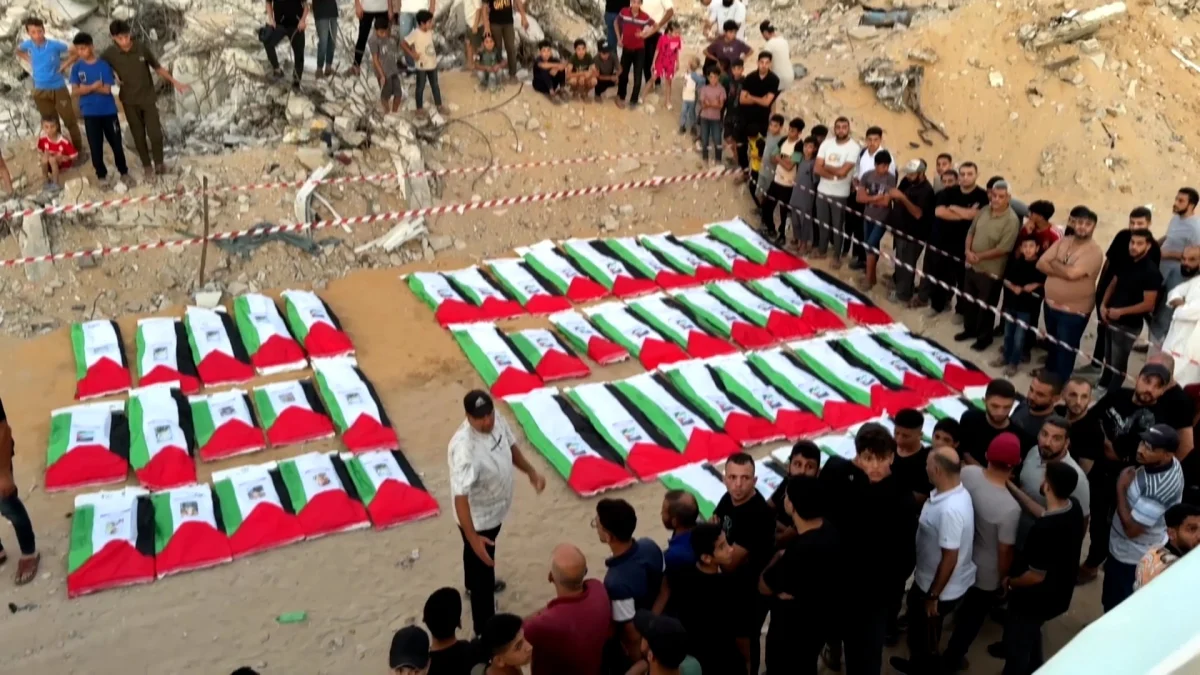
In a somber reflection of the enduring tragedy in the Gaza Strip, local authorities and civil defense teams have begun the delicate process of preparing 105 Palestinians for burial, nearly three years after they were killed during the initial stages of the conflict. The remains were recovered from the deep recesses of a pulverized residential block in northern Gaza, a site that had remained inaccessible since the heavy bombardments of October 2023. This discovery underscores the staggering scale of the humanitarian catastrophe and the long-term challenges of recovery in a region where thousands are still believed to be entombed under the remains of their former homes.
The recovery of these 105 individuals marks one of the largest single retrieval operations since the intensive military campaign began. For three years, these victims were listed among the "missing," a category that has haunted thousands of families across the enclave. The site of the recovery, a once-densely populated neighborhood, was leveled during the early weeks of the Israeli offensive, which has been characterized by international observers and legal experts as a campaign of unprecedented destruction.
The Recovery Effort and Identification Process
The retrieval operation was led by the Gaza Civil Defense, a body that has operated under extreme duress since 2023. Working with severely degraded equipment, much of which has been damaged by years of siege and direct strikes, the teams utilized manual labor and a few remaining pieces of heavy machinery to sift through the compacted layers of concrete and twisted metal. The process of extracting the remains took several weeks of meticulous excavation, as the structural instability of the surrounding ruins posed a constant threat to the recovery teams.
Identifying the victims has proven to be an immense forensic challenge. After three years beneath the rubble, many of the remains are skeletal or heavily decomposed, requiring DNA analysis and dental records for definitive identification—resources that are in critically short supply within the Gaza Strip’s crippled healthcare system. Despite these hurdles, the Ministry of Health has been working alongside local forensic specialists to match the remains with the names of those reported missing by their relatives in the autumn of 2023.
For many families, the discovery brings a painful form of closure. In Gaza, the cultural and religious importance of a proper burial is profound. The inability to retrieve loved ones has been a source of secondary trauma for survivors, who have spent the last three years living near the ruins of their homes, knowing their family members were still inside.
Chronology of the Conflict: October 2023 to October 2026
To understand the context of this mass burial, it is necessary to trace the timeline of events that led to this moment. The conflict escalated dramatically in October 2023, following an unprecedented series of events that triggered a full-scale Israeli military intervention.
- October 2023: The initial weeks of the war saw the most intensive aerial bombardment of the 21st century. High-rise residential buildings, hospitals, and schools were struck as the Israeli military targeted what it described as militant infrastructure. The 105 victims being buried today were killed during this period when a multi-story residential complex was struck without warning.
- Late 2023 to Early 2024: A ground invasion followed the air campaign, leading to further displacement and the total isolation of northern Gaza. During this time, rescue efforts were impossible due to active combat and the systematic destruction of civil defense vehicles.
- 2024-2025: The conflict transitioned into a protracted war of attrition. International bodies, including the International Court of Justice (ICJ), began investigating allegations of genocide, citing the scale of civilian casualties and the deprivation of essential resources. Efforts to clear rubble were repeatedly stalled by a lack of fuel and ongoing security restrictions.
- 2026: As the intensity of active combat shifted, more resources—though still inadequate—were directed toward the recovery of the dead. The discovery of the 105 victims in October 2026 is a direct result of these delayed efforts to address the "missing persons" crisis.
Supporting Data and the Scale of Destruction
The discovery of these 105 bodies highlights a grim statistical reality. According to data from the Gaza Ministry of Health and independent humanitarian organizations, the official death toll, while already exceeding tens of thousands, has long been considered an undercount.
As of late 2026, it is estimated that:
- Over 10,000 individuals remain missing under the rubble across the Gaza Strip.
- More than 60% of Gaza’s residential infrastructure has been destroyed or severely damaged.
- The volume of rubble in Gaza is estimated at over 40 million tons, much of it contaminated with unexploded ordnance and hazardous materials like asbestos.
- The "missing" represent approximately 20% to 25% of the total estimated fatalities, meaning the actual death toll may not be fully realized for another decade.
The recovery of 105 people from a single block provides a micro-level view of the lethality of the strikes in 2023. In many cases, entire multi-generational families were wiped out in a single afternoon, leaving no one behind to even report them missing or identify their remains.
Official Responses and Humanitarian Reactions
The Gaza Ministry of Health issued a statement following the recovery, calling on the international community to provide the specialized equipment and forensic expertise needed to accelerate the retrieval of the thousands still missing. "The dignity of the dead is a fundamental human right," the statement read. "Leaving thousands of our people under the sand and stone for years is a stain on the conscience of the world."
International human rights organizations have also weighed in, noting that the inability to recover bodies serves as a form of "collective punishment" for the survivors. Amnesty International and Human Rights Watch have frequently cited the destruction of residential blocks as evidence of "indiscriminate attacks" that fail to distinguish between combatants and civilians.
On the other side, the Israeli military has consistently maintained that its operations were directed at military targets and that the high civilian toll is a result of militants operating within civilian areas. However, the sheer number of bodies recovered from this single residential site continues to fuel the legal and ethical debates surrounding the proportionality of the 2023 offensive.
Forensic Challenges and the Path to Identification
The passage of three years has made the work of the Gaza Health Ministry’s forensic department nearly impossible. In the immediate aftermath of a strike, bodies can be identified by clothing, personal effects, or visual recognition. By 2026, the environment has taken a heavy toll.
Forensic experts note that the weight of the rubble, combined with the region’s heat and the presence of groundwater, has accelerated the decomposition of remains. In many instances, the recovery teams find "commingled remains," where multiple individuals are found in a single pocket of debris, making it difficult to separate and identify them.
The lack of a centralized DNA database in Gaza further complicates matters. While some international NGOs have attempted to provide kits for DNA collection from surviving relatives, the ongoing blockade and the destruction of laboratory facilities have slowed the process to a crawl. For the 105 victims being buried this week, many will be interred in numbered graves, with samples kept in the hope that future technology or stability will allow for definitive identification.
Broader Impact and Long-term Implications
The burial of these 105 victims is more than a local funeral; it is a significant event that carries weight for the ongoing international legal proceedings. The recovery of remains provides physical evidence of the scale of the strikes and the nature of the casualties. Forensic reports from these recoveries are often submitted to the International Criminal Court (ICC) and the ICJ as part of broader investigations into war crimes.
Furthermore, the environmental and health implications of thousands of unrecovered bodies cannot be ignored. Decaying organic matter under the rubble, combined with the destruction of sewage systems, has led to concerns about groundwater contamination and the spread of disease. The recovery of these remains is a necessary step toward the eventual environmental remediation of the Gaza Strip.
Psychologically, the "presence of the absent" has defined life in Gaza for the last three years. The landscape is a constant reminder of loss. For the community where these 105 people lived, the act of burying them is a communal rite of passage that allows the neighborhood to begin a different phase of mourning. It shifts the status of the victims from "missing" to "martyred," a distinction that carries significant weight in the social and religious fabric of Palestinian society.
Conclusion
As Gaza prepares for the mass funeral of these 105 individuals, the world is reminded that the war of 2023 is far from over for those who live in its aftermath. The recovery process is expected to continue for years, if not decades. Each body retrieved is a story of a life interrupted and a family shattered, contributing to a ledger of loss that has reshaped the demographic and physical landscape of the region.
The burial ceremony, scheduled to take place in a central cemetery that has already been expanded several times since the conflict began, will likely be attended by thousands. It serves as a stark reminder that while the headlines may shift and the intensity of combat may fluctuate, the task of accounting for the dead and healing the living remains the most daunting challenge facing the Gaza Strip in the years to come. The 105 Palestinians being laid to rest today represent just a fraction of those lost, but their recovery is a testament to the persistence of those who refuse to let the victims be forgotten under the weight of the ruins.
