

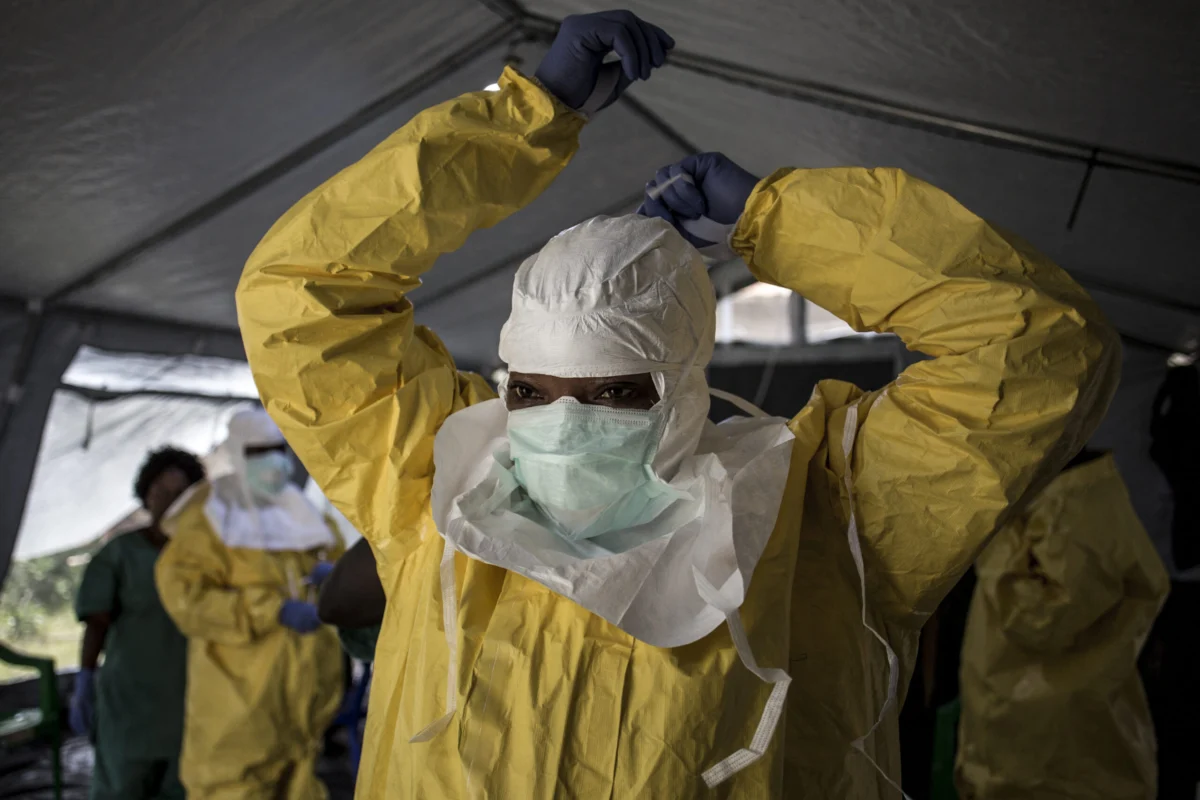
The World Health Organization (WHO) has officially designated the current Ebola virus disease (EVD) outbreak in the Democratic Republic of the Congo (DRC) and Uganda as a Public Health Emergency of International Concern (PHEIC). This declaration follows a surge in fatalities, with nearly 90 people confirmed dead and hundreds of suspected cases reported across multiple provinces and international borders. The emergency status, the WHO’s second-highest alert level, underscores the gravity of an outbreak involving the rare Bundibugyo strain, a variant for which there is currently no approved vaccine or specific therapeutic treatment.
Originating in the Ituri province of the eastern DRC, the virus has demonstrated a rapid geographic expansion, reaching the Congolese capital of Kinshasa and crossing into neighboring Uganda. While the WHO has stopped short of declaring a full-scale pandemic, officials warn that the combination of a highly lethal viral strain, high population mobility, and a volatile security environment in the region creates a "perfect storm" for a major health crisis.
The Genesis and Spread of the Outbreak
The current crisis was first identified in the northeastern DRC, specifically in the Ituri province, a region characterized by its vast mineral wealth and persistent civil unrest. According to reports from the Africa Centres for Disease Control and Prevention (Africa CDC), the outbreak gained significant momentum in late April and early May 2024. The "patient zero" of this event has been identified as a nurse who arrived at a medical facility in Bunia, the capital of Ituri, on April 24, exhibiting symptoms consistent with hemorrhagic fever.
The epicenter of the initial transmission was Mongwalu, a densely populated and commercially active mining hub. The nature of mining operations in the DRC involves a highly mobile workforce, with laborers frequently traveling between remote extraction sites and urban centers. This movement facilitated the rapid dispersal of the virus. From Mongwalu, infected individuals traveled to other health zones seeking treatment, inadvertently seeding the virus in new communities.
By mid-May, the situation escalated as laboratory-confirmed cases were recorded in Kinshasa, a megacity of over 15 million people. Simultaneously, the virus crossed the eastern border into Uganda. Ugandan health authorities have confirmed at least two cases linked to travelers from the DRC, including one fatality in the capital city, Kampala. The presence of the virus in two major African capitals has heightened international anxiety, as urban environments offer significantly more opportunities for superspreader events than isolated rural villages.
Understanding the Bundibugyo Strain
The primary concern for global health officials is the specific variant driving this outbreak: the Bundibugyo ebolavirus (BDBV). First identified in 2007 in the Bundibugyo District of Uganda, this strain is one of six species within the genus Ebolavirus. While the Zaire strain—responsible for the devastating 2014–2016 West Africa epidemic and several recent DRC outbreaks—can be managed with the Ervebo vaccine and monoclonal antibody treatments, the Bundibugyo strain lacks these medical countermeasures.
DRC Health Minister Samuel-Roger Kamba noted that the Bundibugyo strain carries a high lethality rate, which can reach 50 percent in clinical settings. Without a vaccine to provide prophylactic protection for frontline workers or a proven antiviral to treat those already infected, containment relies almost entirely on traditional public health interventions: rigorous contact tracing, isolation, and safe burial practices.
Ebola is characterized by its brutal progression. Following an incubation period of two to 21 days, patients typically experience the sudden onset of fever, fatigue, muscle pain, headache, and sore throat. This is followed by vomiting, diarrhea, rash, and symptoms of impaired kidney and liver function. In the most severe cases, patients suffer from internal and external bleeding, often leading to multi-organ failure and death. The virus is transmitted through direct contact with the blood, secretions, organs, or other bodily fluids of infected people, as well as surfaces contaminated with these fluids.
The Challenge of Insecurity and Conflict
The public health response in the DRC is inextricably linked to the region’s complex security landscape. Ituri and the neighboring North Kivu province have been embroiled in conflict for over three decades. Armed groups, including the Allied Democratic Forces (ADF)—a group with ties to ISIL (ISIS)—and the M23 movement, frequently carry out attacks on civilians and government installations.
This insecurity creates a multifaceted barrier to disease control. First, it limits the ability of epidemiological teams to reach remote villages for contact tracing. Second, the threat of violence often forces local populations to flee, leading to mass displacements that make tracking potential carriers nearly impossible. Third, the "red zones" controlled by rebels are often home to informal, unregulated healthcare facilities. These "tradimedicine" clinics or small private pharmacies often lack the necessary Personal Protective Equipment (PPE), turning them into inadvertent hubs for viral transmission.

Trish Newport, a representative for Doctors Without Borders (MSF), highlighted the precarious nature of the situation: "In Ituri, many people already struggle to access healthcare and live with ongoing insecurity, making rapid action critical to prevent the outbreak from escalating further." The memory of the 2018–2020 Ebola outbreak in North Kivu and Ituri—the second largest in history—remains fresh. That response was marred by community mistrust and attacks on health workers, factors that officials fear could repeat in the current climate.
International Response and WHO Directives
The WHO’s declaration of a PHEIC is intended to galvanize international financial and logistical support. WHO Director-General Tedros Adhanom Ghebreyesus emphasized that while the risk of global spread remains low, the regional risk is "extremely high."
The WHO has issued several critical recommendations for neighboring countries, including South Sudan, Rwanda, and Burundi:
- Emergency Management: Activate national emergency operations centers to coordinate cross-border responses.
- Screening and Monitoring: Strengthen screening at official border crossings while remaining vigilant regarding informal transit points.
- Contact Isolation: Enforce a strict 21-day monitoring period for anyone who has been in contact with a confirmed case, advising against international travel during this window.
- Community Engagement: Launching education campaigns to combat misinformation and encourage early reporting of symptoms.
Crucially, the WHO has advised against the closure of borders or the imposition of trade restrictions. Experience from previous outbreaks suggests that border closures often backfire by driving travelers to use unmonitored bush paths, thereby bypassing health screenings and increasing the likelihood of undetected viral spread.
Statistical Overview and Historical Context
The Democratic Republic of the Congo is effectively the world’s frontline in the battle against Ebola. Since the virus was first discovered in 1976 near the Ebola River, the country has faced 17 documented outbreaks. This deep history has provided the DRC with some of the world’s most experienced "Ebola hunters," yet the frequency of these events continues to strain the nation’s fragile infrastructure.
To date, the current outbreak has produced the following data points:
- Total Deaths: 88 (as of the latest reporting period).
- Suspected/Confirmed Cases: 336.
- Geographic Reach: Ituri Province, Kinshasa (DRC), and Kampala (Uganda).
- Fatality Rate: Estimated at approximately 26% based on current suspected cases, though the Health Ministry warns the strain’s biological lethality is closer to 50%.
Comparatively, the 2018–2020 outbreak resulted in 3,470 cases and 2,280 deaths. That outbreak was eventually contained through a massive vaccination campaign using the then-experimental rVSV-ZEBOV vaccine. The absence of such a tool for the Bundibugyo strain in 2024 is the primary reason for the WHO’s heightened alarm.
Implications for Global Health Policy
The emergence of a BDBV outbreak highlights a significant gap in the global health security architecture: the lack of "universal" Ebola vaccines or treatments that cover multiple strains. While the world celebrated the success of vaccines against the Zaire strain, the Bundibugyo and Sudan strains have remained neglected by major pharmaceutical pipelines due to their rarity.
This outbreak is likely to spark renewed calls for investment in "platform technologies" that can be quickly adapted for different viral variants. Furthermore, the situation in Kinshasa serves as a stark reminder of the risks posed by urban Ebola. In a city where social distancing is a luxury and public sanitation is limited, a viral foothold could result in a catastrophe far exceeding the numbers seen in rural Ituri.
As the international community monitors the situation, the focus remains on supporting the DRC’s Ministry of Health and the Africa CDC. The goal is to ring-fence the current cases through aggressive contact tracing and to ensure that the healthcare workers on the frontlines are provided with the necessary protection to prevent the medical system itself from becoming a vector for the disease. The coming weeks will be decisive in determining whether this outbreak can be contained or if it will evolve into a larger regional crisis.
