

The city of Jeddah, Saudi Arabia, has become the focal point of international diplomatic efforts as representatives from the Sudanese Armed Forces (SAF) and the paramilitary Rapid Support Forces (RSF) convened on Saturday for their first direct discussions since the outbreak of hostilities on April 15, 2023. Brokered by the United States and Saudi Arabia, these "pre-negotiation" talks represent the most significant attempt to date to halt a conflict that has rapidly transformed Sudan’s capital into a theater of urban warfare, resulting in hundreds of fatalities and a mass exodus of civilians seeking refuge across international borders.
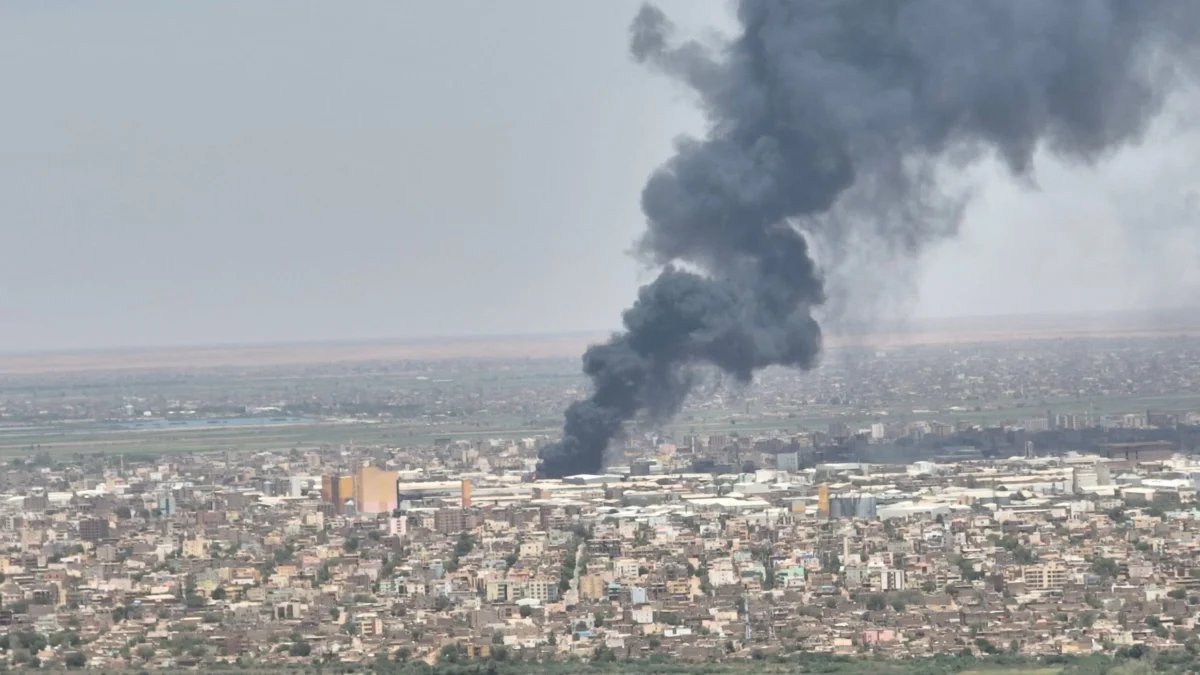
While the international community has welcomed the initiative, the atmosphere remains fraught with skepticism. The SAF and RSF have spent the last three weeks engaged in a brutal power struggle that has effectively derailed a fragile, internationally backed transition toward civilian rule. As the delegations arrived in the Red Sea port city, reports from the ground in Khartoum and its sister cities, Bahri and Omdurman, indicated that the violence had not abated. Residents reported the continued thundering of warplanes and the sharp crackle of heavy machine-gun fire, underscoring the immense gap between the diplomatic maneuvers in Saudi Arabia and the grim reality of the conflict zones.
The Genesis of a Fractured Alliance
The current conflict is the violent culmination of a long-simmering rivalry between General Abdel Fattah al-Burhan, the commander of the Sudanese Armed Forces, and General Mohamed Hamdan Dagalo, widely known as Hemedti, who leads the Rapid Support Forces. Once allies who collaborated to oust long-time autocrat Omar al-Bashir during a popular uprising in 2019, and later partners in a 2021 military coup that dissolved the civilian-led transitional government, the two leaders have since diverged over the future of Sudan’s security architecture.
At the heart of the dispute is the proposed integration of the RSF into the regular army—a key requirement of the "Framework Agreement" signed in December 2022, which was intended to pave the way for a return to civilian-led democracy. Disagreements over the timeline for this integration and the subsequent chain of command turned a political impasse into a military confrontation. General Burhan has characterized the RSF as a "rebellious" militia intent on seizing power, while Hemedti has framed his struggle as a defense of the democratic process against "remnants" of the Bashir regime within the military establishment.
Chronology of the Conflict: April 15 to May 6
The transition from political tension to open warfare was abrupt. On the morning of April 15, 2023, clashes erupted at the Soba military base south of Khartoum and quickly spread to the city center, including the Presidential Palace and Khartoum International Airport.
- Week One (April 15–21): The initial phase of the conflict saw the RSF taking control of several key strategic sites, including the airport and the state television headquarters. The SAF responded with heavy airstrikes, a tactic that has continued to cause significant collateral damage in densely populated residential areas.
- Week Two (April 22–28): As the fighting intensified, foreign nations began a series of high-risk evacuations of diplomats and citizens. Operation Polar Star (France) and various US-led efforts saw thousands of expatriates airlifted or bussed to Port Sudan. Meanwhile, the first major wave of Sudanese displacement began, with thousands fleeing toward Egypt, Chad, and South Sudan.
- Week Three (April 29–May 5): Multiple short-term ceasefires, brokered by various international actors, were repeatedly violated by both sides. The conflict expanded significantly in the Darfur region, awakening old ethnic tensions. By early May, the United Nations warned that the country’s health system was on the verge of total collapse.
- May 6: The Jeddah talks begin. Despite the diplomatic movement, eyewitnesses in Eastern Khartoum and Bahri report sustained airstrikes and artillery fire, indicating that neither side has yet committed to a cessation of hostilities on the ground.
The Jeddah Initiative and Diplomatic Objectives
The talks in Jeddah are being held under a joint US-Saudi umbrella, reflecting the strategic interests of both nations in the stability of the Red Sea region and the Horn of Africa. White House National Security Adviser Jake Sullivan’s visit to Saudi Arabia to discuss the Sudan crisis emphasizes the high priority Washington has placed on preventing a total state collapse.
The primary objective of these initial sessions is not a comprehensive political settlement but rather the establishment of a "technical" or humanitarian truce. Negotiators are pushing for a commitment to allow the safe passage of humanitarian aid, the restoration of essential services like water and electricity, and the evacuation of civilians from active combat zones.
However, the path to a meaningful agreement is obstructed by deep-seated mutual distrust. Special envoy Dafallah Alhaj, representing the SAF, has stated that the army would not engage in direct face-to-face negotiations with the RSF delegation, referring to them as rebels. This suggests that the talks may take the form of "proximity talks," where mediators shuttle between the two parties in separate rooms.
Humanitarian Catastrophe and Supporting Data
The human cost of the three-week conflict is staggering. According to the World Health Organization (WHO) and the Sudanese Doctors’ Union, the death toll has surpassed 700, though officials acknowledge that the true figure is likely much higher as many bodies remain uncollected in the streets of Khartoum and Darfur.
Key humanitarian indicators include:
- Displacement: Approximately 100,000 people have fled across Sudan’s borders into neighboring countries, while internal displacement is estimated to be over 330,000.
- Healthcare: Nearly 70% of hospitals in areas affected by the fighting are out of service. Those that remain open are grappling with severe shortages of oxygen, blood supplies, and surgical equipment.
- Food Security: The World Food Programme (WFP) had to temporarily suspend operations after three staff members were killed. While operations have partially resumed, the looting of warehouses has resulted in the loss of thousands of tons of food aid.
- Logistics: The WHO recently delivered medical aid to Port Sudan, but security clearances remain a major bottleneck for transporting these supplies to the capital.
Regional and Geopolitical Implications
Sudan’s location makes it a linchpin for regional security. Bordering seven countries and sitting on the Red Sea, the conflict has the potential to destabilize the already volatile Sahel region.
Saudi Arabia, in particular, views Sudan as a critical partner in its Red Sea security framework. Both Burhan and Hemedti have previously provided troops to the Saudi-led coalition in Yemen, creating a complex web of existing relationships. The Kingdom’s role as a mediator is bolstered by its ability to exert financial and diplomatic leverage over both generals.
Meanwhile, Western powers remain concerned about the influence of the Wagner Group, a Russian private military company that has historically had ties to Hemedti’s gold mining interests in Darfur. The fear is that a prolonged vacuum of power could allow for increased foreign mercenary activity, further complicating the prospects for a return to civilian rule.
Official Responses and International Reaction
The international community has maintained a unified front in calling for an immediate ceasefire. United Nations Secretary-General António Guterres has repeatedly urged the parties to put the interests of the Sudanese people first. The African Union (AU) and the Intergovernmental Authority on Development (IGAD) have also been active in trying to mediate, though the Jeddah talks have currently taken center stage.
In a joint statement, the US and Saudi Arabia "urged both parties to take into consideration the interests of the Sudanese nation and its people and actively engage in the talks toward a ceasefire and an end to the conflict."
Conversely, internal reactions from Sudanese civilian groups—the very entities that led the 2019 revolution—express concern that the Jeddah talks might lead to a "re-sharing of the cake" between the two military leaders, potentially sidelining the democratic aspirations of the populace. The Forces for Freedom and Change (FFC), a key civilian coalition, has called for any agreement to include a clear path back to civilian governance.
Future Outlook: A Precarious Path Forward
As the talks in Jeddah continue, the immediate future of Sudan hangs in the balance. The most likely short-term outcome is a more formalized humanitarian corridor, but even this requires a level of command and control that may be slipping away from the respective leaders as the fighting becomes more decentralized and localized.
The broader challenge remains the fundamental incompatibility of the two visions for Sudan’s future. For General Burhan, the RSF must be fully subsumed into the SAF to ensure a single national military. For Hemedti, maintaining the autonomy of the RSF is a matter of survival and a vehicle for his political ambitions.
Without a significant shift in the calculus of both generals—perhaps driven by the exhaustion of their forces or overwhelming international pressure—Sudan faces the grim prospect of a protracted civil war. For the residents of Khartoum, Bahri, and Omdurman, the Jeddah talks represent a flicker of hope, but until the sound of airstrikes is replaced by the silence of a true ceasefire, that hope remains fragile.
