

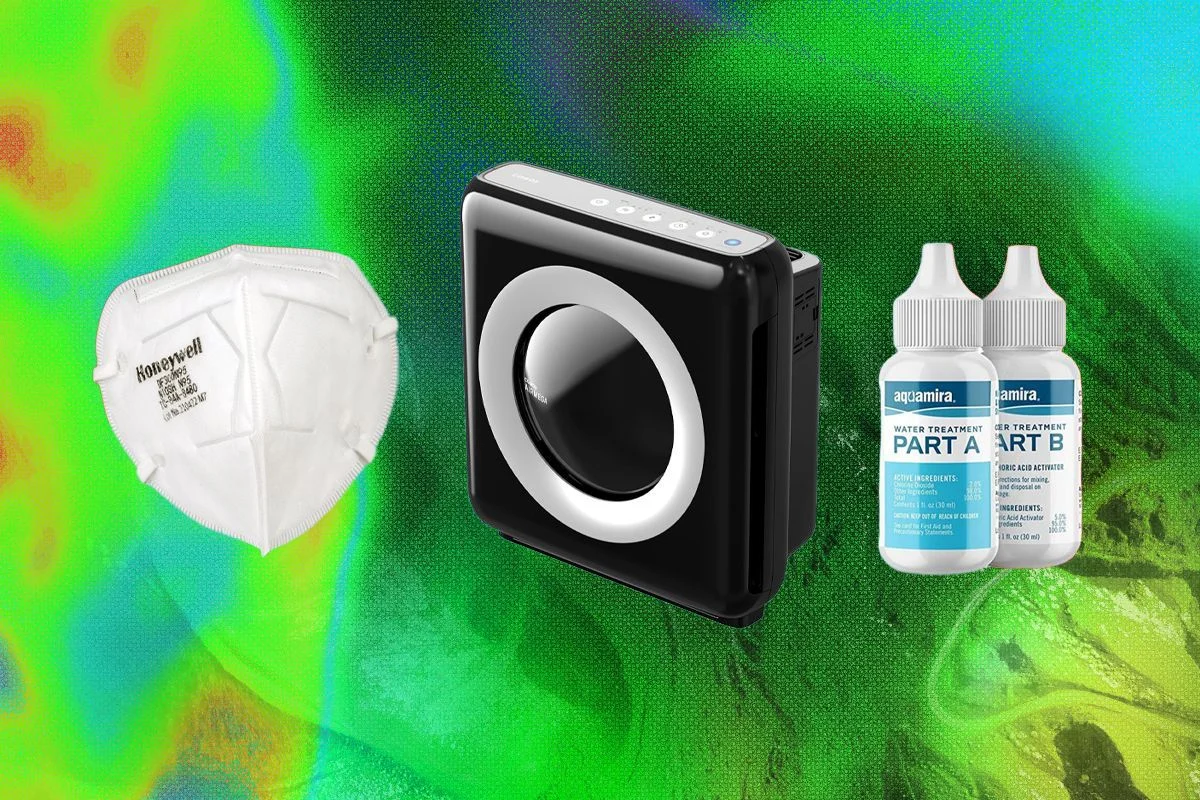
The landscape of disaster preparedness has shifted significantly in the mid-2020s, driven by a confluence of unpredictable political climates, systemic infrastructure vulnerabilities, and an increasingly volatile environment. As the 2026 wildfire season begins with an unprecedented intensity across the Western United States, sending plumes of smoke across the Midwest and into the Northeast, the necessity of a comprehensive emergency plan has transitioned from a niche interest to a fundamental requirement for household safety. Experts in disaster management emphasize that because crises—ranging from natural disasters like hurricanes and earthquakes to human-led failures in the power grid—rarely adhere to a schedule, the window for effective preparation closes the moment an emergency begins.
The Dual Architecture of Disaster Preparedness
Modern disaster response is categorized into two primary frameworks, according to Jonathan Sury, a senior staff associate at Columbia University’s National Center for Disaster Preparedness. The first is the "bug-out" scenario, necessitated by fast-moving threats such as wildfires or flash floods, where families must evacuate within minutes. The second is "sheltering in place," common during severe blizzards, earthquakes, or systemic utility failures, where the objective is to survive for several days or weeks without access to external resources like running water or the electrical grid.
Charlie Woodrum, the preparedness lead for the National Weather Service, notes that the loss of power and water often occurs simultaneously. "You have to think in that mindset of, ‘We could have power out for a couple of days, or up to even a week, and we also could lose water,’" Woodrum stated. This dual-threat reality dictates that an emergency kit must be modular—portable enough for a vehicle but robust enough to sustain a household during a prolonged isolation.

Essential Hydration and Water Purification Systems
Water remains the most critical component of any survival kit. The Federal Emergency Management Agency (FEMA) and the Environmental Protection Agency (EPA) recommend a baseline of one gallon of water per person per day. This allocation covers not only hydration but also basic sanitation and food preparation. For a family of four, a one-week supply requires 28 gallons, a volume that is difficult to transport in a standard vehicle during a rapid evacuation.
To bridge the gap between storage and mobility, experts recommend a multi-tiered purification strategy. For stationary sheltering, large containers can be supplemented by filling bathtubs ahead of a predicted storm. However, for mobile scenarios, chemical purifiers and mechanical filters are indispensable. Aquamira’s chlorine dioxide drops and Aquatabs are widely cited by reviewers for their ability to neutralize bacteria, viruses, and cysts. For mechanical filtration, the industry has moved toward durable, microplastic-free options. The Katadyn BeFree and the Clearly Filtered stainless steel bottle represent the current standard in portable filtration, allowing users to safely source water from lakes or rivers when tap water is compromised by boil-water notices or infrastructure damage.
Power Resilience and the Modern Electrical Grid
The fragility of the national power grid has made portable energy a cornerstone of 2026 preparedness. Lithium-ion technology has matured, providing high-capacity power stations that can run medical devices, communication tools, and small appliances. Jackery’s Explorer series remains a benchmark in this category, offering units that range from lightweight 300-watt-hour models to high-capacity 2000-plus-watt-hour behemoths capable of sustaining a household for days.
For those relying on fuel-based generators, safety protocols have become more stringent. The National Weather Service warns that gas-powered generators, such as those from Westinghouse, must never be operated indoors or within 20 feet of an enclosed space due to the risk of carbon monoxide poisoning. As a safer alternative for vehicle-based emergencies, portable jump-starters like the Wolfbox 4000A have become dual-purpose tools, capable of reviving a dead car battery dozens of times while also serving as a high-speed charging hub for mobile devices.

Air Quality Management Amidst Wildfire Escalation
A defining characteristic of the 2026 disaster season is the pervasive threat of wildfire smoke. Recent longitudinal studies have highlighted the severe health risks associated with PM 2.5—fine particulate matter that can enter the bloodstream and trigger strokes, cardiovascular events, and respiratory failure. Heidi Huber-Stearns of the University of Oregon emphasizes that air purification is no longer optional for residents in the Western or Northeastern U.S.
To combat this, households are encouraged to create a "clean air room" using high-efficiency particulate air (HEPA) purifiers like the Coway Airmega. In instances where commercial purifiers are sold out—a common occurrence during peak fire months—the EPA has validated the efficacy of DIY "Corsi-Rosenthal Boxes." These are constructed by taping MERV 13-rated furnace filters to a standard 20-inch box fan, such as those manufactured by Lasko. Supporting this hardware, indoor air quality monitors from IQAir or GoveeLife provide real-time data, allowing families to monitor PM 2.5 and CO2 levels to determine when filtration or masking with N95 respirators is necessary.
Nutritional Strategy and Non-Perishable Supplies
Nutritional preparedness in 2026 favors calorie-dense, shelf-stable options that require minimal preparation. While canned goods like beans and sardines are reliable, their weight makes them less ideal for "go bags." Dehydrated meal kits, such as those from Mountain House or Nutrient Survival, offer a 25-year shelf life and provide balanced nutrition with minimal weight.
Experts also suggest maintaining a portable cooking solution, such as a Coleman two-burner propane stove, to ensure that hot meals can be prepared even during a total electrical failure. Additionally, the role of a high-quality cooler, such as those from Pelican, has evolved. Beyond food preservation, coolers are now recognized as essential for maintaining the temperature of life-saving medications like insulin during prolonged outages.

Digital Security and Document Redundancy
A significant oversight in traditional preparedness is the neglect of "intangible assets." Jonathan Sury points out that the ability to rebuild after a disaster depends heavily on access to documentation. This includes property titles, insurance policies, medical records, and identification.
In an era of potential internet outages, relying solely on cloud storage is a risk. Redundancy via physical, encrypted storage is the recommended protocol. Ruggedized external SSDs, such as the OWC Envoy Pro Elektron, provide a waterproof and shockproof repository for a "digital go bag." For those requiring higher levels of privacy or security during transit, the use of Faraday bags—which block all electromagnetic signals—can prevent the tracking of mobile devices, while affordable "alt-phones" like the Motorola Moto G Stylus can serve as search-safe communication tools when crossing borders or navigating sensitive areas.
Advanced Wildfire Defense: Creating Defensible Space
For homeowners in high-risk zones, preparedness extends to the physical structure of the home. Amanda Stasiewicz, a wildfire expert at the University of Oregon, advocates for the "defensible space" model promoted by the Institute for Business and Home Safety. This involves a rigorous timeline of maintenance:
- Immediate Zone (0-5 feet): Removing all combustible materials, including mulch, woody vegetation, and cordwood, from the immediate perimeter of the home.
- Intermediate Zone (5-30 feet): Creating "firebreaks" using landscaping and tools like the McLeod—a specialized wildland firefighting tool that combines a rake and a hoe to scrape the ground clear of fuels.
- Extended Zone (30-100 feet): Thinning trees and removing "ladder fuels" that allow ground fires to climb into the canopy.
The Psychological Dimension: Preserving Memories
The final, and perhaps most overlooked, element of emergency preparation is the psychological impact of loss. Stasiewicz’s research indicates that disaster survivors often experience the deepest regret over the loss of items with emotional value—un-digitized photo albums, family heirlooms, or a child’s favorite toy.

"Our checklists talk about how to survive a fire," Stasiewicz noted, "but they don’t mention what’s going to help you rebuild emotionally." Experts now recommend including a "sentimental inventory" in emergency plans—a short list of irreplaceable items that can be grabbed in the final seconds before evacuation. For children, the inclusion of a familiar stuffed animal or a portable gaming console like the Nintendo Switch can provide a necessary sense of normalcy and distraction during the acute stress of displacement.
Chronology of a Proactive Response
To ensure maximum safety, disaster preparedness should follow a logical timeline:
- Phase 1 (Blue Skies): Assemble the physical kit, digitize documents, and establish a family communication plan with pre-arranged meeting points.
- Phase 2 (Watch/Warning): Monitor apps like Watch Duty for wildfires or the FEMA app for weather alerts. Charge all portable power banks and fill water containers.
- Phase 3 (Active Threat): Implement the "Ready, Set, Go" protocol. "Ready" is the initial preparation; "Set" involves packing the vehicle; "Go" is the immediate evacuation upon official orders.
By integrating robust hardware with digital redundancy and community-based awareness, households can navigate the complexities of the 2026 disaster landscape with a significantly higher probability of maintaining both physical safety and long-term resilience. Preparedness is no longer a static box in a closet; it is an active, evolving strategy for an unpredictable world.
