

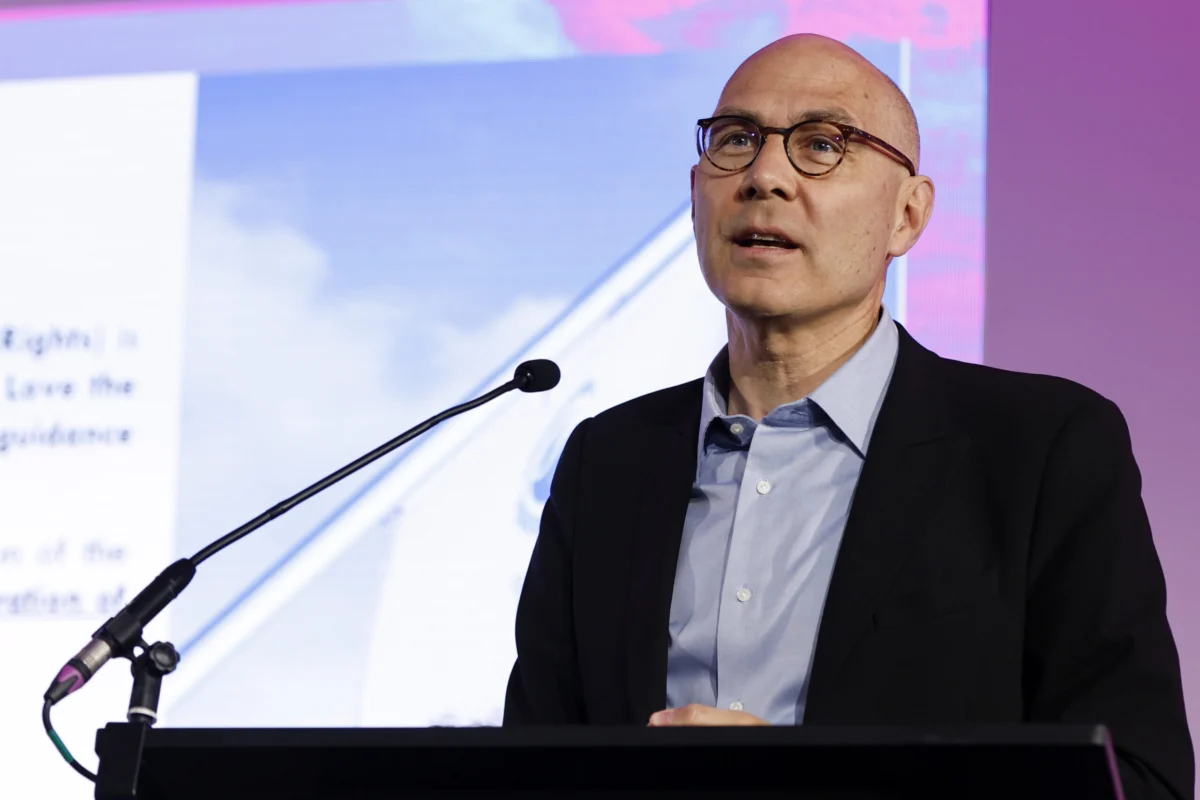
Volker Turk, the seasoned Austrian lawyer and diplomat, has been successfully re-elected to serve a second four-year term as the United Nations High Commissioner for Human Rights, marking a significant and unprecedented moment for the pivotal global office. The vote, held on Friday, saw UN member states endorse Turk’s continuation in the role with a substantial majority of 144 votes in favour, against 10 dissenting votes and 13 abstentions. This outcome ensures that Turk, whose initial term was set to conclude on October 11, will now lead the Office of the High Commissioner for Human Rights (OHCHR) until 2032, making him the first individual to complete two full four-year terms since the post’s inception in 1993. His re-election, however, arrives amidst considerable controversy and strong opposition from several key member states, most notably the United States and Israel, who have vehemently criticised his tenure and his outspoken stance on various global human rights issues, particularly concerning the conflict in Gaza.
The OHCHR, established by the UN General Assembly Resolution 48/141, serves as the principal UN entity responsible for promoting and protecting human rights worldwide. Its mandate includes responding to serious violations of human rights, undertaking preventive human rights action, providing technical assistance and advice, and coordinating human rights activities across the UN system. Since its creation, the role of High Commissioner has been one of the most challenging and politically sensitive within the international community. Previous High Commissioners, including notable figures like Mary Robinson, Navi Pillay, Zeid Ra’ad Al Hussein, and Michelle Bachelet, all served single terms or shorter periods, often citing the immense political pressures and the demanding nature of the position as factors. Turk’s success in securing a second term underscores both his resilience and the complex political landscape in which the OHCHR operates, particularly at a time of escalating global conflicts and widespread human rights concerns.
The Road to Re-election: Turk’s Tenure and Challenges
Volker Turk, an Austrian national, embarked on his journey as High Commissioner in October 2022, bringing with him a distinguished career spanning over three decades within the UN system. Prior to his appointment, he held various senior positions, most notably within the UN Refugee Agency (UNHCR), where he served as Assistant High Commissioner for Protection and later as Assistant Secretary-General for Strategic Coordination in the Executive Office of the UN Secretary-General. His extensive experience in humanitarian law, refugee protection, and human rights advocacy positioned him as a formidable candidate for the role, committed to upholding international legal frameworks and human dignity.
From the outset of his first term, Turk embraced a vocal and principled approach, consistently advocating for adherence to international human rights law and international humanitarian law. However, his tenure has been largely defined by the dramatic escalation of the Israel-Palestine conflict following the October 7, 2023, attacks by Hamas on southern Israel. In the aftermath, Turk emerged as one of the most prominent international voices condemning the unfolding humanitarian catastrophe in the Gaza Strip, as well as broader human rights abuses in the occupied Palestinian territory and attacks on Lebanon. He repeatedly urged Israel, as the occupying power, to comply with its obligations under international law, to ensure the protection of civilians, and to facilitate unimpeded humanitarian access to Gaza. He has also condemned the actions of Hamas, emphasizing the illegality of targeting civilians and taking hostages.
His criticisms have included denouncing what he described as Israel’s "genocidal war on Gaza," a grave accusation that aligns with assessments from leading human rights groups and some UN experts who have pointed to potential violations of the Genocide Convention. Turk has also highlighted a "shameful lack of accountability" for human rights abuses in the region, a stance that has inevitably drawn the ire of Israeli authorities and their closest allies. For instance, in a December 2023 statement, Turk expressed deep alarm over the "catastrophic human rights situation" in Gaza, citing reports of widespread destruction, displacement, and civilian casualties, and calling for an immediate ceasefire. His office has meticulously documented alleged violations by all parties, seeking to establish a factual basis for accountability.
A Divisive Vote: Opposition and Allegations
The vote to reappoint Turk, while overwhelmingly in his favour, exposed deep geopolitical fissures within the United Nations. The United States, Israel, Russia, North Korea, and six other nations cast dissenting votes, signaling a concerted effort to prevent his second term. This opposition was not merely symbolic; it was accompanied by fierce criticism of Turk’s leadership and the overall direction of the OHCHR under his guidance.
Israel’s Ministry of Foreign Affairs issued a particularly sharp rebuke, accusing Turk’s office of having "erased the atrocities of October 7," "misused funds," and "betrayed UN neutrality in favor of corrupt political radicalism." These allegations suggest a perception in Jerusalem that the OHCHR has failed to adequately acknowledge the scale and brutality of the Hamas attacks, and has instead adopted a biased stance against Israel. The claim of "erasing October 7" is particularly contentious, as Turk’s office has consistently condemned the attacks and called for accountability for the perpetrators, even as it has focused heavily on the disproportionate response and humanitarian crisis in Gaza. The Israeli government’s criticism also echoes broader discontent with UN bodies, including the Human Rights Council, which Israel frequently accuses of systemic bias.
The United States, Israel’s staunchest ally and primary arms supplier, also voiced strong disapproval, not only of Turk but also of the process leading to his re-election. Jeff Bartos, the US representative for UN Management and Reform, asserted that the UN human rights system had been "losing credibility for decades," and that Turk had "led it to its deathbed," with Friday’s vote effectively "kicking the bucket." Further criticism came from the US Department of State, which labeled the vote a "rushed" procedure and "another example of the UN’s inherent corruption and incompetence." The State Department went on to accuse Turk of having "turned a blind eye to real atrocities and instead pursued a radical ideological agenda." This procedural criticism also extended to UN Secretary-General Antonio Guterres, who initiated the reappointment process by sending letters to regional groups earlier this month, informing them of his intention to keep Turk in his post, followed by a relatively swift vote. Critics argued that this expedited timeline bypassed more thorough consultation or scrutiny.
The strong opposition from the US and Israel underscores the significant diplomatic pressure that the High Commissioner for Human Rights often faces. Both nations are powerful UN member states whose cooperation and financial contributions are crucial to the functioning of many UN agencies. Their criticism highlights a fundamental disagreement over the interpretation and application of human rights principles, particularly in the context of armed conflict and national security.
Statements of Support and Turk’s Resolve
Despite the vociferous opposition, Volker Turk’s re-election was met with widespread support from a broad coalition of member states and human rights advocates. Following the vote, Turk expressed his profound gratitude for the trust placed in him. In a social media post, he affirmed his unwavering commitment to his mandate: "Human rights are the antidote to today’s turbulence and defeatism. I will give my all for the rights of everyone, everywhere." This statement reflects his continued belief in the transformative power of human rights principles, even in the face of profound global challenges and political pushback.
The European Union’s delegation at the UN was among the first to welcome Turk’s reappointment, stating its eagerness to continue working collaboratively with his office to "promote and protect human rights worldwide." This endorsement from a significant bloc of democratic nations underscores a broad international consensus on the importance of an independent and robust OHCHR. Numerous non-governmental organizations (NGOs) and civil society groups, which often rely on the OHCHR’s reports and advocacy, also likely welcomed the decision, viewing Turk as a steadfast voice for human rights at a critical juncture. His willingness to speak truth to power, even when it means confronting powerful states, has endeared him to many who believe in the UN’s foundational mission to uphold universal human rights.
Implications for Global Human Rights Advocacy
Volker Turk’s historic second term carries significant implications for the future of the OHCHR and the broader landscape of global human rights advocacy.
Firstly, his re-election sends a powerful message about the independence and resilience of the High Commissioner’s office. In an era marked by increasing geopolitical polarization and a rise in authoritarianism, the ability of the UN’s chief human rights official to secure a second term despite strong opposition from powerful states demonstrates a collective will among a majority of UN members to preserve the autonomy of the office. It suggests a recognition that the High Commissioner must be free to speak out on human rights violations without fear of political reprisal or dismissal. This precedent could embolden future High Commissioners to maintain principled stances, even when those positions are unpopular with certain powerful actors.
Secondly, the challenges Turk faces in his second term are formidable. The ongoing conflict in Gaza will undoubtedly remain a central focus, requiring continued monitoring, reporting, and advocacy for accountability. The accusations of genocide and other grave violations will necessitate a sustained and rigorous approach from the OHCHR, which will likely continue to draw criticism from Israel and its allies. Beyond the Middle East, Turk will also contend with a multitude of other pressing human rights crises, including protracted conflicts in Sudan, Ukraine, Myanmar, and the Democratic Republic of Congo, as well as global challenges such as climate change’s human rights impacts, rising xenophobia, and democratic backsliding. His mandate will require balancing these diverse priorities while navigating complex political dynamics.
Thirdly, the strained relationship with the United States and Israel could pose practical challenges for the OHCHR. While Turk’s re-election demonstrates broad support, the sustained opposition from these key member states could affect funding, diplomatic cooperation, and the ability to influence policy in certain contexts. The US, as a major financial contributor to the UN, holds significant leverage, and its vocal disapproval could translate into difficulties for the OHCHR in securing resources or engaging in dialogue with specific governments. However, the strong majority vote also indicates that many nations prioritize the principled voice of the High Commissioner over the objections of a few, suggesting that the OHCHR can still operate effectively with diversified support.
Finally, Turk’s second term reinforces the critical role of international law and human rights principles in a fragmented world. His consistent emphasis on international humanitarian law and human rights law serves as a reminder that these frameworks are not merely aspirational but are legally binding obligations on all states. In a time when these laws are frequently challenged or disregarded, the OHCHR’s steadfast advocacy becomes even more crucial in holding actors accountable and preventing further atrocities. His tenure will continue to test the international community’s commitment to these universal values and its capacity to act collectively in their defense.
As Volker Turk embarks on his historic second term, the global human rights landscape remains fraught with peril and promise. His re-election, a testament to his unwavering commitment and the broad support for his mandate, signals a critical period for the OHCHR. The coming years will undoubtedly see him continue to navigate a complex web of geopolitical tensions, humanitarian crises, and fundamental challenges to human dignity, striving to uphold the rights of everyone, everywhere, as the world watches closely.
