

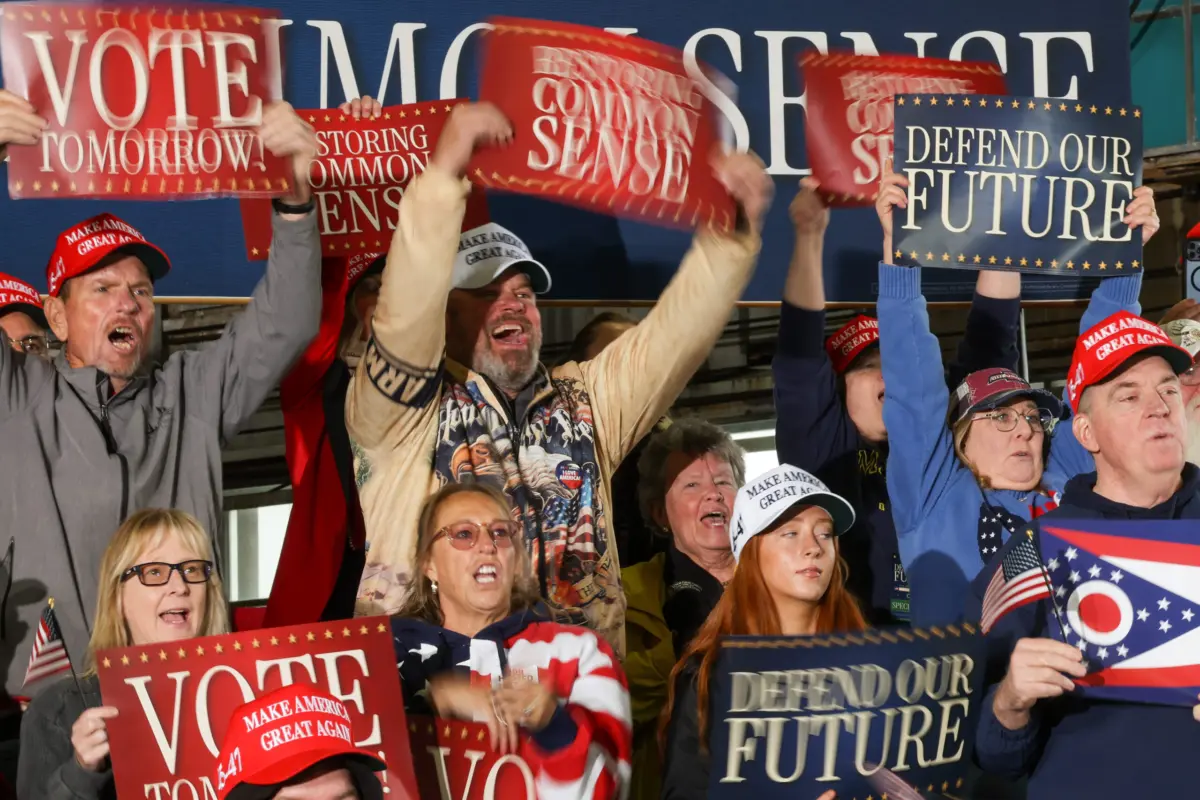
Americans are poised to cast their ballots in the critical US midterm elections on Tuesday, November 3, 2026, with the nation’s economic health, the escalating cost of living, and immigration emerging as the foremost concerns shaping the electoral landscape. While a broad consensus exists across the political spectrum regarding the strain of rising expenses, recent comprehensive surveys reveal stark differences in how Democrats and Republicans perceive the overall state of the economy, evaluate President Donald Trump’s second term, and prioritize other pressing national issues. The outcome of these elections will not only determine the balance of power in Congress but also set the tone for the remainder of President Trump’s administration, influencing policy directions and global standing.
The Economic Undercurrent: A Nation Dissatisfied
The pervasive sentiment of economic dissatisfaction is a dominant theme heading into Election Day. An NBC News poll released just days before the election, on Sunday, November 1, highlighted a profound discontent, with a staggering 75 percent of respondents expressing dissatisfaction with the current state of the US economy. This broad malaise extends to personal finances, as 51 percent of those surveyed reported dissatisfaction with their own financial situation. This marks a significant milestone, being the first time in 30 years of NBC polling that dissatisfaction with personal finances has outweighed satisfaction, underscoring the widespread financial anxieties gripping American households.
Further corroborating these findings, an October 14 Fox News poll indicated that 74 percent of registered voters rated the economy negatively, with 60 percent identifying the cost of living as their most significant economic concern. These figures paint a clear picture: the economy is not merely an issue but the issue, casting a long shadow over the political discourse and campaign strategies of both major parties.
Background and Context: A Referendum on Trump’s Second Term
Midterm elections traditionally serve as a referendum on the incumbent president and their party’s performance, and the 2026 cycle is no exception. President Donald Trump, having secured a second term, faces an electorate grappling with complex domestic challenges and a volatile international environment. His administration’s economic policies, including significant global tariffs implemented in his previous term and continued in this one, have been a subject of intense debate. Furthermore, the geopolitical landscape, notably the "US-Israel war on Iran" as referenced by former Democratic congressional staffer Eric Ham, has added layers of complexity, impacting global supply chains and energy prices, which inevitably trickle down to American consumers.
The political climate leading into these midterms has been characterized by deep ideological fissures. Major legislative battles over healthcare reform, infrastructure spending, and environmental regulations have often resulted in gridlock, fueling voter frustration. The perceived effectiveness of governance and the ability of the administration to address tangible concerns like inflation and job security are directly on trial. For Democrats, the elections represent an opportunity to regain control of one or both chambers of Congress, potentially thwarting the President’s legislative agenda. For Republicans, it’s a fight to maintain or expand their majorities, thereby affirming public support for President Trump’s direction.
Chronology of Concerns: Tracking Voter Priorities
Throughout 2026, a consistent pattern emerged in polling data, illustrating the public’s evolving priorities leading up to the midterms:
- Late September/Early October: A Pew Research Centre survey, conducted between September 28 and October 4, established the economy as the undisputed top issue. Eighty-four percent of registered voters deemed it "very important" to their midterm vote. While both parties prioritized it (82% of Republicans, 88% of Democrats), distinct partisan divergences began to appear on other issues.
- Mid-September: The KFF (Kaiser Family Foundation) survey, from September 16 to 21, specifically delved into healthcare costs, finding that 42 percent of voters trusted Democrats more to handle them, compared to 22 percent favoring Republicans. On the broader cost of living, Democrats also held an advantage (39% to 25%).
- Mid-October: The NPR/PBS News/Marist poll, conducted October 19-20, highlighted personal financial deterioration, with 38 percent of likely voters reporting their finances had worsened over the past year. Crucially, 51 percent of Democratic likely voters reported deterioration, compared to 21 percent of Republicans, indicating a significant partisan gap in perceived personal economic well-being.
- Late October/Early November: The final pre-election polls, including the NBC News poll (October 28-30, published November 1) and the Reuters/Ipsos survey (October 22-26), reaffirmed the economic focus and began to show a slight preference for Democratic candidates in congressional races, signaling a potential shift in the political tides.
Divergent Priorities: A Deep Dive into Partisan Divides
While the economy serves as a shared foundation of concern, the specific issues that energize and mobilize each party’s base reveal a deeply fractured political landscape.
Economic Perceptions and Personal Finances:
Despite shared anxieties about rising costs, Republicans and Democrats hold fundamentally different views on the overall economic situation. An October Pew Research survey revealed that 36 percent of Republicans rated the US economy as "excellent" or "good," a stark contrast to just 9 percent of Democrats and Democrat-leaning voters. This partisan lens filters perceptions of economic reality, even as both groups acknowledge the pinch of inflation.
When it comes to the cost of essential goods and services, the concern is universal but with varying intensity:
- Food and Consumer Prices: Eighty-two percent of Democrats and Democratic leaners expressed concern, compared with 62 percent of Republicans and Republican leaners.
- Healthcare Costs: Eighty percent of Democrats prioritized this, versus 57 percent of Republicans.
- Petrol and Energy Prices: Eighty-one percent of Democrats were worried, compared to 65 percent of Republicans.
These figures underscore that while the cost of living impacts everyone, Democrats are demonstrably more likely to express profound negative feelings about current economic conditions and their impact on daily life. This sentiment is further amplified by the NPR/PBS News/Marist poll, where a striking 51 percent of Democratic likely voters reported their finances had deteriorated, compared to 21 percent of Republicans. The Reuters/Ipsos survey also found that 71 percent of Democrats and 57 percent of Republicans felt their incomes had not kept pace with rising prices.
Other Key Issues:
Beyond the economy, the Pew Research Centre survey highlighted significant partisan gaps in the importance of other issues:
- Future of Democracy: This was a paramount concern for 85 percent of Democratic Party supporters, contrasting sharply with 69 percent of Republicans. This issue often encompasses concerns about electoral integrity, political polarization, and the functioning of governmental institutions.
- Healthcare: Eighty-two percent of Democrats considered healthcare "very important," compared with only 53 percent of Republicans. This includes debates over access, affordability, and the role of government in healthcare provision.
- Immigration: Republican supporters were significantly more concerned about immigration, with 72 percent deeming it "very important," while 53 percent of Democrats shared this view. This often involves discussions around border security, legal immigration pathways, and the economic impact of immigrants.
- Violent Crime: This issue resonated more strongly with Republican supporters (64 percent considering it "very important") than with Democrats (37 percent). Debates here often center on law enforcement funding, sentencing reform, and the root causes of crime.
Interestingly, the Pew Research Center also noted a shift in priorities compared to previous cycles. Abortion and gun policy, while still important, were less central to Democratic respondents in 2026 than they were in 2022. Similarly, among Republican voters, education policy and energy policy were less important than they were four years prior, suggesting a dynamic evolution of the political agenda.
Assessing the Administration: Views on President Trump’s Second Term
Views on President Trump and his economic policies remain deeply divided along predictable party lines, reflecting the broader partisan polarization that defines American politics.
In the Pew Research Centre survey, an overwhelming 91 percent of Democratic respondents and those leaning Democratic believed that Trump’s economic policies had made things worse for the country. This sentiment aligns with their generally negative assessment of the economy and their personal financial struggles.
Among Republican supporters, the picture was more nuanced but still revealing: 39 percent believed his policies had improved the economy, 35 percent thought they had made conditions worse, and 25 percent felt they had little effect. This indicates that even within his own party, there isn’t universal acclaim for his economic stewardship, though a plurality still sees a positive impact.
The NBC News poll further illustrated this divide regarding his overall job performance. Forty percent of registered-voter respondents approved of Trump’s overall job performance, while a significant 60 percent disapproved. This approval rating is consistent with historical patterns for presidents facing challenging midterm environments, suggesting that a substantial portion of the electorate remains unconvinced by his leadership in his second term.
Eric Ham, a former Democratic congressional staffer and Senate national security adviser, provided a critical perspective, linking the administration’s policies to the financial pressures on American households. Ham argued that "Americans are paying more not just in terms of self-inflicted wounds that President Donald Trump implemented through tariffs, but also if you look at this war of choice," referring to the "US-Israel war on Iran." This analysis suggests that both domestic policy choices and foreign policy engagements are perceived by some as direct contributors to the cost of living crisis, impacting everyday Americans.
Voter Engagement and Enthusiasm: The Crucial Turnout Factor
In an election cycle dominated by intense partisan feeling, voter enthusiasm and turnout are paramount. The final days of campaigning are often less about persuading undecided voters and more about mobilizing the base, a point emphasized by John Fury, a former Republican congressional staffer: "This is not a persuasion election. This is a get-out-the-base election."
Polling data indicates that Democratic voters reported higher enthusiasm about participating in these elections. The Marist poll found that 91 percent of likely Democratic voters were "enthusiastic" or "very enthusiastic," compared with 86 percent of Republicans and 76 percent of Independents. This five-point lead for Democrats in enthusiasm could be a critical factor in close races, potentially offsetting any structural advantages Republicans might hold in certain districts.
The KFF survey reinforced this, with Democratic candidate supporters being 25 percentage points more likely than Republican supporters to describe themselves as "more motivated" than usual to vote (63 percent versus 38 percent). This suggests a heightened sense of urgency and purpose among Democratic voters, possibly driven by concerns over issues like the future of democracy, healthcare, and their personal financial situations.
Despite these partisan differences in enthusiasm, overall interest in the elections remains remarkably high. The November 1 NBC News poll reported that 70 percent of registered voters rated their interest at nine or 10 on a 10-point scale, indicating that a significant portion of the electorate, regardless of party affiliation, recognizes the importance of these midterms.
The Electoral Outlook: Congressional Control and Voter Preferences
As Election Day approaches, the ultimate question revolves around which party will control Congress. Recent surveys conducted in the final weeks before the election offered insights into voter preferences for congressional control, though they are not predictive of individual race outcomes.
An NBC poll conducted from October 28-30 and published on November 1 suggested a slight preference for Democratic control of Congress. Fifty-two percent of registered voters preferred Democratic control, compared with 45 percent who favored Republican control. This seven-point margin, if it holds true on Election Day, could signify a significant shift in legislative power.
Similarly, a Reuters/Ipsos poll conducted from October 22 to October 26 indicated that 53 percent of likely voters would vote for or lean towards the Democratic candidates in their district, while 44 percent supported Republicans. This nine-point lead suggests a broader national tilt towards the Democratic Party in generic ballot preferences.
It is crucial to note that these surveys measure general voting sentiment and preferences for party control of Congress; they do not reflect the results of individual races, which are often influenced by local factors, candidate specifics, and district demographics. However, they do provide a macro-level indication of the national mood and the potential direction of the legislative branch. A Democratic-controlled Congress could lead to significant legislative challenges for President Trump’s remaining term, potentially blocking initiatives and pushing for investigations, leading to increased legislative gridlock. Conversely, a continued Republican majority would empower the administration to pursue its agenda with fewer legislative hurdles.
Broader Implications and The Road Ahead
The 2026 midterm elections are more than just a battle for congressional seats; they are a critical barometer of the nation’s political temperature and a prelude to the 2028 presidential cycle. The deep partisan divides on key issues, coupled with widespread economic dissatisfaction, highlight a nation at a crossroads.
Should Democrats gain control of one or both chambers, it would fundamentally alter the dynamics in Washington. President Trump would likely face increased scrutiny, legislative roadblocks, and potentially a more aggressive oversight agenda. This could lead to a period of heightened political confrontation, making it challenging to pass significant legislation and potentially impacting the global perception of American political stability.
Conversely, if Republicans maintain or expand their majorities, it would be interpreted as an endorsement of President Trump’s agenda and leadership. This would provide the administration with greater leverage to pursue its policy objectives, from economic reforms to foreign policy initiatives, potentially solidifying the conservative direction of the country.
Regardless of the outcome, the challenges facing the winning party or parties remain immense. Addressing the persistent concerns about the cost of living, navigating complex geopolitical conflicts, and bridging the profound ideological gaps will require extraordinary leadership and a willingness to find common ground. The enthusiasm among voters, particularly Democrats, suggests a highly engaged electorate, signaling that the political landscape will remain dynamic and fiercely contested. As Americans head to the polls, the focus is squarely on Tuesday’s vote, which will undoubtedly shape the nation’s trajectory for the coming years.
