

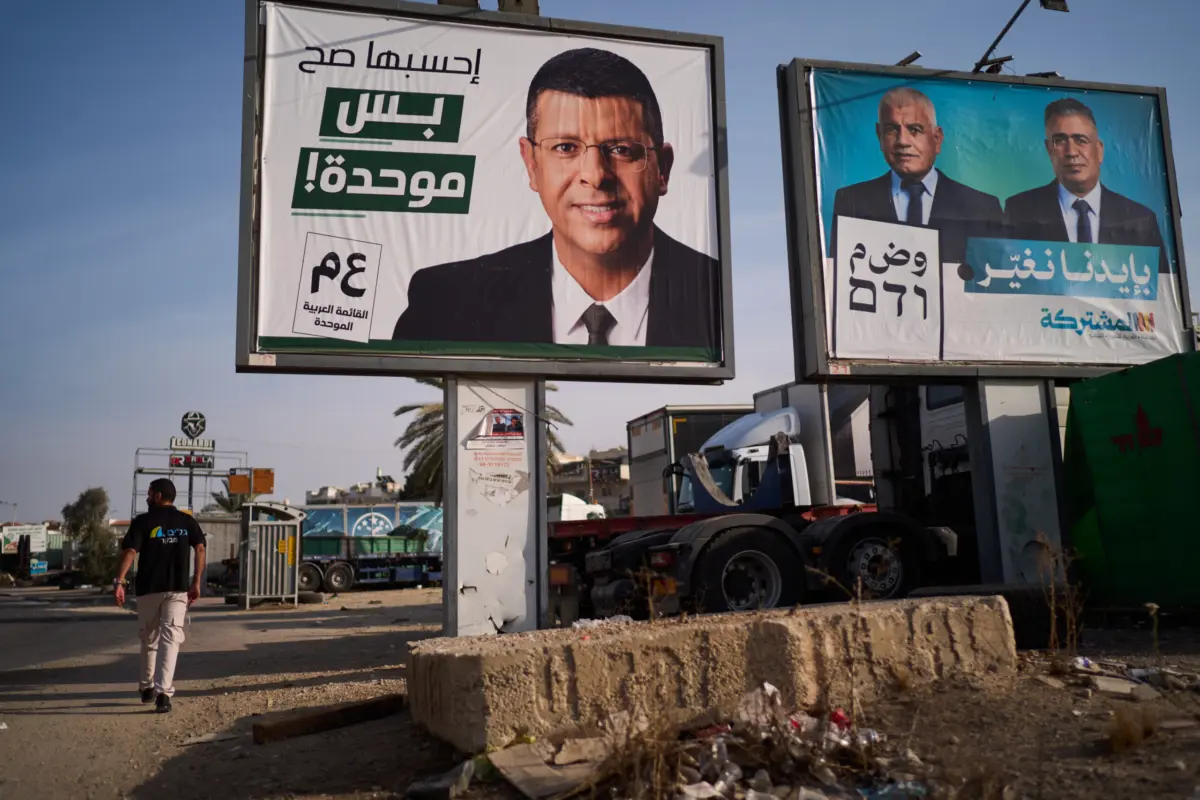
In a significant political development following last week’s general elections, Israel’s Arab parties, having secured a record-breaking 19 seats in the 120-member Knesset, are set to endorse opposition leader Gadi Eisenkot’s bloc. This move substantially diminishes Israeli Prime Minister Benjamin Netanyahu’s prospects of forming another government, thrusting the nation into a complex and potentially unprecedented era of coalition politics. The decision by the two main groups representing Palestinian citizens of Israel to back the "Change" opposition bloc could avert another cycle of political deadlock and a fifth election in under five years, yet it simultaneously ushers in a new set of challenges for Eisenkot from the Israeli right.
The Shifting Political Landscape Post-Election
The recent general elections concluded with no clear victor, leaving both major blocs short of the 61 seats required for a parliamentary majority. Prime Minister Netanyahu’s coalition of Jewish conservative and far-right parties garnered 53 seats, while the opposition bloc, led by former military chief Gadi Eisenkot of the Yashar party, secured 48 seats. The decisive factor in this tightly contested race has emerged as the Arab-led Joint List and Ra’am parties, whose unprecedented electoral success, driven by a near-doubling of Arab voter turnout to approximately 80 percent, has positioned them as kingmakers. Ra’am, led by Mansour Abbas, won eight seats, while the Joint List, under Yousef Jabareen, secured 11.
This outcome represents a profound shift. Historically, Arab parties have been marginalized in Israeli politics, rarely included in governing coalitions and often viewed with suspicion by mainstream Zionist parties. Their collective strength of 19 seats now makes their support indispensable for either bloc to achieve a majority, or at least to prevent the formation of a government by the opposing side. The "Change" opposition bloc has already committed to not joining forces with Netanyahu, citing his ongoing corruption trial and what they describe as security failures that culminated in the devastating October 7 Hamas attacks.
Netanyahu’s Declining Fortunes and Allegations of Fraud
Benjamin Netanyahu, Israel’s longest-serving prime minister, finds his political future hanging by a thread. His Likud party and its allies fell short of a majority, largely due to a loss of public confidence stemming from a multifaceted corruption trial and a pervasive sense of insecurity following the October 7 attacks. These attacks, which saw unprecedented breaches of Israel’s southern border and significant casualties, have led to widespread criticism of Netanyahu’s government, particularly regarding its intelligence and defense preparedness.
In response to his weakening position, Netanyahu has repeatedly, and without substantiated evidence, accused Arab parties of committing electoral fraud with foreign backing. He and the Likud party have pointed to a handful of cases, including the arrests of three political activists suspected of bribing voters before polls opened, allegedly with connections to the Ra’am party – an accusation Ra’am vehemently denies. However, these claims have largely failed to gain traction. An Israeli court recently released one of the suspects, and another was placed under house arrest, casting doubt on the severity and scope of the alleged infractions.
Crucially, Israeli election officials have emphatically stated that the integrity of the vote remains uncompromised. Noam Sohlberg, head of the Central Elections Committee, affirmed that "even if the suspicions are substantiated, this would not undermine the integrity of the electoral process or the election results as a whole." Videos circulating on Sunday, showing Sohlberg alongside Israel’s attorney general and the head of the Shin Bet intelligence service, underscored a unified front among key state institutions to uphold the democratic process, effectively neutralizing Netanyahu’s attempts to delegitimize the election outcome. Netanyahu and Likud have also resorted to inflammatory rhetoric, suggesting that any cooperation between Zionist parties and the Arab bloc would be "dangerous to Israel" and tantamount to treason, a sentiment echoed by some right-wing Israelis who protested outside Eisenkot’s residence.
Eisenkot’s Precarious Path to Power: The Arab Conundrum
While the Arab parties’ support offers a lifeline to Gadi Eisenkot, it simultaneously presents him with a significant political tightrope walk. Accepting support from Arab parties – whether as part of a formal ruling coalition or as outside parliamentary backing – poses a substantial challenge for Eisenkot from the Israeli right. This comes at a time when political discourse, often fueled by figures like Netanyahu, has openly employed anti-Arab racism to appeal to Jewish voters, particularly since the October 7 attacks.
The Israeli minority Arab population, constituting roughly a fifth of the nation’s citizens, has long experienced political marginalization. Post-October 7, this marginalization has intensified, with at least two former Palestinian legislators and one current Knesset member briefly arrested for comments or actions perceived as critical of Israel’s military operations in Gaza and its occupation of the West Bank. This environment makes any alliance with Arab parties a politically sensitive issue for a mainstream Zionist leader like Eisenkot.

Despite earlier pronouncements from Eisenkot and other opposition leaders that they would not form a coalition with Arab parties – a stance aimed at appealing to a broader Jewish Israeli electorate – the current arithmetic necessitates a reconsideration. Mansour Abbas of Ra’am has long expressed willingness to join an Eisenkot government if his party is granted the internal security portfolio, a significant demand that reflects their focus on domestic issues affecting Arab citizens. Ra’am’s deputy being a Jewish lawmaker is also seen as a strategic signal of their openness to partnership.
Yousef Jabareen of the Joint List, while stating his party has no intention of formally joining an Eisenkot government, affirmed their readiness to cooperate with the "Change" bloc to remove Netanyahu and extremist figures like National Security Minister Itamar Ben-Gvir and Finance Minister Bezalel Smotrich. Jabareen clarified that the Joint List would vote with an Eisenkot-led government in the Knesset, potentially enabling the formation of a "minority government" with fewer than 61 seats. Such a government would rely on external support from the Arab parties to pass legislation and survive no-confidence motions, a precarious but not unprecedented arrangement in Israeli politics.
However, Eisenkot’s bloc has previously laid down conditions for any coalition with Arab parties, including acceptance of Israel as a Jewish state, support for army conscription, and denunciation of Hamas as a terror group. Jabareen, in response, highlighted the fundamental ideological chasm, stating that "as long as the occupation of our people in the West Bank continues, we cannot be part of a government," suggesting that these conditions are more relevant for full coalition partners, not for external supporters. This indicates that while cooperation to oust Netanyahu is plausible, deeper, long-term political alignment remains fraught with ideological hurdles.
A Brief History of Arab Political Representation and Coalition Attempts
The political engagement of Palestinian citizens of Israel has a complex history marked by fluctuating participation and often limited influence. Since the establishment of Israel in 1948, Arab parties have consistently held seats in the Knesset, but their role has predominantly been that of opposition, advocating for the rights of the Arab minority and often raising concerns about Israeli policies towards Palestinians in the West Bank and Gaza.
Prior to the recent elections, the 2021 election marked a significant milestone when Ra’am, under Mansour Abbas, made history by becoming the first independent Arab party to join a governing coalition. This experiment, part of a broad "change government" that included parties from across the political spectrum, lasted less than two years. Its collapse underscored the inherent difficulties of bridging deep ideological divides and managing the expectations of diverse constituencies within a single government. Ra’am’s participation was controversial, both among some Arab voters who viewed it as legitimizing the occupation and among some Jewish Israelis who struggled to accept an Arab party in government. This precedent, though short-lived, demonstrated the potential for Arab parties to influence national policy, particularly on civil rights and socio-economic issues affecting their communities. The current situation, with 19 seats for Arab parties, represents a new peak of their collective parliamentary strength, amplifying their potential impact.
The Road Ahead: Certification, Consultations, and Coalition Building
The immediate future of Israeli politics is set to unfold over the coming weeks, following a defined parliamentary process:
- Election Certification (Wednesday): The official results of the elections are slated for certification on Wednesday. This formalizes the seat allocation and sets the stage for the next steps.
- Presidential Consultations: Following certification, President Isaac Herzog will begin a series of consultations with the leaders of all 11 parties elected to parliament. These meetings, which will be livestreamed, aim to ascertain each party’s recommendation for the next prime minister. As leaders of the two largest blocs, Netanyahu and Eisenkot are the most probable candidates to receive the presidential nod. Given the Arab parties’ declared intention to back Eisenkot, he is likely to emerge as the frontrunner in these consultations.
- Mandate to Form a Government: The President will then entrust the candidate he deems most likely to succeed with the mandate to form a coalition government. This individual will be given 28 days to assemble a majority coalition.
- Extension and Alternative Mandate: If the initial 28-day period proves insufficient, a one-time extension of 14 days can be granted. Should this extended period also fail to yield a government, the President has the option to ask another candidate to attempt coalition formation, or potentially even refer the mandate back to the Knesset for its members to propose a candidate.
- Knesset Swearing-in (November 10): Regardless of the progress in coalition talks, all newly elected parliamentarians are scheduled to be sworn in on November 10, marking the formal commencement of the new Knesset’s term.
While the current political climate strongly favors an Eisenkot-led attempt, other scenarios, though less likely, cannot be entirely dismissed. Netanyahu could still try to poach at least eight members from the opposition bloc to bolster his own numbers. Indeed, the Yashar party claimed in an X post that several of its members had already received calls from Likud, which it characterized as being in a state of "hysteria." Another remote possibility is the formation of a unity government involving both Netanyahu and the opposition bloc, though the "Change" bloc’s firm stance against Netanyahu makes this highly improbable at present.
Implications for Israeli Society and Governance
The potential formation of a government reliant on Arab party support carries profound implications for Israeli society, governance, and its democratic fabric.
- Political Stability: A minority government, by its nature, is inherently less stable. It would constantly require delicate negotiations and compromises to pass legislation and survive no-confidence votes, potentially leading to frequent political crises and a renewed risk of early elections.
- Increased Polarization: The fierce rhetoric employed by Netanyahu and the right-wing against an alliance with Arab parties underscores the deep societal divisions. Such a government could exacerbate these tensions, fueling anti-Arab sentiment among some Jewish Israelis and potentially leading to further protests and social unrest.
- Empowerment of Arab Citizens: For Palestinian citizens of Israel, this moment represents a potential, albeit cautious, step towards greater political inclusion and influence. While direct participation in a coalition remains complex, their ability to shape the government from the outside, and to push for policies addressing their community’s needs, marks a significant shift from historical marginalization.
- Redefining "Zionist" Politics: The necessity for a mainstream Zionist party to rely on non-Zionist Arab parties challenges traditional definitions of Israeli politics. It forces a re-evaluation of what constitutes a legitimate governing coalition and could, in the long term, lead to a more nuanced understanding of shared national interests, even amidst deep ideological differences on core issues like the Israeli-Palestinian conflict.
- Impact on the Israeli-Palestinian Conflict: While Arab parties have clear positions on the occupation and Palestinian rights, their primary focus in any domestic political arrangement would likely be on improving the lives of Arab citizens within Israel. However, their presence, even as external supporters, could subtly shift the discourse within the Knesset, potentially bringing Palestinian perspectives more directly into legislative debates.
- Challenges for Eisenkot’s Leadership: Eisenkot, a former military chief, will need to demonstrate exceptional political acumen to navigate the demands of his diverse bloc, placate right-wing elements within his potential support base, and manage the expectations of the Arab parties, all while facing relentless opposition from Netanyahu’s Likud.
As Israel braces for the next phase of its political drama, the unprecedented strength and strategic positioning of its Arab parties have unequivocally transformed the landscape. The coming weeks will determine whether this moment marks a fleeting realignment or the beginning of a more inclusive, albeit turbulent, chapter in Israeli governance.
