

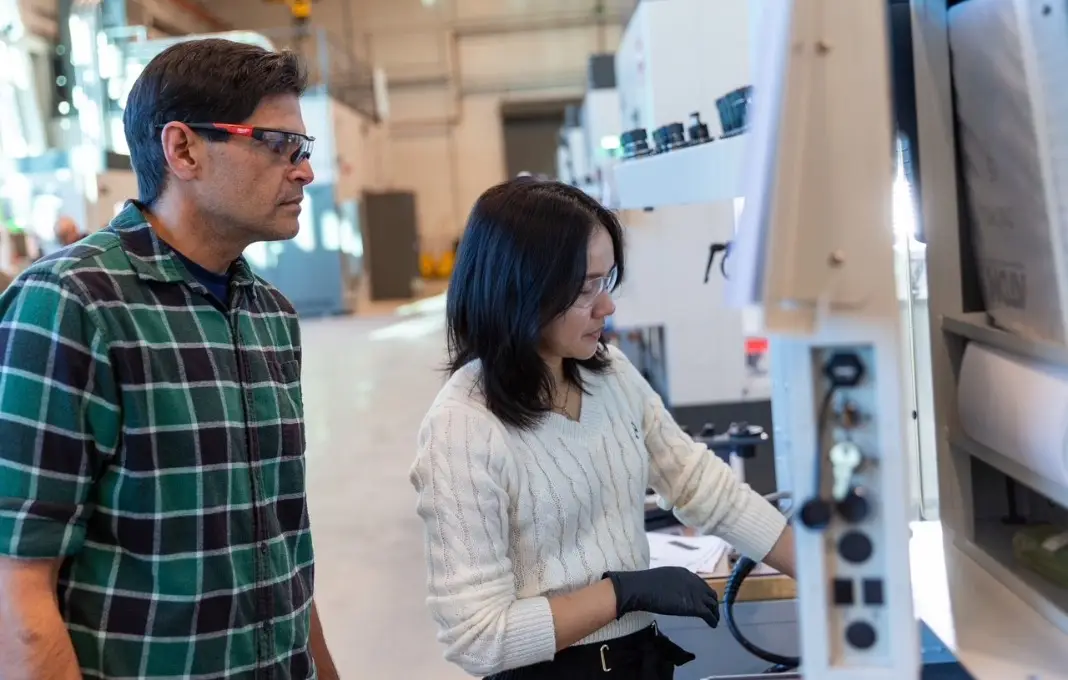
More than 200 miles from the nearest ocean, the city of Danville may seem an unlikely epicenter for maritime expertise. However, this specialization is the culmination of a strategic, two-decade-long investment in building a robust skilled trade and manufacturing workforce. This forward-thinking approach is a cornerstone of Virginia’s broader economic development strategy, particularly in its ability to cultivate specialized talent pools capable of supporting critical aerospace and defense projects through innovative workforce development pipelines.
The Genesis of Accelerated Defense Manufacturing Training
The journey began over 20 years ago, when the region recognized the need to proactively develop infrastructure and training programs to attract and sustain industries requiring specialized skills. This long-term vision has now borne fruit, most notably through the Accelerated Training in Defense Manufacturing (ATDM) program, a collaborative effort spearheaded by the Institute for Advanced Learning and Research (IALR) in Danville, with significant federal backing. The ATDM program was conceived to address the U.S. Navy’s pressing and often unmet workforce demands.
The pilot phase of ATDM was meticulously designed to equip trainees with foundational skills essential for immediate contribution to defense manufacturing companies. The intensive 16-week program, encompassing over 600 hours of focused instruction, aims to enable graduates to "walk into a defense manufacturing company and contribute on Day One." Graduates emerge with multiple industry-recognized certifications, underscoring the program’s efficacy in rapidly producing job-ready professionals.
"Our goal is to reduce the time to talent," stated Telly Tucker, President of IALR. This sentiment is echoed by industry partners who have witnessed the program’s impact. "Companies have told us we’ve saved them as much as two years [in training]," Tucker added, highlighting the program’s significant return on investment in terms of accelerated onboarding and reduced training expenditures for employers.
The ATDM program has ambitious scalability targets, aiming to matriculate up to 1,000 students annually. Beyond its immediate impact in Danville, the program is positioned as a replicable model for similar initiatives across the nation, designed to bolster the Navy’s overall workforce capacity and ensure the continued readiness of the defense industrial base.
Hampton Roads: A National Hub for Maritime Workforce Development
Complementing the ATDM program’s focus on advanced manufacturing, the Hampton Roads region in Norfolk has emerged as a critical nexus for maritime workforce coordination. The Hampton Roads Workforce Council (HRWC) plays a pivotal role in orchestrating these efforts through the Hampton Roads Maritime Training System (HRMTS). This comprehensive system is instrumental in converging diverse skillsets to meet the burgeoning demand for defense asset production.
Shawn Avery, President and CEO of the HRWC, describes Hampton Roads as "the nation’s military metro," a region boasting the highest concentration of shipbuilding and ship repair facilities in the country, including the prominent Newport News Shipbuilding and numerous other repair yards. This strategic geographical advantage, coupled with a deep-seated maritime heritage, positions Hampton Roads as a natural leader in this sector.
With substantial investment and support from the Navy’s Submarine Industrial Base (SIB) Program Office and other federal agencies, the HRMTS acts as a vital conduit, connecting trainees from a spectrum of regional programs, including IALR’s ATDM initiative, to crucial jobs within the defense sector. The HRMTS collaborates closely with the region’s three community colleges—Tidewater, Virginia Peninsula, and Paul D. Camp—to deliver both credit and non-credit maritime training programs.
"We’re five years into this and producing about 5,000 to 6,000 people per year in this effort," Avery reported. He further outlined an aggressive expansion plan: "Within the next two to three years, we will have the capacity to produce up to 10,000 people per year in the maritime industrial base here in Hampton Roads." This exponential growth projection underscores the region’s commitment to meeting the escalating needs of the defense industry.
Addressing Critical Skill Gaps and Future Demand
The most acute demand within the maritime sector has consistently been for individuals skilled in welding, electrical work, pipe fitting, ship fitting, and machining. The HRWC has demonstrated particular success in aggressively expanding welding training. Five years ago, the region was only able to meet approximately 50 percent of the demand for qualified welders. Today, the HRWC reports a significant turnaround, with a surplus of qualified welders, effectively meeting one for every open position. This dramatic shift exemplifies the effectiveness of targeted workforce development strategies.
The AUKUS Partnership and Virginia’s Strategic Role
The demand for skilled labor in Virginia’s defense sector is further amplified by the trilateral AUKUS security partnership between the United States, Australia, and the United Kingdom. This historic agreement, aimed at enhancing cohesion in nuclear arsenals among the allied nations, includes the Royal Australian Navy’s acquisition of five Virginia-class submarines from the U.S. Newport News Shipbuilding (NNS), Virginia’s largest industrial employer, is a key participant in the AUKUS Workforce Alliance. This alliance, a collaborative effort with three Australian universities, is dedicated to cultivating a skilled workforce essential for supporting the partnership’s objectives. The College of William & Mary in Williamsburg will serve as the U.S. academic anchor for this international collaboration.
A Timeline of Strategic Workforce Investment
The development of Virginia’s specialized workforce pipelines represents a deliberate, phased approach:
- Early 2000s: Recognition of the need for long-term workforce development strategies to attract and retain advanced manufacturing and skilled trade industries. Initial investments in infrastructure and foundational training programs begin.
- Mid-2000s – 2010s: Expansion of community college offerings and vocational training programs across the Commonwealth. Development of partnerships between educational institutions and emerging industries.
- Late 2010s: Formalization of programs like the Accelerated Training in Defense Manufacturing (ATDM) at IALR, driven by specific federal defense needs and supported by significant federal investment. The Hampton Roads Maritime Training System (HRMTS) is established and begins to coordinate regional maritime workforce efforts.
- Early 2020s: The ATDM program demonstrates early success, significantly reducing training timelines for defense manufacturers. HRMTS expands its capacity, increasing annual output of skilled maritime workers. The AUKUS partnership emerges, further elevating the demand for specialized skills and solidifying Virginia’s role.
- Present and Future: Virginia continues to refine and scale its workforce development models, aiming to become a national leader in preparing individuals for careers in advanced manufacturing, aerospace, and defense. The goal is to produce up to 10,000 maritime professionals annually in Hampton Roads and to continue expanding the reach and impact of programs like ATDM.
Supporting Data and Impact Analysis
The success of Virginia’s workforce development initiatives is quantifiable. The ATDM program, by reducing training time by up to two years, translates into significant cost savings for defense contractors, allowing for faster project completion and increased operational readiness. For example, a company needing to train a new welder for a complex task might typically invest months in on-the-job training. With ATDM graduates, that period is drastically reduced, allowing them to contribute to production lines much sooner.
In Hampton Roads, the increase in qualified welders from meeting 50% of demand to meeting 100% of demand means that projects are less likely to face delays due to skilled labor shortages. If a shipyard requires 100 welders for a critical shipbuilding contract, and previously only had 50 available, that contract would be severely hampered. The current situation implies that the capacity exists to staff such a project without impediment.
The broader economic implications are substantial. By cultivating a highly skilled workforce, Virginia not only attracts new businesses and investment but also retains existing industries, thereby bolstering the state’s tax base and creating stable, high-paying jobs. The emphasis on defense manufacturing is particularly strategic, as it aligns with national security priorities and leverages federal funding opportunities.
The AUKUS partnership, for instance, represents a multi-billion dollar defense initiative. Virginia’s ability to supply the necessary skilled labor for submarine construction and maintenance makes it an indispensable partner in this global security arrangement. The College of William & Mary’s role as the U.S. academic home further cements Virginia’s position at the forefront of advanced defense technology and education.
Official Reactions and Endorsements
The consistent praise from industry leaders and program administrators underscores the effectiveness of Virginia’s approach. Telly Tucker’s assertion about saving companies two years in training is a direct testament to the program’s efficiency. Shawn Avery’s ambitious projections for the HRMTS demonstrate confidence in the region’s capacity and commitment to meeting future workforce needs.
While specific quotes from federal agencies or military officials directly supporting these Virginia-based programs were not provided in the original text, the sustained federal investment in initiatives like ATDM and the SIB Program Office’s support for HRMTS implicitly signal strong federal endorsement. These programs are not merely state-level initiatives; they are integral components of national defense strategy, recognized and funded by federal entities that rely on a robust and skilled industrial base.
Broader Implications for National Security and Economic Resilience
Virginia’s proactive stance on workforce development is a model for other states grappling with the skills gap, particularly in critical sectors like defense. The ability to rapidly train individuals for highly specialized roles not only supports current economic needs but also builds resilience against future disruptions. In an era of evolving geopolitical landscapes and technological advancements, a readily available and highly skilled workforce is a significant strategic asset.
The "bleeding-edge defense systems" mentioned in the original text are increasingly complex, requiring a sophisticated understanding of advanced manufacturing techniques, cyber-physical systems, and intricate engineering principles. Virginia’s hands-on training opportunities are instrumental in preparing individuals with the necessary competencies to design, build, and maintain these cutting-edge technologies. This not only advances the national security mission but also fosters innovation and economic competitiveness on a global scale. The state’s success demonstrates that strategic investment in human capital, coupled with strong industry-education partnerships, can transform workforce development from a challenge into a powerful economic and national security advantage.
