

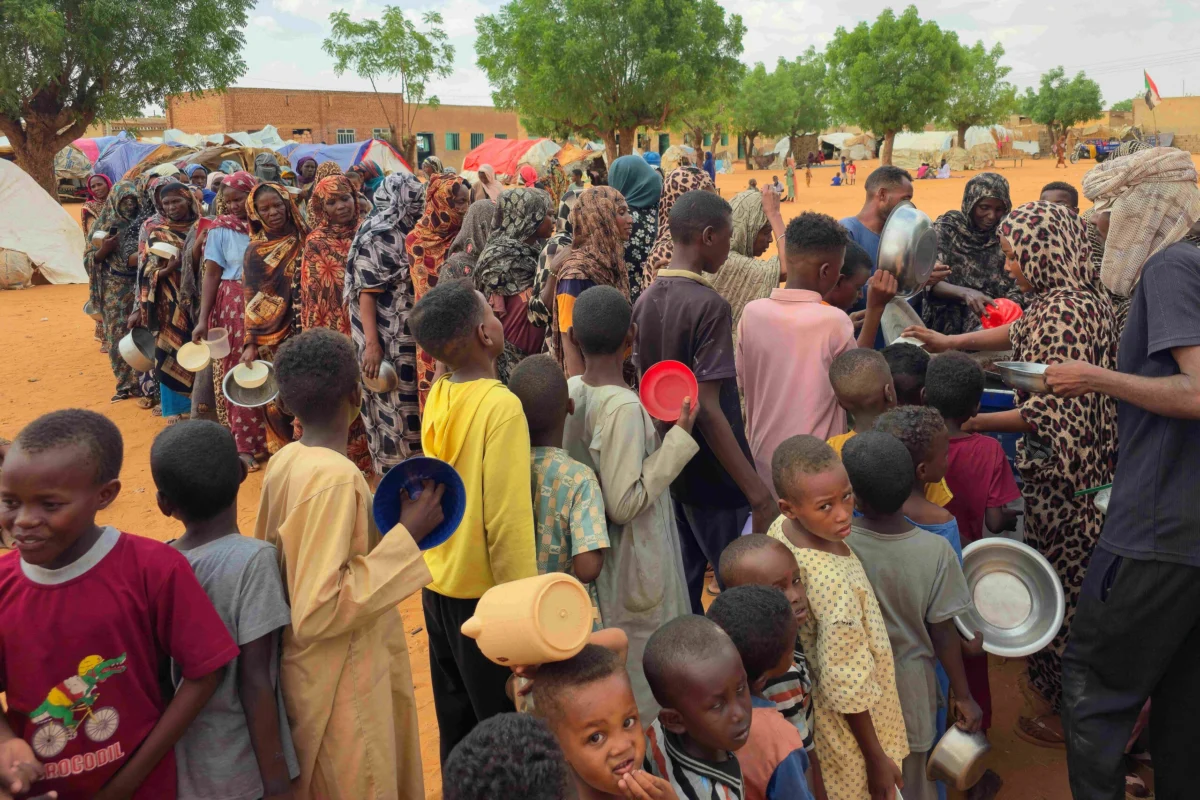
United Nations Human Rights Chief Volker Turk has issued a stark and urgent warning that the Sudanese city of El-Obeid stands on the precipice of another human rights catastrophe, imploring the international community to act decisively before a feared and imminent paramilitary assault by the Rapid Support Forces (RSF) unfolds. Addressing an urgent debate convened by the UN Human Rights Council in Geneva on Friday, Turk’s impassioned plea underscored the gravity of the situation, urging world leaders to mobilize efforts to prevent what he described as potential atrocity crimes in the city.
The Unfolding Crisis in El-Obeid: A City Under Siege
"The signs from El-Obeid are clear and unmistakable: Another human rights catastrophe is unfolding in Sudan, this time in the capital of the strategic state of North Kordofan," Turk declared, painting a grim picture of a city where civilians have endured siege-like conditions for 18 months. The 500,000 residents of El-Obeid, along with nearly 100,000 internally displaced persons (IDPs) who sought refuge there from other conflict zones, have been battered by relentless drone attacks. These assaults are part of an intense struggle between the Sudanese Armed Forces (SAF) and the Rapid Support Forces (RSF) for control over the areas surrounding the city, a battle that has escalated dramatically in recent weeks.
The city, a vital logistical and economic hub, has seen its critical infrastructure systematically targeted. Recent attacks have crippled the main power station and fuel depots, plunging entire neighborhoods into darkness and, more critically, shutting down water pumps. This has led to severe shortages of clean water, exacerbating an already dire humanitarian situation. Between June 6 and 28 alone, the UN human rights office reported at least 45 people killed and 41 others injured in 15 separate drone attacks in El-Obeid and its surrounding areas, illustrating the brutal intensity of the conflict’s latest phase.
Strategic Significance: Why El-Obeid Matters
El-Obeid’s strategic importance cannot be overstated. As the capital of North Kordofan state, it occupies a critical junction on the main arterial route linking RSF-held areas in the western Darfur region to the army-controlled eastern regions of Sudan. This makes it a crucial supply and logistical corridor for both warring factions. Kordofan itself is a key battleground, not only due to its strategic location but also because it is home to significant oil deposits and serves as a power base for some of the RSF’s most influential paramilitary allies. Control over El-Obeid would grant the RSF a firmer grip on these vital links and resources, profoundly shifting the balance of power in the broader conflict. Historically, El-Obeid has served as a major market town and transportation hub, its economic vitality now strangled by the ongoing warfare.
Background to Sudan’s Devastating Conflict
The current conflict, which erupted in April 2023, is the culmination of a power struggle between two rival military factions: the Sudanese Armed Forces (SAF), led by General Abdel Fattah al-Burhan, and the paramilitary Rapid Support Forces (RSF), commanded by General Mohamed Hamdan Dagalo, widely known as "Hemedti." The two generals were once allies, orchestrating a coup in October 2021 that derailed Sudan’s fragile transition to civilian rule following the overthrow of longtime dictator Omar al-Bashir in 2019. However, deep-seated rivalries over the integration of the RSF into the regular army and control over Sudan’s security and economic architecture ultimately led to open warfare.
The conflict swiftly escalated from the capital, Khartoum, engulfing vast swathes of the country, particularly the Darfur region and Kordofan. It has devolved into a brutal civil war characterized by indiscriminate attacks on civilians, widespread sexual violence, ethnic targeting, and the systematic destruction of infrastructure. The conflict has forced over 10 million people to flee their homes, making Sudan the world’s largest displacement crisis. More than 25 million people – over half the country’s population – require humanitarian assistance, and the United Nations has warned that Sudan faces the largest hunger crisis globally, with parts of the country teetering on the brink of famine.
A Chronology of Escalation: El-Obeid’s Ordeal
The journey to the current crisis in El-Obeid has been protracted and brutal:
- April 2023: The conflict erupts in Khartoum, quickly spreading across the country. El-Obeid, due to its strategic location, immediately becomes a contested area.
- Mid-2023: As the RSF consolidates control in parts of Darfur, their focus increasingly shifts eastward, putting El-Obeid under significant pressure. The city experiences its first prolonged siege attempts, disrupting supply lines and civilian life.
- Late 2023: Despite intermittent clashes, the SAF manages to maintain a precarious hold on the city center, though surrounded by RSF-controlled or contested territories. Humanitarian access remains severely constrained.
- February 2024: The SAF launches a significant offensive, successfully breaking a prolonged siege on El-Obeid. This provides a brief window of relief for residents and allows for some limited humanitarian convoys to enter.
- Spring 2024: The RSF intensifies its efforts to reimpose a blockade on El-Obeid, employing a strategy of drone attacks on key infrastructure and the main highway leading out of the city. This aims to cut off SAF supply lines and civilian access.
- June 2024: The frequency and intensity of RSF drone attacks reach unprecedented levels, directly targeting civilian areas and essential services. The UN human rights office documents the highest casualty figures for a concentrated period.
- July 2024: The dire humanitarian and human rights situation prompts the urgent debate at the UN Human Rights Council, culminating in Volker Turk’s "red alert."
The Broadening Humanitarian Catastrophe
The crisis in El-Obeid is a microcosm of Sudan’s broader humanitarian disaster. The destruction of power and water infrastructure is particularly alarming. Without electricity, hospitals struggle to operate, refrigeration for medicines fails, and communication networks falter. The lack of clean water dramatically increases the risk of waterborne diseases like cholera, which have already seen outbreaks in other parts of Sudan. Access to food is severely restricted, pushing an already vulnerable population closer to famine. The agricultural heartland of Kordofan, once a breadbasket, now lies devastated, its harvests disrupted and markets emptied.
Healthcare services across Sudan have largely collapsed. Many hospitals have been destroyed, looted, or repurposed for military use. Medical personnel have fled, and essential supplies are scarce. Children are particularly vulnerable, facing malnutrition, disease, and the trauma of conflict. The education system has ground to a halt, robbing a generation of their future. Beyond the physical toll, the psychological impact of prolonged siege, drone attacks, and constant fear is immense. Reports of sexual violence, forced displacement, and recruitment of child soldiers continue to emerge, painting a picture of widespread protection failures.
International Response and Calls for Accountability
The urgent debate at the UN Human Rights Council, called for by the United Kingdom on behalf of a group of countries, highlights growing international concern, albeit belatedly. Volker Turk’s forceful intervention, describing the situation as "not a drill" and a "red alert that needs to land on the desks of heads of state and government around the world," underscores the perceived inadequacy of the current global response. European countries that initiated the debate plan to present a draft resolution to the 47-country rights council, aiming to galvanize concrete action and ensure accountability.
Beyond the Human Rights Council, other UN bodies and international organizations have repeatedly sounded the alarm. The UN Office for the Coordination of Humanitarian Affairs (OCHA) has launched appeals for funding, but the humanitarian response plan for Sudan remains significantly underfunded. The World Food Programme (WFP) struggles to deliver food aid due to insecurity and access restrictions. UNICEF continues to highlight the devastating impact on children, while the World Health Organization (WHO) warns of disease outbreaks.
The International Criminal Court (ICC) has an ongoing investigation into war crimes in Darfur, and there are growing calls for its mandate to be extended to cover the current atrocities across Sudan. Ensuring accountability for those committing war crimes, crimes against humanity, and potential genocide is crucial not only for justice but also as a deterrent. However, the political will for robust international intervention, including effective sanctions or protection mechanisms, has largely been absent, leaving Sudanese civilians exposed to unimaginable suffering. Regional bodies like the African Union and IGAD have attempted mediation efforts, but these have often faltered, unable to bridge the deep chasm between the warring parties.
Implications and Future Outlook
The potential fall of El-Obeid to the RSF or its continued brutalization carries profound implications for Sudan and the wider region. It would consolidate the RSF’s control over a vital corridor, enhancing their logistical capabilities and potentially prolonging the conflict. Such a development would also represent a significant blow to the SAF, further weakening their position in the fragmented nation.
Regionally, the conflict fuels instability. Sudan’s neighbors – Chad, South Sudan, Ethiopia, and Egypt – are already grappling with massive influxes of refugees, straining their limited resources and posing complex security challenges. The breakdown of the Sudanese state could create a power vacuum exploited by various armed groups, further destabilizing an already volatile region.
The failure of the international community to prevent atrocity crimes in El-Obeid would set a dangerous precedent, signaling impunity for perpetrators and potentially emboldening factions elsewhere to target civilians with similar tactics. The long-term consequences for Sudan are catastrophic: a complete collapse of governance, widespread famine, entrenched poverty, and the disintegration of its social fabric. Rebuilding will require immense international effort, resources, and a sustained commitment to peace and reconciliation that currently appears elusive.
"Their phones should be running hot in the coming days and weeks, with ideas on how to prevent atrocity crimes in El-Obeid and in other places in Kordofan," Volker Turk emphasized, highlighting the critical juncture at which the world finds itself. The fate of El-Obeid, and indeed Sudan, hangs in the balance, a stark reminder of the urgent need for robust, coordinated international action to avert further human tragedy and hold perpetrators accountable. The red alert has been sounded; the world’s response, or lack thereof, will determine the scale of the unfolding catastrophe.
