

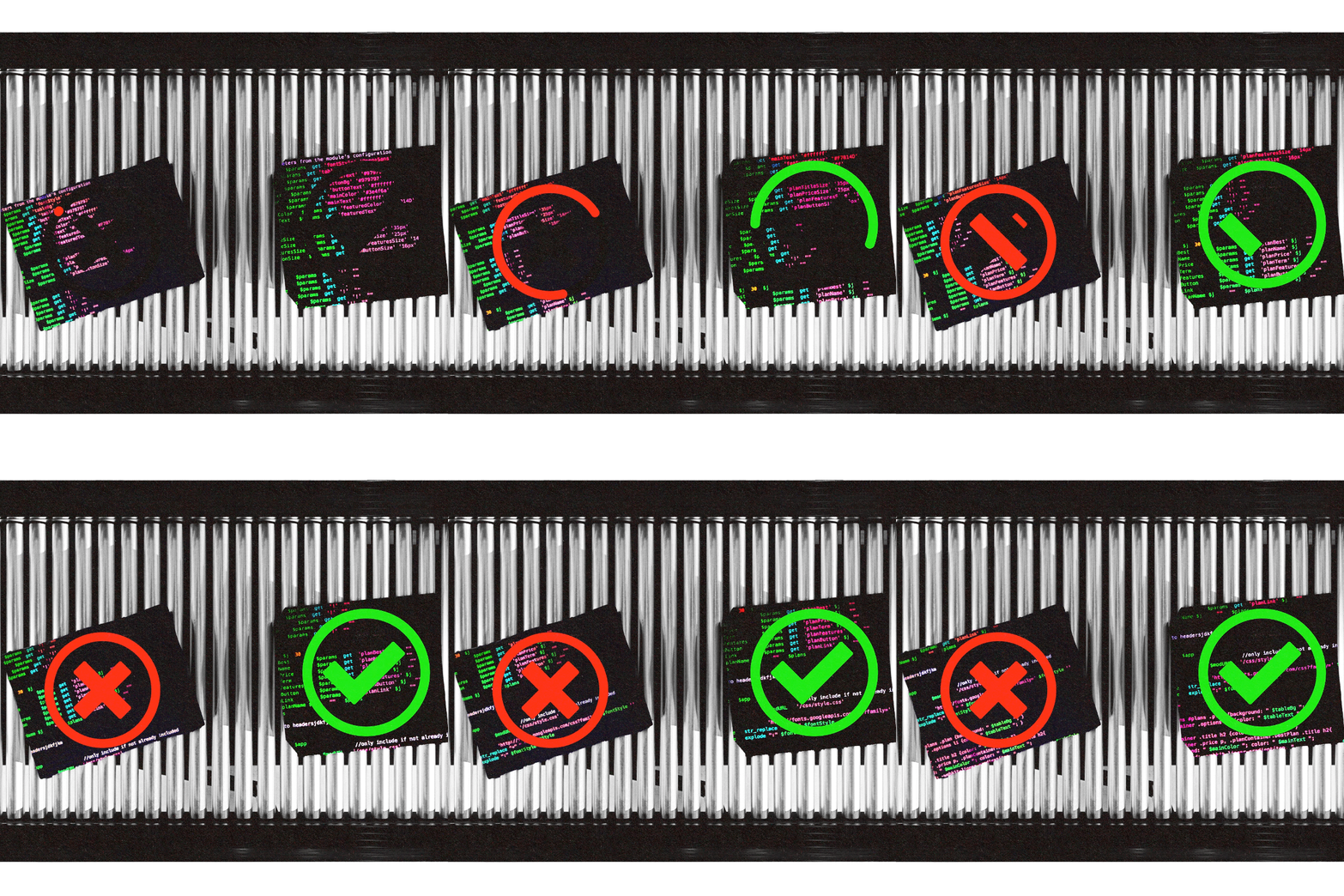
The landscape of software engineering is currently undergoing a fundamental shift as generative artificial intelligence begins to solve one of the industry’s most persistent and expensive challenges: proving that code is mathematically perfect. For decades, the field of formal verification—a rigorous process using mathematical logic to ensure software behaves exactly as intended—remained a luxury reserved for the most critical systems, such as NASA’s flight controllers or Boeing’s avionics. However, recent breakthroughs led by researchers at Stanford University and a new wave of well-funded startups suggest that AI may finally bring "bug-free" software to the mainstream, drastically reducing the time and cost required to secure the world’s digital infrastructure.
The Stanford Breakthrough: From Months to Hours
The catalyst for this renewed interest is a series of results produced by Chuyue Sun, a researcher at Stanford University, and her colleagues. In a recently published paper, Sun demonstrated that an AI-driven tool could complete a complex engineering verification project in less than 12 hours for a total cost of under $500. To put this into perspective, the same task had previously required three highly skilled human experts working for five consecutive months.
The project involved verifying the code responsible for encrypting conversations within Signal, the widely used private messaging application. Encryption protocols are notoriously difficult to verify because even a minor logic error can expose the private data of millions of users. By automating the creation of mathematical proofs that validate the software’s integrity, Sun’s research proved that the "human bottleneck" in formal verification could be bypassed. Sun has since joined &Truth, a startup that publicly launched this week with $70 million in funding, aiming to commercialize these AI-driven verification techniques.
Understanding Formal Verification vs. Traditional Testing
To appreciate the magnitude of this shift, one must understand the difference between traditional software testing and formal verification. Most software today is validated through "testing," where developers run the code against various scenarios to see if it breaks. While sophisticated, testing is inherently incomplete; it can prove the presence of bugs, but it can never prove their total absence.
Formal verification, by contrast, treats code like a mathematical theorem. Developers write precise "specifications"—statements about what the software must and must not do—and then use specialized software tools to prove that the code satisfies those specifications under all possible conditions. Historically, this has been a grueling manual process. Engineers had to manually translate computer code into complex formulas that math-heavy tools like Lean, Rocq, or Isabelle could process. Because of the extreme level of expertise required, formal verification was often deemed too slow and expensive for anything other than life-critical or high-security systems.
Ilya Sergey, Chief Science Officer at &Truth, likens the current state of software to physical engineering. "Bridges and buildings don’t collapse because people did the math before constructing them," Sergey noted. "The technology to mathematically reason about code was always there, but it was simply too difficult to scale."
A Surging Market: Funding and Industry Adoption
The promise of automated verification has ignited a "gold rush" in Silicon Valley. Beyond &Truth, several other major players are vying for dominance in this nascent sector. Harmonic, a startup co-founded by Robinhood CEO Vlad Tenev, recently announced $295 million in funding. Harmonic’s AI agent, Aristotle, is designed to verify software written in the C programming language and hardware designs in Verilog. The company is already in evaluation phases with industry giants like Nvidia and Tensordyne.
Simultaneously, major AI labs are entering the fray. Last week, Anthropic and the startup Theorem announced a joint effort that used AI to identify bugs in open-source software—flaws that had remained hidden despite trillions of traditional automated tests. Anthropic has also released a specialized add-on for its Claude AI model to assist developers in the verification process.
The timeline of this field’s evolution shows an accelerating curve:
- 1960s-1990s: Theoretical foundations of formal methods are established, primarily in academic settings.
- 2000s: Adoption by organizations like NASA and the military for mission-critical systems.
- 2010s: Cloud giants like Amazon Web Services (AWS) begin using "automated reasoning" to secure cloud infrastructure.
- 2024: Generative AI models demonstrate the ability to write mathematical proofs and specifications, reducing verification costs by over 90%.
Corporate Giants and the Security Mandate
The stakes for this technology are highest for companies that manage the world’s most sensitive data. Amazon, Apple, and Boeing have long been proponents of formal verification, albeit on a limited scale. Byron Cook, a distinguished scientist and vice president at AWS, maintains that formal verification has been essential in easing customer anxieties regarding cloud security. At AWS, automated reasoning helps internal teams identify "showstopper" bugs early in the development cycle, which actually accelerates the pace of innovation rather than slowing it down.
Apple has also been vocal about its use of formal verification in its "corecrypto" library, which provides the encryption foundation for over 2.5 billion active devices. In a security blog post earlier this year, Apple engineers noted that some vulnerabilities discovered through formal verification "could not have been found any other way." However, they also cautioned that the process remains so labor-intensive that they must be "conservative" when adding new code to ensure the verification team can keep up.
For mid-sized companies, the barrier has always been the lack of specialized verification engineers. The current AI wave aims to bridge this gap by allowing generalist software developers to use AI agents to generate the necessary mathematical proofs, effectively democratizing a field that previously required a PhD in logic.
The "Math Trap": Skepticism and Limitations
Despite the optimism, not everyone in the industry believes AI-powered verification is a "silver bullet." Will Wilson, CEO of the bug-hunting startup Antithesis, refers to formal verification as a potential "trap" for those enamored with mathematical purity. Wilson points out that while his company spent millions to formally verify its own cybersecurity defenses, they still found bugs using traditional exhaustive testing.
"It can give you some assurance, but only robust exhaustive testing can prove your assurance is true," Wilson argues. The skepticism stems from the fact that formal verification is only as good as the "specifications" or assumptions it is based on. If a human (or an AI) writes an incorrect specification about how a user will interact with the software, the mathematical proof may be "correct," but the software will still fail in the real world.
Vitalik Buterin, the creator of Ethereum, echoed this sentiment in a recent analysis, stating that "formal verification is not a panacea." However, Buterin remains a proponent of the technology, particularly as a defense mechanism against AI-driven cyberattacks. As hackers begin using AI to find and exploit vulnerabilities at unprecedented speeds, defenders will need AI-driven mathematical proofs to harden their systems.
Implications for the Future of Software
The broader implications of this technology extend beyond just "finding bugs." If formal verification becomes cheap and ubiquitous, it could fundamentally change how software is sold and insured. We may see the emergence of "verified" seals of approval for AI-generated code, providing a level of liability protection that does not currently exist in the software industry.
Furthermore, the automation of verification addresses a critical security vulnerability in open-source software. Much of the world’s digital infrastructure relies on open-source libraries maintained by volunteers. These projects are often the "weakest link" in the supply chain. The Beneficial AI Foundation, supported by a grant from Anthropic, is already working on using AI to validate these foundational libraries, ensuring that the building blocks of the internet are as secure as the systems built by trillion-dollar corporations.
Madan Musuvathi, a former 20-year veteran of Microsoft Research and founder of the startup Truidic, believes the commercialization of this technology is an urgent necessity. "AI in the hands of attackers can be extremely powerful," Musuvathi warned. He believes that by making verification "safe and secure for everyone, everywhere," the industry can finally move away from a "patch-and-pray" model of security to one based on provable mathematical certainty.
As AI continues to bridge the gap between human intent and mathematical execution, the "puzzle" of formal verification is becoming less of a laborious chore and more of a scalable utility. While it may not eliminate every possible error—especially those stemming from hardware failure or human unpredictability—it represents the most significant advancement in software reliability in a generation. For an industry that has long accepted "bugs" as an inevitable part of life, the era of mathematically proven software may finally be within reach.
