

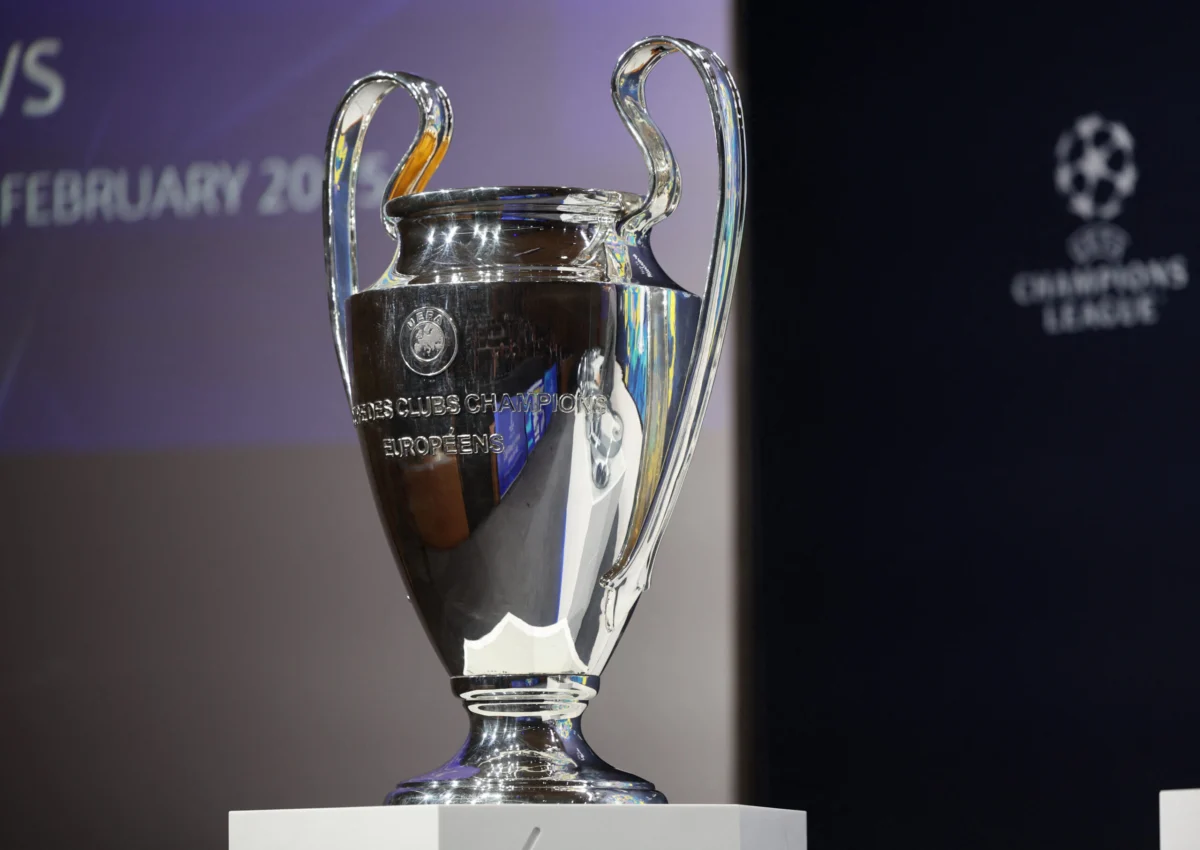
The UEFA Champions League, football’s most prestigious club competition, is poised to ignite for its 2026-2027 season, with the highly anticipated draw for the main league phase scheduled for Thursday, August 27. As European football enthusiasts brace for another spectacle of skill, drama, and tactical prowess, all eyes will be on Paris Saint-Germain, who enter the tournament as back-to-back champions, aiming for an unprecedented third consecutive title in the modern era. Their quest for history will be challenged by a constellation of European giants, including Real Madrid, Barcelona, Manchester City, Liverpool, and Bayern Munich, all eager to reclaim continental supremacy.
This season marks the third iteration of the innovative league phase format, a significant evolution from the traditional group stage. This expanded structure, designed to enhance competitive balance and deliver more high-stakes matches, will commence in September and extend through January. Following the rigorous league phase, the intensity will escalate with the knockout rounds, culminating in the crowning of Europe’s champion in early June. The draw ceremony, a glittering affair where the destinies of Europe’s elite clubs are determined, promises to set the stage for months of thrilling football.
PSG’s Pursuit of Immortality: A Dynasty in the Making
Paris Saint-Germain’s ambition to secure a third consecutive UEFA Champions League title places them on the precipice of footballing immortality. Only a handful of clubs in the competition’s storied history have achieved such a feat, most notably Real Madrid, who secured three successive crowns between 2016 and 2018 under Zinedine Zidane, and also their initial five-year reign in the tournament’s nascent years (1956-1960). For PSG, this achievement would solidify their status as a dominant force in European football, a testament to years of strategic investment and development.
Their journey to this potential treble began with a hard-fought victory in the 2025 final, followed by a dramatic defense of their title in the 2026 final against English rivals Arsenal. The match, held at the Puskas Arena in Budapest on May 30, 2026, was a nail-biting affair that ended 1-1 after extra time. The tension was palpable as the contest moved to penalties, where PSG ultimately triumphed 4-3. Achraf Hakimi, a pivotal figure in PSG’s defense, was captured lifting the coveted trophy, celebrating with his teammates as the first club since Real Madrid’s 2018 triumph to retain the title. The decisive moment came when Arsenal defender Gabriel’s spot-kick sailed over Matvey Safonov’s crossbar, confirming PSG’s place in history.
Further underscoring their current dominance, PSG also lifted the UEFA Super Cup for a second consecutive year in August, defeating Aston Villa 2-1. Desire Doue’s 61st-minute goal, initially disallowed for offside but subsequently awarded after a crucial VAR review, highlighted the fine margins and cutting-edge technology influencing modern football. These consecutive triumphs not only demonstrate PSG’s formidable squad depth and tactical acumen but also inject a significant psychological advantage as they embark on their quest for a historic third.
The Champions League Draw: When and Where the Journey Begins
The crucial main round fixtures for the 2026-2027 UEFA Champions League will be drawn on August 27 at 6pm Central European Time (17:00 GMT). The glamorous setting for this pivotal event is the Grimaldi Forum in Monaco, a venue synonymous with high-profile European football ceremonies. The draw ceremony is typically a grand affair, attended by club representatives, football legends, and UEFA officials, where the fate of 36 clubs will be determined, paving their paths for the coming months of competition.
UEFA President Aleksander Čeferin, speaking ahead of the draw, is expected to reiterate the organization’s commitment to competitive balance and fan engagement. "The Champions League continues to evolve, bringing more elite matchups and unforgettable moments to fans worldwide," a UEFA spokesperson might infer. "The new format, now in its third year, has proven its ability to deliver increased drama and competitive integrity, ensuring that every match matters."
Navigating the Qualification Maze
Of the 36 teams that will compete in the league phase, 29 earned their places directly through their performances in their respective national leagues, securing top positions that guarantee automatic qualification. The remaining seven berths were fiercely contested through a rigorous qualifying competition that commenced earlier this month. This preliminary stage, a crucial gateway for clubs from various European leagues, is set to conclude less than 24 hours before the main draw.
The intensity of the qualifying rounds has already seen several teams secure their spots, often after overcoming significant hurdles. Bodo/Glimt, LASK, and Sabah have recently booked their tickets to the elite competition, demonstrating the growing diversity and competitive spirit across Europe. Their qualification stories often resonate with fans, representing dreams realized for clubs that might not always feature among the continent’s traditional powerhouses. As of Wednesday, eight teams were still locked in battle for the final four coveted places, with their dramatic playoff encounters promising to deliver the last pieces of the puzzle before the draw. These qualifying paths often showcase emerging talents and provide narratives of perseverance and ambition, enriching the overall fabric of the Champions League.
Understanding the New League Phase Format: A Tactical and Financial Shift
The 2026-2027 season marks the third year of the expanded Champions League format, often referred to as the "Swiss model." This significant departure from the traditional group stage sees 36 clubs competing in a single league table. Each team will play eight matches – four at home and four away – against eight different opponents. The draw mechanism dictates that each club will face two teams from each of the four seeding pots (Pots 1, 2, 3, and 4), ensuring a diverse range of opponents and challenges.
This format change was introduced to increase the number of high-profile matches, generate greater revenue for UEFA and participating clubs, and provide more opportunities for clubs from a wider array of leagues to compete at the highest level. The implications for clubs are substantial:
- Increased Match Load: More competitive matches mean greater demands on squad depth, fitness, and tactical rotation throughout the autumn and winter months.
- Varied Opposition: Clubs no longer face the same three opponents home and away, leading to a more dynamic and less predictable league phase. Top teams might face a tricky Pot 2 side and a strong Pot 3 team early on, testing their mettle from the outset.
- League Standings: The single league table fosters continuous competition, as every point and goal difference can impact final standings and knockout phase qualification.
- Progression: The top eight teams in the league phase automatically qualify for the Round of 16. Teams ranked 9th to 24th will enter a knockout round play-off, adding another layer of intense competition to reach the last 16. Clubs finishing 25th to 36th are eliminated from all European competitions, a stark contrast to the previous format where third-placed teams dropped into the Europa League.
This structure also significantly impacts broadcast rights and commercial partnerships, as the increased number of matches and high-stakes encounters translate into greater viewership and engagement across global markets. For clubs, the financial rewards are higher, but so are the operational costs and the pressure to maintain peak performance over an extended period.

Seeding Pots and Potential Match-ups: A Glimpse into the Competition
The seeding pots are meticulously constructed based on UEFA’s club coefficients, reflecting past European performance. These pots are crucial as they determine the initial eight opponents each club will face.
Pot 1: The Elite Vanguard
- PSG, Bayern Munich, Real Madrid, Liverpool, Inter Milan, Manchester City, Arsenal, Barcelona, Atletico Madrid
This pot comprises the reigning champions and traditional titans of European football. Any draw from this pot promises a formidable challenge. PSG, as the defending champions, will be a target for all. Real Madrid, with their unparalleled history, and Manchester City, a recent dominant force, are always strong contenders. The presence of Arsenal, Liverpool, and Barcelona adds further depth, ensuring that every fixture involving a Pot 1 team will be a significant event.
Pot 2: Strong Contenders and Ambitious Challengers
- Aston Villa, Manchester United, Borussia Dortmund, Roma, Sporting, Porto, Club Brugge, PSV Eindhoven, Real Betis
Pot 2 is packed with clubs capable of causing upsets and making deep runs. Aston Villa and Manchester United represent the resurgence of English clubs in Europe, while Borussia Dortmund and Roma bring passionate fanbases and established European pedigrees. Teams like Sporting and Porto are perennial threats, known for their tactical discipline and ability to develop talent. A draw featuring a Pot 1 club against a Pot 2 heavyweight immediately creates a must-watch encounter.
Pot 3: Dark Horses and European Regulars
- Feyenoord, Lille, Napoli, RB Leipzig, Villarreal, Shakhtar Donetsk, Galatasaray, Bodo/Glimt, (winner of League Path)
This pot is a blend of established European teams and emerging forces. Napoli and Villarreal have recent strong European showings, while RB Leipzig represents the modern, tactically astute German approach. The inclusion of Bodo/Glimt, a testament to the broadened access of the new format, brings a fresh narrative. Clubs from Pot 3 can often be the "spoilers," capable of taking points from bigger teams and shaping the league standings significantly.
Pot 4: Rising Stars and Exciting Debuts
- Slavia Prague, VFB Stuttgart, LASK, Como, Lens, Sabah, (3 winners of Champions Path)
Pot 4 features clubs that have either qualified through challenging paths or are making their mark on the European stage. Teams like VFB Stuttgart and Lens represent strong domestic league performances, while LASK and Sabah are examples of clubs pushing boundaries. Como, if they are the "winner of Champions Path" or one of the other qualifiers, could be an exciting debutant. These teams often play with an underdog spirit, bringing passion and unpredictability to the competition, and are always capable of surprising more fancied opponents.
The draw will meticulously select two opponents from each pot for every team, leading to a complex web of matchups that will unfold over the coming months. Football analysts will immediately begin dissecting the draws, identifying potential "groups of death" within the new format and highlighting key tactical battles.
The Road to the Final: A Detailed Chronology
The league phase matches are strategically spread across several months, ensuring a consistent stream of top-tier European football:
- Matchday 1: September 8-10
- Matchday 2: October 13 and 14
- Matchday 3: October 20 and 21
- Matchday 4: November 3 and 4
- Matchday 5: November 24 and 25
- Matchday 6: December 8 and 9
- Matchday 7: January 19 and 20
- Matchday 8: January 27
Following the conclusion of the league phase in late January, the competition intensifies with the knockout rounds:
- Knockout Round Playoffs: February 16, 17 (first leg) and February 23, 24 (second leg) – These crucial two-legged ties determine which teams from 9th-24th place will join the top eight in the Round of 16.
- Round of 16: March 9, 10 (first leg) and March 16, 17 (second leg)
- Quarterfinals: April 6, 7 (first leg) and April 13, 14 (second leg)
- Semifinals: April 27, 28 (first leg) and May 4, 5 (second leg)
- Final: June 5
The Grand Finale: Estadio Metropolitano, Madrid
The climax of the 2026-2027 UEFA Champions League season will be held at the magnificent Estadio Metropolitano, the state-of-the-art home stadium of Spanish club Atletico Madrid. This modern arena, renowned for its vibrant atmosphere and excellent facilities, provides a fitting stage for European football’s ultimate showpiece event. With a capacity exceeding 68,000, the Estadio Metropolitano has already hosted major finals, demonstrating its capability to deliver a world-class experience for players and fans alike. The choice of Madrid as the host city underscores Spain’s rich footballing heritage and its passionate fan culture, promising an electrifying atmosphere for the final on June 5.
Broader Impact and Financial Implications
The UEFA Champions League is not merely a sporting competition; it is a colossal economic engine for European football. The expanded format, with its increased number of matches, translates directly into higher revenues from broadcast rights, sponsorship deals, and matchday ticket sales. UEFA distributes a significant portion of these revenues to participating clubs, with performance-based bonuses, historical coefficient payments, and market pool shares. This financial injection is vital for clubs, enabling them to invest in player transfers, youth academies, infrastructure, and overall club development.
For smaller leagues and clubs, qualification for the Champions League represents a transformative financial boost and invaluable exposure. Even for teams in Pot 4, the opportunity to host European giants brings prestige, revenue, and a chance to showcase their talent on a global stage. The increased competitive fixtures, however, also pose challenges for domestic leagues, particularly regarding player welfare and fixture congestion. Clubs with deep squads and robust financial backing are better equipped to navigate the demands of simultaneous Champions League and domestic campaigns.
The tournament’s global reach continues to expand, attracting billions of viewers from every corner of the world. This universal appeal reinforces the Champions League’s status as the pinnacle of club football, a blend of sporting excellence, rich history, and modern innovation. As the draw approaches, the excitement builds, signaling the start of another chapter in European football’s most compelling narrative.
