

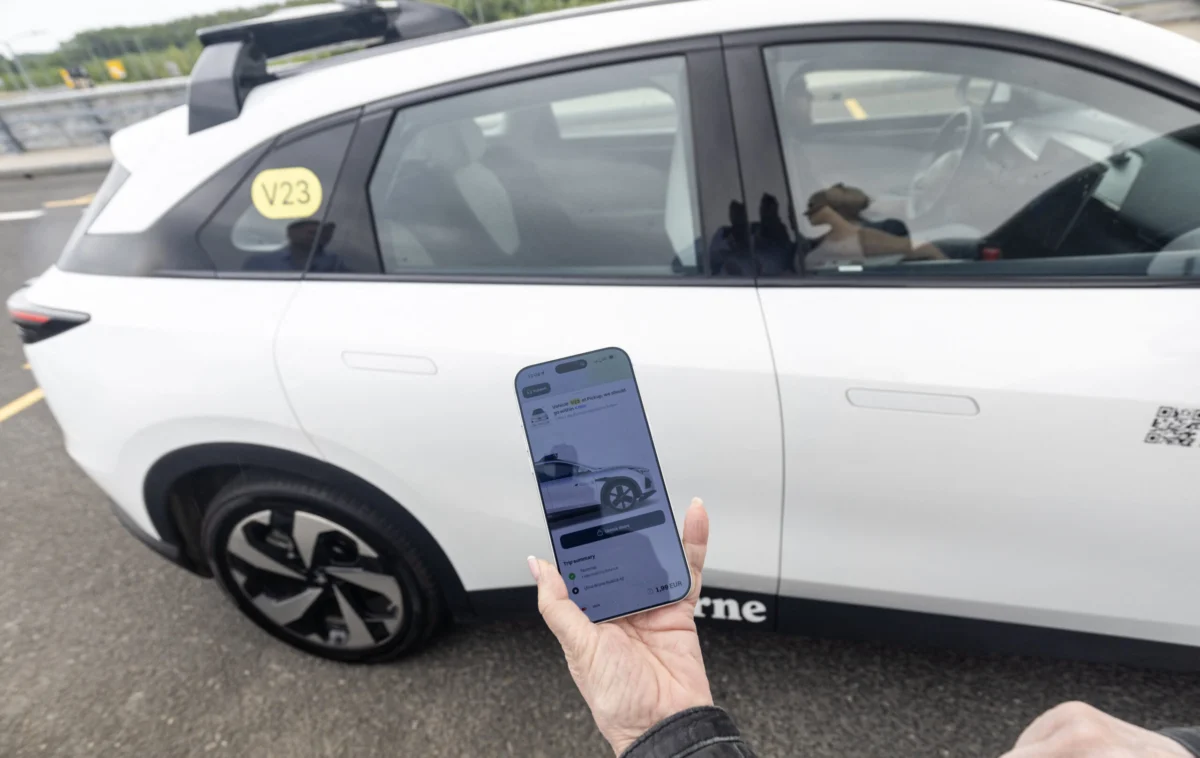
BEIJING – In a significant escalation of the global race for autonomous vehicle dominance, U.S. ride-hailing behemoth Uber has formally announced a sweeping expansion of its robotaxi partnership with Chinese autonomous driving technology firm Pony.ai, targeting a deployment of 2,000 self-driving taxis across Europe and the Middle East. This ambitious plan, unveiled on a recent Friday, follows the successful commercial launch of robotaxi services in Croatia’s capital, Zagreb, earlier this spring, signaling a strategic pivot for Uber to solidify its position as a leading commercialization platform for autonomous mobility worldwide.
Strategic Partnership and Global Ambition
The core of Friday’s announcement revolves around a substantial scaling of operations, with the two companies committing to rolling out a fleet of 2,000 Pony.ai-powered autonomous vehicles. This expansion is designed to extend their reach beyond the initial European foothold in Croatia, encompassing several other European cities and, crucially, making a concerted push into the burgeoning markets of the Middle East. While specific names of the additional European cities and an exact timeline for the deployments were not disclosed, the sheer scale of the planned fleet underscores the partners’ aggressive intent to capture significant market share in regions ripe for autonomous mobility innovation.
This move is emblematic of Uber’s refined strategy in the autonomous vehicle (AV) space. Following its decision to divest its in-house AV development unit, Advanced Technologies Group (ATG), to Aurora in 2020, Uber has strategically pivoted to a "platform as a service" model. Instead of bearing the immense research and development costs associated with developing proprietary self-driving hardware and software, Uber now positions itself as a crucial facilitator, leveraging its vast ride-hailing network and operational expertise to commercialize and scale the technologies developed by leading AV firms like Pony.ai. This capital-light approach allows Uber to accelerate deployment and mitigate the financial risks inherent in AV development, while offering its partners an unparalleled pathway to market and access to a massive user base.
European Entry Point: The Croatian Precedent
The foundation for this expansive partnership was laid in late March 2026, with the quiet but significant launch of a commercial robotaxi service in Zagreb, Croatia. This service, operated by local partner Verne and powered by Pony.ai’s autonomous driving technology, with Uber providing the ride-hailing interface, has been touted by the companies as Europe’s first commercial robotaxi service. The choice of Zagreb as an initial launchpad is strategic, offering a relatively less congested and potentially more adaptable regulatory environment compared to Western European megacities, serving as a critical proving ground for the technology and operational model.
The Zagreb pilot, though not detailed in its initial scale, provided invaluable real-world data and operational experience. It demonstrated the technical feasibility of Pony.ai’s Level 4 autonomous driving system in a European urban setting and tested the integration of AVs into Uber’s established ride-hailing application. This initial success likely provided the confidence and data points necessary to justify the broader, more ambitious expansion announced subsequently. The collaboration with Verne, a local Croatian operator, also highlights a nuanced approach to market entry, leveraging local expertise to navigate specific regional nuances, regulatory frameworks, and consumer preferences.
Beyond Zagreb: Unnamed European Cities and Future Horizons
The plan to roll out robotaxis to four additional European cities, while currently lacking specific geographical and temporal details, underscores the strategic importance of the European market. Europe, with its high population density, sophisticated urban infrastructure, and strong emphasis on sustainability and smart city initiatives, represents a lucrative, albeit complex, frontier for autonomous vehicles. The regulatory landscape across the European Union remains somewhat fragmented, with individual member states often having distinct rules for testing and commercial deployment of AVs. However, the European Commission is actively working towards a more harmonized framework, including common safety standards and type-approval processes, which could significantly streamline future deployments.
The Middle East, particularly regions like the United Arab Emirates (UAE) and Saudi Arabia, presents a different but equally compelling opportunity. Cities such as Dubai and Abu Dhabi have been notably proactive in embracing advanced technologies and implementing supportive regulatory frameworks for autonomous vehicles, often aiming to position themselves as global leaders in smart mobility. Uber’s existing partnerships with WeRide in Abu Dhabi and Dubai further illustrate its diversified approach to the region, leveraging multiple AV technology providers to cater to varying market needs and accelerate deployment. This multi-partner strategy minimizes dependence on a single technology provider and allows for greater flexibility and resilience in its global expansion efforts.
The Crucial Role of Fleet Scale and Data
The commitment to deploying 2,000 vehicles is not merely an arbitrary number; it is a critical strategic imperative for the commercialization and long-term viability of autonomous mobility. A large-enough vehicle fleet is indispensable for several key reasons:
Firstly, data collection and refinement: Each mile driven by an autonomous vehicle generates vast amounts of data—on road conditions, traffic patterns, pedestrian behavior, weather, and unexpected events. This data is crucial for continuously training and improving the artificial intelligence algorithms that power the self-driving systems. The more diverse and extensive the data, the more robust, reliable, and safe the AVs become, especially when encountering novel scenarios. A fleet of 2,000 vehicles will accelerate this learning process exponentially across varied environments.
Secondly, demonstrating safety to regulators: Regulators globally are cautious about permitting widespread autonomous vehicle operations, with safety being the paramount concern. A large, well-documented operational fleet provides tangible evidence of a system’s safety record over millions of miles, which is essential for obtaining necessary permits and scaling operations. This data-driven validation is far more persuasive than theoretical models.
Thirdly, boosting operational efficiency and customer adoption: Greater availability of robotaxis leads to shorter wait times and increased convenience for users, which in turn encourages higher utilization rates. As the service becomes more reliable and accessible, public trust and acceptance grow, creating a virtuous cycle that drives adoption. A larger fleet also allows for more efficient dispatching, better coverage of service areas, and the ability to meet fluctuating demand, thereby improving the overall user experience and economic viability of the service.
Competitive Landscape in Autonomous Driving
The announcement by Uber and Pony.ai intensifies an already fierce global competition in the autonomous vehicle sector, where several major players are vying for market leadership.
Waymo’s Dominance and Global Footprint: Alphabet-backed Waymo, widely considered the global leader in autonomous driving technology, currently boasts a fleet of approximately 5,000 vehicles, primarily operating in the United States. Waymo has accumulated billions of autonomous miles, giving it a significant head start in data collection and system refinement. While its commercial operations are currently concentrated in cities like Phoenix and San Francisco, Waymo is actively exploring international expansion. The company is reportedly testing rides in London and has established new legal entities in four major EU economies—France, the Netherlands, Spain, and Germany—in June 2026, signaling its clear intent to enter these crucial markets. Furthermore, Waymo has plans underway in Tokyo and is engaging with officials worldwide to "lay the groundwork for global operations," as stated in a recent communication to CNBC. Waymo’s methodical, safety-first approach and extensive testing infrastructure make it a formidable competitor.
Chinese Contenders: Baidu and WeRide: Chinese autonomous driving companies are also making aggressive strides, both domestically and internationally. Baidu’s Apollo Go, China’s largest robotaxi operator, and WeRide are actively ramping up their plans and tests for operating autonomous rides in Europe. Baidu Apollo Go, for instance, has been involved in road testing in London through partnerships, and previously announced plans to test robotaxis in Switzerland. WeRide, another prominent Chinese AV developer, has a significant global presence and has also forged partnerships with Uber. In June 2026, WeRide and Uber announced plans to launch Spain’s first robotaxi pilot in Madrid later this year, further diversifying Uber’s AV partnerships in Europe. The two companies also collaborate on robotaxi services in the Middle Eastern cities of Abu Dhabi and Dubai, underscoring a multi-faceted strategy for market penetration. These Chinese firms bring robust technology developed in complex urban environments and benefit from strong government support in their home market.
Uber’s Evolving Autonomous Vehicle Strategy
Uber’s current strategy marks a profound evolution from its earlier, more direct approach to AV development. The company’s journey in autonomous vehicles has been characterized by significant investment, ambitious goals, and notable setbacks, including the tragic fatal accident involving one of its test vehicles in Arizona in 2018. This pivotal event, coupled with the immense capital requirements and prolonged timelines for developing Level 4 (fully autonomous in defined areas) technology, led Uber to re-evaluate its strategy.
From Developer to Platform: The sale of ATG to Aurora in 2020 represented a strategic divestment, allowing Uber to shed the heavy R&D burden and focus on its core strength: its global ride-hailing and delivery platform. CEO Dara Khosrowshahi has been unequivocal about this strategic shift, articulating Uber’s goal to "become the world’s leading commercialization platform for autonomous vehicles." This vision positions Uber not as a creator of AV technology, but as the essential conduit through which AV developers can bring their innovations to market at scale, leveraging Uber’s existing infrastructure, customer base, and operational expertise.
CEO’s Vision and Data Strategy: Khosrowshahi’s statement from earlier this month, according to a FactSet earnings call transcript, emphasizes Uber’s ambition to be the primary ecosystem for AV deployment. A critical component of this strategy is gathering "a super set of data" that Uber can share with its partners. This data, amassed from billions of traditional ride-hailing trips and now from initial robotaxi deployments, is invaluable for accelerating autonomous vehicle development. By providing partners with rich, real-world operational data—on routes, passenger demand, traffic conditions, and specific challenges—Uber aims to help them refine their AI models, enhance safety, and optimize service delivery more rapidly than they could achieve independently. This collaborative data-sharing model creates a powerful network effect, benefiting all partners within the Uber AV ecosystem.
Pony.ai: A Key Technology Partner
Pony.ai, the Chinese company at the heart of this European and Middle Eastern expansion, is a leading player in the global autonomous driving landscape. Founded in 2016, Pony.ai has rapidly developed into a prominent force, known for its Level 4 autonomous driving technology. The company has secured significant funding from major investors, including Toyota, and has established a robust presence in its home market. Pony.ai currently operates robotaxi services in several major Chinese cities, including Guangzhou, Beijing, Shanghai, and Shenzhen, where it has accumulated extensive operational experience in complex urban environments. Its technology stack, encompassing perception, prediction, planning, and control modules, has been rigorously tested and refined over millions of autonomous miles.
The partnership with Uber provides Pony.ai with a crucial pathway for international expansion, allowing it to deploy its advanced technology on a global stage without having to build its own ride-hailing network from scratch. This synergy allows Pony.ai to focus on its core strength—developing cutting-edge autonomous driving systems—while benefiting from Uber’s market access and operational scale. Pony.ai is scheduled to release its quarterly earnings on Tuesday, which may provide further insights into its financial performance and strategic outlook as it embarks on this significant international growth phase.
Regulatory Challenges and Market Dynamics
The widespread deployment of autonomous vehicles, particularly at the scale envisioned by Uber and Pony.ai, presents a myriad of regulatory challenges and requires careful navigation of diverse market dynamics.
Navigating European Regulations: Europe’s regulatory landscape for autonomous vehicles is a patchwork of national laws, although efforts are underway to create a more harmonized framework across the EU. Key challenges include establishing clear liability rules in the event of accidents, developing standardized testing and certification procedures, and addressing data privacy concerns. Each country may have specific requirements for operational permits, safety assessments, and even vehicle specifications. Uber and Pony.ai will need to engage closely with local and national authorities in each target city and country to secure the necessary approvals, which can be a time-consuming and complex process. The success in Zagreb, a smaller market, may provide a blueprint for engaging with regulators in larger, more complex European jurisdictions.
Middle East Opportunities: In contrast to the often-fragmented European approach, certain regions in the Middle East have demonstrated a more agile and proactive stance toward autonomous vehicle integration. Cities like Dubai and Abu Dhabi have expressed clear ambitions to become global leaders in smart mobility, often establishing dedicated zones for AV testing and offering streamlined regulatory pathways. This forward-thinking approach makes the Middle East an attractive market for early and large-scale deployments, especially for companies looking to quickly scale their operations and gather diverse data in supportive regulatory environments.
Public Acceptance and Infrastructure: Beyond regulation, public acceptance remains a critical factor. Building trust in self-driving technology requires consistent safe operation, transparent communication, and effective public education. Infrastructure readiness is also key; while AVs can operate on existing roads, dedicated lanes, smart city infrastructure integration, and robust connectivity can significantly enhance their efficiency and safety. The success of robotaxi services will ultimately depend on their ability to seamlessly integrate into existing urban ecosystems and provide a compelling, safe, and convenient alternative to traditional transportation.
Broader Implications for Urban Mobility and Economy
The aggressive expansion of robotaxi services by Uber and Pony.ai, alongside other industry players, carries profound implications for urban mobility, economic structures, and societal norms.
Transforming Transportation: Robotaxis have the potential to fundamentally transform urban transportation. They could significantly reduce the need for private car ownership, particularly in densely populated areas, thereby alleviating traffic congestion, reducing parking demand, and freeing up valuable urban space. Furthermore, a widespread robotaxi network could offer enhanced accessibility for individuals who cannot drive, such as the elderly or those with disabilities, and provide more efficient and cost-effective last-mile connectivity in conjunction with public transport. The potential for these fleets to be entirely electric also promises significant environmental benefits, reducing urban air pollution and carbon emissions.
Economic Impact: The economic implications are multifaceted. While the widespread adoption of robotaxis could lead to job displacement for traditional taxi and ride-hailing drivers, it is also expected to create new jobs in areas such as remote monitoring and support, fleet maintenance, software development, and infrastructure management. The autonomous vehicle industry itself represents a massive new economic sector, attracting billions in investment and fostering innovation across various technological domains, from AI and sensors to mapping and cybersecurity. The increased efficiency and accessibility of transportation could also spur economic growth by improving logistics and enabling greater mobility for workers and consumers.
Conclusion:
Uber’s strategic partnership with Pony.ai and its aggressive push into European and Middle Eastern robotaxi markets mark a pivotal moment in the global race for autonomous mobility. By leveraging its platform strength and partnering with leading AV technology developers, Uber is positioning itself to be a dominant force in the commercialization of self-driving services. The planned deployment of 2,000 vehicles, building on the precedent set in Zagreb, signals a new phase of rapid expansion and intensified competition with established players like Waymo and emerging contenders from China. As these advanced technologies move from test tracks to city streets, the coming years will undoubtedly witness a transformative shift in how people move within urban environments, driven by innovation, strategic partnerships, and a relentless pursuit of autonomous efficiency.
