

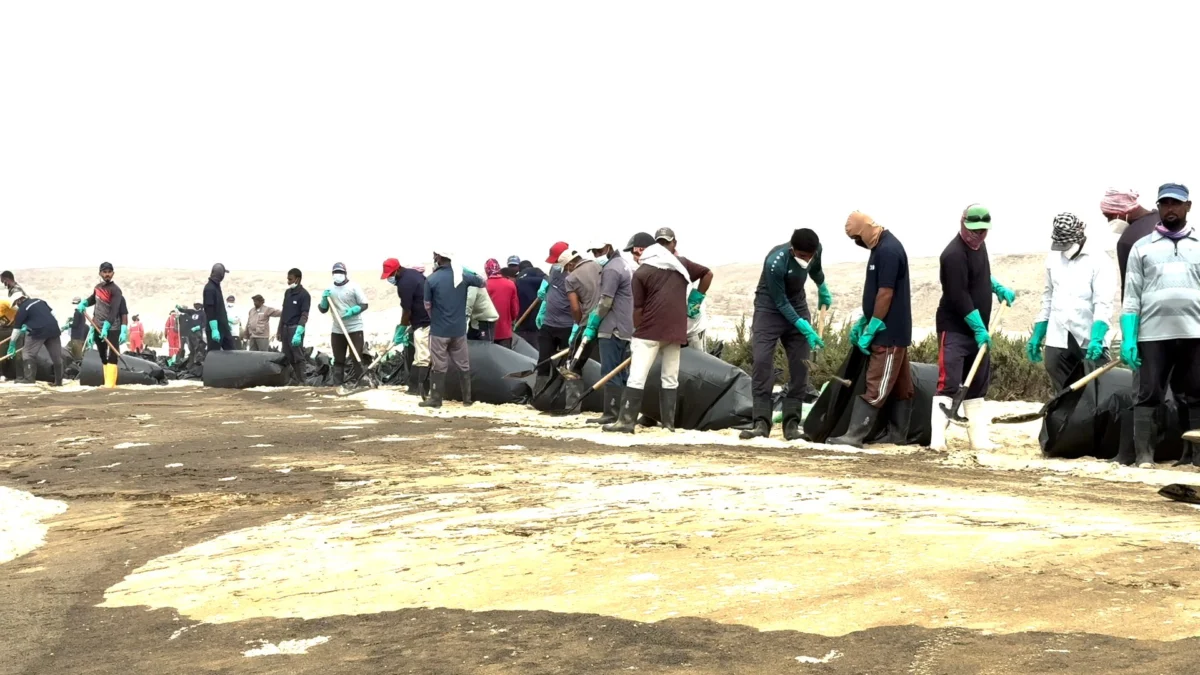
Cleanup crews are engaged in an escalating battle against a significant oil spill along 12 kilometres of Omani coastline, following the grounding of the tanker Caroline Bezengi. The vessel, carrying an estimated 800,000 barrels of Russian crude oil, ran aground near a critical marine reserve, triggering widespread fears of a severe and long-lasting ecological crisis. As of August 15, 2026, the spill continues to pose an immediate threat to the region’s rich biodiversity and vital marine ecosystems, prompting a multi-agency response and drawing international concern. The incident underscores the inherent risks of maritime oil transport in ecologically sensitive regions and has initiated a thorough investigation into the circumstances leading to the grounding.
Immediate Crisis and Initial Response
The incident, which became public knowledge in early August 2026, saw the Liberian-flagged very large crude carrier (VLCC) Caroline Bezengi suffer a catastrophic grounding in Omani territorial waters. The precise location, approximately 30 nautical miles off the coast of the Al Sharqiyah South Governorate, is alarmingly close to the critically important Ras Al Hadd Turtle Reserve and other protected marine areas known for their pristine coral reefs, extensive mangrove forests, and seagrass beds. The initial assessment indicated a breach in at least one of the vessel’s cargo tanks, leading to the immediate discharge of an unknown quantity of heavy crude oil into the Arabian Sea.
Omani authorities, led by the Ministry of Environment and Climate Affairs (MECA) and supported by the Royal Navy of Oman and the Coast Guard, swiftly activated their national oil spill contingency plan. Within hours of the alarm, booms were deployed around the grounded vessel and strategically placed in critical inlets and coastal areas to prevent the spread of oil. Skimming operations commenced, alongside manual cleanup efforts involving hundreds of personnel. However, the sheer volume of oil, coupled with challenging sea conditions and the intricate nature of the coastline, has made containment exceptionally difficult. The affected stretch of coastline, now visibly impacted by a thick sheen and patches of emulsified oil, extends across a diverse range of habitats, from sandy beaches to rocky shores and biologically rich intertidal zones.
Chronology of the Incident
August 2, 2026: The VLCC Caroline Bezengi, laden with approximately 800,000 barrels of Russian Urals crude oil, is reported to be transiting the Arabian Sea, having originated from a Russian port and presumably en route to an Asian market, though its exact destination was not immediately confirmed. Weather conditions in the area were reported as moderate, with no immediate severe weather warnings.
August 3, 2026, 03:45 UTC: The Caroline Bezengi transmits a distress signal, indicating a loss of propulsion and steering capabilities. Subsequent communications confirm the vessel has drifted into shallower waters.
August 3, 2026, 04:17 UTC: The vessel makes contact with the seabed, approximately 30 nautical miles off the Omani coast. Initial reports from the crew suggest a significant impact, but no immediate breach is confirmed. Omani maritime authorities are alerted.
August 3, 2026, 06:00 UTC: Omani Coast Guard vessels are dispatched to the scene. An aerial survey confirms the Caroline Bezengi is hard aground and reveals a visible oil sheen emanating from the stern section of the vessel. This marks the official confirmation of an oil spill.
August 4, 2026: MECA declares a Level 2 oil spill emergency and mobilizes national response teams. The first deployment of containment booms begins around the grounded tanker and at strategic coastal locations, particularly near the Ras Al Hadd Turtle Reserve. Initial estimates of the spill volume are conservative, but growing concerns are voiced about potential structural damage to the vessel.
August 7, 2026: Satellite imagery and further aerial reconnaissance confirm the oil slick has expanded significantly, now impacting approximately 5 kilometres of coastline. Wildlife rescue efforts commence as initial reports of oiled seabirds and marine animals emerge. International salvage experts are contracted and arrive on site.
August 10, 2026: The oil slick reaches 10 kilometres of coastline, with visible impacts on delicate intertidal zones and mangrove areas. The emergency level is escalated to Level 3, indicating a major incident requiring sustained, large-scale response. Calls for international assistance are issued by Oman.
August 13, 2026: Specialized oil spill response vessels and equipment, including high-capacity skimmers and vacuum trucks, arrive from neighbouring countries and international contractors. The focus shifts to both containing the source and cleaning up the widespread coastal contamination.
August 15, 2026: Current status report indicates 12 kilometres of Omani coastline are now affected. Cleanup operations are in full swing, but the environmental damage is already substantial. Efforts are concentrated on preventing further spread, protecting critical habitats, and initiating long-term rehabilitation strategies. An official investigation into the cause of the grounding is formally launched.
The Vessel and its Volatile Cargo
The Caroline Bezengi is identified as a 20-year-old VLCC, a class of supertanker designed for long-haul crude oil transport. While the vessel reportedly underwent its last major dry-dock inspection 18 months prior, its age raises questions regarding structural integrity and maintenance schedules, particularly when operating in challenging maritime conditions. The flag state of Liberia has initiated its own parallel investigation into the vessel’s compliance with international maritime safety standards.
The cargo of 800,000 barrels of Russian Urals crude oil, equating to approximately 127 million litres or roughly 100,000 metric tons, represents a substantial volume. Urals crude is a medium-density, sour crude oil known for its higher sulfur content. When spilled, such crude can be particularly persistent in the environment due to its viscosity, making cleanup more challenging than lighter crude oils. It tends to form stable emulsions (mousse) with seawater, which can persist for extended periods, coat shorelines thickly, and prove difficult to disperse or recover. The specific properties of the oil will significantly influence its environmental impact, weathering processes, and the efficacy of various cleanup techniques. For context, this volume is less than the Exxon Valdez (250,000 barrels) but significantly more than many smaller regional spills, making it a major incident by any measure.
Ecological Significance and Vulnerability
The Omani coastline is a recognized global hotspot for marine biodiversity, serving as a critical nursery ground and migratory route for numerous species. The proximity of the spill to the Ras Al Hadd Turtle Reserve is particularly alarming. This reserve is a globally important nesting site for green turtles (Chelonia mydas) and loggerhead turtles (Caretta caretta), with nesting season typically peaking in the summer months. Hatchlings and adult turtles are highly vulnerable to oil contamination, which can cause direct mortality through ingestion, suffocation, and hypothermia, as well as long-term reproductive and developmental issues.
Beyond the turtles, the region boasts extensive coral reefs, which are highly sensitive to oil exposure. Oil can smother corals, disrupt their feeding mechanisms, and introduce toxic hydrocarbons that lead to bleaching and death, potentially devastating entire reef ecosystems that have taken centuries to form. Mangrove forests, critical for coastal protection, fish nurseries, and carbon sequestration, are also present along the affected stretch. Oil coating mangrove roots can suffocate the trees, leading to widespread die-offs and subsequent coastal erosion. Seagrass beds, vital habitats for dugongs and various fish species, are similarly threatened.
The area is also home to a diverse array of seabirds, including various species of terns, gulls, and cormorants. Oiling can compromise a bird’s waterproofing and insulation, leading to hypothermia and starvation. Furthermore, the spill poses a direct threat to numerous fish populations, crustaceans, and other invertebrates that form the base of the marine food web, potentially leading to long-term population declines and impacting commercial fisheries. The interconnectedness of these ecosystems means that damage to one component can have cascading effects throughout the entire marine environment.
Comprehensive Response and Containment Efforts
The Omani government’s response has been multifaceted, involving both national resources and appeals for international expertise. The primary objective remains to prevent further oil discharge from the Caroline Bezengi and to contain the existing slick. Salvage operations are underway to potentially lighter the remaining cargo onto another vessel or to stabilize the tanker for refloating, though these are complex and risky endeavours.
On the water, dynamic containment strategies are being employed, utilizing offshore booms to corral the oil and skimmers of various types (oleophilic, weir, vacuum) to recover the crude. On the shore, manual cleanup teams, equipped with protective gear, are meticulously removing tar balls and oiled debris from beaches and rocky outcrops. Specialized teams are also focused on sensitive habitats, deploying absorbent materials and undertaking low-impact cleaning methods in mangrove areas to minimize further damage.
Wildlife rescue and rehabilitation centres have been established, working in conjunction with international experts from organizations like the International Tanker Owners Pollution Federation (ITOPF) and local conservation groups. These centres are treating oiled animals, providing veterinary care, and preparing them for eventual release, though the success rate for severely oiled wildlife can be low.
Challenges to the cleanup include the prevailing currents and winds that can rapidly spread the oil, the sheer scale of the affected area, and the logistical complexities of deploying heavy equipment in remote coastal regions. The decision on whether to use chemical dispersants is under careful consideration, as while they can break down oil slicks into smaller droplets, their application carries its own set of environmental risks, particularly in shallow, biologically rich waters.
Statements and Reactions
"Our absolute priority is the protection of Oman’s precious marine environment and the livelihoods of our coastal communities," stated His Excellency Dr. Abdullah bin Ali Al Amri, Undersecretary for Environmental Affairs at MECA. "We have mobilized all available national resources and are actively coordinating with international partners to contain this spill and mitigate its impact. A full investigation is underway, and we will hold all responsible parties accountable."
The vessel’s owner, through their legal representatives, expressed deep regret over the incident, stating, "We are fully cooperating with Omani authorities and international experts in the response effort. Our insurers have been notified, and we are committed to providing all necessary resources to assist in the cleanup and remediation. The safety of our crew and the environment remains paramount."
Environmental non-governmental organizations (NGOs) have voiced strong concerns. "This incident is a stark reminder of the constant threat oil transport poses to our fragile marine ecosystems," commented a spokesperson for the Oman Environmental Society. "The proximity to the Ras Al Hadd reserve is particularly devastating. We urge immediate, transparent, and comprehensive action to protect marine life and ensure long-term monitoring and restoration."
Local fishermen and tourism operators have reported immediate and severe impacts on their livelihoods. "Our nets are empty, and our boats are stained with oil," lamented a fisherman from a nearby village. "This is our sea, our life. How long will it take for it to heal?" Tourism agencies operating eco-tours in the affected region have cancelled bookings, anticipating a significant economic downturn.
Broader Impact and Implications
The Caroline Bezengi incident carries significant broader implications, extending beyond the immediate environmental and economic damage.
Environmental Legacy: Even with robust cleanup efforts, the long-term ecological damage could be profound. Oil can persist in sediments, mangrove roots, and rocky crevices for decades, slowly leaching toxins into the environment. This can lead to chronic health issues for marine life, reproductive failures, and a slow recovery of biodiversity. The resilience of coral reefs and other sensitive habitats will be severely tested, with recovery potentially taking many years or even centuries.
Economic Fallout: Oman’s economy, while diversified, relies significantly on its fisheries and a growing eco-tourism sector. The contamination of fishing grounds could lead to a collapse of local fisheries, impacting food security and the livelihoods of thousands. The pristine image of Oman’s coastline, a major draw for international tourists, has been severely tarnished, potentially deterring visitors for years to come. Cleanup costs alone are expected to run into hundreds of millions of dollars, with long-term monitoring and restoration adding further substantial expenses.
Geopolitical and Regulatory Scrutiny: The incident places renewed scrutiny on the safety standards of maritime shipping, particularly for older vessels traversing highly sensitive and strategically vital waterways like the Arabian Sea, which connects to the Strait of Hormuz. International maritime organizations, including the International Maritime Organization (IMO), may face pressure to review existing regulations concerning tanker age, maintenance schedules, crew training, and emergency preparedness. The origin of the crude oil (Russian) also adds a layer of complexity, potentially influencing international shipping insurance markets and trade routes, especially given the ongoing global energy landscape.
Lessons in Preparedness: This spill will undoubtedly serve as a critical case study for national and international oil spill response protocols. It highlights the need for continuous investment in advanced containment and recovery technologies, robust early warning systems, and enhanced cross-border cooperation in emergency response. It also underscores the importance of proactive environmental risk assessments for all maritime activities in ecologically sensitive areas.
As the cleanup continues and the investigation unfolds, the Caroline Bezengi oil spill stands as a stark reminder of the delicate balance between global energy demands and environmental protection, casting a long shadow over Oman’s pristine coastline and its vibrant marine life. The full extent of the damage and the timeline for recovery will only become clear in the months and years to come.
