

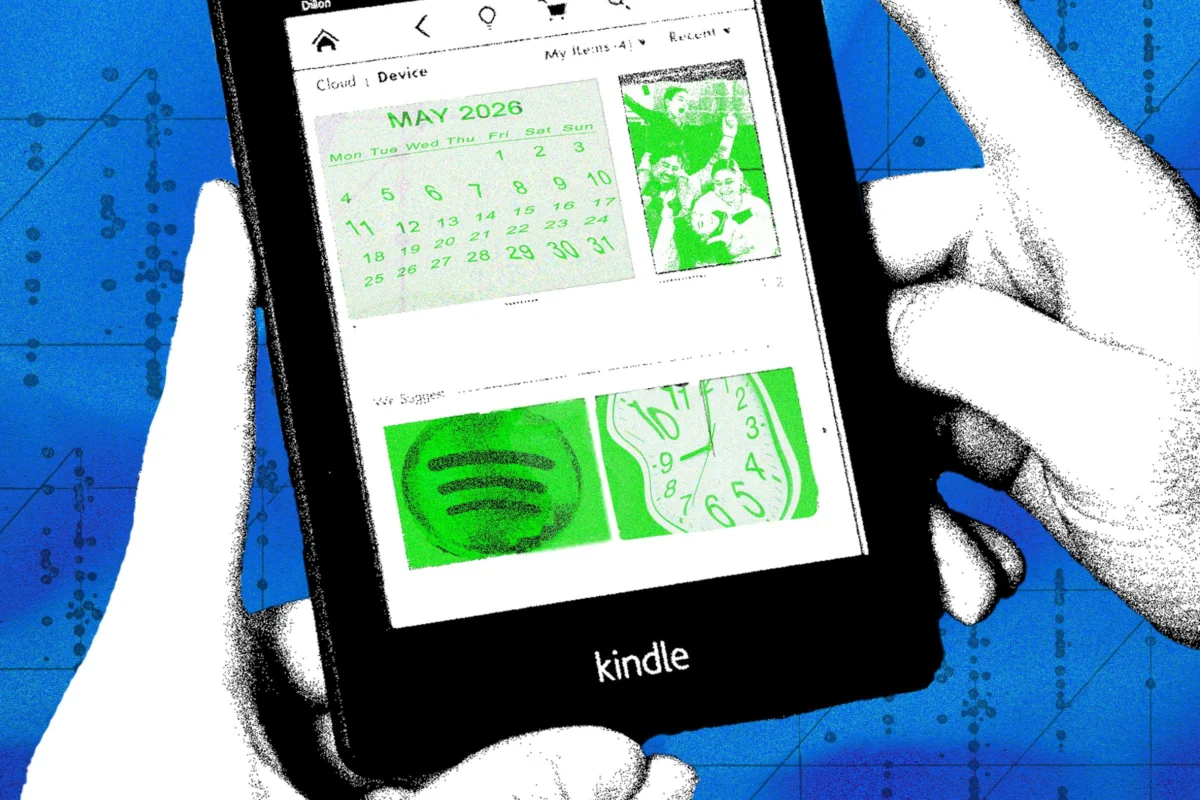
The Amazon Kindle has long been the dominant force in the global e-reader market, a position it has maintained since its initial launch in November 2007. While these devices are primarily engineered for the consumption of digital literature, their underlying hardware—specifically the highly efficient E-Ink display technology—renders them capable of far more than simple text rendering. As consumers upgrade to newer iterations like the Kindle Paperwhite 5 or the Kindle Scribe, a growing surplus of older, yet functional, devices has entered the secondary market or remained dormant in household storage. In response, a vibrant community of developers and hardware enthusiasts has emerged, dedicated to "hacking" or repurposing these devices into specialized tools for the modern smart home.
The versatility of the Kindle is largely a result of its unique electrophoretic display. Unlike Liquid Crystal Displays (LCD) or Organic Light-Emitting Diode (OLED) screens, E-Ink screens only consume power when the image on the screen changes. Once an image is set, it remains visible without further energy expenditure. This characteristic makes the Kindle an ideal candidate for low-refresh utility displays, such as music controllers, information dashboards, and decorative timepieces. By leveraging the Kindle’s built-in experimental web browser or more advanced firmware modifications, users can breathe new life into aging hardware, contributing to the "circular economy" and reducing electronic waste.
Technical Foundations: The Evolution of Kindle Hacking
To understand the feasibility of these projects, it is necessary to examine the evolution of the Kindle’s software environment. Amazon’s proprietary operating system is based on Linux, which has historically provided a foundation for developers to explore the device’s limits. Over the past decade, a chronology of "jailbreaking" milestones has allowed users to gain root access to their devices, enabling the installation of custom software like the Kindle Unified Application Launcher (KUAL) and terminal emulators.
However, many contemporary repurposing projects no longer require risky firmware modifications. Instead, they utilize the "Experimental Browser" included in almost every Kindle model. While this browser is notoriously slow for traditional web surfing, it is perfectly suited for displaying static or semi-static web applications designed specifically for E-Ink refresh rates. This shift toward browser-based utility has democratized Kindle hacking, making it accessible to users without deep technical expertise in coding or hardware manipulation.
Transforming the Kindle into a Dedicated Spotify Controller
One of the most practical applications for an old Kindle is its conversion into a dedicated Spotify controller. In a modern smart home ecosystem, music is often played through high-end speakers or home theater systems, but controlling that music usually requires a smartphone. Using a smartphone for this purpose often leads to digital distractions, such as social media notifications or work emails. A repurposed Kindle provides a "single-tasking" interface that focuses entirely on music management.
This functionality is facilitated by a third-party service known as Kindlify.co. The process relies on "Spotify Connect," a proprietary protocol that allows Spotify users to bridge playback between different devices. By accessing Kindlify through the Kindle’s web browser and authenticating with Spotify credentials, the Kindle becomes a remote interface for the user’s active Spotify session.
From a technical standpoint, the Kindle does not stream the audio itself. Instead, it sends commands via the web browser to Spotify’s servers, which then relay those commands to the active playback device, such as a Sonos speaker or a laptop. Users can play, pause, and skip tracks directly from the Kindle’s E-Ink screen. Because the display only refreshes when the song title or album art changes, the battery life remains significantly superior to that of a smartphone or tablet used for the same purpose.
The Smart Home Information Dashboard
For users seeking a more complex challenge, the Kindle can be transformed into a sophisticated smart home display. This project, popularized by developers such as Matt Healy, involves configuring the Kindle to act as a real-time monitor for various data streams, including weather forecasts, Google Calendar events, and package delivery statuses.
Unlike the Spotify controller, this project typically requires an intermediary server—often a Raspberry Pi or a cloud-based script—to aggregate data and convert it into a Kindle-friendly image format. The Kindle then periodically refreshes its browser to display the latest image. The implications of this are significant for home organization; an E-Ink dashboard can be mounted on a wall or placed on a desk, providing a high-contrast, glare-free view of the day’s schedule without the intrusive glow of a traditional monitor.
Data from the International Data Corporation (IDC) suggests that the smart home market continues to expand, yet "screen fatigue" remains a primary concern for consumers. The use of E-Ink for home automation addresses this by offering a "calm technology" alternative. It blends into the home environment like a piece of paper or a framed photograph, only updating when necessary. Developer Matt Healy’s documentation highlights that the information displayed is entirely customizable, provided the source platform offers an accessible Application Programming Interface (API).
The Literary Clock: A Fusion of Art and Utility
Perhaps the most aesthetically pleasing use for a retired Kindle is the "Literary Clock." This project repurposes the e-reader into a timepiece that tells the time using quotes from classic and contemporary literature. For every one of the 1,440 minutes in a day, the clock displays a sentence from a book that specifically mentions that exact time.
The complexity of this project lies in the database of images. To function effectively, the Kindle must store or access 1,440 unique images, each formatted to the device’s specific resolution. According to instructions available on platforms like Instructables, this can be achieved by setting the Kindle to a "slideshow" mode or by using a web-based script that pushes a new image to the screen every 60 seconds.
This project has received significant praise within the "maker" community for its cultural value. It transforms a piece of technology into a literary quiz; the name of the author and the title of the book are often hidden until the user interacts with the screen. This encourages a deeper engagement with literature while serving a functional purpose. Furthermore, it highlights the longevity of E-Ink; even a Kindle from 2012 can perfectly execute this task, as the processing power required to change an image once a minute is minimal.
Environmental and Economic Implications
The trend of repurposing Kindles is more than a hobby; it is a response to the growing problem of electronic waste (e-waste). According to the Global E-waste Monitor, the world generated 53.6 million metric tons of e-waste in 2019, a figure that is projected to rise. Tablets and e-readers contribute to this total when they are discarded due to perceived obsolescence.
By finding new uses for these devices, consumers are extending the lifecycle of the lithium-ion batteries and rare earth minerals contained within them. Economically, these hacks provide high-value utility for "zero cost," assuming the user already owns the hardware. A dedicated smart home dashboard or a high-end digital clock can cost hundreds of dollars; a hacked Kindle provides the same functionality using resources that would otherwise be trashed.
Industry analysts suggest that Amazon and other hardware manufacturers may eventually see the benefit in officially supporting these "utility modes." Currently, Amazon’s "Show Mode" on Fire tablets provides similar features, but the high power consumption of LCD screens makes them less desirable for permanent "always-on" displays compared to the Kindle’s E-Ink technology.
Conclusion: The Future of Hackable Hardware
The transformation of the Amazon Kindle from a simple book-reader into a Spotify remote, a smart home hub, or a literary clock demonstrates the untapped potential of specialized hardware. These projects underscore a broader shift in consumer behavior toward "right to repair" and creative upcycling. As software continues to become more web-centric, the hardware limitations of older devices become less relevant, provided they have a screen and a basic internet connection.
While Amazon continues to refine the Kindle as the ultimate reading device, the community-led efforts to expand its utility ensure that these devices remain relevant long after their primary purpose has been served. Whether for the sake of home organization, musical convenience, or artistic expression, the Kindle remains one of the most versatile and durable pieces of consumer electronics in the modern era. For the millions of Kindle owners worldwide, the message is clear: your old e-reader is not obsolete; it is merely waiting for its next chapter.
