

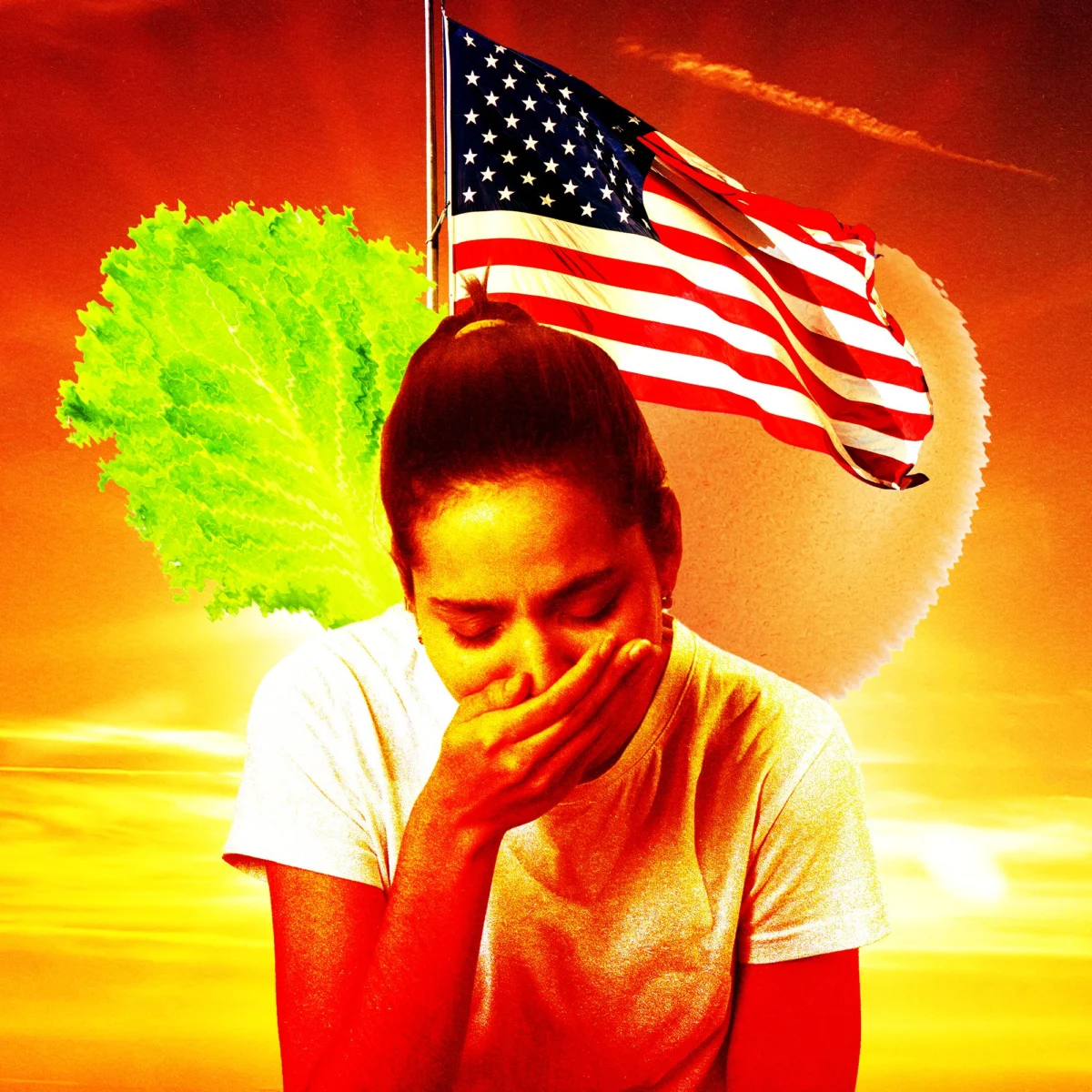
The United States is currently grappling with a public health crisis of historic proportions as a series of massive foodborne illness outbreaks have left thousands of citizens ill and the national food safety infrastructure under unprecedented strain. Data analyzed from the Food and Drug Administration (FDA) and the Centers for Disease Control and Prevention (CDC) reveal that 2026 has become the most dangerous year for food consumption in recent memory, with reported illnesses already exceeding 12,800 cases. This figure represents a staggering increase compared to the previous year, which saw only 895 recorded cases related to major outbreaks. As medical facilities across more than two dozen states report a steady influx of patients, experts point to a "perfect storm" of administrative downsizing, budget cuts, and regulatory loopholes as the primary drivers behind the current "summer of sickness."
The Scope of the 2026 Outbreaks
The current crisis is defined by the convergence of several major outbreaks involving different pathogens and a wide variety of food products. The most significant contributor to the surge is an unprecedented outbreak of Cyclospora cayetanensis, a microscopic parasite. While Cyclospora infections typically occur in the hundreds or low thousands annually, the 2026 outbreak has shattered all previous records. According to the CDC, there have been 17,180 laboratory-confirmed cases of cyclosporiasis this year alone, with approximately 67 percent linked directly to iceberg lettuce sourced from Taylor Farms.
In addition to the parasitic threat, bacterial infections are also on the rise. A significant Salmonella outbreak linked to contaminated jalapeños has resulted in at least 431 illnesses and 57 hospitalizations across 25 states. This represents the most severe Salmonella event since the 2024 cucumber outbreak. Furthermore, a rare dual-pathogen outbreak involving both E. coli and Salmonella has been traced to alfalfa sprouts produced in a Minnesota hydroponic facility, affecting 55 individuals. The diversity of the products involved—ranging from leafy greens and peppers to eggs and even pet food—suggests systemic vulnerabilities that transcend any single farming sector.
Chronology of a Public Health Crisis
The roots of the current crisis can be traced back to a series of policy shifts and budgetary decisions made over the last several years. To understand the timeline of the 2026 surge, one must look at the gradual erosion of the nation’s protective health agencies:
- 2022: The FDA issues a new traceability rule intended to improve the tracking of high-risk foods like leafy greens. The rule is designed to allow investigators to pinpoint the source of an outbreak within hours rather than weeks.
- January 2025: A report from the U.S. Government Accountability Office (GAO) warns of a dangerous disparity in food inspections. The report reveals that the FDA conducted only 917 foreign inspections annually between 2018 and 2023, compared to over 8,000 domestic inspections, despite the fact that a massive portion of the U.S. produce supply is imported.
- Spring 2025: The Trump administration implements a $12 billion cut to grants for state health departments. These funds are the primary resource for local epidemiologists who act as the first line of defense in identifying and containing outbreaks.
- Late 2025: The CDC undergoes a massive workforce reduction, losing approximately 3,000 employees through layoffs and buyouts. This represents a 25 percent reduction in the agency’s total staff. Crucially, the molecular parasitology lab—responsible for tracking Cyclospora—is downsized from 11 specialists to just three.
- November 2025: Under pressure from industry lobbyists, Congress votes to delay the implementation of the 2022 FDA traceability rule until July 20, 2028, effectively leaving the current paper-based, fragmented tracking system in place.
- May 2026: FDA Commissioner Marty Makary resigns, leaving the agency without a permanent leader during the onset of the summer peak for foodborne pathogens.
- July 2026: The Cyclospora outbreak reaches a tipping point, with thousands of cases reported in Michigan and other Midwestern states, overwhelming local health departments that had already seen staff reductions.
The Administrative and Financial Toll
The "summer of sickness" is not merely a biological phenomenon but a direct consequence of a weakened public health infrastructure. Barbara Kowalcyk, director of George Washington University’s Institute for Food Safety and Nutrition, notes that the current situation demonstrates the extreme vulnerabilities inherent in a stressed system. When federal funding for state health departments was slashed in 2025, the impact was felt immediately at the local level.
In Michigan, which has emerged as the epicenter of the Cyclospora crisis, the loss of federal grants resulted in the termination of 23 infectious disease workers and 123 county health staff members. These are the professionals responsible for interviewing patients, collecting food samples, and identifying the "common denominator" in an outbreak. Without this human capital, thousands of cases go uninvestigated, allowing contaminated products to remain on grocery store shelves for longer periods.
The staffing crisis at the federal level is equally dire. The reduction of the CDC’s parasitology lab has hampered the government’s ability to perform "DNA fingerprinting" on Cyclospora samples. This technical analysis is essential for determining if a cluster of illnesses in Maine is related to a cluster in California. Without it, the FDA and CDC are effectively "flying blind," unable to link disparate cases to a single source facility.
Regulatory Loopholes and the Traceability Gap
A significant portion of the current illness burden is linked to imported products, highlighting a major loophole in U.S. food safety regulations. De Ann Davis, senior vice president of science at the Western Growers Association, points out that while the U.S. has strict standards for domestic growers, the oversight of the "middlemen" in the international supply chain is remarkably thin.
Current regulations often do not apply to importers, brokers, or trading companies that coordinate the movement of food but do not physically handle the product. This means that iceberg lettuce or jalapeños can enter the country without verified traceability information. If a shipment is contaminated, investigators often hit a "dead end" when trying to trace the product back to a specific field in a foreign country.
The Taylor Farms facility in Mexico, which has been linked to the primary Cyclospora outbreak, illustrates the inspection gap. Reports indicate that the facility has not undergone an FDA inspection since 2019. Budgetary constraints and a shift in agency priorities have led to a decrease in unannounced foreign inspections, leaving the safety of imported produce largely to the discretion of the producers themselves.
Scientific Analysis: Why This Summer is Different
Beyond the policy failures, biological and environmental factors are exacerbating the crisis. Cyclospora is a particularly resilient pathogen. Unlike many bacteria, it forms a tough, protective outer shell that makes it resistant to standard chemical sanitizers. Because it frequently lodges itself in the intricate folds of leafy greens and berries—products typically consumed raw—there is no "kill step" (such as cooking) to protect the consumer.
Furthermore, 2026 is experiencing what meteorologists describe as the strongest El Niño event in 150 years. This has resulted in record-breaking temperatures and increased humidity across major agricultural regions. Pathogens like Salmonella and E. coli thrive in heat, and increased rainfall can lead to contaminated runoff from livestock operations entering irrigation systems for produce fields. The intersection of a warming climate and a decaying safety net has created an environment where pathogens can proliferate with minimal interference.
Official Responses and Future Implications
In response to the growing criticism, the FDA issued a statement defending its oversight system. The agency emphasized that its "risk-based" approach successfully identified the source of the Cyclospora outbreak and claimed that it is actively seeking expanded authority to collect fees from foreign food facilities to fund more inspections. The administration has also argued that it has increased the number of unannounced foreign inspections, though critics point out that the raw number of inspections remains far below pre-2020 levels.
The implications for the remainder of the year are somber. Food safety experts warn that the peak season for foodborne illness typically extends into August, September, and early October. With the traceability rule delayed and state health departments operating at a fraction of their former capacity, the "summer of sickness" may well extend into a "fall of infection."
Consumer advocacy groups, including the Safe Food Coalition, have intensified their calls for Congress to immediately reinstate the traceability requirements and restore funding to the CDC and state-level health agencies. They argue that the economic cost of the outbreaks—including healthcare expenses, lost productivity, and the financial ruin of impacted farmers—far outweighs the cost of maintaining a robust safety infrastructure.
As the 2026 crisis continues to unfold, it serves as a stark reminder that food safety is a continuous process requiring constant vigilance, adequate funding, and international cooperation. For now, American consumers are left to navigate a grocery aisle where even a simple salad feels like a calculated risk, and the systems designed to protect them appear to be failing under the weight of their own diminished resources.
