

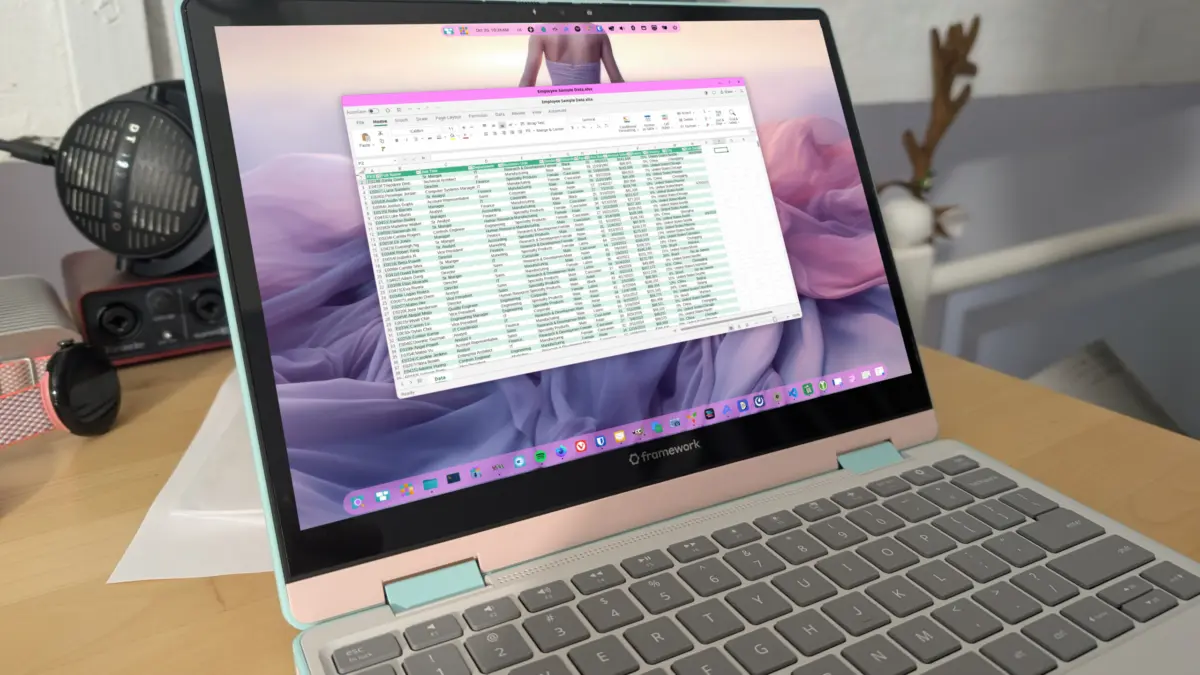
The landscape of desktop productivity software is undergoing a significant shift as the ArtCraft development team continues its ambitious project to provide open-source, native alternatives to the industry-standard Microsoft Office and Adobe Creative Cloud suites. The latest addition to this ecosystem is GridCraft, a spreadsheet application designed to offer a seamless transition for users accustomed to Microsoft Excel. By reverse-engineering the core functionalities of the world’s most popular spreadsheet software and rebuilding them using the Rust programming language, ArtCraft aims to dismantle one of the final barriers to widespread Linux adoption: the lack of a high-performance, native office suite that maintains perfect parity with proprietary formats.
The Strategic Context of ArtCraft’s Ecosystem
GridCraft does not exist in a vacuum; it is the latest component of a broader strategy by ArtCraft to provide a comprehensive software stack for professionals who prefer open-source environments. This suite includes PhotoCraft (a Photoshop alternative), WordCraft (a Word alternative), DeckCraft (a PowerPoint alternative), PDFCraft (an Acrobat alternative), and FilmCraft (a Premiere Pro alternative). For years, the "app gap" has been the primary deterrent for enterprise and creative professionals considering a move to Linux or FreeBSD. While web-based solutions like Google Sheets and Microsoft 365 have mitigated some of these issues, they often lack the responsiveness and offline capabilities required for complex data processing.
The ArtCraft initiative represents a departure from previous attempts at open-source office suites, such as LibreOffice or Apache OpenOffice. While those suites are robust, they often carry decades of legacy code and user interface designs that can feel dated to modern users. GridCraft, by contrast, focuses on a "native-first" philosophy, ensuring that the application feels like a part of the underlying operating system rather than a port.
Technical Specifications and the Rust Advantage
One of the most significant technical decisions made by the ArtCraft team was the choice of Rust as the primary programming language for GridCraft. Rust has gained immense popularity in recent years for its memory safety guarantees and its ability to deliver performance comparable to C and C++. In the context of a spreadsheet application, these attributes are critical.

Spreadsheets are notoriously resource-intensive, particularly when handling "big data" sets involving thousands of rows, complex nested formulas, and pivot tables. Microsoft Excel often struggles with "lag" or "not responding" states when recalculating large workbooks. Initial testing of GridCraft indicates that its virtualized grid and incremental recalculation engine—optimized through Rust’s concurrency models—allow it to handle workbooks with over 1,000 rows and complex calculations without the stuttering typically associated with traditional spreadsheet software.
Key technical features of GridCraft include:
- Native XLSX Compatibility: The application reads and writes directly to the standard Excel format, ensuring that files can be shared with users on other platforms without data loss or formatting errors.
- Extensive Formula Library: GridCraft launches with support for over 500 calculation functions, covering financial, statistical, and engineering requirements.
- Agent-Native Automation: Unlike Excel’s traditional VBA (Visual Basic for Applications), GridCraft integrates modern automation hooks designed to work with contemporary scripting and AI agents.
- Virtualised Grid Architecture: This allows the software to render only what is visible on the screen, significantly reducing memory overhead when navigating massive datasets.
- Copy-on-Write Workbooks: This feature enables instant undo snapshots, allowing users to revert changes across complex sessions without the risk of data corruption.
Overcoming the Linux Desktop Adoption Barrier
For the Linux community, GridCraft represents more than just another free tool; it is a strategic asset. Historically, the "Year of the Linux Desktop" has been delayed by the reliance of corporate environments on the .docx, .xlsx, and .pptx formats. While compatibility layers like Wine have allowed some versions of Microsoft Office to run on Linux, the experience is often plagued by bugs and performance bottlenecks.
By providing a native application that mimics the Excel workflow while remaining entirely open-source, ArtCraft is providing IT departments with a viable pathway to migrate workstations to Linux distributions like Ubuntu, Fedora, or Arch. This move has the potential to save organizations significant licensing fees while increasing the security and stability of their computing environments. Furthermore, because GridCraft is released under an open license, organizations can audit the source code to ensure compliance with strict data privacy regulations—a feat impossible with proprietary software.
Performance Benchmarks and User Experience
In practical application, GridCraft distinguishes itself through its speed of execution. Unlike many modern applications that rely on Electron or other web-based wrappers, GridCraft is a compiled native binary. This results in nearly instantaneous launch times. On standard hardware running Linux or Windows, the application typically opens in under two seconds, whereas Microsoft Excel may take significantly longer to load plugins and cloud-syncing services.

The user interface of GridCraft is intentionally familiar. The development team has opted for a layout that mirrors the traditional ribbon and grid system, minimizing the learning curve for new users. During testing with complex data structures, including pivot tables and multi-sheet dependencies, the application maintained its responsiveness. The "instant undo" feature, powered by the copy-on-write architecture, proved particularly effective when performing bulk data edits that would typically cause a spreadsheet program to hang.
Current Limitations and Development Roadmap
Despite its strengths, GridCraft is still an evolving product. One notable area for improvement is its template system. Currently, the application lacks a robust library of pre-built templates for tasks like project management, complex financial modeling, or specialized invoicing. Furthermore, the ability to save files specifically in the .xltx (Excel Template) format is currently absent, forcing users to rely on workarounds such as saving files as CSVs or standard XLSX files in a dedicated "templates" folder.
The ArtCraft team has acknowledged these gaps and indicated that future updates will focus on:
- Enhanced Template Integration: Developing a native template browser and supporting more specialized file extensions.
- Cloud Integration: While the app is native-first, there is a growing demand for seamless synchronization with services like Nextcloud or Google Drive.
- Advanced Visualization: While GridCraft supports standard charts and pivot tables, the team aims to expand its data visualization tools to compete with Power BI-lite features.
Broader Implications for the Software Industry
The rise of the ArtCraft suite, and GridCraft in particular, signals a maturing of the open-source ecosystem. We are moving away from the era where open-source meant "functional but unpolished." The use of modern languages like Rust and a focus on high-fidelity reverse engineering suggests that the open-source community is now capable of producing tools that are not just "good enough" alternatives, but are technically superior in terms of speed and resource efficiency.
From a market perspective, GridCraft poses a challenge to the subscription-based model popularized by Microsoft 365. As economic pressures lead businesses to scrutinize recurring software costs, the availability of a free, high-performance, and compatible spreadsheet tool becomes highly attractive. While Microsoft remains the dominant force in the enterprise sector due to its deep integration with Azure and Active Directory, GridCraft provides a "decoupled" alternative for users who prioritize performance and data sovereignty over ecosystem lock-in.

Chronology of ArtCraft’s Development
The journey to GridCraft has been a multi-year effort:
- Phase 1 (The Foundation): ArtCraft began by developing the core graphics and data processing engines in Rust, ensuring that the foundational code could be shared across multiple applications.
- Phase 2 (The Creative Suite): The release of PhotoCraft and FilmCraft established ArtCraft as a serious contender in the professional software space, proving that Rust could handle high-intensity media tasks.
- Phase 3 (The Productivity Suite): WordCraft and PDFCraft were released to address the documentation needs of users, leading directly into the development of the more complex GridCraft.
- Phase 4 (Current): GridCraft enters the market as a near-complete replacement for Excel, with the team now focusing on fine-tuning compatibility and expanding the template library.
Conclusion: A New Era for Productivity
GridCraft stands as a testament to the power of modern open-source development. By focusing on the "de facto standards" of the industry and rebuilding them with modern performance in mind, ArtCraft has provided a tool that serves both the enthusiast and the professional. While it may not yet possess every niche feature found in the decades-old Microsoft Excel, its speed, native cross-platform support, and open nature make it a formidable competitor. For the Linux user, it represents the removal of one of the final hurdles to a fully professional desktop experience. For the broader tech industry, it serves as a reminder that innovation often comes from those who seek to build better, faster, and more accessible versions of the tools we use every day.
