

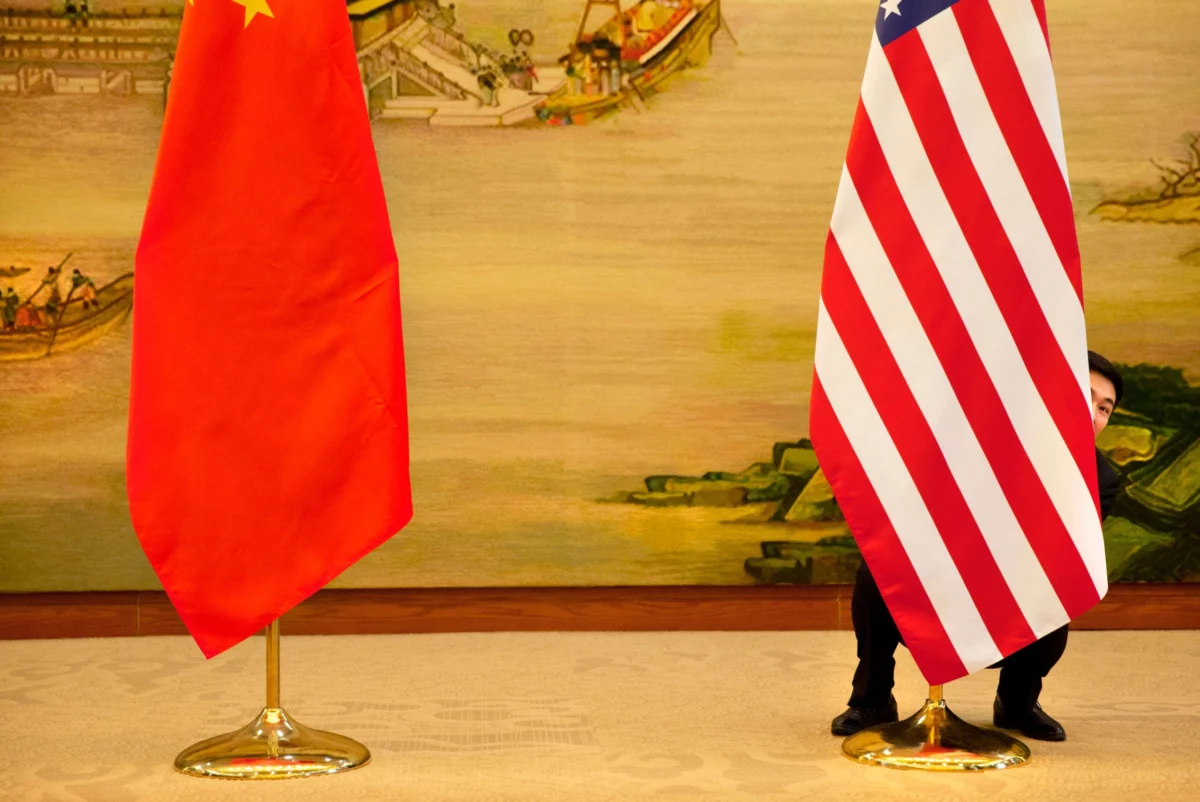
In July and August 2026, the United States government significantly escalated its economic and regulatory pressure on foreign-made advanced robotic systems, signaling a pivotal shift in the global technology trade war. Citing urgent national security concerns, Washington introduced a two-pronged strategy involving the expansion of the Federal Communications Commission’s (FCC) "Covered List" to include advanced robotic devices and the imposition of steep tariffs on imported drones and their essential components. These measures, which follow years of escalating tension over telecommunications and semiconductor technology, represent a targeted effort to decouple critical American infrastructure from Chinese-manufactured autonomous systems. The drone tariffs are scheduled to take effect in September 2026, with a secondary phase of component-specific levies set for 2027, creating a complex compliance landscape for American enterprises and global manufacturers alike.
A Strategic Expansion of the Regulatory Perimeter
The recent actions against the robotics sector are not isolated incidents but are part of a broader, multi-year strategy to insulate the U.S. economy from foreign technological influence in strategically sensitive industries. The foundation for these moves was laid in 2021 with the establishment of the FCC’s Covered List. Initially, this list was designed to prevent the integration of telecommunications and video surveillance equipment from companies deemed to pose an unacceptable risk to national security, most notably Huawei, ZTE, and Hikvision.
As the definition of "national security" has evolved to encompass data privacy and autonomous mobility, the scope of the list has widened. In early 2026, the focus shifted to unmanned aircraft systems (UAS), and the most recent inclusion of advanced robotic systems marks the first time that humanoid and multi-purpose industrial robots have been directly targeted by federal communications regulators. By placing these devices on the Covered List, the FCC effectively bars them from receiving the equipment authorizations necessary to operate on U.S. radio frequencies, essentially "bricking" new foreign-made units within American borders unless they utilize approved, non-restricted components.
Chronology of U.S. Technological Restrictions (2021–2027)
To understand the current state of the robotics industry, one must examine the chronological progression of U.S. policy:
- March 2021: The FCC officially publishes the first "Covered List" under the Secure and Trusted Communications Networks Act of 2019, targeting five Chinese firms.
- 2022–2024: Incremental updates add more telecommunications entities and software service providers to the list.
- Early 2026: Washington identifies drones as a primary security vulnerability, citing the potential for data harvesting and remote surveillance of critical infrastructure.
- July 2026: The FCC expands the Covered List to include "advanced robotic systems," specifically targeting humanoid robots and autonomous industrial platforms.
- August 2026: The White House announces Executive Action under Section 301 of the Trade Act to impose significant tariffs on drones and drone parts.
- September 2026: The first phase of drone tariffs takes effect, aimed at finished units.
- 2027: The second phase of tariffs is scheduled for implementation, focusing on the underlying components and supply chain elements used in drone assembly.
The Scale Gap: China’s Dominance in Humanoid Robotics
The urgency of the U.S. response is driven by the sheer scale of Chinese manufacturing. According to a recent report by Counterpoint Research, the first half of 2026 saw a massive surge in the humanoid robotics market, with global shipments reaching approximately 22,000 units. This represents a nearly 300% year-over-year increase, but the distribution of this growth is heavily skewed.
The data reveals that the world’s five largest humanoid robot manufacturers by shipment volume—AgiBot, Unitree, Galbot, UBTECH, and Leju Robotics—are all headquartered in China. Together, these five companies accounted for a staggering 86% of all global shipments in the first six months of 2026. This dominance is not merely a matter of quantity; it is a matter of economic momentum. Lower production costs allow these firms to flood the market, which in turn generates vast amounts of real-world operational data. This data is then fed back into machine learning models to improve the robots’ dexterity, navigation, and utility, creating a self-reinforcing cycle of technological advancement and cost reduction.
Ankur Saxena, an investment director at TDK Ventures, notes that while the U.S. leads in "frontier AI," software innovation, and semiconductor design, China has secured an almost unassailable lead in manufacturing scale and supply-chain depth. This "scale gap" means that Chinese manufacturers can cut prices for humanoid robots at a rate that Western competitors, currently operating at a fraction of that volume, struggle to match.
Analyzing the "Cost Curve" and Industry Reactions
The competitive friction between the two superpowers highlights a fundamental disagreement on how to lead the robotics industry. For Chinese firms, the strategy is vertical integration. Companies like Unitree are increasingly developing their own actuators, sensors, and chips in-house. Furthermore, Chinese automakers such as XPeng are leveraging their existing vehicle assembly lines and battery supply chains to pivot into robotics, dramatically lowering the barrier to entry.
Industry analysts argue that U.S. sanctions may be an ineffective tool against such economic momentum. "You cannot sanction your way around a cost curve," Saxena told TechCrunch. "You can only out-build it, and America has yet to begin making the decade-long investment that will require."
In contrast, U.S.-based companies have largely welcomed the restrictions as a necessary protective measure. Agility Robotics, the manufacturer of the Digit humanoid robot, publicly supported the FCC’s July decision. The company argues that early intervention is necessary to prevent foreign-made robots from becoming "deeply embedded" in the U.S. market, similar to how DJI dominated the consumer and commercial drone sectors before security concerns were fully addressed. By assembling and designing its robots domestically, Agility Robotics positions itself as a "trusted" alternative, though it continues to call for access to global research and specialized components that are not yet available in the U.S.
The Fragmented Global Market: Where Competition Moves Next
As the U.S. market becomes increasingly restricted for Chinese robotics firms, the industry is bracing for a "Great Fragmentation." Rather than a total collapse of Chinese exports, experts predict a shift in geographic focus. Chinese companies are already pivoting toward price-sensitive regions where labor shortages are acute but national security concerns regarding Chinese hardware are less prioritized. These include:
- Southeast Asia and Latin America: Regions with growing manufacturing sectors seeking affordable automation to maintain global competitiveness.
- The Middle East: Nations investing heavily in "smart city" infrastructure and logistics automation.
- Europe: A complex market where some nations may follow the U.S. lead on security, while others remain open to cost-effective Chinese solutions for their aging workforces.
Bentzion Levinson, founder and CEO of Heven AeroTech, suggests that the drone market serves as a blueprint for this future. The industry is splitting into two distinct ecosystems: a U.S.-led market focused on NDAA-compliant (National Defense Authorization Act), high-security, long-range autonomous systems, and a China-led market focused on high-volume, low-cost consumer and agricultural drones.
Regionalization and the Rise of Allied Supply Chains
The ultimate result of Washington’s restrictions may be the regionalization of robotics. Yang Fang of Beagle Technology suggests that robots will increasingly be designed for the specific labor needs and regulatory environments of their home markets. A robot designed for a Chinese factory might prioritize different safety protocols or data-handling standards than one designed for a North American warehouse.
Furthermore, the "alternative to China" is unlikely to be a purely American supply chain. Instead, industry leaders envision a "diversified allied" network. This would involve:
- Japan: Leveraging its decades of expertise in precision industrial robotics (e.g., Fanuc and Yaskawa).
- South Korea: Utilizing its strengths in battery technology and electronics (e.g., Hyundai’s ownership of Boston Dynamics).
- Taiwan: Providing the high-end semiconductors necessary for on-device AI processing.
While these nations offer a pathway toward a non-Chinese supply chain, the transition will be slow and costly. Many components used by Japanese and Korean manufacturers are still sourced from China, meaning that a true "clean" supply chain remains a long-term goal rather than a current reality.
Implications for the Future of Automation
The imposition of tariffs and the expansion of the Covered List mark the end of the "globalized" era for robotics. For American businesses, this means higher costs in the short term as they transition away from affordable Chinese drones and robots. For the robotics industry, it means a shift in the "battleground" of innovation. As Levinson of Heven AeroTech points out, the next competitive frontier is not just the robot itself, but the "energy and payload architecture"—the batteries and sensors that define a machine’s capability.
As the September 2026 tariff deadline approaches, the global robotics industry stands at a crossroads. The U.S. has made its move to protect its national security and domestic industry, but the global "cost curve" remains in China’s favor. Whether the U.S. can "out-build" its rivals through AI innovation and allied partnerships will determine who leads the next generation of autonomous systems. For now, the world must prepare for a more divided, regionalized, and complex robotics landscape.
