

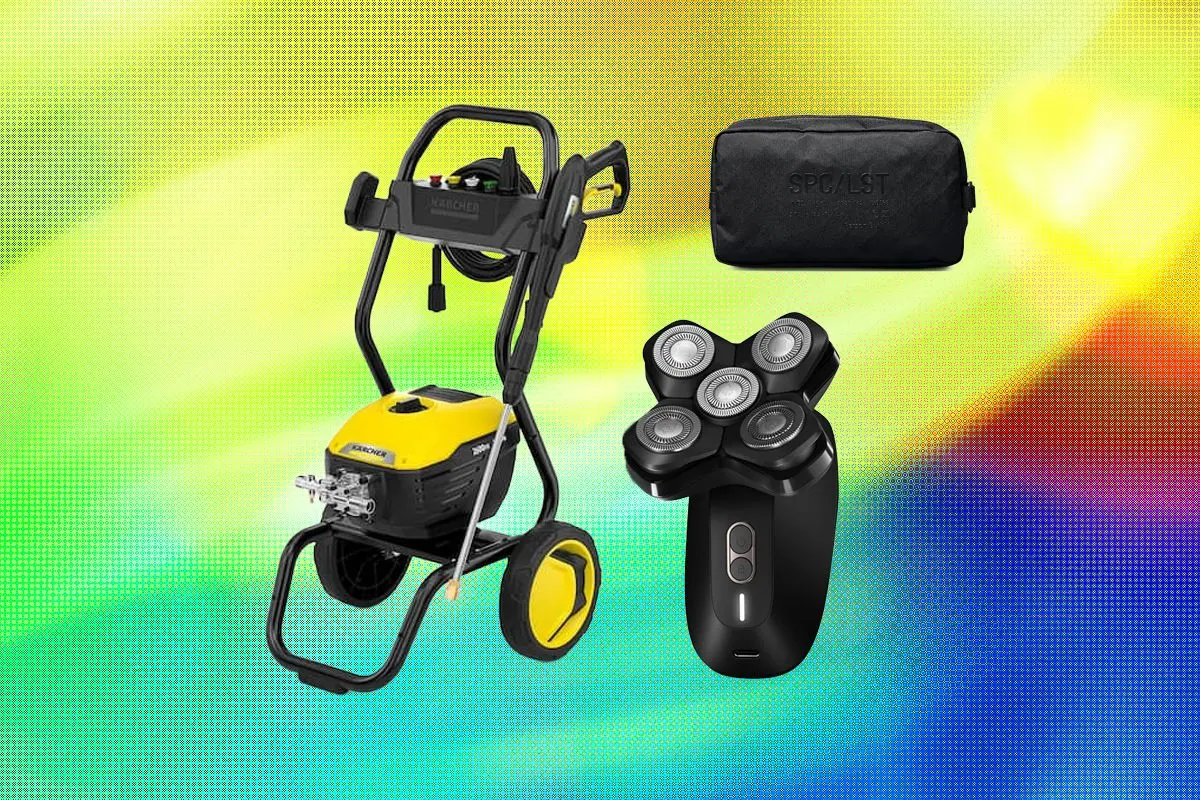
The landscape of men’s consumer products has undergone a significant transformation over the last decade, shifting from a focus on basic utility to a niche market defined by hyper-performance, tactical aesthetics, and over-engineered durability. This evolution is most visible in the gift-giving sector, where traditional items like silk neckties and standard leather belts are increasingly being replaced by products that borrow design cues from aerospace engineering, professional culinary arts, and military-grade hardware. As of late 2026, the market for "manly" goods has bifurcated: one segment remains rooted in classic heritage, while the other leans heavily into a "tactical" lifestyle, often categorized under the cultural umbrella of the "manosphere." This shift represents a broader psychological trend where domestic tasks—such as cooking, grooming, and home maintenance—are rebranded as high-stakes, performance-driven activities.
The Engineering of Domesticity: High-Output Culinary Tools
A primary example of this trend is the emergence of the Männkitchen Pepper Cannon. Historically, the pepper mill was a decorative wooden heirloom, often prioritizing aesthetics over mechanical efficiency. However, the Pepper Cannon, priced at approximately $200, treats the act of seasoning as an engineering challenge. Constructed from high-grade aerospace aluminum and featuring a heavy-duty stainless steel burr set, the device is marketed on its "output" capabilities. While a standard grocery store grinder may require dozens of rotations to produce a teaspoon of ground pepper, the Pepper Cannon is designed to achieve the same result in a fraction of the time.

This focus on "torque" and "output" mirrors the specifications found in automotive or industrial marketing. The success of such products—often launched via crowdfunding platforms like Kickstarter—highlights a consumer base that values "over-built" solutions for mundane problems. Market analysts suggest that the appeal lies in the tactile feedback of the machine; it transforms a kitchen task into a mechanical operation. For the modern consumer, the value proposition is not just the pepper itself, but the efficiency and durability of the delivery system.
Professional Standards and Cultural Icons: The Global Chef’s Knife
In the realm of cutlery, the influence of professional endorsement remains a powerful driver of consumer behavior. The Global 8-Inch Classic Chef’s Knife has maintained a position of prominence, largely due to its association with the late culinary icon Anthony Bourdain. Bourdain’s advocacy for the Global G-2—a knife he famously recommended for its balance, ease of maintenance, and accessible price point—has cemented the tool’s legacy.
Unlike traditional Western knives that feature heavy bolsters and wooden handles, the Global knife is characterized by its seamless, one-piece stainless steel construction and a handle filled with sand to achieve precise balance. From a manufacturing standpoint, the use of CROMOVA 18 stainless steel allows the blade to remain sharp for extended periods while resisting stains and corrosion. As of 2026, the knife remains a staple in both professional kitchens and home collections, retailing between $116 and $150. Its enduring popularity illustrates a cross-over point where "manly" gifts intersect with genuine professional utility, moving away from the "tactical" gimmickry and toward proven industrial design.

Precision Technology and the Modern Tool Kit
The integration of laser technology into the domestic tool kit represents another leap in the hyper-masculinization of home maintenance. The Mileseey S50 Green-Laser Distance Measure, priced at $130, exemplifies the transition from the analog tape measure to digital precision instruments. The use of green-laser technology is a specific upgrade over traditional red lasers, offering up to four times better visibility in bright environments—a feature often touted in construction-grade equipment.
These devices are no longer relegated to professional surveyors or architects. Instead, they have become lifestyle accessories for the "DIY" enthusiast who prioritizes accuracy and high-tech interfaces. The inclusion of features such as electronic level sensors, multiple measurement modes (Pythagorean, area, volume), and Bluetooth connectivity reflects a broader trend: the "gadgetization" of manual labor. By framing home measurement as a high-tech endeavor, manufacturers tap into a demographic that values technical proficiency and sophisticated hardware.
The Tactical Aesthetic in Personal Care and Organization
The "tactical" trend has perhaps most aggressively permeated the personal care and organization sector. The SPC/LST System Kit, a $95 toiletry bag, serves as a case study in this aesthetic. Eschewing the soft leathers of traditional "dopp kits," the System Kit utilizes rugged materials and modular designs reminiscent of military load-bearing equipment. The use of the word "system" rather than "bag" or "pouch" is a deliberate marketing choice, suggesting a level of organization and readiness that transcends simple storage.

This trend extends to the products contained within such kits. The rise of "ruggedized" grooming products—soaps with "men" explicitly branded on the packaging, aggressive safety razors like those from Leaf or Thorn, and specialized head shavers—indicates a shift in how personal hygiene is marketed. Shaving is no longer a chore; it is an "aggressive" grooming ritual. This rebranding has proven lucrative. Data from 2024 and 2025 indicated that the men’s personal care market was growing at a faster rate than the general beauty sector, driven largely by products that emphasize "masculine" scents, durable packaging, and "problem-solving" formulations.
Chronology of the High-Performance Gift Trend
The trajectory of these consumer goods can be traced through several distinct phases over the last seven decades:
- 1950s – 1980s: The Era of Utility. Gifts for men were largely functional and tied to traditional roles (e.g., the "Sears Craftsman" tool set or the "Brooks Brothers" tie).
- 1990s – 2000s: The Metrosexual Shift. Marketing began to focus on aesthetics and luxury, introducing high-end skincare and designer fashion to a broader male audience.
- 2010s – 2020: The Rise of the EDC (Everyday Carry) Movement. Online communities began obsessing over the "perfect" kit, leading to a surge in high-end flashlights, multi-tools, and pocket knives.
- 2021 – 2026: The Tactical and Professional Convergence. The current era, where domestic products (kitchenware, toiletries, home tech) are redesigned with "pro-sumer" specs and tactical aesthetics, often influenced by the "manosphere" cultural zeitgeist.
Market Data and Consumer Psychology
Recent retail data suggests that men are increasingly willing to pay a premium for "life-long" goods. A survey of luxury consumers in early 2026 found that 64% of male respondents prioritized "durability and material quality" over "brand name recognition." This explains the success of the $200 Pepper Cannon; the consumer is not buying a spice grinder so much as they are buying the promise that they will never have to buy another one.

Furthermore, the "manosphere" influence has created a demand for products that feel "consequential." Whether it is a giant flashlight with 10,000 lumens or a pressure washer with industrial-grade PSI, the appeal lies in the sensation of power and control. Psychologically, these objects serve as "manly totems"—items that reinforce a sense of traditional masculinity in an increasingly digital and service-oriented world.
Implications for the Future of Retail
The "hypermasculinization" of consumer goods has several long-term implications for the retail industry. First, it has raised the bar for build quality. As consumers become more educated about materials like G10 scales, S35VN steel, and 6061 aluminum, manufacturers can no longer rely on plastic components and expect to command premium prices.
Second, the trend reflects a growing "hobbyist" approach to everything. Cooking is no longer just making a meal; it is "culinary arts." Shaving is "wet shaving." Carrying a wallet is "EDC." By turning everyday activities into specialized hobbies, brands can sell more complex and expensive equipment.

Finally, there is the environmental impact. While "buy it for life" (BIFL) products like the Global knife or the Pepper Cannon reduce waste by lasting decades, the "tactical" trend often leads to over-consumption of gear that exceeds the actual needs of the user. The challenge for brands moving toward 2030 will be balancing this desire for "over-built" performance with the increasing global demand for sustainable manufacturing.
In conclusion, the modern guide to "manly" gifts is less about the items themselves and more about the philosophy they represent: a blend of professional-grade performance, tactical durability, and a rejection of the disposable consumer culture. Whether it is a laser measure or a tactical toiletry kit, these objects are designed to provide a sense of agency and precision in an unpredictable world. For the "manly man" of 2026, the ideal gift is one that functions like a tool, performs like a machine, and lasts like a legacy.
