

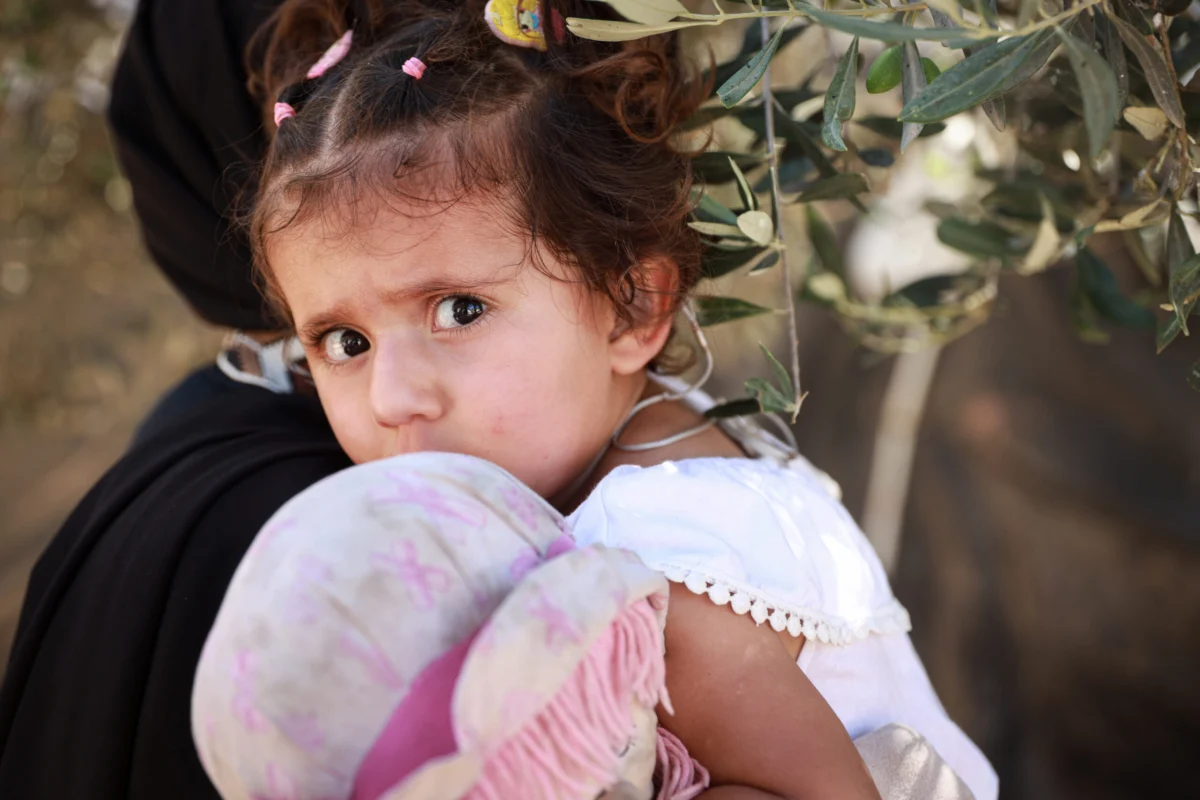
Wateen al-Ajrami was just more than a year old when the blast shook the simple storage room in northern Gaza’s Jabalia that her extended family were sheltering in, an incident that tragically rendered her almost entirely deaf and a stark symbol of the silent, escalating health crisis impacting children in the besieged enclave. Her mother, Mariam, vividly recalls the horrifying moment in August last year when Wateen, then barely articulating her first words, was standing near a door as an Israeli strike detonated nearby. Mariam instinctively grabbed her child, witnessing the raw fear in Wateen’s eyes as the toddler covered her ears and screamed, a primal response to an incomprehensible terror. Miraculously, there were no immediate, visible physical injuries; no blood, no fractures, no shrapnel. The insidious damage, however, lay deeper, unseen.
Within two or three days, Mariam and her family began to notice an alarming change. "I would call Wateen and she wouldn’t respond… I would speak to her and there was no reaction," Mariam recounts, her voice heavy with the memory. Wateen, unable to articulate her distress, would point to her ears, a silent plea that foreshadowed the devastating diagnosis to come. A hearing test, swiftly scheduled by a medical specialist, confirmed Mariam’s gravest fears: Wateen had suffered severe, almost complete hearing loss due to the profound impact of the explosion’s blast wave. The young girl had sustained approximately 85 percent hearing loss in her left ear and 90 percent in her right, a condition generally classified as between severe and profound. "It was an extremely shocking moment… Your child is healthy, just beginning to say her first words, and suddenly the doctor tells you she has lost her hearing," Mariam says, her eyes welling with tears, recounting the cruel twist of fate that robbed her daughter of one of her most fundamental senses.
According to Mariam, the attending physician explained that the cause was unequivocally the blast wave from the strike. He further noted, with a chilling resignation, that Wateen’s case was far from an isolated incident. He had witnessed a distressing pattern of similar injuries during what he described as Israel’s "genocidal war on Gaza," a conflict that intensified dramatically in October 2023, two months after Wateen’s injury, and has since unleashed unprecedented levels of destruction and human suffering on the Gaza Strip. Since that fateful day, the family’s life has transformed into an arduous journey of medical follow-ups, navigating a collapsed healthcare system in a desperate search for solutions that might restore Wateen’s ability to hear. The child underwent additional examinations, including an MRI scan, and medical reports were meticulously prepared and submitted to the World Health Organization (WHO) in the increasingly faint hope of securing a medical referral outside the besieged territory. But, like countless other Gazans requiring specialized care, the wait for an exit permit continues, stretching into agonizing uncertainty.
The Invisible Epidemic: Blast Trauma and Childhood Hearing Loss
The grim reality faced by Wateen is increasingly common across Gaza. Estimates from United Nations agencies and various health organizations reveal a sharp, alarming rise in children suffering partial or total hearing loss directly attributable to exposure to explosions and the relentless heavy bombardment that has characterized the conflict. Blast waves, which are powerful pressure fronts generated by explosions, are a leading cause of inner ear injuries. Unlike visible shrapnel wounds or fractures, the damage inflicted by blast waves is often internal and insidious, affecting the delicate structures of the cochlea, the auditory ossicles, and the tympanic membrane. This can result in sensorineural hearing loss, a permanent condition caused by damage to the inner ear or the auditory nerve, often accompanied by related brain trauma and severe psychological shock.
Before the escalation of the conflict, data from rehabilitation centers and specialized associations in Gaza estimated that approximately 20,000 people lived with some form of hearing disability. However, field workers and humanitarian groups now warn that this number has surged dramatically since the war began in October 2023. Current estimates suggest that between 30,000 and 40,000 people, including a disproportionate number of children, are now living with new or exacerbated hearing loss or impairment. These newly disabled individuals, alongside those already living with disabilities, face monumental challenges due to the catastrophic collapse of Gaza’s healthcare system, widespread damage to rehabilitation centers, and severely limited access to critical medical devices such as cochlear implants and hearing aids.

Organizations dedicated to assisting the deaf and hard of hearing in Gaza report acute shortages of essential hearing devices, including the devices themselves, their specialized batteries, and crucial spare parts for maintenance and repair, all due to the severe import restrictions imposed by the Israeli blockade. Many rehabilitation centers that once provided vital speech therapy, psychological support, and educational programs have been destroyed or rendered non-operational. This widespread disruption poses a dire threat to children’s language development during critical growth stages, potentially condemning an entire generation to communication barriers and social isolation.
An Unsafe Environment: Living with Impaired Senses in a War Zone
International humanitarian law and various UN agencies unequivocally state that children with disabilities in conflict zones – particularly those with hearing loss – face heightened risks that directly threaten their lives and significantly increase their vulnerability. In a war-torn environment, survival often hinges on the ability to perceive warnings, such as the sound of incoming explosions, the distant drone of aircraft, or urgent evacuation calls. With hearing loss, children are stripped of this vital "warning system," rendering them unable to detect immediate danger or respond in time.
This life-threatening reality is exemplified by the daily struggles of Usaid al-Shami, a three-year-old boy who lost most of his hearing at approximately four months old, during one of the most intense phases of the war in southern Gaza. His mother, also named Mariam, describes his daily life as a constant tightrope walk, filled with peril because he cannot hear the myriad dangers unfolding around him. "He was once attacked by dogs because he didn’t hear them barking," she recalls with palpable anguish. "Children around him ran away, but he didn’t. He couldn’t hear them. Only God’s mercy saved him." She adds that Usaid has narrowly escaped multiple road accidents, unable to perceive the approach of cars and motorbikes. "I live in constant fear and anxiety, as if I am inside another war within the war," she laments, highlighting the psychological toll on caregivers.
The timeline of escalating violence has had a direct correlation with the rise in these injuries. While Wateen’s injury predated the major escalation of October 2023, the subsequent months of intensive aerial bombardment, artillery shelling, and ground operations across the Gaza Strip have exponentially increased the number of children like Usaid. The sheer volume of explosive ordnance used, combined with the densely populated nature of Gaza, has created an environment where blast trauma is an omnipresent threat, even for those sheltering indoors. The Israeli military operation, launched in response to Hamas’s October 7 attacks, has resulted in the deaths of tens of thousands of Palestinians, the vast majority civilians, and the displacement of over 85% of Gaza’s population, creating a humanitarian catastrophe of unprecedented scale. The targeting of civilian infrastructure, including residential buildings, has meant that homes, which should be sanctuaries, have become sites of profound injury and disability.
A Growing Crisis and the Impact of the Blockade
Fadel Kuraz, a dedicated sign language interpreter and disability rights activist in Gaza with the Atfaluna Society for Deaf Children, emphasizes the dramatic increase in the scale of this crisis since the war began. Kuraz explains that the number of people with hearing loss or hearing disabilities, estimated at around 20,000 before the war, has now surged to approximately 35,000, according to current field estimates. "As a result of continuous explosions and bombardments, the number has increased significantly," Kuraz tells Al Jazeera, underscoring the direct link between the conflict’s intensity and the rise in disability. "These individuals are unable to integrate into society or communicate with their surroundings."
A crucial step towards mitigating this crisis, Kuraz asserts, would be unfettered access to essential hearing devices, ranging from basic medical hearing aids to their specialized batteries, maintenance tools, and, most critically, cochlear implant equipment. However, this necessity runs headlong into one of the most enduring and crippling challenges facing Gaza: the Israeli blockade on the Palestinian enclave. Imposed by Israel and Egypt since 2007, the blockade has severely restricted the movement of people and goods, including vital medical supplies, into and out of Gaza. While a ceasefire was declared, the blockade has not been totally lifted, continuing to choke the flow of essential humanitarian aid and medical equipment.

"Current policies prevent the entry of assistive devices, cochlear implants, and spare parts, which significantly worsens the situation," Kuraz states, highlighting the systemic impediment to healthcare. Many of the centers that once provided crucial diagnostic and rehabilitation services have either been destroyed in the bombardment or are no longer operational due to lack of resources, staff, or infrastructure. This significantly reduces the capacity to identify and follow up on new cases, especially among children who require early intervention for optimal developmental outcomes. "We are facing a real catastrophe," he warns. "Even hearing aid batteries are no longer available. People cannot find the simplest supplies needed to operate their devices." Kuraz issues a stark warning: if the current situation persists, an entire generation of children risks losing their ability to acquire language and communicate naturally, due to the absence of timely cochlear implantation and effective early intervention programs. The long-term implications for their education, social integration, and overall well-being are catastrophic, potentially creating a cohort of individuals permanently isolated by their disability in a society already grappling with immense trauma.
The Race Against Time: Cochlear Implants and Developmental Windows
Wateen, despite the overwhelming odds, is currently undergoing speech and auditory rehabilitation sessions at Hamad Hospital in Gaza. Here, dedicated specialists are attempting to train her to respond to sounds and develop rudimentary communication skills, striving to build a bridge across her profound hearing loss. She eventually received two hearing aids, which have provided a slight, albeit limited, improvement in her response to certain sounds. However, doctors consistently stress that hearing aids alone are not a definitive solution for her level of hearing loss.
Both Wateen and Usaid, along with many other children in similar predicaments, require cochlear implant surgery. This complex procedure, which bypasses damaged parts of the inner ear to directly stimulate the auditory nerve, offers the most promising pathway to significant hearing restoration for those with severe to profound sensorineural hearing loss. Crucially, this specialized surgery is only available outside Gaza, as the territory’s crippled healthcare infrastructure lacks the necessary facilities, equipment, and highly specialized surgical teams. Yet, Israel continues to restrict permission for Palestinians in Gaza to travel outside the territory, including for critical medical treatment. This policy creates an insurmountable barrier for desperate families.
The children suffering from hearing loss do not have the luxury of limitless time. Medical professionals emphasize a critical developmental window: doctors recommend cochlear implant surgery before the age of five for it to be optimally effective. Beyond this age, the brain’s plasticity for language acquisition significantly diminishes, making the outcomes of implantation less robust in terms of speech and language development. Wateen’s mother, Mariam, explains that this ticking clock has become a constant source of profound anxiety. Doctors have warned her that any delays in cochlear implantation may irrevocably affect her child’s language and speech development, particularly during these critical early years.
"I think about her day and night," Mariam says, her voice thick with exhaustion and fear. "It’s not just about today… I keep thinking about the future. How will she hear? How will she learn? How will she speak?" At home, the family makes every effort to surround Wateen with special care, attempting to compensate for her inability to participate in the auditory world. "The children around her understand each other, they talk and laugh, and she just sits watching them in silence." In those heart-wrenching moments, Mariam feels her daughter’s acute awareness of a barrier separating her from the vibrant world of sound and communication around her. At times, Wateen cries or becomes upset, her frustration mounting without anyone fully understanding what she wants or needs. "I don’t want anything… Nothing at all," the mother says, struggling to hold back tears. "Just for her to travel and receive a cochlear implant." This simple, yet unattainable, desire encapsulates the profound despair and injustice facing thousands of families in Gaza, where the silent scars of conflict are carving deep, lasting wounds into the youngest generation. The international community, humanitarian organizations, and human rights bodies continue to call for immediate, unimpeded access for medical aid and patient transfers out of Gaza, emphasizing that the denial of such fundamental rights constitutes a grave violation of international humanitarian law and the rights of children. The future of a generation hinges on these calls being answered.
