

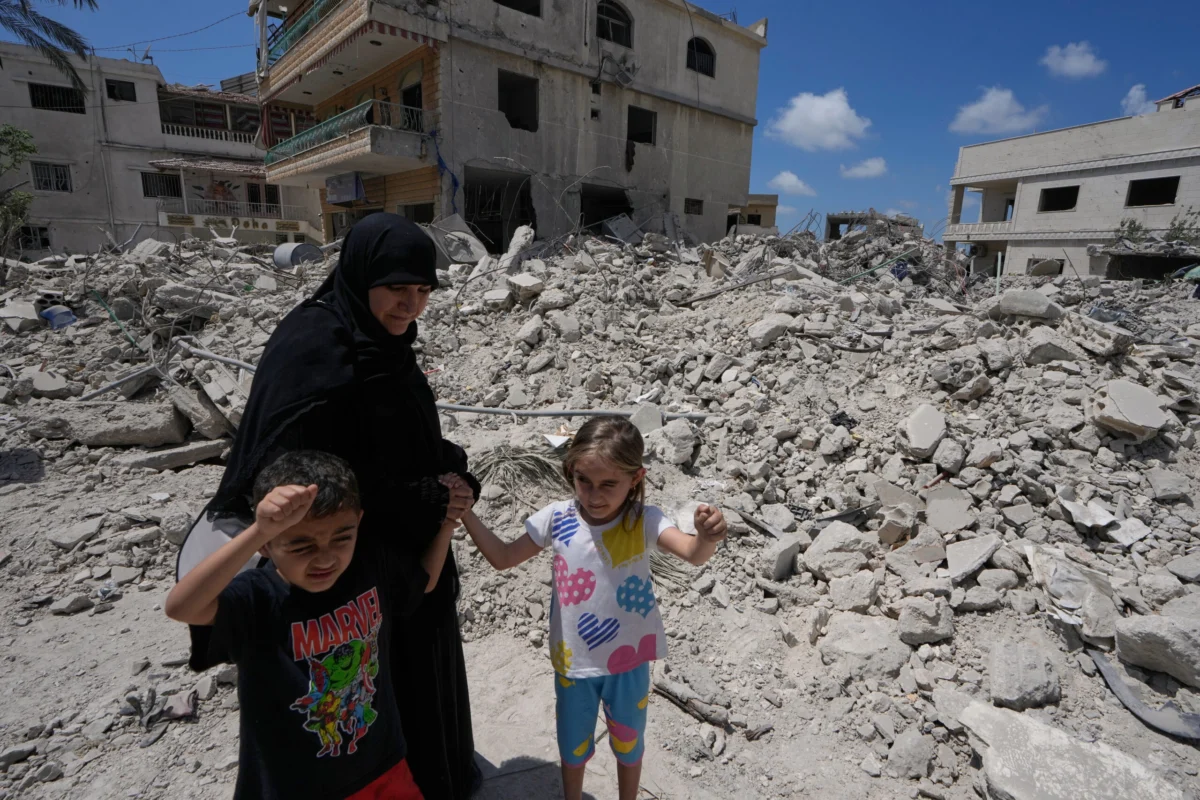
Multiple Israeli drone attacks in Lebanon’s southern Nabatieh governorate on Tuesday have killed at least four people, according to reports from Lebanon’s National News Agency (NNA). These strikes directly targeted vehicles in the villages of Mayfadoun and Shoukin, occurring despite a recently announced "understanding" between the United States and Iran aimed at halting military operations across all fronts, including Lebanon. The precise nature of the targets and the specific individuals killed in the strikes remain under investigation by Lebanese authorities, though preliminary reports suggest civilian casualties amidst the broader conflict. The incident immediately casts a shadow over the delicate diplomatic efforts, highlighting the profound challenges in de-escalating a multi-layered regional conflict where key actors hold divergent interpretations of peace and territorial sovereignty.
The attacks unfolded in two distinct locations within Nabatieh, a region that has frequently found itself on the front lines of cross-border hostilities. In Mayfadoun, separate drone strikes targeted two vehicles, resulting in an unspecified number of casualties. Shortly thereafter, a third vehicle was hit in the nearby village of Shoukin. While the NNA confirmed four fatalities across these incidents, details regarding the identities of the deceased or their affiliations were not immediately released. Such precision strikes, often characteristic of drone warfare, raise immediate questions about the intelligence gathering preceding the operations and their adherence to international humanitarian law, particularly concerning the protection of civilians in conflict zones. The timing of these attacks, coming directly after a period of intense diplomatic engagement, has been widely interpreted as a direct challenge to the nascent ceasefire framework and a potential indicator of the deep-seated obstacles to lasting peace in the region.
A Precarious Diplomatic Landscape
The backdrop to Tuesday’s violence is a highly intricate and often fragile negotiation process between Iran and the United States, facilitated by various international actors. For weeks, diplomatic channels had been abuzz with efforts to broker a comprehensive ceasefire that would bring an end to the protracted hostilities that have plagued the region. Iranian officials have consistently maintained that any viable ceasefire arrangement must explicitly include a cessation of Israeli attacks on Lebanese territory and, crucially, a complete withdrawal of Israeli forces from all occupied Lebanese land. This stance underscores a fundamental red line for Tehran, reflecting its commitment to its regional allies and its long-standing opposition to what it views as Israeli aggression and territorial encroachment.
While the definitive text of the memorandum of understanding (MoU) between the US and Iran has yet to be publicly disclosed, key details began to emerge through statements from mediating parties. On Monday, the Prime Minister of Pakistan, a pivotal mediator in the conflict, publicly affirmed that the agreement encompassed an immediate halt to military operations "on all fronts, including Lebanon." This declaration had initially sparked cautious optimism that a significant de-escalation of hostilities might be within reach, offering a glimmer of hope to a region ravaged by ongoing conflict. The Pakistani Prime Minister’s statement was a testament to the considerable diplomatic efforts expended, suggesting a broad consensus had been achieved on the scope of the ceasefire.
However, the optimistic pronouncements were quickly juxtaposed with stark realities on the ground. Iran’s Foreign Minister, Abbas Araghchi, reiterated Tehran’s firm position on Tuesday, stating unequivocally that Israel’s continued occupation of southern Lebanon would constitute a direct violation of any agreed-upon deal. "Without the withdrawal of Israeli forces from the territories they occupied during this war, the war has not fully come to an end," Araghchi declared, emphasizing that true cessation of hostilities required a complete Israeli disengagement. This statement, delivered mere hours before the drone strikes, highlighted the chasm between the stated intentions of the ceasefire and the operational realities of the conflict.
Further compounding the diplomatic pressure, Iran’s top negotiator, Mohammad Bagher Ghalibaf, engaged in a crucial phone conversation with Lebanon’s Parliament Speaker, Nabih Berri. During this call, Ghalibaf explicitly urged the United States to exert its influence and compel Israel to cease its military operations in Lebanon, halt the demolition of homes, and withdraw from all occupied Lebanese territory. This direct appeal to Washington underscored Iran’s expectation that the US, as a primary facilitator of the ceasefire, would take active measures to ensure compliance from its allies. It also served as a public demonstration of Iran’s commitment to Lebanon’s sovereignty and its broader regional strategy.
Israel’s Unwavering Stance
In a move that immediately dampened any nascent hopes for a swift de-escalation, Israeli Prime Minister Benjamin Netanyahu issued a resolute statement soon after the announcement of the US-Iran understanding. Netanyahu declared that Israel would "continue to occupy" southern Lebanon, unequivocally rejecting any notion of withdrawal from the territories it holds. This declaration stands in direct opposition to Iran’s demands and the implied terms of the US-Iran understanding, setting the stage for continued friction and potential escalation. Israel’s rationale for maintaining its presence in southern Lebanon typically centers on security concerns, particularly regarding the activities of Hezbollah and other militant groups which it views as direct threats to its northern border communities. The historical context of the 2006 Lebanon War and numerous smaller-scale confrontations informs this strategic posture, with Israel consistently asserting its right to self-defense and pre-emptive action against perceived threats emanating from Lebanese territory.
Meanwhile, the powerful Lebanese group Hezbollah, a key non-state actor with significant political and military influence, conveyed that it had received "assurances" from Iran. According to Reuters, these assurances indicated that Tehran would demand "a withdrawal of Israeli troops from Lebanon" during its subsequent phases of talks with the United States. This suggests a coordinated diplomatic strategy between Iran and Hezbollah, wherein the latter’s interests and security concerns are directly represented in the broader US-Iran negotiations. Hezbollah’s involvement adds another complex layer to the conflict, as its military capabilities and political agenda are central to the dynamics of southern Lebanon. Any resolution to the conflict would inevitably need to address Hezbollah’s role and its relationship with both Lebanon and Iran.
The Devastating Human Cost: A Chronology of Conflict
The recent drone strikes in Nabatieh are not isolated incidents but rather the latest tragic entries in a grim chronology of renewed hostilities that recommenced on March 2. Since that date, the Lebanese Ministry of Health has reported staggering casualty figures, painting a stark picture of the human cost of the ongoing conflict. A total of 3,826 people have been killed by Israeli attacks in Lebanon, with an additional 11,851 wounded. These numbers reflect not only direct combatant casualties but also a significant toll on the civilian population, including women and children, who often bear the brunt of cross-border shelling and aerial bombardments. The scale of these casualties underscores the profound humanitarian crisis unfolding in southern Lebanon, where essential services, infrastructure, and civilian life have been severely disrupted.
The daily exchanges of fire, often involving rockets from Lebanon and retaliatory airstrikes from Israel, have forced tens of thousands of residents on both sides of the border to flee their homes, creating an internal displacement crisis. Schools have been closed, agricultural lands lay fallow, and the economy of southern Lebanon, heavily reliant on farming and cross-border trade, has been decimated. The constant threat of escalation hangs heavy over communities, preventing any semblance of normalcy or recovery. International aid organizations have repeatedly warned of the deteriorating humanitarian situation, calling for unhindered access to affected areas and a permanent cessation of hostilities to allow for relief efforts and long-term reconstruction.
Historical Context and Regional Implications
The current clashes and diplomatic stalemates are deeply rooted in decades of unresolved conflict and geopolitical tensions in the Middle East. The border region between Lebanon and Israel has historically been a flashpoint, characterized by intermittent wars, occupations, and cross-border skirmishes. The Shebaa Farms, a disputed territory claimed by both Lebanon and Syria and currently occupied by Israel, remains a significant point of contention. This unresolved territorial dispute, coupled with Israel’s security concerns regarding Hezbollah and Iran’s strategic interests in supporting non-state actors in the Levant, forms a complex web of grievances and objectives that are exceedingly difficult to untangle.
The US-Iran negotiations, while primarily focused on de-escalation, are also inextricably linked to broader regional power dynamics. The US seeks to prevent a wider regional conflagration that could destabilize global energy markets and entangle its allies. Iran, on the other hand, aims to solidify its influence in the "Axis of Resistance" and leverage its position to extract concessions from its adversaries. Israel, operating with its own security doctrine, often acts independently to counter perceived threats, even when such actions risk undermining broader diplomatic efforts. This tripartite dynamic, where each actor possesses distinct goals and operational capabilities, makes any comprehensive ceasefire incredibly challenging to enforce.
Analysis of Implications and Future Outlook
The drone attacks in Nabatieh represent a significant setback for the fragile ceasefire negotiations. They underscore the immense difficulty in translating high-level diplomatic "understandings" into concrete cessation of hostilities on the ground, especially when one party explicitly rejects key terms of the agreement. The strikes highlight:
- Erosion of Trust: Such actions immediately erode the trust necessary for successful negotiations. If one party acts in direct contravention of an alleged agreement, it casts doubt on the sincerity and effectiveness of the entire diplomatic process.
- Risk of Escalation: The continued targeting of vehicles and the resulting casualties significantly heighten the risk of further escalation. Hezbollah, under pressure from its constituents and its Iranian patron, may feel compelled to retaliate, potentially triggering a more extensive military confrontation.
- Challenges for Mediators: The incident poses a considerable challenge for mediators like Pakistan. Their credibility and effectiveness depend on the ability of all parties to adhere to agreed-upon terms. When a major player like Israel openly defies the spirit of an agreement, it complicates future mediation efforts.
- Humanitarian Impact: Beyond the diplomatic realm, the immediate and most devastating implication is the continued human suffering. The rising casualty figures and displacement crisis in southern Lebanon are a stark reminder of the urgent need for a durable ceasefire.
- US Leverage and Credibility: The situation places the United States in a difficult position. As a primary facilitator of the understanding with Iran, and a staunch ally of Israel, Washington faces the challenge of demonstrating its ability to influence all parties towards de-escalation. Its perceived inability to compel Israel to adhere to the ceasefire terms could undermine its diplomatic credibility in the region.
- Future of Negotiations: The immediate future of the US-Iran talks appears precarious. Iran’s insistence on Israeli withdrawal from Lebanon as a condition for a full ceasefire, coupled with Netanyahu’s resolute refusal, creates an intractable deadlock. Any progress will require significant shifts in position or creative diplomatic solutions that address the core security concerns of all parties.
The international community, including the United Nations and its peacekeeping force in Lebanon (UNIFIL), has consistently called for adherence to UN Security Council resolutions and respect for Lebanon’s sovereignty. However, without a robust enforcement mechanism and genuine commitment from all parties, such calls often remain unheeded in the face of geopolitical realities. The current situation demands urgent and sustained diplomatic engagement, coupled with unequivocal pressure on all actors to prioritize de-escalation and humanitarian protection. The path to a lasting peace in the Levant remains fraught with peril, with each drone strike and each defiant statement pushing the region further away from stability.
