

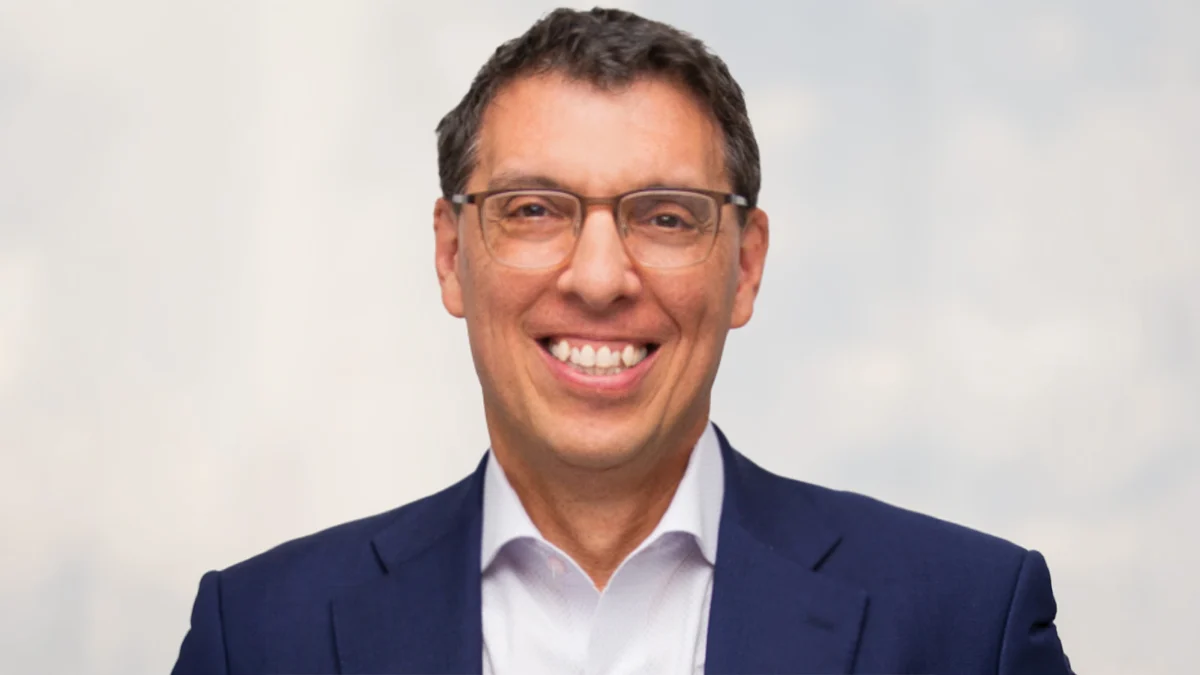
Fidelis Capital, a rapidly growing registered investment advisor (RIA) managing nearly $3 billion in assets, has embarked on a deliberate expansion strategy, recently adding its 13th partner in July. This significant move, under the leadership of co-founder and CEO Rick Simonetti, is a cornerstone of the firm’s vision to blend the extensive capabilities of large, institutional wirehouses with the personalized service and agility of a boutique firm. The firm’s genesis and continued growth are deeply rooted in the collective experience of its advisors, all of whom have transitioned from prominent bank-based wealth management practices, including major institutions like Wells Fargo and Bank of America Private Bank.
This unique composition, according to Simonetti, is what sets Fidelis Capital apart. The firm harnesses the deep financial acumen and operational understanding cultivated within large banking environments, but crucially, operates without the inherent pressures to sell proprietary products or navigate the often rigid, blanket compliance procedures typical of those institutions. This allows Fidelis to offer a more client-centric and tailored approach to wealth management.
The Genesis of Fidelis Capital: A Deliberate Departure from Tradition
The decision to establish Fidelis Capital was not an impulsive one but rather a carefully considered strategy born from years of experience within the traditional banking sector. Rick Simonetti, who spent 22 years at Wells Fargo, rising to lead their national planning team and a significant portion of their private wealth management operations, recognized a growing disconnect between institutional priorities and the evolving needs of high-net-worth families and organizations.
"At about the same time our firm decided to make big strategic shifts about how they were serving clients, the opportunity to build something ourselves became even easier—and that has continued," Simonetti explained in a recent interview. This shift within his former employer, coupled with an increasing demand for more personalized and holistic financial guidance, created a fertile ground for a new venture.
The formation of Fidelis Capital was catalyzed by serendipitous connections. Simonetti discovered that a team from Bank of America Private Bank in Dallas was experiencing similar discontents. Through a connection with the brother of one of the Dallas-based leaders, Simonetti and his future partners began to explore the possibility of a collaborative endeavor.
"We started our firm after looking at other firms and talking to everyone," Simonetti recounted. "Each of us could have gotten a big check, but we chose a different path. We actually chose to write checks. That in and of itself tells you our level of commitment." This willingness to invest their own capital underscored their profound belief in the vision and their dedication to building a firm from the ground up.
A Strategic Blueprint: Building Trust and Delivering Value
The founding partners dedicated nearly a full year to meticulous planning and client need assessment before officially launching Fidelis Capital. This period was crucial for identifying the gaps in service and advisory capabilities that were becoming increasingly apparent within larger financial institutions.
The firm officially launched in August 2022, with initial operations established in Dallas and Tampa. The subsequent years have seen a strategic and consistent expansion, marked by the integration of talent from various esteemed financial backgrounds. Notable additions include a team from Bank of America Private Bank in Washington, D.C., the former global head of fixed income from Bank of America Merrill Lynch in Greenwich, Connecticut, and Doug Rothermich, who previously led wealth planning for TIAA.
This influx of seasoned professionals has been instrumental in the firm’s rapid ascent. "You get this incredible pool of talent, and you serve clients really well," Simonetti stated. "That’s how you get from zero to almost $3 billion of assets in four years without necessarily a huge initial book move. Our belief was: build it, execute, serve in a way that differentiates you, and you will meet more people." The success of this strategy is evidenced by the fact that over half of Fidelis Capital’s current business comes from clients they had no prior relationship with before launching, a testament to their effective client acquisition and retention strategies.
The Fidelis Difference: Beyond Compensation
In an industry often characterized by compensation-driven decisions, Fidelis Capital distinguishes itself by attracting advisors motivated by a deeper purpose. Simonetti emphasized that the firm’s appeal extends far beyond financial incentives.
"The people who joined us and who we didn’t know for a long time found us and sought us out," Simonetti noted. "But a lot of the people who’ve joined us have known at least one member of our founding partner team—there are five of us—for decades. Their driver is passion, which will result in success. Their driver is not money."
The firm’s philosophy is clear: those primarily driven by salary grids and immediate financial gains are not the ideal fit. Instead, Fidelis seeks advisors who are deeply committed to addressing the complex needs of their clients. "Philosophically, if somebody calls up and says, ‘What’s your grid and how much are you paying?’ That’s just not going to go too far," Simonetti explained. "It’s about saying, ‘Hey, I’ve got a family with a massive amount of need, and it’s not getting served. How can you help me serve this family well?’ Financial success comes as a result of that—that’s the outcome." This client-first ethos ensures that financial rewards are viewed as a natural consequence of exceptional service and client satisfaction, rather than the primary driver.
An Outsourced Family Office Model: Comprehensive Wealth Solutions
Fidelis Capital positions itself as an outsourced family office, a model that allows it to offer a sophisticated suite of wealth management services typically associated with much larger institutions. For a firm managing $3 billion in assets, this comprehensive approach is a significant differentiator.
"We pull it off because, first of all, we’re willing to dig in where most of the bigger institutions won’t even allow their advisors to go," Simonetti asserted. He highlighted the limitations faced by advisors in large banks, where discussions about income taxes or complex trust documents can be flagged as outside of approved protocols. "You can’t go talk about income taxes with your client at those places—if they see that in an email, they’re going to flag you. You’re out of bounds."
In stark contrast, Fidelis actively encourages a deep dive into clients’ financial lives. "We say: give us your tax returns, give us your trust documents, let us look at them, let us understand them, let us explain how they work to you." This open-door policy facilitates a more holistic understanding of a client’s financial landscape.
The firm’s internal talent pool is a critical component of its outsourced family office model. Simonetti himself possesses expertise in income tax and estate tax planning. The team also includes two former practicing trust, estate, and tax attorneys, as well as specialists in alternative investments, fixed income, and equities. This diverse expertise allows Fidelis to address a wide array of complex client needs.
"When we come together on behalf of a client and take the time to look at their situation, we almost immediately—and in every case we’ve done so—identify areas that need adjustment or a shift," Simonetti stated. "In some cases, we’ve done that before they become a client." This proactive approach demonstrates a commitment to client well-being that transcends the typical client-acquisition process.
The firm’s operational structure reinforces its collaborative approach. Regular meetings are a cornerstone of the Fidelis culture. "We meet twice a week as an entire company in each office. We go over every single task about what’s on our plate for every single client," Simonetti explained. Furthermore, a dedicated planning committee convenes twice a month, comprising five members, including two former practicing trust and estate tax attorneys, two trust officers with over 20 years of experience, and Simonetti himself. This committee delves into complex client scenarios, fostering a culture of continuous learning and problem-solving.
"We’ve helped clients with things there’s no chance we could have helped them with at Wells, Bank of America or any other big institution," Simonetti concluded, underscoring the tangible benefits of their specialized approach.
An Innovative Ownership Structure: Aligning Interests for the Long Term
Fidelis Capital employs a distinct ownership structure designed to foster long-term commitment and align the interests of its team members, clients, and the firm itself. While new partners like Herb Achey, who joined from U.S. Trust Bank of America, are integrated, the typical model of direct equity buy-in is nuanced.
"We are somewhat uniquely structured," Simonetti explained. "We built ourselves as what’s called an opportunity zone business, and what that means is the ownership structure has to maintain that structure for a period of time." This structure allows for the creation of "phantom" interest, which provides financial benefits tied to firm growth without immediate actual ownership.
This phantom equity model is designed to reward advisors not just for their current contributions but also for the long-term value they build within the firm. "We believe that if a team member joins us and they build a book—a series of five, six, seven clients that they’re serving and that they’ve introduced to our firm—then not only should we compensate them now for that, but we should compensate them for the value that they are leaving that firm with years from now when they depart," Simonetti elaborated. This approach ensures that advisors are financially incentivized to foster client loyalty and build sustainable practices.
A particularly distinctive aspect of Fidelis Capital’s ownership is its partial client ownership. While not part of the original structure, a misalignment with initial investors prompted the firm to seek alignment with its most valued stakeholders. "We went to a couple of clients and said, ‘Hey, would you be interested?’ They said, ‘Sure,’ and we were able to structure ourselves so that we are completely and totally aligned with every owner of the company." This client ownership model ensures that the firm’s strategic decisions are intrinsically linked to the best interests of its client base.
The firm’s approach to attracting talent from private banking backgrounds is deeply informed by its own experiences. "The reality is that someone who’s worked at a private bank today tends to get paid well now, but tends to get paid nothing when they leave," Simonetti observed. "We know how that works. There are lots of people very interested in attracting talent from that space, and you really have to understand how people in that world think. Everyone in our firm worked in a private bank—all 23 of us. We all speak that language. We get it. We know the language of that relationship."
A Focus on Succession and Future Growth
Fidelis Capital’s strategic vision extends to robust succession planning, both for its clients and its internal leadership. The firm has proactively implemented a system where every portfolio manager has a designated successor already in place, actively working with the families they will eventually serve.
"The next step is planning," Simonetti stated, signaling an ongoing commitment to talent development and future leadership. "If you’re a planner out there and you want to join a planning team of this caliber, we’d love to talk. We’re going to build that out more on the planning front."
The ultimate goal for the founding partners is to transition ownership to the next generation of leaders within the firm. "We believe the ownership of our firm should probably transition to those who are inheriting the legacy that we’ve built," Simonetti articulated. This philosophy ensures continuity and a vested interest among those who will carry the firm forward.
"As a group of five founding partners, we believe we’ll be able to get enough financial reward out of that structure to be able to really live this out in the long run and then watch it grow into something even more special as we pass it off many years from now." This forward-thinking approach to ownership and succession positions Fidelis Capital for sustained growth and enduring success in the evolving wealth management landscape.
