

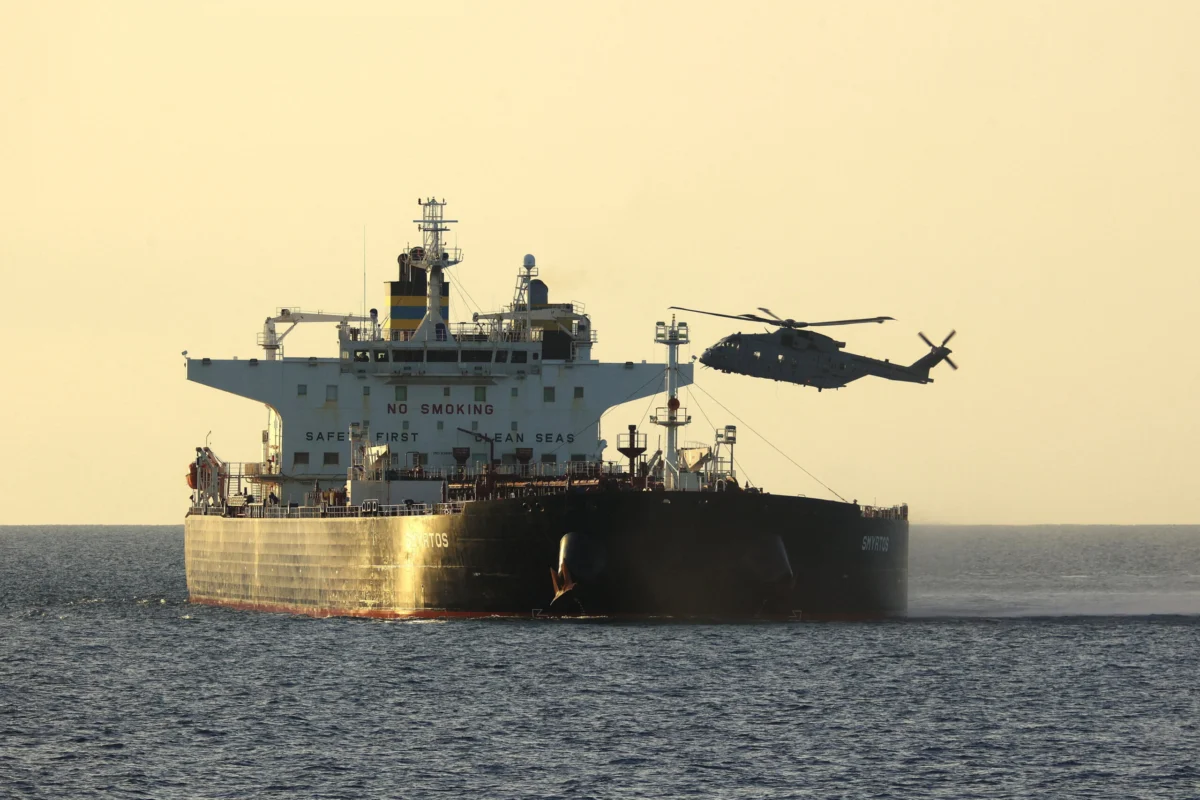
British forces have seized a Russian-linked oil tanker suspected of breaching sanctions while transiting the English Channel on Sunday, in what Prime Minister Keir Starmer described as a significant setback for Moscow’s efforts to fund its war in Ukraine. This unprecedented operation marks the first time UK forces have boarded and detained a vessel from Russia’s so-called "shadow fleet" within British waters, signaling a new, more assertive phase in the West’s economic warfare against the Kremlin.
The audacious pre-dawn raid, executed by Royal Marines commandos and officers from the National Crime Agency (NCA), targeted the Smyrtos, a tanker carrying an estimated 700,000 barrels of Russian crude oil. Prime Minister Starmer, in a post on X, underscored the strategic importance of the seizure, stating, "This successful operation delivers yet another blow to Russia and reminds those fuelling [Russian President Vladimir] Putin’s war in Ukraine that we will not let them hide." The incident has sent ripples through the illicit shipping networks that Russia relies upon to circumvent Western sanctions, prompting at least six other tankers to immediately alter their courses away from the English Channel, according to vessel tracking data.
The Operation Unfolds: A High-Stakes Maritime Interception
The sequence of events leading to the seizure of the Smyrtos began with its departure from the Russian Baltic port of Ust-Luga on June 5. Sailing under a Cameroonian flag and reportedly bound for Port Said in Egypt, the vessel was being closely monitored by British intelligence. MarineTraffic, a prominent vessel-tracking website, confirmed the tanker’s identity and its unusual ownership structure. The Smyrtos is recorded as being owned by Zhao Yao Shipping Ltd, a Hong Kong-registered company known to control several other vessels suspected of sanctions evasion. Its management company is listed as being based in Tamil Nadu state, India, highlighting the complex, multi-jurisdictional web often employed by the shadow fleet.
As the Smyrtos navigated the crucial and heavily trafficked waters of the English Channel, the UK Ministry of Defence (MoD) launched its meticulously planned interception. In the early hours of Sunday, Royal Marines commandos, supported by military aircraft, including Chinook helicopters, executed a textbook boarding operation. Descending onto the tanker’s deck with ropes, the commandos swiftly secured the vessel. They were backed by a Royal Navy frigate and a minehunter, providing a robust naval presence to ensure the operation’s success and deter any potential interference.
Despite the proximity of a Russian warship, the Admiral Grigorovich, which has been stationed near the UK since April and has escorted numerous Russian tankers through the Channel, the operation proceeded without incident. The exact distance of the Admiral Grigorovich from the Smyrtos at the time of the raid remains unclear, but its presence underscored the heightened geopolitical tensions in the region.
Following the successful boarding, officers from the NCA commenced their investigation. An Indian national was arrested on suspicion of sanctions offences, marking a tangible legal consequence for individuals involved in such illicit activities. The MoD confirmed the seizure of the Smyrtos, and its 24 Georgian and Indian crew members remained aboard as the vessel was anchored off the Dorset coast. The entire operation lasted approximately six hours. Plans are now underway to move the tanker to a secure location along England’s south coast, where it will be continuously monitored for any environmental or safety concerns, a critical aspect given the often poor maintenance and questionable safety standards associated with shadow fleet vessels.
Background to the "Shadow Fleet": Russia’s Sanctions Evasion Network
The seizure of the Smyrtos thrusts the clandestine world of Russia’s "shadow fleet" into the global spotlight. This network, estimated to comprise hundreds of aging tankers, many operating under false flags, with obscured ownership, and lacking adequate insurance, emerged as a direct response to the sweeping Western sanctions imposed on Russia following its full-scale invasion of Ukraine in February 2022.
These sanctions, spearheaded by the G7 nations, the European Union, and their allies, aim to cripple Russia’s ability to finance its war machine by targeting its most lucrative export: oil. A cornerstone of this strategy is the G7 price cap, introduced in December 2022, which prohibits Western companies from providing maritime services (such as shipping, insurance, and financing) for Russian oil traded above $60 per barrel. The UK, in alignment with this broader Western effort, has barred vessels linked to Russia’s shadow fleet from entering its ports and strictly prohibits British companies from providing any form of support to ships transporting Russian oil outside the price cap mechanism.
Prior to the 2022 invasion, Russia was a major global energy supplier, with its oil and gas revenues forming a significant portion of its national budget. Post-invasion, and despite the sanctions, Russia has continued to export substantial volumes of oil, albeit often at a discount. The International Energy Agency (IEA) has reported that Russia’s crude oil exports remained robust, largely due to strong demand from countries like India and China, which have become key buyers. This trade, however, is increasingly reliant on the shadow fleet, which allows Russia to bypass traditional shipping channels and Western financial oversight.
Alexander Lord, a defence analyst at London intelligence firm Sibylline, elaborated on this dynamic, telling Al Jazeera, "Sanctions have undoubtedly increased costs and complications for Moscow but have not completely prevented Russia from continuing to export large volumes of oil. Russia has a significant customer base and continues to trade its oil at a heavy discount, particularly to countries such as India and China." Lord added, "The sanctions are undoubtedly causing problems for the Russian economy. But we are now well into the fifth year of the full-scale invasion [of Ukraine], and Russia is still exporting large quantities of oil. Russia is constantly trying to find loopholes to protect its fleet, using shadow-fleet vessels, changing names and ownership structures to circumvent sanctions and investigations."
The shadow fleet’s operational model often involves shell companies, frequent changes of vessel names and flags, "dark" ship-to-ship transfers at sea to obscure origin, and reliance on non-Western insurance providers. This opaque system poses significant regulatory and environmental risks, as these older vessels often operate with minimal oversight and may not adhere to international safety and environmental standards.
The UK’s Evolving Stance and Legal Framework
For many observers, the crucial question surrounding the Smyrtos seizure is not what happened, but why now? The English Channel is one of the world’s busiest shipping lanes, and sanctioned Russian-linked tankers have transited British waters with alarming frequency since the full-scale invasion.
The impetus for this more aggressive posture by the UK can be traced back to a significant policy announcement by Prime Minister Starmer in March. At that time, Starmer declared that UK authorities would be empowered to stop, board, and detain sanctioned vessels transiting British waters. This declaration laid the legal groundwork for operations like the Smyrtos seizure, aligning national enforcement capabilities with international law.
The MoD confirmed that the UK has already imposed sanctions on more than 500 vessels linked to Russia’s shadow fleet. These measures, alongside broader economic sanctions, contributed to a reported 24 percent decline in Russian oil and gas revenues in 2025 compared with the previous year, according to official UK figures. This indicates that while the shadow fleet mitigates some of the impact, sanctions are indeed taking a toll on Russia’s war economy.
Defence analyst and historian Peter Caddick-Adams pointed out the time lag between policy and action: "The authority for this operation has existed since March. That month, Starmer agreed that British armed forces and law enforcement could stop, board and detain sanctioned shadow-fleet vessels in accordance with international law. That legal framework has sat in place for 11 weeks. In those 11 weeks, more than 200 sanctioned tankers sailed through Britain’s exclusive economic zone. Unchecked. Unchallenged." Reports in the UK media suggested that the delay in initiating such operations was primarily due to complex legal issues surrounding jurisdiction and the potentially high costs associated with storing and maintaining seized vessels indefinitely.
International Efforts Against Sanctions Evasion
The UK’s action is not an isolated incident but rather part of a broader, intensified Western effort to target Russia’s shadow fleet. The United States, often with assistance from European partners, has also been active in this domain. In January, for instance, the US, with Royal Navy assistance, seized a Russia-linked tanker off Scotland. Lord described that operation as "the beginning of a new phase of shadow-fleet interdictions," noting that it "created a clear precedent for subsequent boarding actions. Shortly afterwards, there was a flurry of activity around the legal justification for the UK to act unilaterally."
France has also demonstrated increasing resolve, detaining several vessels suspected of transporting sanctioned Russian oil. In January, French authorities impounded the tanker Grinch, and in March, they detained the Deyna, which had sailed from Murmansk under a Mozambican flag. Nordic and Baltic states, including Finland, Sweden, and Estonia, have similarly stepped up inspections and enforcement actions against vessels suspected of helping Russia evade sanctions, particularly in the Baltic Sea, a key transit route for Russian oil.
These interdictions, however, operate in a legally contested space. Lord explained, "Russia contests the French and British legal basis for such actions, arguing they contravene the UN Convention on the Law of the Sea [UNCLOS]." He countered, "The British and French argue that existing provisions within their legislation justify interdictions. These legal disputes could continue for years." The legal nuances often revolve around the concept of "innocent passage" versus activities deemed harmful to the security or economic interests of the coastal state, especially when linked to international sanctions regimes.
Reactions and Geopolitical Ripple Effects
The seizure of the Smyrtos elicited strong reactions from key stakeholders. Ukrainian President Volodymyr Zelenskyy immediately welcomed the move, thanking the UK in a post on X for "taking this important step against Russia’s oil fleet." He further elaborated on the strategic significance, stating, "It was Russia’s hubris, fuelled by high oil and gas revenues, that paved the way for this war, and every decision by partners that deprives Russia of money also limits the war itself." Zelenskyy’s appreciation underscored Ukraine’s consistent plea for its Western allies to tighten the economic noose around Russia.
Russia, notably, has not publicly commented on the incident. This silence is largely characteristic of its response to actions targeting its shadow fleet, as acknowledging ownership or direct links to such vessels would effectively admit to sanctions evasion. Diplomatic silence allows Moscow to maintain a degree of plausible deniability while privately assessing the implications.
Analysts largely agree that while the seizure of a single tanker, even one carrying 700,000 barrels, is unlikely to significantly disrupt Russia’s overall oil exports, its symbolic and deterrent impact is substantial. The operation sends a clear message that Western nations are increasingly willing to use direct action to enforce sanctions, even in contested international waters.
Economic Impact and Future Outlook
The most immediate economic impact of the Smyrtos seizure will be increased costs and logistical complications for Russia’s oil export operations. Avoiding the English Channel adds approximately 926 kilometres (500 nautical miles) to the journey of a tanker from the Baltic Sea heading for the Suez Canal and onward to Asian markets. This longer route, often traversing the rougher North Atlantic, translates to higher fuel consumption, longer transit times, increased insurance premiums (if any legitimate insurance is secured), and greater operational risks.
Lord acknowledged, "I don’t think this changes the broader picture. Ust-Luga on the Baltic Sea, near St Petersburg, will remain a major destination, and vessels will continue transiting that route." However, he added, "Russia’s response is likely to be asymmetric. There is a chance Russian ships will alter their sailing routes. We have already seen examples of vessels taking the longer route around the UK in an effort to reduce risk." This strategic shift, even if only by a portion of the fleet, adds to Russia’s operational burden and costs.
Beyond the immediate costs, the increased scrutiny and risk of interdiction could deter some operators from engaging with the shadow fleet. It might also push Russia to further deepen its reliance on less regulated shipping partners or to develop even more elaborate evasion tactics, potentially increasing the environmental and safety hazards associated with these operations. The aging profile of many shadow fleet vessels, often operating beyond their intended lifespan and with minimal maintenance, presents a ticking time bomb for potential maritime disasters, particularly in environmentally sensitive areas like the English Channel.
Potential for Russian Retaliation
The question of Russian retaliation naturally arises in the context of such a high-profile seizure. However, analysts largely downplay the likelihood of direct military or overtly aggressive responses against the UK. Lord observed that Russia has shown little direct response to similar French seizures, suggesting a pattern of strategic restraint in this specific domain.
Caddick-Adams concurred, stating, "There have been no repercussions against other nations boarding shadow-fleet tankers, and none are expected against the UK." He reiterated the fundamental nature of the shadow fleet: "The largely ageing and poorly maintained fleet of shadow tankers is designed to evade sanctions through false registrations, limited insurance coverage, and concealed movements. The shadow fleet is used to avoid sanctions against Russian-generated oil and oil products. This operation simply makes it more difficult for Moscow to move its oil around the globe."
Any direct military confrontation over a sanctions-evading oil tanker would escalate tensions dramatically, potentially drawing NATO into a direct conflict, a scenario neither Russia nor the West currently desires. Instead, Russia’s "asymmetric" response is more likely to involve diplomatic protests (though difficult given the nature of the shadow fleet), intensified cyber activities, or increased hybrid warfare tactics that fall short of open conflict.
The seizure of the Smyrtos represents a tangible escalation in the West’s economic pressure campaign against Russia. It demonstrates a growing willingness to move beyond financial sanctions to direct maritime enforcement, signaling a new front in the ongoing efforts to curtail Moscow’s ability to fund its war in Ukraine. While unlikely to cripple Russia’s oil exports entirely, such operations inject significant risk and cost into its illicit trade, tightening the screws on a critical revenue stream and reaffirming the resolve of Western nations to uphold international law and principles.
