

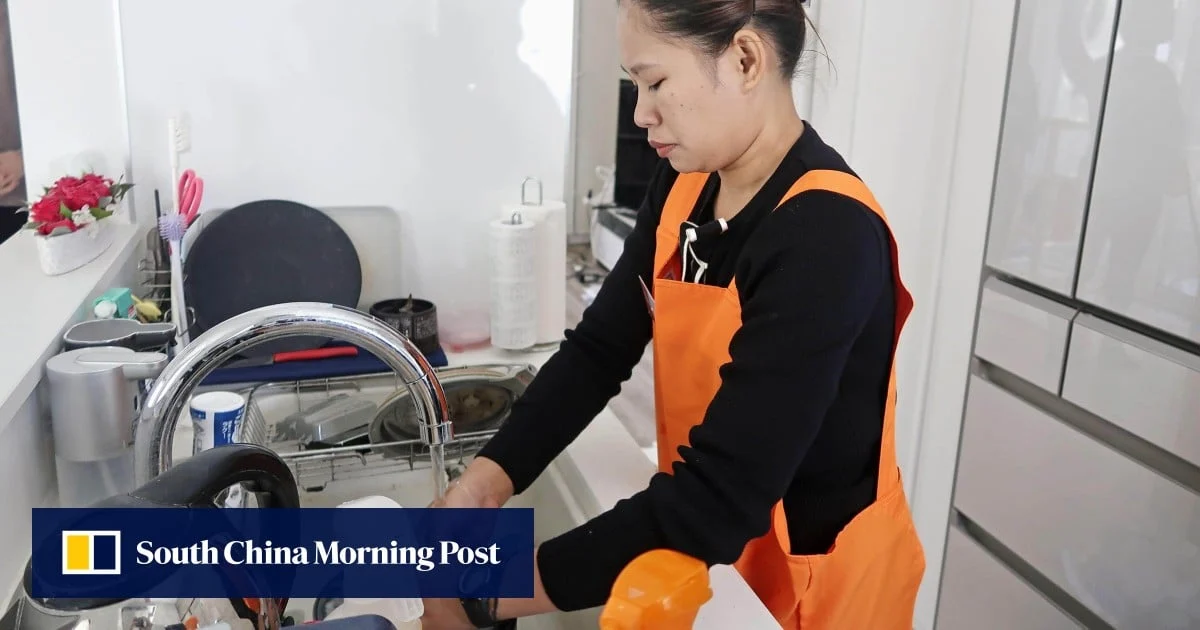
The landscape of domestic labor in Japan is undergoing a significant transformation as housekeeping services employing Filipino staff experience a surge in popularity across major metropolitan areas. This trend is driven by a confluence of demographic shifts, evolving labor policies, and a growing acceptance of foreign professional support within the Japanese household. One prominent provider, Tokyo-based Pinay International, has reported that its workforce has roughly doubled over the past decade, reflecting a broader national trajectory toward the integration of foreign nationals into the service sector. This shift is not merely a matter of convenience for local families but represents a strategic response to Japan’s chronic labor shortages and its ongoing efforts to increase the participation of women in the professional workforce.
Since the Japanese government officially began allowing foreign nationals to provide housekeeping services within designated national strategic special zones in 2016, workers from the Philippines have emerged as the preferred choice for many Japanese households. Employers and clients frequently cite the cheerful personalities, diligence, and specialized expertise of Filipino staff as primary reasons for their high satisfaction levels. The synergy between the Filipino culture of hospitality and the rigorous standards of Japanese domestic expectations has created a robust market for these services, particularly in high-density urban hubs such as Tokyo, Kanagawa, Osaka, and Hyogo.
The Evolution of Policy and the Regulatory Framework
The current prevalence of Filipino housekeepers is the result of a deliberate policy shift that began nearly a decade ago. Prior to 2015, the employment of foreign domestic workers was strictly limited to a very small subset of the population, primarily high-ranking foreign diplomats or expatriate business executives. This restrictive environment meant that the vast majority of Japanese households had no access to legal foreign domestic help, placing the burden of housework and elder care almost exclusively on Japanese women or expensive, local boutique services that were often understaffed.
In 2015, a landmark legal change was enacted, aimed at addressing two of Japan’s most pressing economic challenges: a shrinking labor pool and the underutilization of female talent. By allowing foreign domestic workers to enter the country under specific visa categories within "National Strategic Special Zones," the government sought to outsource domestic chores, thereby freeing Japanese professionals to focus on their careers. This initiative was a cornerstone of the "Womenomics" policy, which posited that economic growth could be spurred by making it easier for mothers and wives to remain in or re-enter the workforce.
The implementation began in earnest in 2016, with Kanagawa Prefecture and the city of Osaka serving as early adopters. The program was designed with strict oversight to ensure the protection of worker rights and the maintenance of high service standards. Unlike the controversial Technical Intern Training Program (TITP), the domestic service framework in these special zones requires workers to be employed as full-time staff by registered agencies, ensuring they receive stable salaries and social security benefits comparable to their Japanese counterparts.
On-the-Ground Integration and Professional Training
The transition for Filipino workers into Japanese homes is a meticulous process involving cultural immersion and technical training. In February, observers noted the debut of a new Filipino staff member in a Japanese household, occurring just one month after her arrival in the country. The interaction highlighted the practicalities of cross-cultural labor; the worker assiduously took notes as her client explained, in a blend of English and Japanese, the specific nuances of the home’s cleaning tools and the precise order in which various detergents should be applied.
This level of detail is characteristic of the "Japanese way" of housekeeping, which emphasizes precision and the careful treatment of property. To meet these expectations, agencies like Pinay International invest heavily in pre-deployment and post-arrival training. Filipino staff are taught the intricacies of Japanese waste separation—a notoriously complex system—as well as the proper use of high-tech Japanese appliances and the cultural etiquette required when working in private living spaces.
Clients have responded positively to this blend of professional training and the natural interpersonal skills of the Filipino workforce. One client recently remarked that the staff are "friendly and easy to talk to," noting that their serious work ethic provides a sense of "ease" and security. This psychological comfort is a critical factor in a society where privacy is highly valued and the presence of a stranger in the home was traditionally viewed with hesitation.
Market Expansion and the Role of Pinay International
The success of the special zone initiative is perhaps most visible in the growth of specialized agencies. Pinay International, which launched specifically to capitalize on the 2015 law revision, has become a benchmark for the industry. Starting with a modest team, the company now manages more than 200 Filipino staff members, all of whom are employed as full-time professionals rather than gig workers.
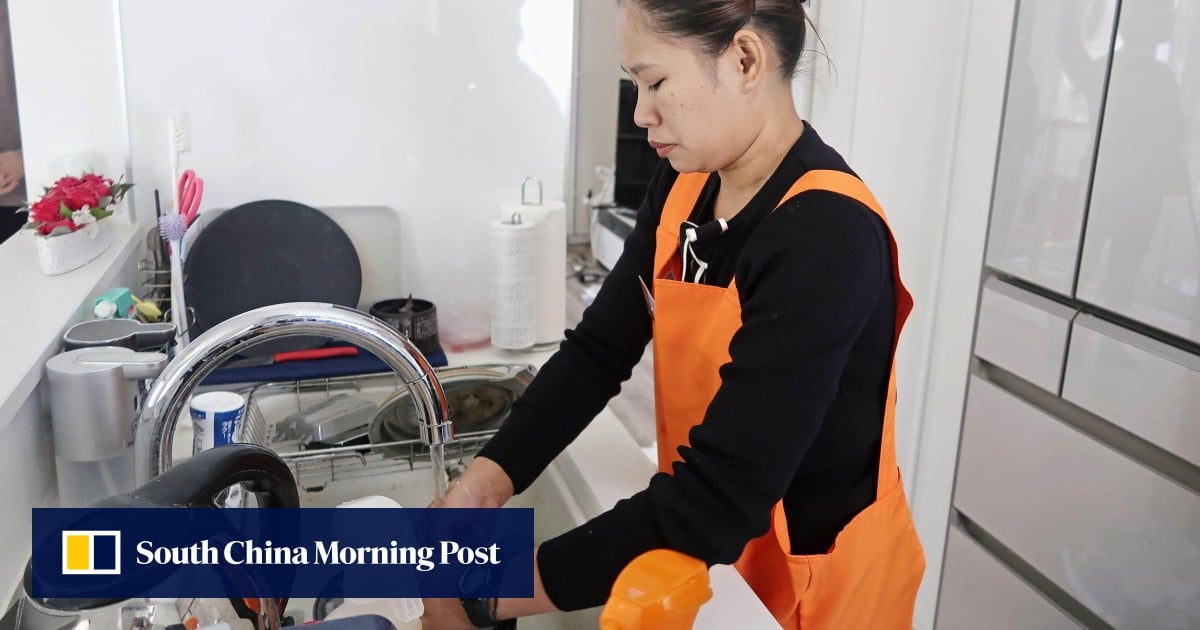
The company’s expansion from Tokyo into the surrounding prefectures and the Kansai region (Osaka and Hyogo) indicates that the demand for these services is not an isolated phenomenon but a systemic shift in urban Japanese lifestyle. The growth of such companies has also contributed to the formalization of the housekeeping industry in Japan. By providing a structured career path for Filipino workers, these agencies offer a level of reliability and accountability that was previously difficult to find in the fragmented domestic help market.
Supporting Data and Demographic Drivers
The demand for foreign domestic labor is underpinned by stark demographic realities. Japan’s working-age population (ages 15 to 64) has been in decline since its peak in 1995. Projections suggest that by 2040, the country could face a shortage of over 11 million workers. In this context, the domestic service sector is often the first to feel the squeeze, as local workers gravitate toward higher-paying or less physically demanding roles in other industries.
Furthermore, data from the Ministry of Internal Affairs and Communications consistently shows that Japanese women still perform a disproportionate amount of unpaid domestic work compared to men. While the government has set targets to increase the percentage of women in leadership roles, the lack of affordable and accessible domestic support has remained a significant barrier. The influx of Filipino housekeepers provides a "middle-way" solution—more affordable than traditional Japanese "housekeeping agencies" (kaji daiko) but more regulated and professional than informal arrangements.
According to industry reports, the cost of hiring a foreign housekeeper through these official channels is competitive, often ranging from 2,500 to 5,000 yen per hour, depending on the frequency and scope of the work. For a dual-income household in Tokyo, this is an investment that yields high returns in terms of time and reduced domestic stress.
Broader Implications for Immigration and Society
The rising popularity of Filipino housekeeping services is also a litmus test for Japan’s broader immigration policies. For decades, Japan has been cautious about opening its doors to unskilled or semi-skilled foreign labor. However, the success of the Filipino domestic worker program suggests that when labor migration is managed through formal corporate structures and focused on specific economic needs, it can be integrated smoothly into Japanese society.
This model of "circular migration" or "contract-based labor" avoids many of the social frictions associated with permanent immigration while providing vital support to the economy. It also fosters a unique form of cultural exchange. As more Japanese families interact with Filipino staff, long-standing stereotypes are being replaced by mutual respect and professional appreciation.
However, challenges remain. The reliance on "Special Zones" means that these services are not yet available nationwide. There are also ongoing discussions regarding the long-term residency status of these workers. Currently, the visas are tied to their employment with specific agencies and have time limits, which raises questions about the sustainability of the workforce as the original cohorts reach the end of their permitted stays.
Future Outlook: Scalability and Sustainability
Looking ahead, the trajectory for Filipino housekeeping services in Japan appears to be one of continued growth. As the "silver society" continues to age, the line between housekeeping and elder care may begin to blur, potentially opening up even more opportunities for Filipino workers, many of whom also hold qualifications in nursing or caregiving.
The Japanese government is expected to review the results of the Special Zone programs with an eye toward potentially expanding the geographic areas where these workers can operate. If the current trend of doubling workforces continues, the industry could see a significant influx of new workers over the next five years, further diversifying the Japanese labor market.
In conclusion, the rise of Filipino housekeeping services is a multifaceted success story. It addresses the practical needs of the Japanese household, supports the national goal of female economic empowerment, and provides stable, dignified employment for thousands of Filipino professionals. As Japan continues to navigate its demographic winter, the "cheerful and diligent" presence of Filipino staff in urban homes is likely to become an enduring feature of the country’s social and economic fabric. The evolution from a restrictive, diplomat-only service to a mainstream professional industry highlights a pragmatic Japan that is increasingly willing to look beyond its borders to maintain its domestic harmony and economic vitality.
