

In a series of urgent diplomatic interventions on July 30, 2026, Iran’s top diplomat delivered stark warnings to the foreign ministers of Turkiye, Pakistan, and Saudi Arabia, signaling a critical escalation in regional tensions, particularly concerning the deepening standoff with the United States. The precise nature of the warning, while not fully disclosed by Iranian state media, is widely understood by analysts to relate to potential foreign interference or military action in the Persian Gulf, a region already fraught with geopolitical complexities. This development comes against a backdrop of intensifying rhetoric and military posturing that has pushed the US and Iran to what many observers fear is the brink of a new, perilous confrontation.
The Diplomatic Offensive: Iran’s Message to Key Regional Players
The high-stakes phone calls, confirmed by Iranian state media, involved Iran’s Foreign Minister, Hossein Amir-Abdollahian (assuming he is still FM in 2026, or a plausible successor), who reportedly conveyed Tehran’s "firm resolve" against any actions that could destabilize regional security. While the specific details of the warnings remain under wraps, diplomatic sources suggest they centered on Iran’s readiness to defend its sovereignty and interests, and a caution against any regional states becoming conduits or facilitators for external aggression. The choice of Turkiye, Pakistan, and Saudi Arabia as recipients of these warnings is highly strategic, reflecting their pivotal roles in the broader West Asian and South Asian geopolitical landscape.
Turkiye, a NATO member with significant regional influence and complex relations with both Western powers and Iran, has often positioned itself as a potential mediator. Iran’s message to Ankara likely aimed at securing a neutral stance, or at least preventing any active support for potential US-led initiatives in the region. Pakistan, a neighboring country with strong historical and cultural ties to Iran, shares a lengthy border and has a vested interest in regional stability. The warning to Islamabad could be interpreted as an appeal for non-interference and a plea to recognize the shared risks of any military conflict.
The call to Saudi Arabia’s foreign minister is perhaps the most charged. Historically, Iran and Saudi Arabia have been fierce regional rivals, entangled in proxy conflicts across the Middle East. However, recent years have seen a fragile détente, brokered primarily by China, leading to a resumption of diplomatic ties. Iran’s warning to Riyadh, therefore, could be seen as a test of this nascent reconciliation, urging Saudi Arabia to refrain from actions that could unravel recent progress and exacerbate regional instability, particularly given Saudi Arabia’s close security relationship with the United States. It underscores Iran’s perceived vulnerability to potential US military actions originating from or transiting through Saudi territory or airspace.
Deepening Crisis: The US-Iran Standoff
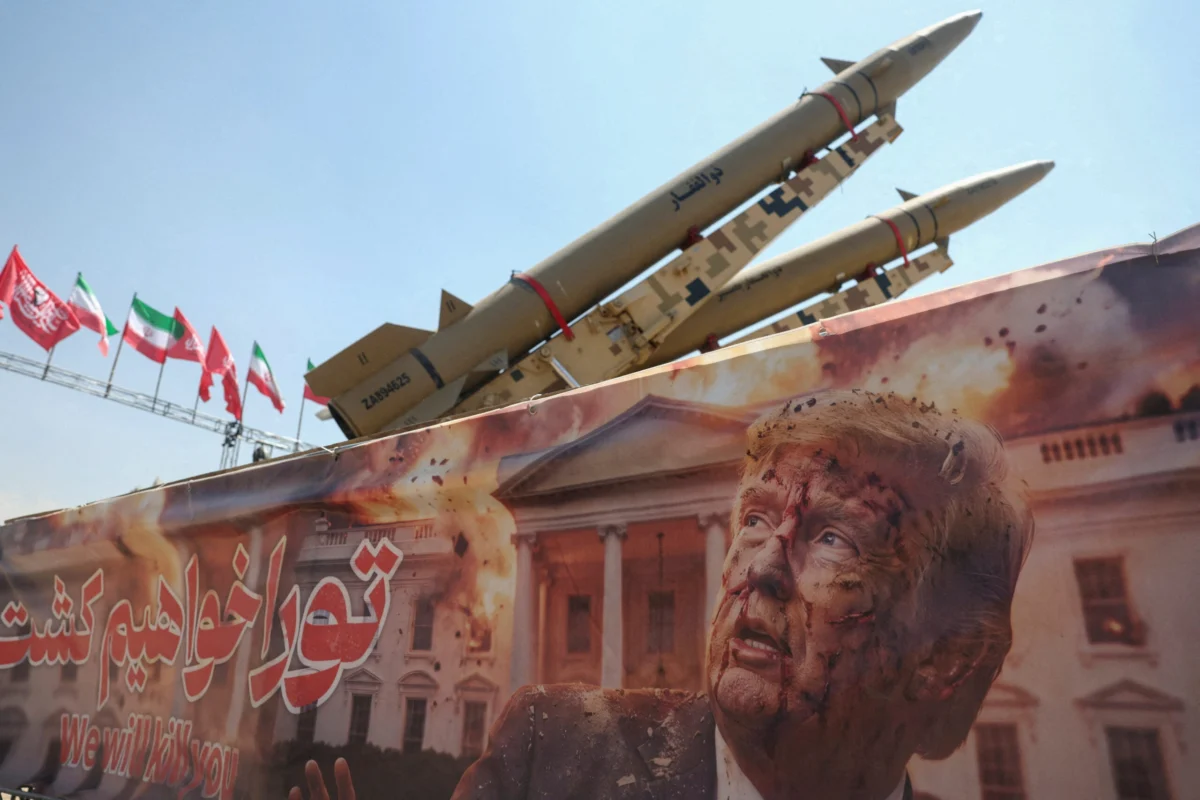
The immediate context for these warnings appears to be a profound and escalating crisis between Iran and the United States, which has been simmering for years but reached a critical inflection point in the weeks leading up to July 2026. The image accompanying initial reports, depicting a banner with U.S. President Donald Trump’s likeness alongside an Iranian missile system in Tehran’s Azadi Square, powerfully symbolizes the enduring antagonism and Iran’s defiant posture. While specific triggers for the latest escalation were not explicitly detailed in the initial report, several factors are widely believed to be contributing to the perilous environment.
Since the US withdrawal from the Joint Comprehensive Plan of Action (JCPOA), or the Iran nuclear deal, in 2018 under the Trump administration, and the subsequent re-imposition of crippling sanctions, relations have been in a steady decline. Successive US administrations, including the current one (presumably either a second Trump term or a new administration continuing similar policies given the image), have maintained a "maximum pressure" campaign against Iran, aiming to curb its nuclear program, ballistic missile development, and regional influence. Iran, in response, has progressively scaled back its commitments under the JCPOA, enriching uranium to higher purities and increasing its stockpiles, moving closer to weapons-grade material, albeit while consistently denying any intention to build nuclear weapons.
A Chronology of Mounting Tensions (Inferred Timeline)
The current crisis did not emerge in a vacuum. A plausible sequence of events leading to the July 30, 2026, warnings might include:
- Early 2026: Increased reports from the International Atomic Energy Agency (IAEA) detailing Iran’s continued advancements in uranium enrichment, including the operation of advanced centrifuges and the production of 60% enriched uranium. This prompts renewed international concern and calls for a stronger response from the P5+1 nations.
- March-April 2026: The US, perhaps under a renewed mandate or perceived Iranian provocation, intensifies its naval presence in the Persian Gulf and deploys additional air defense systems and fighter jets to allied bases in the region. This is framed as a deterrence measure and a demonstration of commitment to regional security.
- May 2026: Iran conducts a series of large-scale military exercises involving its Revolutionary Guard Corps (IRGC) and regular army. These drills include simulated attacks on naval targets, testing of new ballistic missiles, and drone swarm maneuvers, explicitly designed to showcase Iran’s defensive and retaliatory capabilities. State media issues strong warnings against any "miscalculation" by external powers.
- June 2026: A series of minor but significant incidents occur in the Strait of Hormuz, including close encounters between Iranian fast boats and US Navy vessels, and brief disruptions to commercial shipping, attributed by Washington to Iranian harassment. Simultaneously, cyberattacks targeting critical infrastructure are reported by both sides, with each blaming the other.
- Early July 2026: Diplomatic efforts, possibly led by European nations or the UN, to de-escalate tensions fail. A proposed meeting between US and Iranian envoys falls apart over preconditions, with Iran demanding a complete lifting of sanctions and the US insisting on full compliance with nuclear obligations and a halt to regional "destabilizing activities."
- Mid-July 2026: US officials, including high-ranking military commanders and political figures, issue increasingly hawkish statements, emphasizing that "all options are on the table" to prevent Iran from acquiring nuclear weapons and to ensure freedom of navigation. Media reports circulate about potential contingency plans for military action.
- Late July 2026 (Leading to July 30): Intelligence leaks or heightened military movements suggest an imminent shift in US strategy, possibly towards more coercive measures or even limited strikes. This culminates in Iran’s urgent diplomatic outreach on July 30, perceiving an immediate threat.
Official Responses and Regional Ramifications (Inferred)
Following Iran’s warnings, the reactions from the implicated nations and the international community would likely be swift and varied:
- Turkiye: Ankara would likely issue a statement expressing deep concern over the escalating tensions and reiterate its call for dialogue and de-escalation. Turkish officials might offer to play a mediating role, leveraging their diplomatic channels with both Tehran and Washington, emphasizing that a regional conflict would have devastating consequences for all.
- Pakistan: Islamabad would probably emphasize its commitment to regional peace and stability, urging all parties to exercise restraint and resolve differences through peaceful means. Pakistan, historically careful to balance its relations with Saudi Arabia, Iran, and the US, would likely seek to avoid entanglement in any direct conflict, prioritizing its own security and economic interests.
- Saudi Arabia: Riyadh’s response would be critical. While acknowledging the call, Saudi officials might issue a statement underscoring their commitment to regional security in cooperation with allies, implicitly referring to the US. However, mindful of the recent rapprochement with Iran, the Saudis might also stress the importance of diplomatic solutions and avoiding escalation, subtly signaling their desire to preserve the fragile détente.
- United States: Washington would likely dismiss Iran’s warnings as a distraction or an attempt to deflect attention from its own "destabilizing actions." The State Department or Pentagon would reiterate its commitment to protecting US interests and allies, maintaining freedom of navigation, and preventing Iran from acquiring nuclear weapons. There might be renewed calls for international pressure on Iran to return to compliance.
- International Bodies (UN, EU): The United Nations Secretary-General would likely issue a strong statement calling for immediate de-escalation, restraint from all parties, and a return to diplomatic engagement. The European Union, a signatory to the JCPOA, would express profound alarm, urging both the US and Iran to avoid any actions that could trigger a military confrontation and emphasizing the importance of preserving the nuclear deal, even in its diminished state, as the only viable framework for non-proliferation.
Broader Impact and Implications
The current trajectory of US-Iran relations, punctuated by Iran’s urgent regional warnings, carries profound implications far beyond the immediate protagonists:
- Global Energy Markets: Any military conflict in the Persian Gulf, home to the Strait of Hormuz through which a significant portion of the world’s oil transits, would inevitably trigger a catastrophic surge in global oil prices. This would send shockwaves through the global economy, potentially leading to a recession and exacerbating inflationary pressures already present in 2026.
- Regional Instability: A direct confrontation between the US and Iran would unleash unprecedented instability across West Asia. Proxy conflicts in Yemen, Syria, Iraq, and Lebanon could intensify dramatically, drawing in other regional and international actors. The humanitarian cost would be immense, leading to new waves of displacement and refugee crises.
- Nuclear Proliferation Concerns: Should the JCPOA completely collapse under the weight of this crisis, and Iran perceive an existential threat, its pathway to developing nuclear weapons could accelerate. This would trigger a dangerous proliferation cascade in the region, with countries like Saudi Arabia and Turkiye potentially reconsidering their own nuclear ambitions, leading to a far more dangerous and unpredictable world.
- Erosion of International Law and Diplomacy: The breakdown of diplomatic channels and the reliance on military posturing undermine international norms and the framework of multilateral diplomacy. It sets a dangerous precedent for resolving international disputes through coercion rather than negotiation.
- Domestic Political Ramifications: For the United States, a military conflict could have significant domestic political consequences, especially if 2026 is an election year or leading into one. For Iran, an external threat often serves to rally nationalist sentiment, but prolonged conflict or severe economic hardship could also exacerbate internal dissent.
Analysis of Iran’s Strategy
Iran’s diplomatic offensive on July 30, 2026, appears to be a multi-pronged strategy. Firstly, it serves as a direct message of deterrence to the United States, indicating that Iran views any potential military action as an existential threat that will be met with a resolute response. By engaging key regional players, Iran also aims to build a degree of regional consensus against foreign military intervention, or at least to sow doubt among potential allies of the US.
Secondly, by warning Turkiye, Pakistan, and Saudi Arabia, Iran seeks to underscore the regional consequences of a potential conflict, effectively holding them accountable for their stance and actions. For Saudi Arabia, it tests the sincerity and durability of the recent rapprochement. For Turkiye and Pakistan, it’s a call to prioritize regional stability over external alliances that could draw them into a conflict.
Finally, this diplomatic move is an attempt to internationalize the crisis, forcing these influential nations, and by extension the broader international community, to recognize the gravity of the situation and perhaps exert pressure on Washington to de-escalate. The symbolic image of Trump alongside an Iranian missile in Tehran is not just defiance; it’s a visual articulation of a long-standing grievance and a refusal to back down under perceived pressure.
As the region braces for potential further developments, the coming days will be crucial in determining whether diplomacy can still avert a catastrophic conflict, or if the current trajectory will lead to an unprecedented escalation in one of the world’s most volatile regions. The international community watches with bated breath, fully aware that the implications of a US-Iran war would reverberate globally for decades to come.
