

As the United States and Iran exchanged fresh attacks this week, a singular date has increasingly loomed over the volatile conflict: November 3, the day of the US midterm elections. This electoral contest could prove a pivotal moment in the ongoing confrontation, with senior advisers to President Donald Trump reportedly seeking to prevent the conflict from escalating into an all-out war before the polls, where Republicans face the daunting task of defending narrow majorities in both houses of Congress. The delicate balance between applying pressure and avoiding full-scale war defines Washington’s strategy in these critical weeks.
Recent Escalations and Washington’s Dual Strategy
The recent exchange of hostilities between the two long-standing adversaries underscores the precarious nature of the current geopolitical landscape. While the precise details of the latest strikes remain under tight wraps, reports indicate continued military actions by US forces against Iranian targets, met with reciprocal responses from Tehran. This comes against a backdrop of the broader conflict that began on February 28 with US and Israeli attacks on Iran, marking a significant escalation from previous tensions.
In tandem with limited military engagement, Washington has intensified its reliance on economic pressure. August saw the Trump administration unleash its so-called “Economic D-Day,” a sweeping package of sanctions targeting 60 entities deemed instrumental in facilitating Iran’s oil revenues and international trade. These measures, aimed at crippling Tehran’s financial lifelines, also carry the formidable threat of secondary sanctions against any other nation or entity found to be doing business with Iran. This economic offensive is complemented by a persistent US naval blockade of Iranian ports in and around the strategically vital Strait of Hormuz, further throttling Tehran’s crucial oil exports.
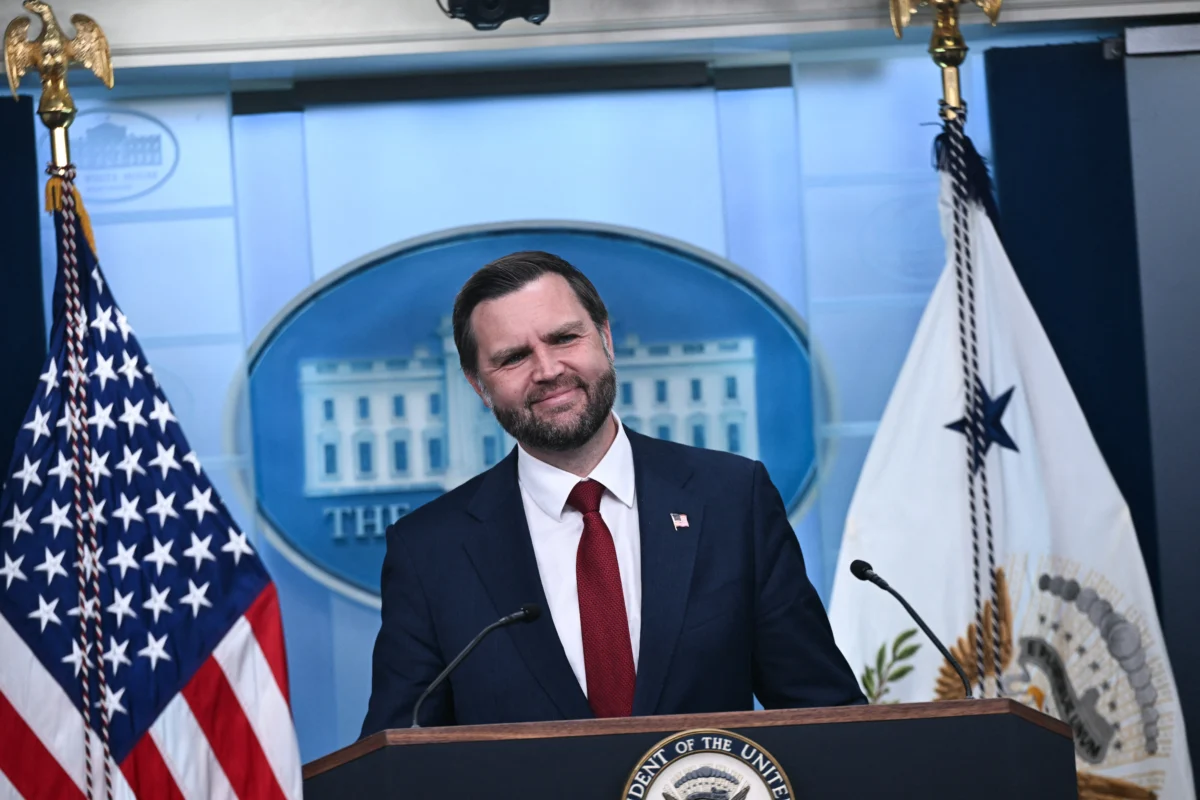
Vice President JD Vance has, meanwhile, taken on the task of downplaying the severity of the conflict. With rising domestic fuel prices and mounting public opposition threatening to become significant political liabilities for Republicans ahead of the midterms, Vance has sought to frame the situation as less than a full-blown war. However, the administration’s rhetoric of restraint is tested by the reality of ongoing military operations. US leaders maintain that further military action remains a viable option, with Vance stating this week that "everything that could happen is on the table," encompassing economic, military, diplomatic, and even covert pressure. This leaves the next two months as a particularly tricky period for Washington, aiming to avoid all-out war while ratcheting up economic pressure, yet susceptible to Iran’s own calculations that could force an unwanted escalation.
The Midterm Election Conundrum for Trump
The November 3 midterm elections are of paramount importance for the Trump administration, as they will determine whether the Republican Party can retain its precarious control of Congress. A significant escalation of the conflict before this date could galvanize voter sentiment against the incumbent administration, jeopardizing Republican majorities in both the House of Representatives and the Senate. The political imperative, therefore, is to contain the fighting until November, preventing an already deeply unpopular war from monopolizing the national political agenda.
The administration’s initial projections for the conflict have proven wildly optimistic. In early March, President Trump had confidently asserted that the war would conclude within "four or five weeks." Instead, the conflict has dragged on for months, generating a cascade of unintended and politically damaging consequences. Chief among these is Iran’s strategic closure of the Strait of Hormuz, a move that has sent global energy prices soaring and inflicted direct financial pain on American households.
Domestic Political and Economic Fallout
Public sentiment data paints a grim picture for the administration. A late-August Reuters/Ipsos poll revealed that only 31 percent of Americans support the war, starkly contrasted by 63 percent who oppose it. This widespread disapproval has directly impacted President Trump’s approval ratings, which have fallen from 40 percent at the outbreak of hostilities to a mere 33 percent, according to the same polling data. Such figures are a clear alarm bell for any party facing a national election.
The economic ramifications have been particularly acute. US diesel prices, a critical indicator for the nation’s logistics and industrial sectors, hit a record high on Thursday, surpassing the previous peak recorded in 2022. This surge is a direct consequence of higher crude oil prices, exacerbated by refining bottlenecks and the disruption to global shipping lanes, especially the Strait of Hormuz. Diesel is the lifeblood of much of the US economy, underpinning trucking, agriculture, construction, and manufacturing. Its increased cost quickly translates into higher prices across the board.
This situation is particularly damaging for a president who campaigned on a promise to dramatically reduce energy costs and famously pledged to avoid "unnecessary" wars. The fallout from the Iran conflict has not been confined to the petrol pump. Sustained increases in fuel and transport costs inevitably feed into the price of groceries, manufactured goods, and other everyday purchases. This inflationary pressure comes at a time when Democrats are strategically positioning the cost of living as a defining issue for their midterm campaigns. An August Politico poll underscored this concern, indicating that 61 percent of Americans believe the Iran war had made life more expensive for their families, a four-percentage-point increase from the previous month. This economic strain directly impacts voter wallets and is a significant vulnerability for the Republican Party.
The Administration’s Tightrope Walk: "No War, No Peace"
Evidence suggests the Trump administration is indeed attempting to navigate a "no war, no peace" strategy, aiming to contain the conflict until after the November elections. In recent weeks, Washington has intensified its economic campaign against Iran, threatening severe sanctions against countries that continue to engage in trade with Tehran, while simultaneously maintaining a robust military presence around the Strait of Hormuz. The sporadic strikes on Iran, such as those earlier this week, demonstrate a willingness to engage militarily but with a clear intent to avoid a full-scale conflagration.
Senior administration officials have actively sought to minimize the perceived scale of the military confrontation. During a White House briefing, Vice President JD Vance, when asked if the Iran situation would be resolved before the midterms, explicitly stated he "wouldn’t call it a war" and claimed there was "no active shooting right now." His attempts to downplay the severity extended to global energy markets, asserting the conflict was having "less effect day by day." The US has also claimed that it is successfully escorting approximately 30 ships per night through the Strait of Hormuz, with officials citing some 18 million barrels of oil transported through the strait on Tuesday this week alone. However, independent shipping data has not fully corroborated these claims, raising questions about the transparency of information regarding the critical waterway.
Despite the administration’s efforts, this "no war, no peace" strategy is fraught with risk, as analysts have repeatedly warned. Negar Mortazavi, a senior fellow at the Washington, DC-based Center for International Policy, articulated this concern to Al Jazeera, stating, "Tehran will not capitulate under [economic] pressure. Both sides may believe they can control the escalation, but every new exchange increases the risk of a wider regional conflict."
The human cost of the sporadic strikes has also come under scrutiny. One of the US attacks this week is believed to have tragically struck a civilian home where a wedding was taking place in Kuhestak, southern Iran, reportedly killing at least four people, including children, and wounding dozens. Such incidents inevitably fuel anti-American sentiment and complicate any de-escalation efforts.
Furthermore, The Washington Post reported on Sunday that senior Army, Navy, and Air Force leaders have delivered a stark warning to Pentagon chief Pete Hegseth in a written assessment. Their evaluation concluded that sustaining the war at its current pace is unsustainable and poses a significant risk to undermining US military readiness in other crucial parts of the world. This internal assessment highlights the strain the conflict is placing on the Pentagon’s resources and long-term strategic planning.
Trita Parsi, executive vice president of the US-based Quincy Institute for Responsible Statecraft, told Al Jazeera that the recent attacks suggest a US strategy that remains deeply unsettled. "I think it’s quite likely that what we’re seeing right now is just complete military, strategic disarray on the American position in which the positions, the actions, the tactics, the strategies keep on getting changed," Parsi observed. He pointed out the apparent contradiction: Washington imposed sweeping economic sanctions with the stated aim of making further military intervention unnecessary, only to return to bombing Iran seven days later. Parsi concluded that the US appears to be "jumping from one position to the other," indicative of a lack of coherent long-term strategy.
Iran’s Strategic Calculus: Maximizing Political Pain
While the most recent exchanges between the US and Iran have been less intense than the heavy bombardments seen in the early weeks of the war and during flare-ups in July, the inherent risk of escalation remains alarmingly high. Moreover, it may, paradoxically, be in Iran’s strategic interest for such an escalation to occur sooner rather than later.
Iran has long demonstrated a sophisticated mastery of asymmetric warfare, a doctrine tailored to counter an enemy with vastly superior conventional military might. Tehran has effectively leveraged cheap, mass-produced drones to exhaust US supplies of very expensive defensive systems, while also launching proxy attacks on US allies across the Gulf region, sowing discord and instability. Crucially, Iran has repeatedly shown its capacity to severely disrupt maritime traffic through the Strait of Hormuz, a choke point through which approximately 20% of the world’s crude oil passes, thereby creating global economic consequences that resonate far beyond the immediate conflict zone.
Continued Iranian attacks on US or regional military assets, commercial shipping, or energy infrastructure would inevitably exert significant pressure on Washington to retaliate more forcefully than the limited strikes it has carried out this week. This dynamic could easily trigger an escalatory cycle, propelling the two countries back into a much wider war, irrespective of the White House’s pressing electoral calculations.
Furthermore, Washington’s current economic strategy to isolate Tehran—an attempt to pivot away from open warfare—may inadvertently create a greater incentive for Iranian retaliation. Parsi suggested that Iranian officials appear to believe President Trump ultimately intends to restart the war on a larger scale, merely awaiting the conclusion of the midterms. This perception creates a potentially perilous calculation for Tehran: that it might be more advantageous to escalate now, while Trump is at his most politically vulnerable. As Parsi explained, "The reaction of the Iranians to that might be to actually trigger the war themselves early right before the midterm elections in order to maximize the pain that will impose on the US president."
The Post-Election Landscape: Unpredictable Outcomes
The period immediately following November 3 presents a highly unpredictable landscape for the US-Iran conflict. Reuters reported on Wednesday that senior White House officials are already contemplating the possibility of intensifying military operations against Iran after the vote, though no definitive decision has been made on returning to a full-scale conflict.
A Republican victory in the midterms, retaining control of Congress, could be interpreted by the Trump administration as a mandate – or at least a lack of sufficient public disapproval – for its handling of the war, despite the considerable economic consequences borne by voters. Such an outcome could embolden Trump, providing him with greater political leeway to pursue more aggressive military options against Iran.
Conversely, a Republican defeat, resulting in the loss of one or both chambers of Congress, presents a more complex picture. On one hand, a divided Congress would inherently constrain the administration. Congress holds the power of the purse, controlling government funding, which includes military spending. Democratic control of the House or Senate would also grant Trump’s political opponents greater scope to hold investigative hearings, scrutinize the US conduct of the war, and challenge requests for additional military appropriations. This legislative oversight could act as a check on executive power.
However, experts also warn of an alternative, more dangerous scenario. With President Trump no longer facing an immediate congressional election, he might feel less political pressure to contain the war. Parsi cautioned that an electoral defeat could, therefore, have the opposite effect to what Tehran might anticipate. "I’m not so sure that it’s going to pay off necessarily for the Iranians because a Trump that is humiliated at the elections, who is faced with a Democratic [majority] House [of Representatives] and potentially a Democratic Senate, may also become a much more desperate and reckless president," he stated. Such a president, unburdened by direct electoral accountability for the conflict, might be inclined towards more drastic actions to assert power or distract from domestic political challenges.
Broader Implications and The Uncertain Path Ahead
Beyond the immediate domestic political considerations, the ongoing US-Iran conflict, and its potential post-midterm escalation, carries significant regional and international implications. Regional allies, particularly those in the Gulf, watch with apprehension, fearful of a wider conflict that could destabilize an already volatile Middle East. Global energy markets remain on edge, susceptible to any further disruptions in the Strait of Hormuz, which could send oil prices to unprecedented levels and trigger a global economic slowdown.
The coming two months are thus poised to be a period of intense diplomatic maneuvering, military posturing, and high-stakes political calculations. Both Washington and Tehran are navigating a complex web of domestic pressures and external threats. The US seeks to manage a costly and unpopular war while securing electoral success, while Iran assesses the optimal moment to exert maximum leverage. The November 3 midterm elections are not merely a domestic political event; they are a critical juncture that could fundamentally reshape the trajectory of the US-Iran conflict, with potentially far-reaching consequences for regional stability and global security. The world watches, holding its breath, as the countdown to this pivotal date continues amidst the echoes of escalating hostilities.
