

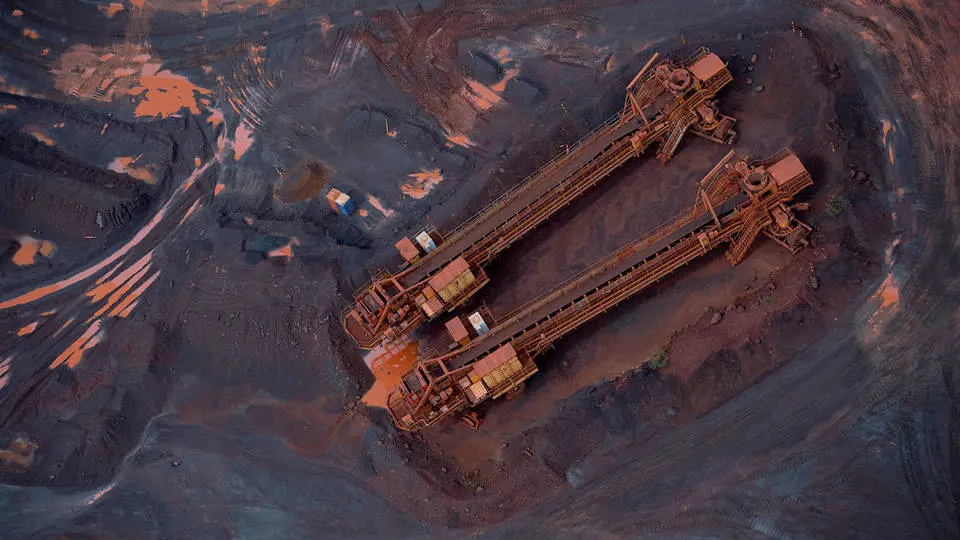
While the United States and China vie for maximum returns on their critical mineral investments, governments in resource-abundant nations face the intricate challenge of balancing external pressures with burgeoning internal demands. The intricate dance between global economic ambition and national sovereignty has intensified, with mining corporations finding themselves under increasing scrutiny. The trust of local communities is no longer a mere formality but a critical determinant of success, as host countries are poised to swiftly withdraw support should public opinion turn unfavorable. This complex geopolitical and economic landscape is vividly illustrated by recent political shifts in Brazil and Serbia, countries poised to become key players in the escalating global demand for essential raw materials.
A Shifting Global Order and the Looming Demand for Critical Minerals
The week’s political theater, marked by two significant electoral outcomes, has underscored the evolving geopolitical landscape and its direct implications for the global resource market. In Brazil, President Luiz Inácio Lula da Silva secured re-election, narrowly defeating his far-right challenger, Flávio Bolsonaro. Simultaneously, Serbia witnessed a seismic shift as a student-led opposition movement successfully ousted Aleksandar Vučić, who had held power for fourteen years. While these democratic transitions are significant in their own right, their true import extends beyond domestic politics. Both Brazil and Serbia, whether by choice or by circumstance, find themselves increasingly drawn into the intensifying global competition for critical minerals and metals—resources indispensable for the green energy transition, advanced technologies, and modern defense systems.
The burgeoning demand for these materials is a direct consequence of global decarbonization efforts and the accelerating pace of technological innovation. Minerals like lithium, cobalt, nickel, copper, and rare earth elements are the building blocks of electric vehicle batteries, wind turbines, solar panels, advanced semiconductors, and sophisticated military hardware. Projections from various international bodies, including the International Energy Agency (IEA), highlight a dramatic increase in demand for these commodities in the coming decades. For instance, the IEA’s "Critical Minerals Market Review" has consistently pointed to a projected doubling of demand for critical minerals by 2040, driven primarily by clean energy technologies. This escalating need places resource-rich nations at the center of a complex web of geopolitical interests and economic opportunities.
Brazil: Navigating a Resource Boom Amidst Political Realignment
President Lula da Silva’s victory in Brazil signals a potential shift in the nation’s approach to its vast mineral wealth. Brazil is a global powerhouse in the extraction of several critical minerals, including niobium (where it holds over 90% of global reserves), iron ore, bauxite (for aluminum), and manganese. The country also possesses significant, though less extensively exploited, reserves of rare earth elements, nickel, and copper. Historically, Brazil’s approach to resource governance has been a delicate balancing act between attracting foreign investment and ensuring that the benefits accrue to the nation and its citizens.
The Lula administration’s re-election comes at a time when global powers, particularly the United States and China, are aggressively seeking to secure reliable and diversified supply chains for critical minerals. Both nations are heavily investing in exploration, extraction, and processing capabilities worldwide, often through direct state-backed enterprises or by incentivizing private sector involvement. This creates a dual pressure on Brazil: the opportunity to leverage its resources for economic development and the risk of becoming a pawn in larger geopolitical rivalries.
Timeline of Key Developments in Brazil’s Critical Mineral Landscape:
- Early 2020s: Growing global awareness of critical mineral importance fuels increased interest from international mining companies and governments in Brazil’s resource potential.
- 2022 onwards: The US and China intensify efforts to secure critical mineral supply chains, leading to increased diplomatic and investment overtures towards Brazil.
- October 2026 (Election Year): President Lula da Silva is re-elected, setting the stage for his administration’s policy decisions regarding resource extraction and foreign investment.
The Lula government’s policy framework will be crucial in determining how Brazil capitalizes on this demand. Will it prioritize state-led development of its mineral sector, as seen in some Latin American nations, or will it continue to rely on foreign direct investment? The former approach could offer greater national control and a larger share of the profits but might deter private capital and slow down development. The latter could accelerate extraction but risks repeating past patterns where resource wealth did not translate into broad-based economic prosperity, potentially fueling domestic discontent.
Serbia: A European Nation in the Crucible of Mineral Geopolitics
Serbia’s political transition, with the ousting of Aleksandar Vučić after a long tenure, introduces another dynamic into the critical mineral equation. Serbia, while not possessing the sheer scale of resources as Brazil, is strategically important for certain minerals crucial to European supply chains. It is a significant producer of copper and holds substantial reserves of lithium, particularly in the Jadar Valley, where the Jadar project, developed by Rio Tinto, has been a focal point of both economic promise and intense local and environmental opposition.
Vučić’s government had actively courted foreign investment in the mining sector, viewing it as a key driver of economic growth. However, the Jadar lithium project, in particular, faced considerable public backlash due to environmental concerns and fears of land degradation and water contamination. These protests, often amplified by student groups and environmental activists, played a significant role in the political climate leading up to the elections.
Chronology of Serbia’s Lithium Debate:
- Early 2000s: Rio Tinto discovers significant lithium deposits in the Jadar Valley.
- 2017-2021: The Jadar project gains momentum, with government approvals and initial construction phases.
- 2021-2023: Widespread public protests erupt against the Jadar project, citing environmental risks.
- December 2023: The Serbian government officially revokes Rio Tinto’s permits for the Jadar project amid sustained public pressure.
- October 2026 (Election Year): The student-led opposition, leveraging environmental concerns and broader calls for democratic reform, unseats the incumbent government.
The new Serbian government inherits a complex situation. The decision to revoke Rio Tinto’s permits, while popular with a segment of the population, has significant implications for foreign investment and Serbia’s standing in the eyes of international mining conglomerates and their home governments. The challenge for the new leadership will be to find a way to develop its mineral resources responsibly, if at all, in a manner that addresses environmental concerns and gains local community trust, while also navigating the geopolitical pressures from countries like China, which has been actively seeking to expand its influence and control over critical mineral supply chains in Europe.
The Geopolitical Chessboard: US vs. China and the Role of Host Nations
The United States and China are the primary architects of the current global scramble for critical minerals. Both nations recognize that securing these resources is paramount to their economic competitiveness, national security, and leadership in the global transition to a green economy.
United States Strategy: The US has been actively pursuing a strategy of "friend-shoring" and diversification of supply chains. This involves encouraging domestic production, forming strategic partnerships with allied nations, and investing in processing capabilities outside of China. Initiatives like the Inflation Reduction Act (IRA) provide substantial incentives for companies to source critical minerals and components from North America or countries with which the US has free trade agreements. This strategy aims to reduce reliance on China, which currently dominates many aspects of the critical mineral supply chain, from extraction to refining.
China’s Strategy: China, conversely, has spent decades building a formidable presence in the global critical mineral market. Through state-backed enterprises and strategic investments, China has secured access to vast reserves and processing facilities worldwide. Beijing views control over critical minerals as a strategic imperative, enabling its own industrial dominance and influencing global trade dynamics. China’s Belt and Road Initiative (BRI) has often facilitated its access to resources in developing nations.
Implications for Resource-Rich Countries: For countries like Brazil and Serbia, this intense competition presents both opportunities and significant risks.
- Economic Opportunity: The global demand translates into potential for significant foreign investment, job creation, and revenue generation through resource extraction and export. This can be a powerful engine for economic development, particularly in regions that have historically struggled with poverty and underdevelopment.
- Geopolitical Leverage: Nations possessing critical mineral reserves can potentially wield greater geopolitical influence. They can negotiate more favorable terms with investing countries and play a more active role in shaping international resource governance.
- Risk of Exploitation: However, there is a substantial risk that resource-rich nations could become mere suppliers of raw materials, with limited value addition occurring domestically. This can perpetuate cycles of dependency and prevent the development of higher-value industries.
- Environmental and Social Concerns: The accelerated pace of extraction, driven by external demand, can exacerbate environmental degradation, displace local communities, and lead to social unrest if not managed with robust regulations and genuine community engagement.
- "Resource Curse" Potential: Without strong governance, transparency, and equitable distribution of revenues, critical mineral wealth can contribute to corruption, inequality, and political instability, a phenomenon often referred to as the "resource curse."
The Imperative of Local Trust and Sustainable Governance
The experience in Serbia, particularly with the Jadar lithium project, highlights a critical lesson: the success or failure of major mining ventures is increasingly dependent on securing the trust and buy-in of local communities. Public opinion, once a secondary consideration, is now a powerful force that can derail multi-billion-dollar projects.
Mining firms operating in resource-rich countries must adopt a proactive and transparent approach to community engagement. This involves:
- Early and Continuous Consultation: Engaging with local populations from the initial stages of project planning, not merely as a formality, but as a genuine partnership.
- Environmental Stewardship: Implementing the highest environmental standards, with rigorous monitoring and mitigation plans to address potential impacts on land, water, and biodiversity.
- Social Impact Assessments: Conducting thorough assessments of potential social impacts and developing comprehensive plans to address issues such as land rights, cultural heritage, and community development.
- Benefit Sharing: Establishing clear and equitable mechanisms for sharing the economic benefits of mining operations with local communities, such as employment opportunities, local procurement, and investment in social infrastructure.
- Transparency and Accountability: Operating with a high degree of transparency regarding operations, environmental performance, and financial contributions to local economies.
Host governments, in turn, must establish robust regulatory frameworks that ensure responsible resource extraction, protect the environment, and guarantee that the benefits of mineral wealth are equitably distributed. This includes:
- Strong Environmental Regulations: Enforcing stringent environmental protection laws and ensuring compliance by all mining operators.
- Transparent Licensing and Permitting: Implementing clear and transparent processes for awarding mining licenses and permits, free from corruption.
- Revenue Management: Establishing sovereign wealth funds or similar mechanisms to prudently manage revenues from mineral extraction, investing them in diversification and sustainable development.
- Conflict Resolution Mechanisms: Developing effective mechanisms for resolving disputes between mining companies, local communities, and the government.
Looking Ahead: A Balancing Act for a Sustainable Future
The recent electoral shifts in Brazil and Serbia underscore a global trend: resource-rich nations are increasingly asserting their agency in the face of intense international pressure. The global demand for critical minerals presents an unprecedented economic opportunity, but it is fraught with geopolitical complexities and environmental risks.
The United States and China, locked in a strategic competition for dominance in the 21st-century economy, will continue to exert influence. However, the ultimate success of their strategies will hinge on their ability to engage with resource-rich countries as genuine partners, rather than mere suppliers. For nations like Brazil and Serbia, the challenge is to harness their mineral wealth for sustainable development, ensuring that the benefits accrue to their citizens while safeguarding their environments and sovereignty. The coming years will be critical in determining whether this global scramble for critical minerals leads to shared prosperity or exacerbates existing inequalities and geopolitical tensions. The ability of these nations to navigate this complex landscape, balancing external demands with internal needs and fostering trust with their own populations, will be the defining factor in their journey towards a secure and prosperous future.
