

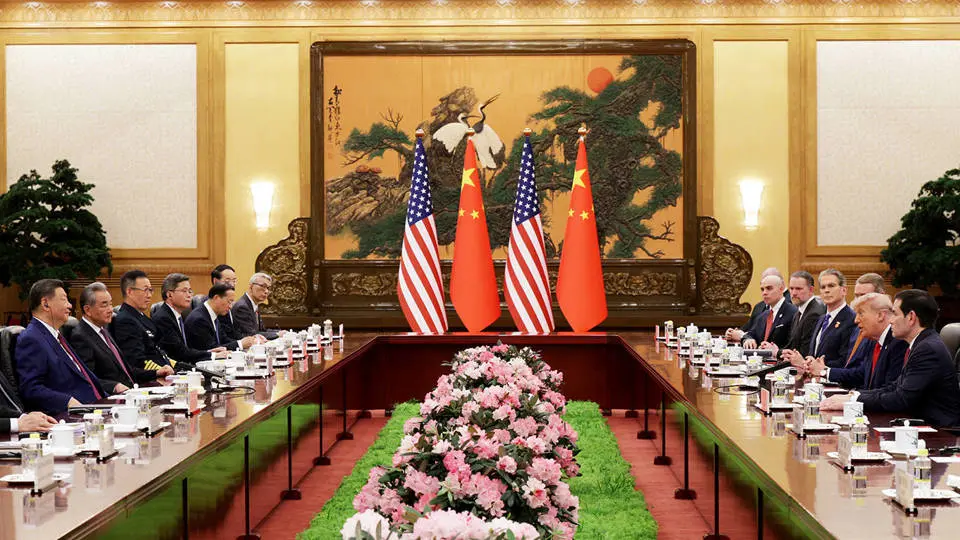
Shanghai – Delegates convened at the prestigious Bund Summit in Shanghai have largely concluded that the relationship between the United States and China may be entering a new, less contentious phase. While the prospect of a post-Trump era looms large in the minds of many, sparking keen interest in its potential impact on Sino-American ties, a particularly encouraging development observed at the summit was the palpable willingness for candid and open exchanges of views. This shift, if sustained, could mark a significant departure from recent years characterized by heightened tensions and strained diplomatic dialogue.
A New Chapter for Sino-American Relations?
The prevailing sentiment among participants at the Bund Summit, a high-profile gathering that brings together leading economists, policymakers, and business figures, suggested a collective desire to move beyond the confrontational rhetoric that has defined much of the US-China relationship in recent years. While the specific contours of the post-Trump administration remain a subject of intense speculation, the discussions at the summit indicated a cautious optimism that a more pragmatic and less ideologically driven approach to bilateral engagement might be on the horizon. This sentiment was underscored by the emphasis placed on fostering a more constructive dialogue, a stark contrast to the often acrimonious exchanges that have characterized past interactions.
The summit, held against the backdrop of evolving global economic and geopolitical landscapes, provided a crucial platform for dissecting the complex dynamics of the world’s two largest economies. Discussions reportedly delved into a range of critical issues, including trade imbalances, technological competition, climate change cooperation, and regional security. The underlying theme, however, was the shared recognition that a stable and predictable relationship is not only beneficial but essential for global prosperity and stability.
The Significance of Open Dialogue
A key takeaway from the Bund Summit was the observed increase in the "honest exchange of views." This phrase, often used euphemistically in diplomatic circles, appeared to carry a more substantial weight in the context of this particular gathering. For years, concerns have been raised about the shrinking space for critical discourse within China, particularly on economic and social issues. The article’s author, Stephen S. Roach, a prominent economist with extensive experience engaging with China, highlights his personal experience of being excluded from the China Development Forum (CDF) after 25 years of participation. He attributes this exclusion to his offering "constructive criticism" regarding structural economic malaise in mainland China and a perceived loss of autonomous identity in Hong Kong.
Roach’s experience, while personal, reflects a broader concern about the diminishing culture of open debate. The CDF, once considered one of China’s most prestigious international forums for intellectual exchange, has seemingly become less receptive to candid critiques. This trend, if indicative of a wider policy shift, raises questions about the future of intellectual freedom and the ability of international observers to provide valuable feedback that could contribute to China’s ongoing development. The contrast between his past engagement and his current exclusion underscores the challenges of fostering genuine dialogue when criticism is perceived as a threat rather than an opportunity for improvement.
Historical Context and Shifting Dynamics
The US-China relationship has undergone a dramatic transformation over the past few decades. From a period of cautious engagement and nascent economic interdependence in the late 20th century, the relationship has evolved into a complex mix of competition and cooperation, often punctuated by periods of intense friction. The "trade war" initiated under the Trump administration, characterized by tit-for-tat tariffs and heightened rhetoric, significantly strained bilateral ties. This period saw a noticeable decline in high-level diplomatic engagement and a rise in protectionist policies from both sides.
The approaching end of the Trump presidency, therefore, presents a critical juncture. While the future trajectory of US foreign policy remains subject to the outcome of the upcoming elections, the discussions at the Bund Summit suggest that many in China are anticipating a potential recalibration of US engagement. This anticipation is not necessarily a sign of weakness, but rather a recognition that different administrations may adopt different approaches to managing the complex relationship. The desire for a "less contentious chapter" reflects a hope for a return to a more predictable and less volatile interaction, allowing for a focus on areas of mutual interest.
Economic Realities and Interdependence
The economic interdependence between the United States and China is undeniable, despite ongoing efforts by both nations to diversify supply chains and reduce reliance on each other. China remains a critical manufacturing hub and a massive consumer market, while the US is a significant source of technology, investment, and consumer demand for Chinese goods. The sheer scale of this economic entanglement means that a complete decoupling is both impractical and economically damaging for all parties involved.
Data from the U.S. Bureau of Economic Analysis consistently shows China as one of the largest trading partners for the United States, with billions of dollars in goods and services exchanged annually. Similarly, Chinese trade statistics highlight the substantial role of the US market in its export-oriented economy. Any significant disruption to this relationship has ripple effects across global supply chains, impacting businesses and consumers worldwide. This underlying economic reality often serves as a powerful incentive for maintaining a degree of stability, even amidst political disagreements.
The Hong Kong Factor: A Symbol of Shifting Liberties
The author’s mention of deteriorating relations with friends in Hong Kong and the perception of a "loss of autonomous identity" in the city points to another sensitive area in the broader US-China context. The erosion of Hong Kong’s promised autonomy, particularly following the imposition of the National Security Law in 2020, has drawn widespread international condemnation and significantly impacted the city’s status as a global financial and cultural hub.
For many observers, Hong Kong served as a unique bridge between mainland China and the West, a place where different systems and values coexisted. Its transformation has been seen by some as a symbolic indicator of China’s tightening grip and a reduction in the space for dissent and independent thought. This shift has not only affected personal relationships but also contributes to a broader narrative of concern about the direction of governance and individual freedoms within China and its sphere of influence.
Implications for Global Governance
The nature of the US-China relationship has profound implications for global governance and international cooperation. Many of the world’s most pressing challenges, from climate change and pandemic preparedness to nuclear proliferation and economic stability, require a degree of collaboration between these two global powers. A more constructive and less adversarial relationship, as suggested by the sentiment at the Bund Summit, could facilitate greater progress in addressing these shared concerns.
Conversely, continued antagonism and a breakdown in communication risk exacerbating global instability and hindering effective solutions. The international community watches closely, recognizing that the ability of the US and China to manage their differences will shape the geopolitical landscape for decades to come. The summit’s emphasis on open dialogue, therefore, represents not just a potential shift in bilateral relations but a crucial element for the future of multilateralism and global problem-solving.
Looking Ahead: Navigating Uncertainty
While the Bund Summit has provided a glimmer of hope for a more amicable US-China relationship, significant challenges remain. The underlying structural issues that have led to tensions – including economic competition, technological rivalry, and differing political systems – are not easily resolved. The upcoming US presidential election will undoubtedly introduce another layer of uncertainty, as different administrations may prioritize different aspects of the relationship.
However, the reported willingness for "honest exchange of views" at the Bund Summit is a positive indicator. It suggests that even amidst geopolitical complexities, there is a recognition of the value of communication and a desire to find common ground. The true test will be whether this sentiment translates into tangible policy shifts and sustained diplomatic engagement in the years to come. The world is watching to see if this potential new chapter in Sino-American relations will indeed be characterized by greater understanding and cooperation, or if the underlying tensions will persist. The author’s personal experience of exclusion, while lamentable, serves as a reminder of the importance of maintaining open channels for criticism and dialogue, even when it is uncomfortable. This balance between candid feedback and diplomatic engagement will be crucial in shaping the future of this vital global relationship.
