

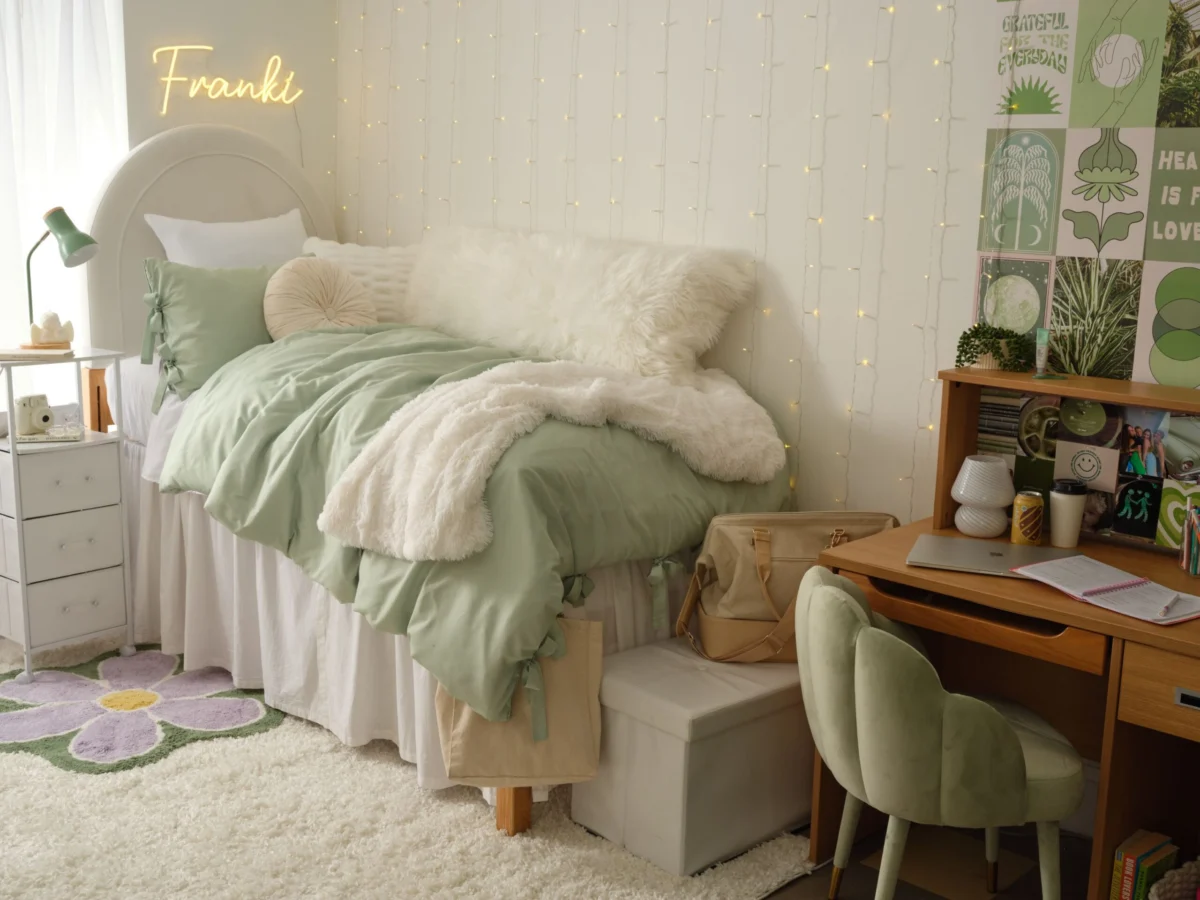
The traditional American dormitory, once characterized by sterile cinderblock walls and utilitarian furniture, is undergoing a profound transformation as the 2026 academic year approaches. Current market data and interior design forecasts indicate that students are no longer viewing their dorm rooms as temporary transit points, but as curated living environments essential to their mental well-being and academic success. This shift toward "lifestyle-centric" collegiate housing has spurred a multi-billion-dollar industry focused on renter-friendly modifications, multifunctional furniture, and highly specific aesthetic movements that mirror broader residential design trends.
The Personalization Revolution: Redefining the Collegiate Aesthetic
The drive for personalization has become the primary motivator for student consumers in the mid-2020s. According to industry analysis, the "standard-issue" look of university housing is being systematically replaced by designs that emphasize comfort and individual identity. This movement is largely fueled by social media platforms, where "dorm reveal" content has become a significant seasonal phenomenon, influencing how students budget for and select their living essentials.
In 2026, the prevailing design philosophy is one of "curated whimsy." This aesthetic departs from the stark minimalism of previous years, embracing bold colors and nostalgic elements. Leading the charge is an unapologetic use of pink, ranging from pastel hues to vibrant fuchsias. Manufacturers have responded to this demand with specialized appliances, such as Frigidaire’s retro-inspired compact refrigerators in signature pink finishes, which have become a staple at major retailers like Target. This trend suggests a broader consumer desire to inject personality into functional items that were previously viewed only through a lens of utility.
Parallel to the whimsical movement is the emergence of the "Coastal Grad" aesthetic. An evolution of the "Coastal Grandma" trend that dominated luxury residential design in the early 2020s, the collegiate version incorporates floral duvets, rattan textures, and light blue gingham patterns. This style emphasizes a sophisticated yet relaxed atmosphere, utilizing natural materials like wicker desk lamps and pencil holders to soften the harsh lighting and hard surfaces typical of university architecture.
Innovation in Non-Invasive Installation: The Rise of Nail-Free Galleries
One of the most significant challenges in dorm decoration has historically been the strict "no-damage" policies enforced by university housing departments. In response, a niche market for high-performance adhesive and magnetic mounting systems has matured. The goal for the 2026 student is the "lived-in" look of a gallery wall without the permanent scarring of nails or screws.
Technology has played a pivotal role in this evolution. Companies like TilePix, in partnership with national retailers such as Walgreens, have revolutionized the concept of the gallery wall through magnetic wall pads. These systems allow students to affix eight-by-eight-inch custom photo tiles to their walls with a simple magnetic interface, facilitating easy rearrangement and damage-free removal at the end of the semester. This shift from paper posters to high-quality, framed, or bordered tiles reflects a growing sophistication in student taste and a preference for durable, reusable decor.
Furthermore, the application of peel-and-stick wallpaper has migrated from residential kitchens to dorm rooms. Modern variants are designed specifically for temporary use, allowing students to line entire walls or the interior backs of bookshelves to create depth and texture. This trend is supported by a growing body of "renter-friendly" guides from major design publications, which emphasize that aesthetic expression need not come at the cost of a security deposit.
The Ergonomic Dorm: Prioritizing Comfort and Mental Well-being
The 2026 design cycle places a unprecedented premium on the "bed upgrade," a trend that acknowledges the bed as the primary hub of student life—serving as a place for sleep, study, and socialization. The "comfort-first" movement has led to a surge in the purchase of high-thread-count sheets, quality duvets, and complex layering of throws and pillows.
Personalization within this space has taken a sentimental turn. Startups such as Canelo & Co. have seen significant growth by specializing in pet portraits applied to textiles, including blankets and pillows. As mental health awareness becomes central to the university experience, these items serve a dual purpose: they provide physical comfort while acting as a psychological bridge to the student’s home life, effectively staving off homesickness.
The physical structure of the bed has also evolved. The practice of "lofting" or raising beds to create additional floor space remains popular, but it is now frequently augmented with custom headboards and bed skirts designed to hide under-bed storage, maintaining a clean visual line in a small space.
Spatial Engineering: Multifunctional Solutions for Small-Scale Living
As urban university real estate becomes increasingly constrained, the necessity for space-saving innovation has never been higher. The 2026 academic year highlights a shift toward "spatial engineering," where every piece of furniture must serve multiple functions.
Market leaders like Amazon and PBteen have expanded their inventories to include "hybrid" pieces. Notable examples include:
- Storage Ottomans: Serving as seating, a step-stool for lofted beds, and a container for out-of-season clothing.
- Light-up Vanity Mirrors: These units allow a standard study desk to be converted into a grooming station, maximizing the utility of the room’s limited surface area.
- Rolling Storage Carts: These have become ubiquitous for their ability to serve as mobile pantries, craft stations, or bedside tables, easily tucked away when not in use.
- Desktop Hutches: Vertical storage solutions that capitalize on unused air space above desks, providing a dedicated area for textbooks and electronics without sacrificing workspace.
Logistics also play a role in product design. Large, durable storage bags designed for efficient packing and stacking have replaced traditional cardboard boxes, reflecting a demand for tools that simplify the biannual move-in and move-out process.
Chronology of the 2026 Dorm Design Cycle
The preparation for the 2026 academic year follows a structured timeline that begins long before the first day of classes:
- January – March: Major retailers and design houses finalize their "Back to College" collections, heavily influenced by early spring fashion trends and interior design forecasts.
- April – May: High school seniors receive housing assignments. This triggers the "roommate coordination" phase, where students use digital mood boards to align their aesthetic choices.
- June – July: The peak purchasing window. Retailers report the highest volume of sales for large-scale items like mini-fridges, mattresses toppers, and storage furniture.
- August: The "Install Phase." Social media becomes saturated with transformation videos, showcasing the application of peel-and-stick wallpaper and the arrangement of nail-free gallery walls.
- September – December: The "Adjustment Phase." Students refine their spaces based on lived experience, often purchasing secondary organizational tools like hanging shoe racks or back-of-door mirrors to address unforeseen clutter.
Market Analysis and Economic Impact
The economic footprint of the dorm decor market is substantial. Financial analysts estimate that the average college student and their family spend between $1,200 and $2,500 on dorm furnishings and electronics during the freshman year. In 2026, this spending is increasingly directed toward "durable temporary" goods—items that are designed to last for four years of college but remain portable and adaptable.
The partnership between technology companies and traditional retailers (e.g., TilePix and Walgreens) illustrates a broader trend of cross-industry collaboration to capture the Gen Z market. By offering "on-demand" customization, these companies are tapping into a consumer base that values both convenience and uniqueness.
Broader Implications for the Future of Residential Design
The trends observed in the 2026 dorm room are indicative of a larger shift in the residential design landscape. The "renter-friendly" innovations developed for college students are increasingly being adopted by young professionals in urban apartments who face similar constraints regarding space and permanent modifications.
Furthermore, the focus on "whimsy" and "personalization" represents a move away from the standardized, mass-produced aesthetics of the early 2010s. As students prioritize mental health and domestic comfort, the dormitory has become a testing ground for how small-space living can be both functional and emotionally restorative. The 2026 academic year stands as a testament to the fact that college life and high-end design are no longer mutually exclusive, but are instead becoming deeply intertwined components of the modern higher education experience.
