

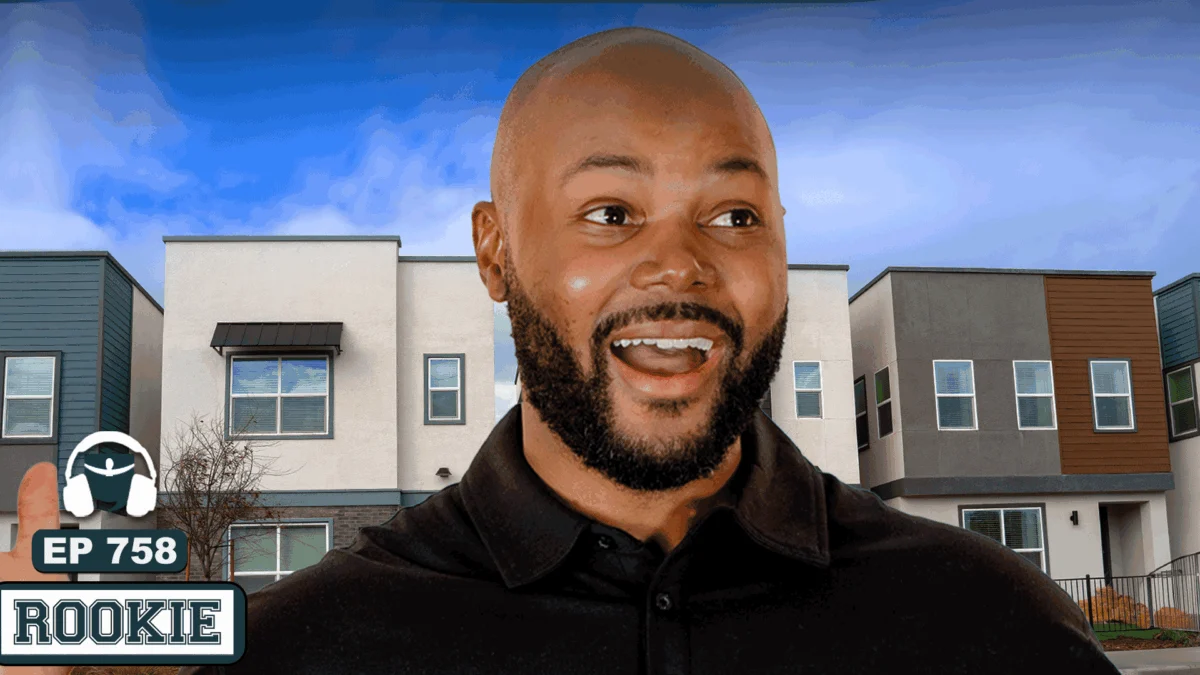
The trajectory of a real estate investor often begins with a period of intense theoretical study followed by a high-stakes leap into the physical market. For Jake McVey, a former indoor rock climbing coach turned real estate professional, this transition was marked by a disciplined adherence to the "BRRRR" method (Buy, Rehab, Rent, Refinance, Repeat) and a subsequent pivot into high-volume residential flipping. Since acquiring his first property at the age of 23, McVey has successfully navigated 13 real estate transactions in the Chicagoland area, leveraging strategic family partnerships, creative financing through Home Equity Lines of Credit (HELOCs), and a transparent relationship with municipal oversight. His journey provides a granular look at the mechanics of the suburban Illinois real estate market and the logistical hurdles inherent in scaling a renovation-based investment business.
The Foundation of a Real Estate Career
McVey’s interest in real estate was not a sudden impulse but a long-term professional objective cultivated since his high school years. While working in the indoor rock climbing industry, he spent several years consuming educational resources, including podcasts and literature from the BiggerPockets platform. However, the move from theory to practice required a tangible entry point that minimized initial risk.
In 2018, at age 23, McVey purchased his first property in Bolingbrook, Illinois, a southwest suburb of Chicago. This initial acquisition served as a primary residence and a laboratory for renovation techniques. Utilizing what he describes as a "long-term BRRRR," McVey and his partner lived in the home while executing a comprehensive cosmetic and structural overhaul. The project included removing walls to create an open-concept living space, installing new cabinetry, and updating flooring and bathrooms.
The financial data from this first deal underscores the efficacy of the BRRRR strategy during a period of historically low interest rates. Purchased in the $130,000 range with a renovation budget of approximately $12,000 in materials, the property was eventually refinanced in 2020. By securing a 2.99% interest rate, McVey was able to extract his initial capital while maintaining a high cash-flow margin. When the property transitioned into a full-time rental in 2023, it commanded a monthly rent of $2,300, yielding a significant monthly profit even as property taxes and insurance premiums rose in the ensuing years.
Chronology of the Partnership and Initial Flips
Following the success of his primary residence renovation, McVey sought to scale his operations by entering the "fix-and-flip" market. To do so, he formed a strategic partnership with his father, a veteran of the painting industry. This partnership was designed to blend McVey’s knowledge of real estate brokerage and market analysis with his father’s practical experience in the trades.
The duo’s first official flip occurred in 2020, financed through a HELOC secured against his father’s primary residence. This method of financing provided the necessary liquidity to make competitive cash offers on the Multiple Listing Service (MLS). The project was characterized by extreme labor intensity, with the pair working 14-hour days over a five-week period. Despite the stresses of the early COVID-19 pandemic and the pressure of using family equity, the project resulted in a $25,000 profit.
However, it was the second flip in 2021 that provided the most significant "reality check" for the fledgling firm. While the first deal was largely cosmetic, the second property revealed deep-seated structural and mechanical failures. Upon removing a shower base, the team discovered that the previous owners had used a flexible black garden hose as a primary drainage line, which had been routed through a destroyed ventilation duct. This discovery necessitated a shift from DIY labor to hiring licensed professionals.
Navigating Municipal Oversight and Technical Challenges
A defining characteristic of McVey’s approach is his proactive engagement with local government. In many investment circles, building inspectors and code enforcement officers are viewed as obstacles. McVey, however, adopted a policy of requesting "consultation" meetings with village inspectors prior to beginning major work.
During the second flip, the decision to pull comprehensive permits and involve the village of Bolingbrook initially doubled the renovation budget and extended the timeline. Nevertheless, this transparency mitigated long-term risk. The project, purchased for roughly $155,000, eventually sold for $270,000, yielding a $50,000 profit. The higher-than-expected return was attributed largely to fortuitous market timing, as suburban home prices saw rapid appreciation in early 2021.
The importance of municipal relations was further highlighted during a later project that faced a potential catastrophe during an open house. Heavy rains caused significant water intrusion into a slab-on-grade property. Rather than attempting a cosmetic fix, McVey contacted the village engineer. He discovered that the municipality had an existing program to address drainage issues in older neighborhoods. The village eventually agreed to dig a swale between the properties to reroute runoff, a move that not only solved the structural issue but also reassured the prospective buyer, allowing the sale to proceed.
Strategic Data: The Chicagoland Market Context
The success of McVey’s 13 deals must be viewed within the context of the Illinois real estate climate. Unlike many "sunbelt" markets that saw massive price spikes followed by corrections, the southwest suburbs of Chicago have remained a consistent seller’s market.
Key market indicators identified in McVey’s portfolio include:
- Acquisition Strategy: Approximately 50% of deals were sourced via the MLS, while the remainder were off-market.
- Offer Terms: To compete with institutional buyers, McVey frequently waives inspection contingencies and offers flexible closing dates tailored to the seller’s needs—sometimes ranging from 10 to 90 days.
- Renovation Costs: Early DIY projects cost between $12,000 and $20,000, whereas more recent projects involving licensed trades and structural permits have seen budgets exceed $40,000.
- Appreciation Trends: While the rapid 20% annual gains of the 2020-2021 era have slowed, the Bolingbrook market continues to see low "days on market" (DOM) for renovated starter homes.
Operational Evolution and Contractor Management
As McVey moved toward his 13th deal, his role shifted from a hands-on laborer to a General Contractor (GC) and strategist. This transition required the development of a reliable "sub-contractor base." McVey notes that the most effective contractors often lack a significant online presence, relying instead on word-of-mouth referrals and networking at trade-specific supply stores like Menards or Home Depot.
His vetting process for contractors focuses on three primary criteria:
- Repeatability: Would previous clients hire them again?
- Licensing and Bonding: Essential for projects involving municipal permits.
- Mutual Profitability: McVey avoids "beating down" contractors on price, arguing that a fair profit for the tradesman ensures priority scheduling and higher quality work for the investor.
Broader Impact and Market Outlook
The trajectory of Jake McVey serves as a case study in "conservative" deal analysis. By assuming lower-than-expected After Repair Values (ARV) and higher-than-expected renovation costs, his firm has remained resilient despite the doubling of interest rates between 2022 and 2024.
For the broader real estate industry, McVey’s experience highlights a shift in the "Rookie" investor profile. The modern successful investor is increasingly one who combines digital education with a high degree of local civic engagement. His ability to navigate the complexities of "garden hose plumbing" and "village swale programs" suggests that the future of small-scale residential redevelopment lies in technical competence and professional transparency rather than just financial speculation.
As of mid-2024, McVey remains active in the Chicagoland market, continuing to leverage his brokerage expertise to identify undervalued assets. While the "easy money" of the 2.99% interest rate era has vanished, his focus on provide-quality housing in established suburbs remains a viable model for capital accumulation and community stabilization. His story confirms that while the first deal is often the most difficult, the subsequent "snowball effect" is a product of systems, partnerships, and a willingness to solve the problems that other investors might ignore.
