

The signing of the 21st Century ROAD to Housing Act into law on July 11 has catalyzed a fundamental paradigm shift within the American housing industry, moving the discourse surrounding manufactured housing from one of long-standing advocacy to the pragmatic challenges of industrial execution. For decades, the federal requirement that manufactured homes be built upon a permanent steel chassis served as a defining characteristic that distinguished these structures from site-built homes. However, with the removal of this mandate, the industry now faces a transformative period characterized by both significant design opportunities and complex implementation risks. As major industry players like Cavco Industries, Champion Homes, and Clayton Homes begin to navigate this new regulatory landscape, the focus has pivoted toward how this change will influence the supply of attainable housing and the revitalization of urban infill markets.
The Legislative Milestone and Its Immediate Aftermath
The 21st Century ROAD (Renewing Opportunity and Accountability Decisions) to Housing Act represents one of the most significant updates to the Department of Housing and Urban Development (HUD) Code since its inception in 1974. The primary friction point addressed by this legislation was the "permanent chassis" requirement. Historically, this steel frame was necessary to ensure the structural integrity of the home during transport and to facilitate its classification as personal property (chattel) rather than real estate in certain jurisdictions. However, the requirement also imposed architectural limitations, forcing homes to sit higher off the ground and preventing the seamless integration of manufactured units into traditional residential neighborhoods.
In the weeks following the bill’s passage, executives from the nation’s leading manufactured home builders utilized Q1 2027 earnings calls to temper immediate market expectations while highlighting the long-term strategic advantages. The consensus among industry leaders is that while the law is a landmark victory for housing flexibility, the transition to a "chassis-free" production model will be an evolutionary process rather than an overnight revolution. Operational and business results from this change are projected to take at least 12 to 18 months to materialize as the industry awaits final HUD rulemaking and state-level alignment.
Debunking the Cost-Savings Myth: A Focus on Innovation
Early reporting on the removal of the permanent chassis often emphasized the potential for significant cost reductions. The Niskanen Center, for instance, estimated that eliminating the steel chassis could reduce construction costs by $5,000 to $10,000 per home. While these figures suggest a direct path to increased affordability, industry executives have provided a more nuanced perspective, suggesting that the "savings" may be largely offset by other production and installation requirements.
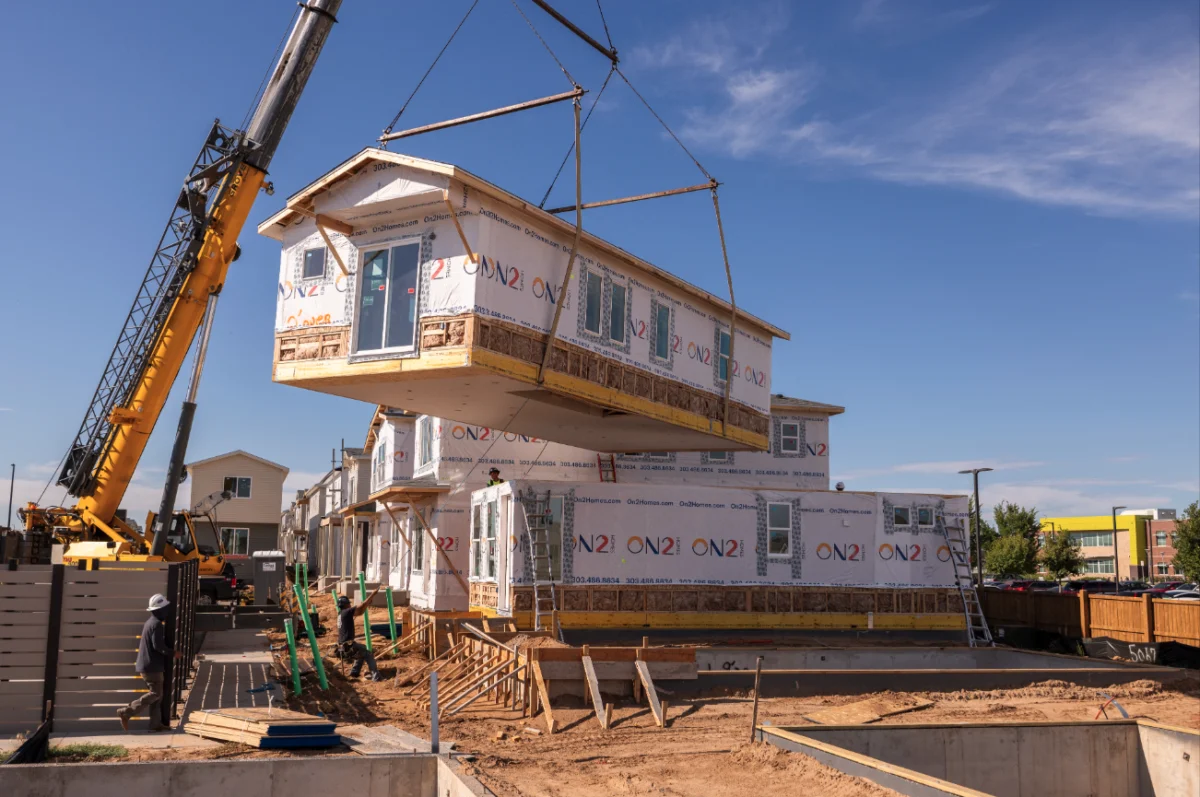
William Boor, CEO of Cavco Industries, addressed this during an earnings call on July 31. Boor noted that the removal of the steel chassis necessitates the use of alternative structural materials—most notably wood and reinforced floor joists—to ensure the home maintains its integrity during transport and placement. Furthermore, the logistics of installation are expected to become more complex. Without a chassis to "roll" the home into place, developers will increasingly rely on heavy machinery and cranes to set the units onto permanent foundations.
"For us, we’re not really viewing it as a big cost savings element," Boor stated. "We are viewing it as a product innovation element… something that’s going to allow us to make products that will continue to help break down those zoning barriers and get into urban areas."

Dave McKinstray, CFO of Champion Homes, echoed this sentiment, emphasizing aesthetic parity over price reduction. He noted that the primary driver is changing the "aesthetic of our homes to be at parity with site-built at the local level." By allowing manufactured homes to sit lower to the ground, they can mimic the appearance of traditional stick-built homes, thereby mitigating the visual cues that often lead to "Not In My Backyard" (NIMBY) opposition.
Unlocking Urban Infill and Multi-Story Density
Perhaps the most significant opportunity presented by the 21st Century ROAD to Housing Act is the potential for multi-story manufactured housing. When combined with a proposed HUD rule that allows upper-level sections to be transported and assembled without a permanent chassis, the industry is poised to enter high-density urban markets that were previously inaccessible.
Urban infill—the process of developing vacant or underused parcels within existing urban areas—is often cost-prohibitive due to high land prices. To make these projects viable, developers require density, which typically means building up rather than out. Clayton Homes, a private subsidiary of Berkshire Hathaway, has already begun releasing conceptual renderings of two-story manufactured homes that lack the traditional raised profile of a chassis-bound unit.
Kevin Clayton, CEO of Clayton Homes, has praised the regulatory change for offering "greater flexibility to design homes that better meet the needs of today’s home buyers." These designs include modern, multi-story configurations that can fit onto narrow city lots, providing a high-quality, factory-built alternative to expensive site-built townhomes and apartments. This shift could prove vital in addressing the "missing middle" housing gap—homes that are more dense than single-family detached houses but more affordable than mid-rise luxury apartments.
Addressing the Affordability Crisis with Data
The move toward more flexible manufactured housing arrives at a critical juncture for the U.S. housing market. According to a report from the Harvard Joint Center for Housing Studies, manufactured housing remains the most affordable path to homeownership in the country. The data indicates that CrossMod homes—a category of manufactured homes that include features like pitched roofs, permanent foundations, and garages—cost approximately 27% less than comparable site-built homes. Double-section and single-section manufactured homes offer even greater savings, costing 40% and 65% less, respectively.
By removing the chassis and allowing these homes to blend into standard residential zones, the industry hopes to capture a larger share of the market currently struggling with record-high home prices and limited inventory. The ability to produce these homes in a controlled factory environment reduces waste, shortens construction timelines, and ensures higher energy efficiency, all of which contribute to lower long-term costs for the consumer.
A Chronology of Regulatory and State-Level Reform
The path to chassis removal has been paved by several years of incremental reforms at the state level. These legislative actions provided the momentum necessary for federal change:

- Florida (March 2024): Passed a landmark bill requiring local governments to allow modular and manufactured homes by right in any single-family zoning district, effectively stripping municipalities of the power to ban these homes based solely on their construction method.
- Kentucky (July 1, 2024): House Bill 160 took effect, requiring local and county governments to treat "qualified manufactured housing" equally with site-built homes, provided they meet certain aesthetic and foundation standards.
- Texas (September 1, 2024): Senate Bill 785 is set to take effect, mandating that cities with zoning laws allow manufactured homes by right in at least one residential district.
- Virginia, Montana, and Maine: These states have recently enacted similar parity laws, signaling a national trend toward the "normalization" of factory-built housing.
Industry leaders believe these state reforms will complement the federal ROAD to Housing Act. As states lower the barriers to placement, the federal government is now lowering the barriers to design.
Factory Readiness and the Implementation Timeline
A key concern for investors and housing advocates is whether the manufacturing infrastructure is ready for such a drastic change. According to Tim Larson, CEO of Champion Homes, the industry’s leading factories already possess the "operational agility" required for this transition. Many of these facilities already produce modular homes, which are built to state and local codes rather than the federal HUD Code and do not require a permanent chassis.
"If you’ve got a factory that’s making both manufactured and modular, they already do it," Cavco’s William Boor explained. "It’s not a big technological leap." Cavco has specifically invested in production lines where the home is built independently and only placed on a chassis at the very end of the line. This allows the factory to easily switch between permanent-chassis models and the new chassis-free variants based on customer demand.
Despite this factory readiness, the timeline for market availability remains conservative. The process involves several mandatory steps:
- HUD Rulemaking: HUD must formalize the new standards through its advisory committee.
- Public Comment: A mandatory period for industry and public feedback.
- Third-Party Approval: Manufacturers must submit new chassis-free designs to HUD-approved Design Approval Primary Inspection Agencies (DAPIA) for rigorous safety and structural review.
- State Definition Updates: Individual states must update their legal definitions of "manufactured housing" to include units without a permanent chassis to ensure they can be titled as real property.
Given these hurdles, Champion Homes’ Dave McKinstray noted that the impact would likely be "gradual over time," with significant volume not expected for at least a year.
Broader Implications: Dispelling the Stigma
The most profound long-term impact of the 21st Century ROAD to Housing Act may be the eventual eradication of the stigma associated with manufactured housing. For decades, the "mobile home" moniker persisted because the permanent chassis served as a reminder of the home’s portability. By allowing these structures to be indistinguishable from site-built homes, the industry is positioned to attract a more diverse demographic of buyers, including young professionals and retirees who seek modern design at an attainable price point.
As the industry moves forward, the "chassis-free" model will likely coexist with traditional manufactured housing. The permanent chassis will remain a viable option for those seeking the lowest possible entry price or for placement in traditional land-lease communities. However, for the future of urban density and suburban integration, the removal of the chassis marks the beginning of a new era in American residential architecture—one where the quality of the home is defined by its construction, not by the frame it arrived on.
