

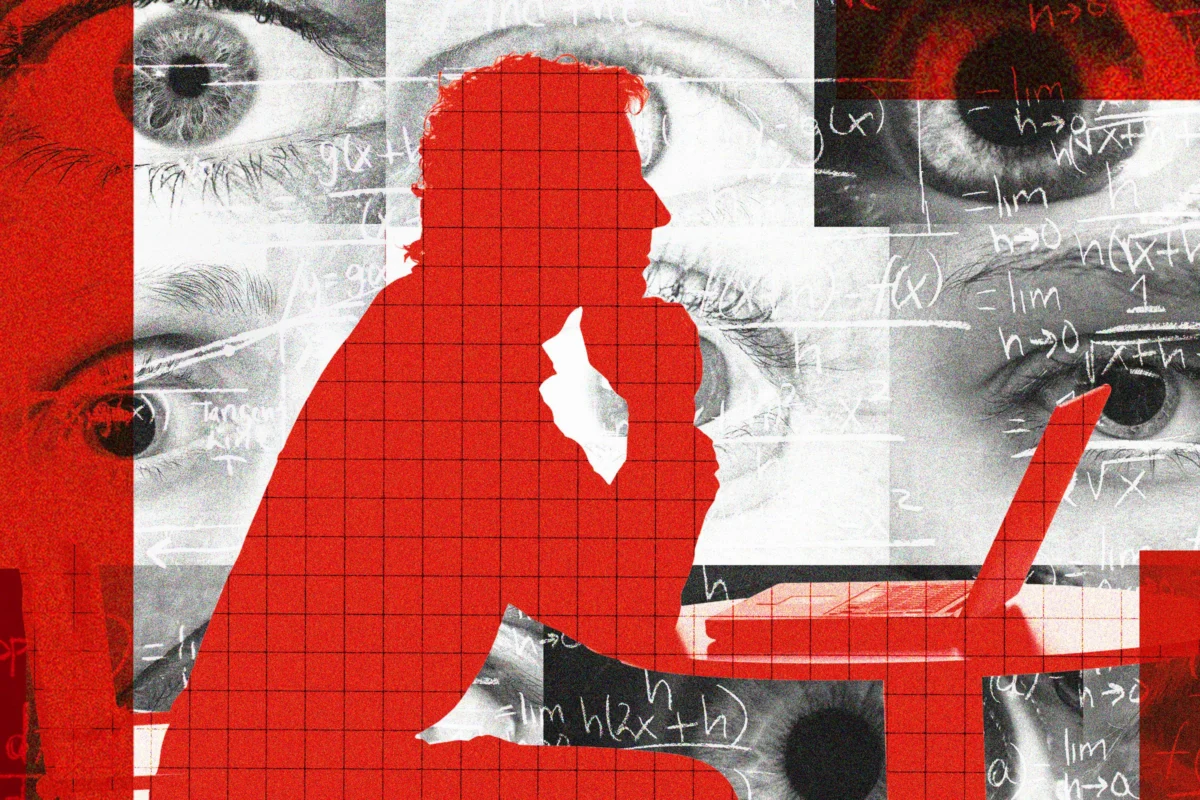
Tristan Buckmaster, a distinguished professor of mathematics at New York University, currently finds himself at the center of a historical pivot point in the relationship between human intellect and artificial intelligence. Buckmaster contends that OpenAI, the multi-billion-dollar laboratory behind ChatGPT, leveraged his proprietary research to accelerate its own efforts, ultimately beating him to the solution of the Navier-Stokes existence and smoothness problem—a legendary challenge that carries a $1 million bounty from the Clay Mathematics Institute. Despite the gravity of his accusations, Buckmaster remains entangled in a modern academic paradox: he cannot stop using the very technology he accuses of intellectual encroachment.
This conflict has ignited a global debate within the mathematical community, raising fundamental questions about the nature of discovery, the ethics of data training, and whether the traditional system of academic credit can survive an era of automated reasoning. While Buckmaster has been vocal about his grievances, he admits to WIRED that the utility of these models makes them nearly impossible to abandon. For many in his field, AI has become a monopoly that offers an efficiency gain so profound that abstaining from its use is synonymous with professional isolation.
The Navier-Stokes Challenge and the Millennium Prize
To understand the weight of Buckmaster’s claims, one must consider the prestige of the Navier-Stokes equations. Named after Claude-Louis Navier and George Gabriel Stokes, these partial differential equations describe the motion of fluid substances such as water and air. They are the bedrock of modern fluid mechanics, used in everything from climate modeling to aircraft design. However, a fundamental mathematical question remains: do smooth, three-dimensional solutions always exist for given initial conditions?
In 2000, the Clay Mathematics Institute designated this as one of seven "Millennium Prize Problems," offering $1 million for a definitive proof. For over a century, the problem has humbled the world’s greatest minds. When OpenAI announced it had made significant headway or "solved" aspects of this problem using its AI agents, it was not merely a technical achievement; it was a claim to a throne that human mathematicians have occupied exclusively for millennia.
A Chronology of Conflict and Accelerated Discovery
The timeline of the current controversy began in the months leading up to September 2026. Buckmaster, working alongside Anthropic researcher Levent Alpöge, had been utilizing various AI tools, including OpenAI’s Codex and Anthropic’s Claude, to assist in navigating the complex logical pathways of the Navier-Stokes problem. Buckmaster alleges that as he neared a breakthrough, OpenAI deployed a massive infrastructure—reportedly tens of thousands of autonomous agents—to finish the proof, allegedly after gaining insight into the proximity of his solution through his interactions with their models.
On September 8, 2026, the situation reached a boiling point when OpenAI published its findings. Buckmaster responded by going public with claims that the company had essentially "rushed ahead" by monitoring his progress. The fallout was immediate. OpenAI launched an internal investigation and eventually amended its official announcement. The company stated it had "confirmed that Buckmaster’s Codex prompts over the two months preceding this announcement… could not have influenced the system in any way, including through training."
Despite this denial, the mathematical community remains skeptical. The speed at which the AI arrived at the final proof, following Buckmaster’s intensive use of the tool, has created a "circumstantial cloud" that many find difficult to ignore.
The Case of Andreas Thom and Geometric Group Theory
Buckmaster is not the only elite mathematician to find his life’s work mirrored in AI outputs without clear attribution. Andreas Thom, a German mathematician who has spent two decades specializing in geometric group theory, experienced a similar shock in August 2026. OpenAI announced that its "Astra" model had solved a long-standing problem in Thom’s niche field.
Thom’s astonishment was rooted in the rarity of his expertise; only a handful of individuals globally possess the technical depth to work on these specific problems. Upon reviewing OpenAI’s press release, Thom noted a glaring error: the company claimed "no progress" had been made on the problem in a decade, completely overlooking a seminal paper Thom had published in 2019.
When Thom queried OpenAI researchers Mark Sellke and Sébastien Bubeck about whether his own ChatGPT prompts had been used for training, he was told that no such data leakage had occurred. Like Buckmaster, Thom is forced to take the company at its word, though he remains wary. "AI really kills this entire idea that you could trace back who contributed what," Thom observed. "That is probably over."
The Economic and Institutional Divide
The tension between academia and AI labs is exacerbated by a massive disparity in resources. While university professors operate on grants and limited computing budgets, companies like OpenAI and Anthropic are backed by hundreds of billions in capital and have access to specialized hardware that can run tens of thousands of simulations simultaneously.
Alex Townsend, a Cornell mathematician and coauthor of an upcoming book on the evolution of mathematics, describes the current atmosphere as one of "simultaneous excitement and nervousness." He notes that many of his colleagues are now scrambling to secure enterprise-level subscriptions to high-powered models, fearing that without them, they will be unable to compete.
The central question for the modern mathematician is existential: if a trillion-dollar company can deploy a fleet of AI agents to brute-force a proof that a human would spend a lifetime crafting, what is the human’s role? This is no longer a theoretical concern. It is a practical reality that is reshaping how mathematics is taught, researched, and published.
Data Rights and the Leiden Declaration
The backlash against the perceived "gobbling up" of academic data has led to organized resistance. More than 4,000 researchers and academics have signed the Leiden Declaration, a document outlining recommendations to ensure that AI does not "swallow" the field of mathematics. The declaration calls for transparency in training data, clear attribution for human-led breakthroughs, and protections for researchers who use AI as a drafting tool.
Furthermore, 25 Fields Medalists—often described as the "Nobel Prize of Mathematics"—penned an open letter warning that the incentives of AI corporations are "severely misaligned" with the values of the mathematical community. They argue that mathematics relies on a rigorous, transparent peer-review process, whereas AI models often produce "black box" results where the logic is obscured or impossible to verify through traditional means.
The Efficiency Trap and the Future of the Field
Despite the ethical concerns, the "efficiency gain" offered by AI is a powerful gravity well. Andreas Thom continues to use ChatGPT for paper writing, albeit with updated privacy settings, because the speed it affords is undeniable. Buckmaster himself continues to use Codex to "tidy up" his research, even as he cleans up what he calls "AI slop"—rushed papers he published prematurely in a desperate attempt to establish priority over OpenAI’s announcement.
This creates a precarious environment for early-career researchers. If senior professors are using AI to accelerate their output, junior mathematicians feel they have no choice but to follow suit or face professional obsolescence. This "AI arms race" threatens to prioritize the speed of a result over the depth of understanding.
Conclusion: Toward a Necessary Detente
As the dust settles from the Navier-Stokes controversy, the path forward remains unclear. Tristan Buckmaster is calling for a "detente"—a period of cooling off where AI laboratories and academic institutions can establish ground rules for collaboration and attribution. He emphasizes that he does not want a permanent conflict with OpenAI, but rather a system where human work is respected and properly referenced.
The resolution of the Navier-Stokes problem by an AI agent—if the proof holds up to rigorous scrutiny—will be remembered as a landmark in the history of science. However, if the cost of that achievement is the erosion of the academic community’s trust and the erasure of human contribution, it may be a pyrrhic victory. For now, the world of mathematics remains in a state of uneasy transition, caught between the unmatched power of the machine and the indispensable intuition of the human mind.
Buckmaster’s "wry smile" when asked about future collaborations with OpenAI suggests that while the battle lines are drawn, the door is not entirely closed. The challenge for the next generation of mathematicians will be to find a way to walk through that door without losing the very essence of what it means to discover.
