

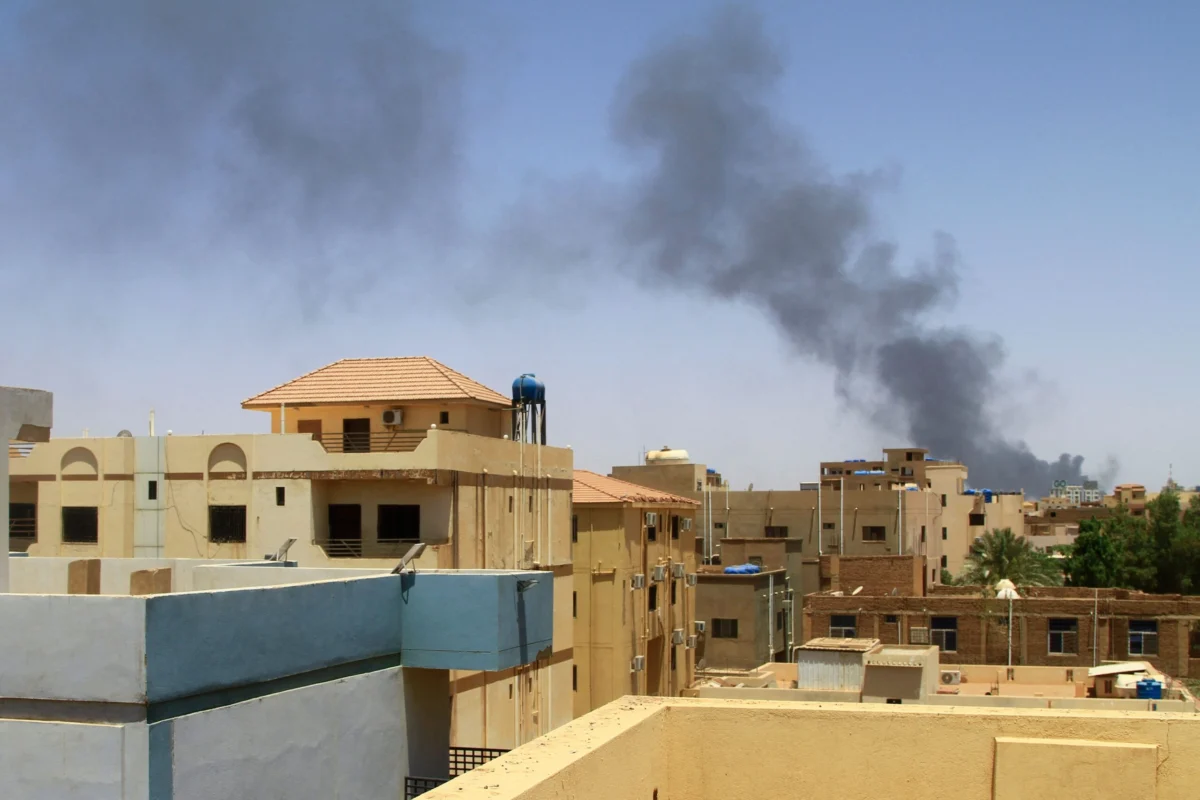
The paramilitary Rapid Support Forces (RSF) of Sudan announced early Friday that they had agreed to a 72-hour humanitarian truce beginning at 6:00 a.m. local time, yet the declaration failed to bring immediate relief to the capital as heavy gunfire and artillery shelling continued to echo through the streets of Khartoum. This unilateral ceasefire announcement, timed to coincide with the Muslim holiday of Eid al-Fitr, was intended to allow civilians to seek safety and reunite with their families after nearly a week of relentless combat. However, residents in the capital and its twin city of Bahri reported that Sudanese Armed Forces (SAF) troops were deploying on foot across several neighborhoods, suggesting a shift toward intensified urban skirmishes rather than a cessation of hostilities.
The RSF statement, released via social media, emphasized the "blessed Eid al-Fitr" as the primary motivation for the pause, citing the need to open humanitarian corridors for the evacuation of trapped citizens. Despite this, the Sudanese Army, led by General Abdel Fattah al-Burhan, did not immediately issue a formal concurrence. In a pre-recorded address posted to the army’s official Facebook page on Friday morning, General Burhan expressed sorrow over the violence but made no specific mention of a ceasefire, instead focusing on the military’s resolve to maintain the country’s security. This disconnect between the two warring factions underscores the deep-seated mistrust that has derailed multiple international attempts to broker even a temporary halt to the violence.
The Battle for Khartoum: A City Under Siege
Khartoum, a sprawling metropolis at the confluence of the Blue and White Nile, has become the primary theater of a power struggle that has effectively paralyzed the nation. Before the scheduled start of the ceasefire at 0400 GMT, the city was rocked by heavy bombing and aerial strikes. Witnesses reported that as morning prayers for Eid began, the sound of takbir (the call to prayer) was punctuated by the staccato of machine-gun fire and the dull thud of heavy artillery.
In Bahri, located across the River Nile from central Khartoum, the situation remained volatile. Residents described the deployment of large numbers of army personnel who engaged in fierce gun battles with RSF units. The paramilitary group, which grew out of the Janjaweed militias active in Darfur two decades ago, has utilized its high mobility and knowledge of urban terrain to embed itself within residential areas, complicating the army’s efforts to use its superior air power and heavy weaponry without causing significant civilian casualties.
The RSF claimed its actions were taken in "self-defense" to repel what it characterized as a coup attempt by the SAF leadership. Conversely, the army has labeled the RSF a "rebel militia" and accused its leader, General Mohamed Hamdan Dagalo—popularly known as Hemedti—of attempting a violent power grab to avoid the integration of his forces into the regular military hierarchy.
Historical Context: From Alliance to Attrition
The current conflict is the culmination of years of political instability following the 2019 ousting of longtime autocrat Omar al-Bashir. Bashir, an Islamist leader who ruled Sudan for thirty years, was removed by the military following a massive popular uprising. In the immediate aftermath, a fragile power-sharing agreement between the military and civilian pro-democracy groups was established. However, this transition was shattered in October 2021, when General Burhan and Hemedti joined forces to lead a military coup, dissolving the civilian government and tightening the junta’s grip on the state.
The alliance between Burhan and Hemedti, while instrumental in the 2021 coup, was always a marriage of convenience. Tensions began to simmer over the "Framework Agreement," an internationally backed plan designed to return Sudan to civilian rule. A central sticking point in the negotiations was the timeline for the integration of the RSF into the national army. The SAF demanded a rapid two-year integration process, while the RSF sought a ten-year window, during which Hemedti would maintain independent command. This procedural disagreement transformed into an existential struggle for dominance, leading to the outbreak of violence on April 15, 2023.
The Humanitarian Toll and Healthcare Collapse
As the fighting enters its second week, the human cost has become staggering. According to figures provided by the Central Committee of Sudanese Doctors and international agencies, at least 350 people have been killed, though the actual death toll is believed to be significantly higher due to the inability of medical teams to reach bodies in the streets. Thousands more have been wounded, and the healthcare system in Khartoum is reportedly on the verge of total collapse.
Medical facilities have not been spared from the violence. Reports indicate that several major hospitals have been shelled or forcibly evacuated by armed groups. Doctors on the ground have described a desperate shortage of blood, oxygen, and basic surgical supplies. In many neighborhoods, civilians are unable to access medical care because of the constant threat of snipers and the presence of checkpoints manned by nervous, heavily armed young men from both sides.
The conflict has also triggered a massive displacement crisis. Thousands of residents have fled Khartoum, packing what they can into cars or moving on foot toward safer regions. In the western Darfur region, where the RSF has a significant presence, the violence has reignited old ethnic tensions. In El-Obeid, west of the capital, at least 26 people were killed on Thursday during a wave of clashes and widespread looting that has left the local population in a state of terror.
International Reaction and the U.N. Appeal
The international community has reacted with alarm to the prospect of a full-scale civil war in Africa’s third-largest country. U.N. Secretary-General Antonio Guterres, following a virtual meeting with the heads of the African Union, the Arab League, and other regional blocs, issued an urgent appeal for a cessation of hostilities. Guterres emphasized that the priority must be the safety of civilians and the establishment of humanitarian corridors.
The United States, which had been heavily involved in mediating the transition to democracy, has also endorsed the ceasefire proposal. U.S. Secretary of State Antony Blinken has held separate calls with both Burhan and Hemedti, urging them to honor the Eid truce. However, the rhetoric from both generals remains uncompromising. In an interview with Al Jazeera, General Burhan stated he saw "no other option but the military solution," while Hemedti referred to Burhan as a "criminal," signaling that neither leader is currently interested in a negotiated settlement.
Regional Stability and Geopolitical Stakes
Sudan’s strategic location makes its internal conflict a matter of regional and global concern. Bordering seven countries—Egypt, Libya, Chad, the Central African Republic, South Sudan, Ethiopia, and Eritrea—Sudan sits at the crossroads of the Sahel, the Horn of Africa, and the Red Sea. A prolonged conflict risks destabilizing an already volatile region.
In Chad, the U.N. Refugee Agency (UNHCR) and the World Food Programme (WFP) have reported that between 10,000 and 20,000 refugees have already crossed the border to escape the fighting in Darfur. This influx threatens to strain the resources of one of the world’s poorest nations. Furthermore, the suspension of WFP operations in Sudan—following the deaths of three staff members on the first day of the conflict—has left millions without food aid. Even before the current violence, roughly 25% of Sudan’s population was facing acute hunger.
Geopolitically, the conflict could become a proxy battleground. Russia, through the Wagner Group, has historically maintained ties with Hemedti’s RSF, particularly in the gold mining sector. Meanwhile, the United States and its Western allies have sought to foster a democratic transition to counter Russian and Chinese influence in the region. Egypt, which shares a long border and deep historical ties with Sudan, is seen as a staunch supporter of General Burhan and the regular army. The involvement of these external actors adds a layer of complexity to any peace process.
Timeline of the 2023 Conflict
- April 15: Heavy fighting erupts in Khartoum and other cities. RSF claims control of the presidential palace and Khartoum International Airport; SAF denies these claims and begins airstrikes on RSF bases.
- April 16: The World Food Programme suspends operations after three employees are killed in North Darfur.
- April 17-18: Multiple attempts at a 24-hour ceasefire fail within minutes of the scheduled start times.
- April 20: U.N. Secretary-General Antonio Guterres and regional leaders call for an Eid al-Fitr ceasefire.
- April 21: The RSF declares a 72-hour truce starting at 6:00 a.m. Gunfire continues in the capital as the army deploys ground troops.
Analysis: The Path Forward
The failure of the Eid al-Fitr ceasefire to take hold effectively suggests that both the SAF and the RSF believe they can still achieve a decisive military victory. For the army, the goal is the total dissolution of the RSF, which it views as a threat to the state’s monopoly on force. For the RSF, the conflict is a fight for survival; Hemedti knows that any surrender would likely lead to his marginalization or prosecution.
The transition to democracy, which seemed within reach just weeks ago, now appears more distant than ever. The "military solution" mentioned by Burhan suggests a protracted war of attrition that could see Khartoum—once a hub of African commerce and education—reduced to ruins. As the holiday of Eid al-Fitr begins under the shadow of war, the Sudanese people are left to navigate a landscape where the promise of peace is frequently announced but rarely realized. The international community’s challenge will be to find leverage over two leaders who appear increasingly willing to sacrifice their nation’s future for personal and institutional survival.
