

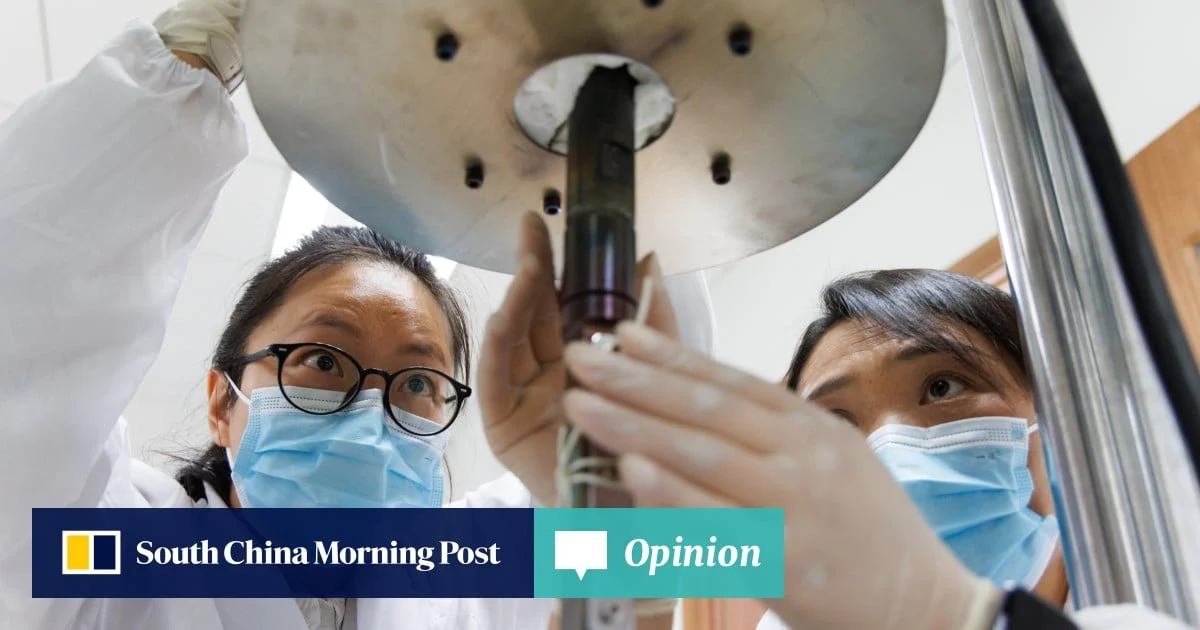
The idealized image of the scientific researcher, characterized by the pursuit of objective truth and the thrill of discovery, is increasingly being replaced by a reality of systemic pressure, institutional drudgery, and ethical compromise within the Chinese academic landscape. While Science, Technology, Engineering, and Mathematics (STEM) fields have long been romanticized for their perceived certainty—rooted in the immutable laws of physics and the absolute logic of mathematics—the professional environment for those working within these disciplines has become fraught with challenges that threaten the integrity of global scientific output. Behind the veneer of national progress and corporate innovation lies a workforce of junior researchers grappling with unrealistic expectations, precarious job security, and a funding model that prioritizes immediate material gain over foundational inquiry.
The Structural Realities of Modern Scientific Research
For many students and their families, STEM education is viewed as a pathway to stability and prestige. In China, the "Tiger Mom" and "Tiger Dad" phenomenon has historically driven a massive demand for online education and specialized tutoring, focusing heavily on the hard sciences. The allure is clear: the ratio of a circle’s circumference to its diameter will always be pi, and the quadratic formula provides a reliable solution to complex equations. This field of certainty offers a perceived refuge from the ambiguity of the humanities. However, once students transition from the classroom to the laboratory, the "eureka moments" so often depicted in popular media prove to be rare exceptions.
Instead, the daily life of a researcher is frequently defined by a vast sea of monotony. The environment is often one of physical and mental exhaustion, characterized by the hum of fluorescent lighting and the repetitive nature of failed experiments. This drudgery is not merely a byproduct of the scientific method but is exacerbated by the institutional frameworks that govern research. In the modern era, researchers are rarely afforded the luxury of curiosity-driven exploration. Instead, they perform their work under the mandate of utility.
The primary benefactors of scientific research today—predominantly state entities and large corporations—fund projects with the explicit expectation of material gain. Whether the goal is to develop proprietary technology, secure market dominance, or enhance the state’s ability to enforce its will through data and surveillance, the researcher’s output is treated as a commodity. This commodification of knowledge forces scientists to submit to higher powers, working toward deadlines that are often divorced from the actual timeline required for rigorous scientific validation.
A Chronology of Academic Pressure in China
The current state of the Chinese research environment is the result of decades of rapid expansion and shifting policy priorities. To understand the disillusionment of today’s junior researchers, one must look at the timeline of China’s academic evolution:
- The Late 1990s to early 2000s (The Expansion Phase): China began a massive investment in higher education and R&D, aiming to transform its economy from labor-intensive manufacturing to high-tech innovation. This period saw the launch of "Project 211" and "Project 985," aimed at creating world-class universities.
- 2010–2018 (The Metric Obsession): As the number of PhD graduates swelled, universities began implementing strict "publish or perish" policies. Success was measured almost exclusively by the number of papers published in Science Citation Index (SCI) journals. This led to a surge in volume, but often at the expense of quality.
- 2019–Present (The "Double First Class" Initiative and Increased Scrutiny): The government shifted focus toward "Double First Class" university status, heightening competition for funding. Simultaneously, international tensions and US-led curbs on core technologies forced a "pivot" toward self-reliance. This increased the pressure on researchers to deliver breakthroughs "yesterday," leading to the current crisis of burnout and fraud.
Supporting Data: The Cost of the "Publish or Perish" Culture
The pressure to produce results has led to a documented rise in academic misconduct. According to data from Retraction Watch, a significant portion of retractions in major international journals over the last five years has been attributed to researchers based in China. The issues range from "paper mills"—businesses that mass-produce fake research for a fee—to AI-powered fraud, where large language models are used to synthesize plausible-looking but entirely fabricated datasets.
In 2023 alone, major publishers like Wiley and Hindawi retracted thousands of papers after discovering systematic manipulation of the peer-review process. These "paper mills" often target junior researchers who are desperate to meet the publication quotas required for graduation or tenure. The data suggests that when the world demands research at an impossible pace, the integrity of the scientific record is the first casualty.
Furthermore, the economic outlook for these graduates is increasingly grim. In Hong Kong, for instance, recent reports indicate that graduates face the gloomiest job market in half a decade. Despite their high-level technical skills, the oversupply of STEM graduates in certain sectors, coupled with a slowing global economy, has led to a mismatch between academic training and market demand.
The Rise of Satirical Resistance: The "Call" Journal Phenomenon
The psychological toll of this environment has given rise to a unique form of academic protest. As reported in a recent commentary by You Xiaoying in the journal Nature, junior researchers in China have begun establishing satirical journals as a vent for their frustrations. These underground or online publications serve as a mirror to the prestigious journals they are pressured to appear in.
The most notable example is Call, a satirical take on the world-renowned journal Cell. Other parodies target Science and Nature. In these forums, researchers publish "papers" that humorously or bitingly detail the absurdity of their daily lives. They describe the "scientific method" of staying in the lab until 2 a.m. to satisfy a supervisor’s whim, or the "discovery" that a researcher’s coffee consumption is the only variable that correlates with their data output.
While these journals are satirical, their existence is a serious indicator of a systemic failure. They represent a collective recognition among the younger generation of scientists that the current model of academic success is unsustainable and, in many cases, farcical. This satirical movement is not just about humor; it is a survival mechanism for those who feel trapped in a cycle of low-quality, mass-produced research that provides no real insight into the natural world.
Official Responses and Institutional Shifts
Recognizing the potential for long-term damage to the nation’s scientific reputation, Chinese authorities have begun to take steps to address these issues. The Ministry of Science and Technology has issued guidelines aimed at de-emphasizing the "SCI-only" approach to evaluations. There is a growing movement toward "representative works" systems, where researchers are judged on the impact of a few high-quality papers rather than the sheer volume of their output.
However, institutional change is slow. Many universities still rely on quantitative metrics because they are easier to administer and provide a veneer of objectivity in a highly competitive system. Furthermore, as long as research funding remains tied to immediate corporate or state utility, the pressure to produce "useful" results—even if they are rushed or falsified—will remain.
Academic leaders have expressed concern that the "brain drain" could accelerate if the environment does not improve. When young scientists feel like cogs in a machine rather than explorers of the unknown, they are more likely to leave academia for the private sector or move abroad, seeking environments that offer more autonomy and a healthier work-life balance.
Broader Impact and Global Implications
The crisis in the Chinese research environment has implications that extend far beyond its borders. As China is now one of the world’s largest producers of scientific research, the quality of its output affects the global scientific community. If a significant percentage of published data is unreliable or fraudulent, it wastes the time and resources of researchers worldwide who attempt to build upon those findings.
Moreover, the shift toward research as a tool for "material gain" and "market dominance" threatens the tradition of open, collaborative science. When research is viewed primarily as a weapon in a geopolitical or economic struggle, the sharing of data and the transparency of methodology are often curtailed. This environment of secrecy and competition undermines the very foundation of science as a global public good.
In conclusion, the disillusionment of STEM professionals in China serves as a warning for the global academic community. The pursuit of certainty and practicality, while noble, cannot be achieved through a system of drudgery and coercion. To preserve the integrity of science, there must be a shift away from the commodification of research and toward a model that values the "eureka moments" and the slow, rigorous work required to reach them. Without such a change, the satirical journals like Call will remain the most honest reflection of the state of modern academia.
