

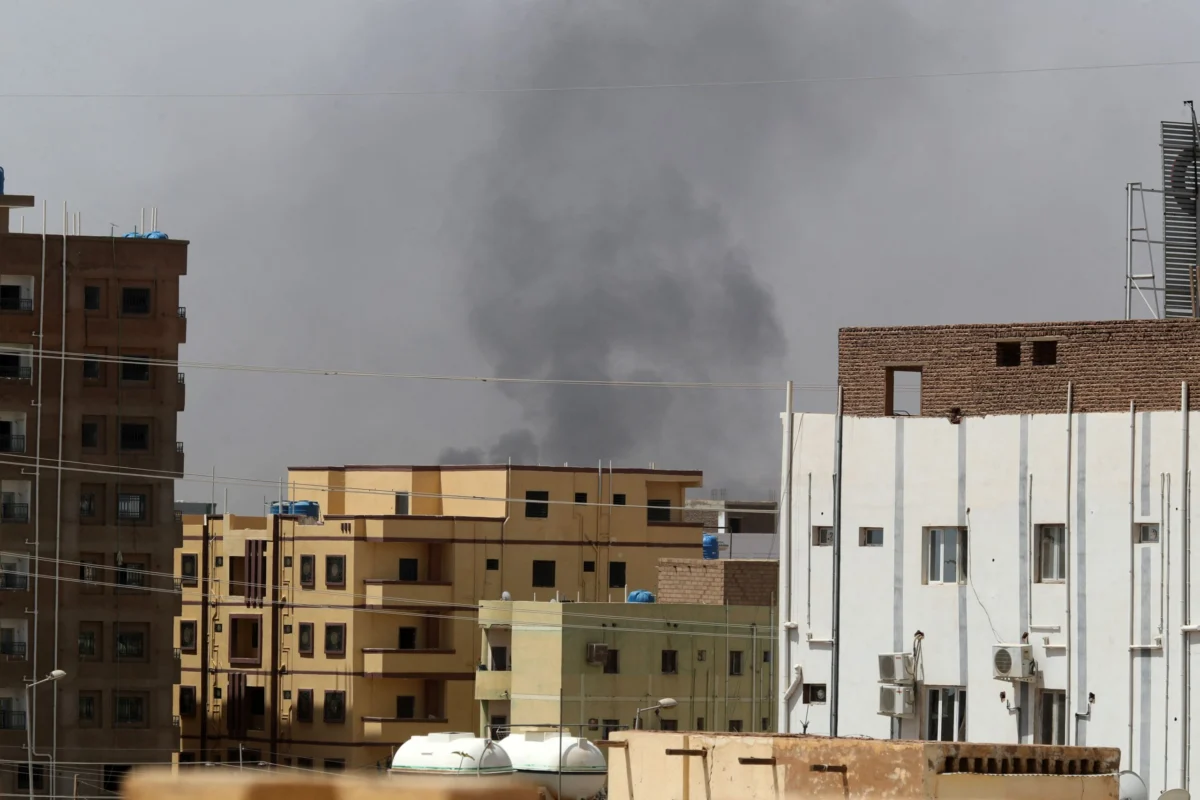
The signing of a week-long ceasefire agreement between Sudan’s warring military factions has sparked a cautious sense of optimism among a population ravaged by five weeks of relentless urban warfare. Brokered by the United States and Saudi Arabia following intensive negotiations in Jeddah, the deal represents the most significant diplomatic breakthrough since hostilities erupted on April 15. Scheduled to take effect on Monday evening, the agreement specifically aims to facilitate the delivery of life-saving humanitarian aid and the restoration of essential services, which have been systematically dismantled during the power struggle between the Sudanese Armed Forces (SAF) and the paramilitary Rapid Support Forces (RSF).
Despite the diplomatic progress in Saudi Arabia, the reality on the ground in Khartoum remained grim on Sunday. Residents in the capital reported the sounds of sporadic artillery fire and heavy clashes in the central and southern districts. The persistence of fighting highlights the immense challenge of translating high-level diplomatic signatures into a functional cessation of hostilities across a fractured and chaotic battlefield. This latest truce is the first of its kind to include an internationally supported monitoring mechanism, a feature that mediators hope will prevent the immediate collapse seen in previous, less formal ceasefire announcements.
The Genesis of the Conflict and the Failed Transition
To understand the gravity of the current crisis, one must look back to the fragile political transition that followed the 2019 popular uprising. The ousting of longtime autocrat Omar al-Bashir led to a precarious power-sharing agreement between civilian leaders and the military. However, this transition was derailed in October 2021 when General Abdel Fattah al-Burhan, head of the SAF, and General Mohamed Hamdan Dagalo, better known as Hemedti, leader of the RSF, jointly orchestrated a coup to seize full control of the state.
The alliance between the two generals was always one of convenience, and it began to disintegrate over the specifics of a new transition toward civilian-led elections. The primary point of contention was the integration of the RSF—a powerful paramilitary group with roots in the Janjaweed militias of Darfur—into the regular army. Disagreements over the timeline of this integration and the future chain of command escalated into a full-scale military confrontation on April 15, 2023. What began as a power struggle between two men has since evolved into a national catastrophe, turning residential neighborhoods into frontlines and forcing millions of civilians to choose between the risk of crossfire and the hardship of displacement.
The Jeddah Agreement: A New Framework for Peace
The talks in Jeddah have been the focal point of international efforts to de-escalate the situation. Unlike previous attempts at truces, which were largely unilateral declarations or verbal commitments made via phone calls, the Jeddah deal is a formal document signed by representatives of both the SAF and the RSF. The agreement focuses heavily on the "pre-short-term" humanitarian requirements, including the withdrawal of forces from hospitals and essential public facilities, and the provision of safe passage for civilians fleeing conflict zones.
Crucially, the deal introduces a monitoring mechanism involving the U.S., Saudi Arabia, and international observers. This committee is tasked with documenting violations and maintaining communication between the warring parties to prevent minor skirmishes from escalating back into full-scale war. However, analysts remain skeptical. Neither General al-Burhan nor Hemedti traveled to Jeddah personally, delegating the task to subordinates. This has raised questions regarding the level of commitment from the top leadership and whether they possess the command and control necessary to silence the guns of their respective troops, many of whom are scattered across the urban sprawl of the capital.
Humanitarian Crisis: A Nation in Flight
The human cost of the five-week conflict is staggering. According to the latest data from the United Nations and the World Health Organization (WHO), at least 705 people have been confirmed killed, with over 5,287 injured. Medical professionals on the ground, however, suggest the true death toll is significantly higher, as many bodies remain uncollected in the streets or are buried in private gardens due to the danger of reaching cemeteries.
The displacement crisis has reached a critical threshold. Approximately 1.1 million people have been uprooted from their homes. Of these, more than 800,000 are internally displaced within Sudan, while over 250,000 have crossed borders into neighboring countries, including Egypt, Chad, South Sudan, and Ethiopia. This mass exodus is placing immense pressure on regional resources and threatens to destabilize an already volatile part of the African continent.
In Khartoum, the situation is one of total systemic collapse. Residents who have remained in the city are struggling with a complete breakdown of the banking system, which has left millions without access to cash or digital payments. Food supplies are dwindling as markets are looted or destroyed, and the price of fuel has skyrocketed, making escape impossible for the poorest families. The health sector is particularly hard-hit; the WHO reports that roughly 75% of hospitals in conflict zones are out of service, either due to physical damage, lack of supplies, or occupation by military forces.
Voices from the Ground: Survival Amidst Siege
For the civilians trapped in the crossfire, the Jeddah agreement is a desperate lifeline. Safaa Ibrahim, a 35-year-old resident of Khartoum, expressed the exhaustion felt by millions. "We’re tired of this war," she told Reuters. "We’ve been chased away from our homes, and the family has scattered between towns in Sudan and Egypt. We want to return to normal life and safety. Al-Burhan and Hemedti have to respect people’s desire for life."
The sentiment is echoed by activists like Mohamed Hamed, who has been working to coordinate local aid efforts through "Resistance Committees"—neighborhood networks that have become the primary providers of food and medical assistance in the absence of state services. "The people of Khartoum are waiting for the truce and the opening of humanitarian corridors," Hamed said. "The health situation is getting worse day after day."
The psychological toll is also mounting. The use of heavy artillery, air strikes, and anti-aircraft weaponry in densely populated areas has created a constant state of terror. The RSF has been accused of embedding itself in residential neighborhoods and private homes to evade air strikes, while the SAF has been criticized for its use of indiscriminate shelling and aerial bombardment in those same areas.
Military Posturing and the Threat of Civil Armament
Despite the ceasefire agreement, the rhetoric from military leaders remains combative. Senior army general Yassir al-Atta recently appeared on Sudan state TV to defend the military’s tactics, stating that the army is working to "cleanse" residential areas, schools, and hospitals of RSF presence. In a move that has alarmed international observers, al-Atta also addressed calls from certain tribal leaders for civilians to take up arms. While he stated that mass civilian armament is not currently a formal requirement, he asserted that residents have a "natural right" to arm themselves for self-defense if attacked in their homes.
This rhetoric raises the specter of a broader civil war. If civilians are encouraged to arm themselves, the conflict could shift from a battle between two military organizations into a fragmented communal conflict, potentially drawing in Sudan’s diverse ethnic and tribal groups. Such an escalation would make any future peace process infinitely more complex and could lead to a long-term breakdown of the Sudanese state.
Regional and International Implications
The conflict in Sudan is not happening in a vacuum. The country’s strategic location—bordering seven nations and possessing a significant coastline on the Red Sea—means that its stability is a matter of global concern. Neighboring countries like Chad and South Sudan are already struggling with their own internal challenges and are ill-equipped to handle a prolonged influx of refugees. Egypt, which shares deep historical and economic ties with Sudan, views the instability as a direct threat to its national security and water interests regarding the Nile.
The international community, led by the African Union, the Arab League, and Western powers, has called for an immediate and permanent end to the fighting. The Jeddah talks are seen as a "building block" toward a more comprehensive political process. Mediators have emphasized that once a temporary ceasefire is established and humanitarian aid is flowing, the next phase must involve the removal of forces from urban centers and a return to negotiations involving civilian political actors. The goal is to restore the path toward a civilian-led government, which remains the primary demand of the Sudanese people who led the 2019 revolution.
The Path Forward: Challenges to a Permanent Peace
As the Monday evening deadline for the ceasefire approaches, the world watches to see if this agreement will hold where others have failed. The success of the Jeddah deal hinges on several factors: the willingness of the two generals to compromise on their ambitions for total victory, the effectiveness of the international monitoring mechanism, and the ability of humanitarian agencies to rapidly scale up their operations in a high-risk environment.
The challenges are monumental. The RSF and the SAF have spent weeks entrenching themselves in a war of attrition. Breaking the cycle of violence will require more than just a signature; it will require a fundamental shift in the political landscape of Sudan. The underlying issues—security sector reform, justice for past atrocities, and the fair distribution of economic resources—remain unresolved.
In the short term, the priority remains the survival of the Sudanese people. If the ceasefire can provide even a few days of genuine calm, it could allow for the repair of water and power lines, the restocking of pharmacies, and the safe evacuation of the wounded. For the millions of civilians who have seen their lives upended by the ego and ambition of two generals, the hope is that this truce marks the beginning of the end of a nightmare, rather than just another brief pause in an ongoing tragedy. The international community must remain steadfast in its pressure on the warring factions, ensuring that the "desire for life" expressed by the people of Sudan is finally respected by those who claim to lead them.
