

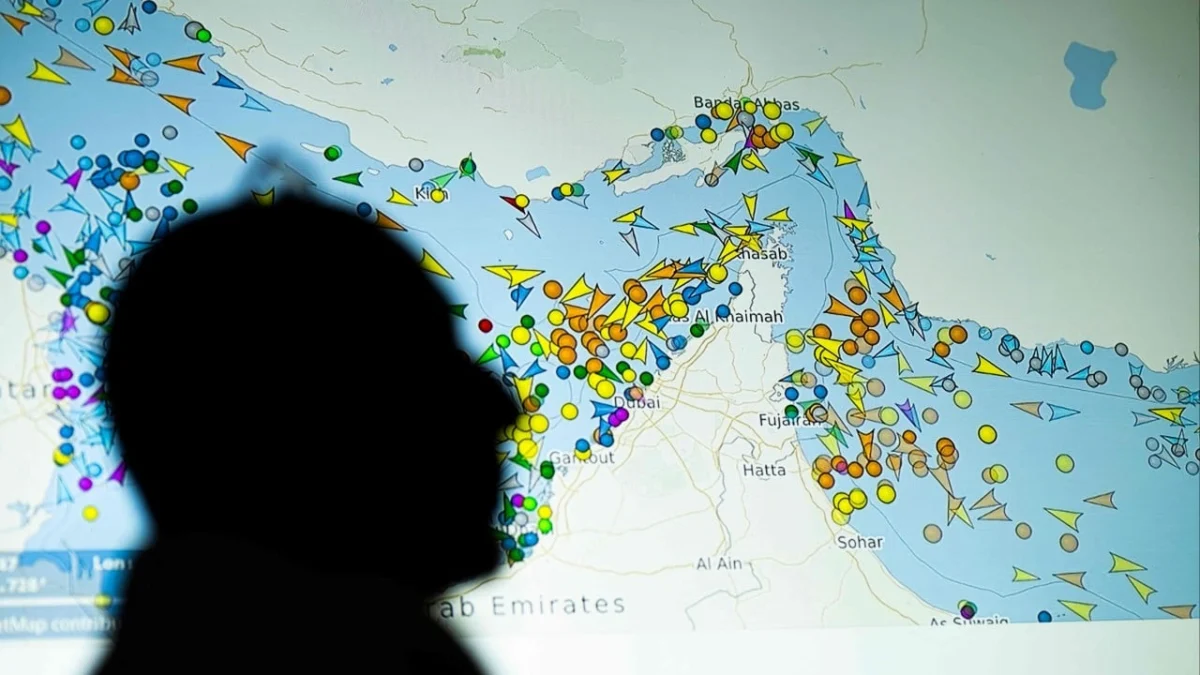
The geopolitical landscape of the Middle East underwent a seismic shift on July 12 as the United States military executed its third major round of aerial and missile strikes within a single week, targeting approximately 140 sites across Iranian territory. This massive military response followed Iran’s unilateral declaration that the Strait of Hormuz—a vital artery for global energy supplies—would remain closed until further notice. The closure was punctuated by an Iranian kinetic strike on a Cyprus-flagged container vessel, an act that signaled a definitive end to the fragile maritime status quo. While the majority of the American strikes focused on the southern coastline overlooking the Strait, specifically targeting military installations in Bandar Abbas, Sirik, Jask, and Qeshm, a precursor strike on July 9 revealed a significant evolution in U.S. military strategy: the targeting of Iran’s internal logistics and overland trade infrastructure.
A New Frontier in Tactical Targeting
The July 9 strike involved U.S. cruise missiles hitting the Aq Taqeh Khan bridge in Aq Qala, located in the northern province of Golestan. This operation, subsequently confirmed by the provincial command of the Islamic Revolutionary Guard Corps (IRGC), represented a departure from traditional maritime containment. Aq Qala is not a coastal military outpost; rather, it serves as a critical node in the overland corridor that connects Iran to Central Asian republics, Russia, and China. By striking this bridge, Washington signaled that its military objectives have expanded beyond merely contesting Iranian naval dominance in the Persian Gulf. The new focus appears to be the systematic degradation of the infrastructure that allows the Iranian economy to function and trade to flow when maritime routes are blockaded or contested.
The strategic logic behind this shift is rooted in the events following the outbreak of regional conflict in February. During the initial naval blockades, Iran successfully mitigated the impact of maritime restrictions by rerouting trade through its northern borders. The overland rail and road networks provided a "safety valve," allowing the flow of essential goods and energy exports to continue toward Eurasian markets. The destruction of the Aq Taqeh Khan bridge indicates that the U.S. is now prepared to target these alternative supply chains, effectively aiming to isolate Iran both by sea and by land.
Chronology of the Crisis: From Memorandum to Missile Strikes
The current escalation is the culmination of a deteriorating security environment that began early in the year. To understand the gravity of the July 12 strikes, it is necessary to examine the timeline of events that led to the current state of open confrontation.
- February: Following the outbreak of regional hostilities, a naval blockade began to take shape, significantly restricting commercial traffic in the Persian Gulf. Iran responded by accelerating its "Pivot to the East," strengthening overland trade ties with Russia and China.
- June: The United States and Iran signed a Memorandum of Understanding (MoU) intended to ensure safe passage through the Strait of Hormuz. The agreement was designed to decouple commercial shipping from the broader political and military tensions.
- Late June to Early July: Disagreements over the interpretation of the MoU emerged. Tehran began asserting that the agreement granted the IRGC Navy the authority to manage all traffic within the waterway, requiring vessels to seek prior authorization and follow IRGC-designated routes.
- July 9: U.S. forces conducted a precision strike on the Aq Taqeh Khan bridge in Golestan province, targeting Iran’s northern logistics hub.
- July 11: Iran officially declared the Strait of Hormuz closed. Shortly thereafter, an Iranian strike hit a Cyprus-flagged container ship, marking a direct assault on international commercial shipping.
- July 12: The U.S. launched a large-scale retaliatory operation, hitting 140 targets across Iran, primarily focusing on the southern coast but reinforcing the message sent by the northern strike three days earlier.
The Maritime Layer: Sovereignty vs. International Law
The primary flashpoint remains the Strait of Hormuz, a narrow waterway through which approximately 20 to 30 percent of the world’s total oil consumption passes daily. Under the June MoU, the U.S. expected a return to the principles of "transit passage" as defined by the United Nations Convention on the Law of the Sea (UNCLOS), even though Iran is not a formal party to the treaty. However, Tehran’s interpretation of the MoU has been radically different.
Iranian officials have viewed the memorandum as a de facto recognition of their sovereign right to police the strait. Reports indicate that the IRGC has attempted to force all commercial vessels into the northern lanes, which fall within Iranian territorial waters, while firing upon ships that attempted to use the southern lanes closer to the coast of Oman. For Washington, this interpretation is unacceptable. If Iran is permitted to manage the strait as a private waterway, it gains the leverage to extract political concessions, impose transit fees, or "weaponize" the passage of oil to blunt the impact of international sanctions. The July 12 strikes on Bandar Abbas and Qeshm were specifically designed to degrade the IRGC’s ability to monitor and intercept traffic in these waters.
The Logistical Layer: The Eurasian Escape Route
While the maritime conflict is well-documented, the "logistical layer" of this confrontation is a relatively new development. Iran’s northern rail and road links are the arteries of the International North-South Transport Corridor (INSTC), a multi-modal network intended to link Indian ports with Russian markets via Iranian territory. This corridor has become increasingly vital as Western sanctions have pushed Moscow and Tehran into a closer economic embrace.
The strike in Golestan province directly impacts this Eurasian trade route. By disabling key infrastructure in the north, the U.S. is targeting the "land bridge" that connects Iran to the Chinese-led Belt and Road Initiative (BRI) and the Russian-led Eurasian Economic Union (EAEU). Data suggests that since the maritime blockade began in February, rail freight between Iran and Central Asia had increased by an estimated 15 percent. The U.S. military action suggests a policy of "maximum pressure" that now includes the physical disruption of these non-maritime trade assets.
Official Responses and Regional Reactions
The IRGC provincial command in Golestan was the first to confirm the strike on the Aq Taqeh Khan bridge, characterizing it as an act of "blatant aggression against civilian infrastructure." Iranian state media has framed the U.S. actions as an attempt to "suffocate the Iranian people" by cutting off essential supply lines.
In Washington, Department of Defense officials have maintained that the strikes are "proportionate and necessary" to restore freedom of navigation. A spokesperson for U.S. Central Command (CENTCOM) stated that the operations were aimed at "reducing the Iranian regime’s capability to conduct destabilizing activities both at sea and through its logistical networks."
International reaction has been a mix of alarm and strategic positioning. China, a major purchaser of Iranian energy and a key partner in the northern trade corridor, called for "restraint" and emphasized the importance of maintaining the stability of global supply chains. Russia, meanwhile, condemned the strikes on northern Iran, viewing them as a direct threat to the INSTC project which Moscow views as a cornerstone of its future economic security.
Broader Impact and Strategic Implications
The expansion of the conflict from sea lanes to supply chains has profound implications for the global economy and regional stability.
First, the closure of the Strait of Hormuz, combined with the targeting of overland routes, creates a "double squeeze" on global energy markets. While the U.S. has increased its own domestic production, the sudden removal of Persian Gulf oil—or the significant increase in insurance premiums for ships in the region—threatens to trigger a global inflationary spike.
Second, the targeting of the Golestan bridge signals a change in the "rules of engagement." By striking targets far from the immediate theater of naval operations, the U.S. has demonstrated that no part of Iranian infrastructure is off-limits if it contributes to the evasion of maritime blockades. This could lead to a symmetrical response from Iran, potentially targeting U.S. or allied logistical hubs in the region, such as ports in the United Arab Emirates or bases in Qatar.
Finally, the situation underscores the fragility of international agreements like the June MoU. When two parties have fundamentally different interpretations of a "memorandum of understanding," the document often serves as a precursor to conflict rather than a preventative measure. As the confrontation moves deeper into the heart of Iranian territory and its critical infrastructure, the risk of a full-scale regional war continues to climb, with the global economy hanging in the balance.
