

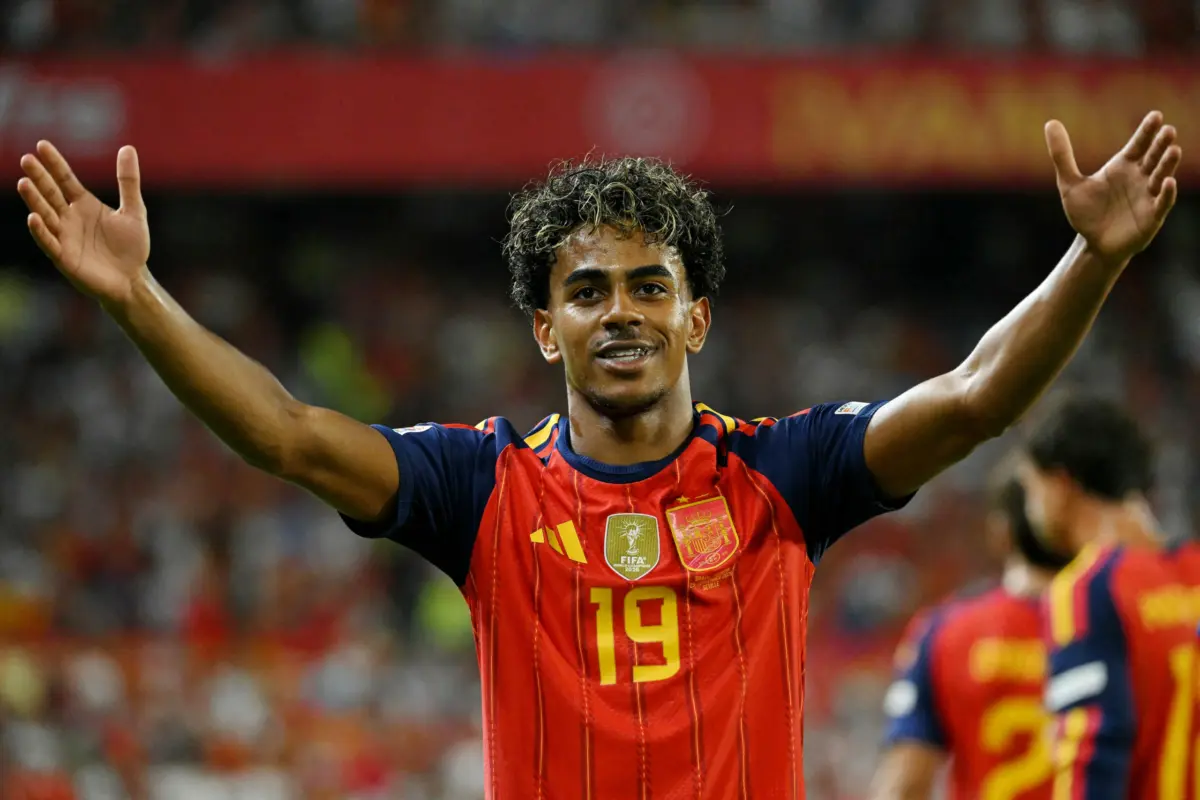
The stage is set at Stadion Poljud in Split, Croatia, for a crucial UEFA Nations League 2026-27 Group A3 encounter between Croatia and Spain. Scheduled for Tuesday, October 6, at 8:45 pm local time (18:45 GMT), this fixture holds significant implications for both nations, with FIFA World Cup holders Spain on the verge of confirming their ticket to the quarterfinals, while Croatia desperately seeks to rebound from a period of historical underperformance. Al Jazeera Sport will provide comprehensive build-up and live updates from 15:45 GMT, capturing every moment of what promises to be a compelling contest.
Spain’s Unstoppable Momentum and Quarterfinal Aspirations
Spain arrives in Split brimming with confidence, boasting a flawless record in the current UEFA Nations League campaign. Their impeccable form is underscored by an astonishing overall 41-match unbeaten streak, a testament to their consistency and depth under the current managerial setup. This remarkable run, which includes their recent triumph as FIFA World Cup holders, positions them as formidable favourites against a Croatian side struggling to find its footing. La Roja currently leads Group A3 with a maximum nine points, and a victory on Croatian soil would not only secure their place in the quarterfinal stage but also further cement their status as one of international football’s dominant forces.
The Spanish attack has been particularly potent this term, demonstrating a diverse scoring threat. They have netted 10 goals across three games, distributed among seven different scorers, highlighting the collective strength and versatility of their offensive unit. Leading this charge is teenage sensation Lamine Yamal, whose meteoric rise continues unabated. Yamal has been in scintillating form, leading the scoring charts for Spain and showcasing a maturity beyond his years. His ability to create chances, dribble past defenders, and finish with precision has added a new dimension to the Spanish attack, making him a focal point for opposing defences. The prospect of an early quarterfinal qualification would allow the Spanish coaching staff valuable flexibility in future group matches, potentially enabling experimentation with tactics and providing opportunities for fringe players, while maintaining competitive sharpness.
Croatia’s Quest for Redemption Amidst Historic Challenges
In stark contrast to their opponents, Croatia’s performance in the current Nations League campaign has been far from exemplary. The side, captained by the evergreen Luka Modric, finds itself in a precarious third position in Group A3 with just three points from three games. The weight of recent results, most notably their heaviest defeat in history suffered in the last fixture, hangs heavy over the team. While the specifics of that defeat are etched in the memory of Croatian fans, its impact on team morale and confidence cannot be overstated. This match against Spain therefore takes on added significance, serving as a critical opportunity for redemption and a chance to reignite their campaign.
For Croatia, the stakes are not just about points but about national pride and demonstrating their resilience. Despite their recent struggles, the Vatreni possess a core of experienced players and a passionate home crowd at Stadion Poljud, known for its fervent atmosphere. The team will be acutely aware that a positive result against the dominant Spanish side could be the catalyst needed to turn their fortunes around, providing a much-needed boost to morale and offering a glimmer of hope for progression or, at the very least, avoiding relegation from League A. Coach and players alike will be expected to rally, drawing upon their rich history of battling against the odds in major tournaments.
Understanding the UEFA Nations League Framework
The UEFA Nations League, inaugurated in 2018, was conceived to revolutionize international football by reducing the prevalence of ‘meaningless’ friendly matches. Its core objective is to provide nations with competitive fixtures against equally ranked teams, fostering a more engaging and impactful international calendar. The competition is structured around a comprehensive league system, featuring promotion and relegation across its various divisions, adding a layer of jeopardy and excitement to every match.
Participating countries from across Europe are allocated into four distinct leagues (A, B, C, D) based on their UEFA national team coefficient rankings. Within each league, teams are further divided into groups, typically comprising three or four nations. The league phase mandates that every team plays every other team in its group twice – once at home and once away – ensuring a balanced and fair competitive environment. This phase typically concludes in November. For League A, the top division, the stakes are particularly high: the top two teams from each group advance to the quarterfinals, scheduled for March 2027. These quarterfinal victors then progress to the finals, a four-team knockout tournament that determines the overall UEFA Nations League champion. The host nation and specific dates for the 2026-27 finals are yet to be confirmed, adding an element of anticipation to the latter stages of the competition. The Nations League also offers potential pathways to qualifying for major tournaments like the UEFA European Championship and the FIFA World Cup through playoff berths, further enhancing its importance in the international football landscape.
Historical Encounters and the "Clash of Generations 2.0"
While the original article hints at a recent "clash of generations 2.0" and an "initial face-off in Seville," the rivalry between Croatia and Spain extends back through several memorable encounters in major tournaments. These two footballing nations have developed a compelling competitive history, often producing tense and high-stakes matches. Their most recent significant clash prior to the current Nations League campaign was the 2023 UEFA Nations League final, where Spain emerged victorious after a penalty shootout following a goalless draw, claiming their first Nations League title. This prior final adds an extra layer of narrative to their current group stage meeting, with Croatia undoubtedly seeking a measure of revenge for that narrow defeat.
Beyond the Nations League, they famously met in the round of 16 at UEFA Euro 2020, an epic encounter that saw Spain ultimately prevail 5-3 in extra time after a thrilling 3-3 draw in regular play. These past battles underscore the inherent quality and fighting spirit present in both squads, regardless of their current form. The "clash of generations 2.0" narrative specifically highlights the stark age contrast between Croatia’s venerable captain, Luka Modric, now 41, and Spain’s electrifying teenage talent, Lamine Yamal. This individual duel, symbolizing the enduring legacy of one of football’s greats against the dazzling emergence of a future superstar, encapsulates the evolving dynamics of international football and adds a fascinating personal dimension to the collective team struggle. Yamal’s double against Croatia in their initial face-off in Seville earlier in the current campaign further intensified this narrative, proving his immediate impact against seasoned opposition.
Form Guide and Head-to-Head Overview
A look at the recent form of both teams paints a stark picture of their differing trajectories heading into this critical match.
-
Croatia (Last five matches; latest match first): L-L-W-L-W

- This sequence indicates a struggle for consistency, with more losses than wins, culminating in a heavy defeat in their most recent outing. The pressure to deliver a strong performance in front of their home crowd is immense.
-
Spain (Last five matches; latest match first): W-W-W-W-W
- Spain’s perfect record in their last five matches, extending to their impressive 41-match unbeaten streak, demonstrates a team operating at the peak of its powers. This sustained winning mentality will be a significant psychological advantage.
While specific comprehensive head-to-head statistics for all their encounters are extensive, the pattern in recent years, especially in competitive fixtures, has often seen Spain hold the upper hand, albeit often in closely contested battles. The memory of the 2023 Nations League final and the Euro 2020 round of 16 clash will undoubtedly fuel both sides, with Spain aiming to continue their dominance and Croatia desperate to reverse the trend.
Key Players to Watch and Tactical Battlegrounds
The individual brilliance of key players will undoubtedly play a pivotal role in the outcome of this match. Both teams feature generational talents alongside experienced campaigners.
For Croatia, the enduring brilliance of Luka Modric remains central to their aspirations. Even at 41 years old, the captain continues to be the heartbeat of the Croatian midfield. His unparalleled vision, exquisite passing range, and ability to dictate the tempo of the game are indispensable. Modric has found the net once in this campaign, demonstrating that his goal-scoring prowess, though perhaps less frequent, is still present. Alongside him, the experience and attacking thrust of Ivan Perisic from the wing will be crucial. Perisic, with two assists to his name, provides width, crosses, and a dangerous goal threat, complementing Modric’s midfield control with direct attacking impetus. Croatia’s strategy will likely revolve around Modric’s ability to retain possession and launch attacks, while Perisic’s pace and delivery will be vital for creating scoring opportunities, particularly against a high-pressing Spanish defence. The onus will be on these veterans to lead by example and inspire their younger teammates.
Spain’s attack, characterized by youthful exuberance and clinical finishing, is spearheaded by Lamine Yamal. With an astounding four goals in just three games, Yamal is the joint leading scorer in this year’s Nations League, alongside established stars like England’s Harry Kane. The Barcelona prodigy has found the net in every game, including a decisive double against Croatia in their previous encounter in Seville. His explosive pace, exceptional dribbling skills, and composure in front of goal make him a constant threat. Supporting Yamal in the offensive third is Alex Baena of Atletico Madrid, who has proven to be influential in multiple facets of play, bagging two assists and a goal. Baena’s versatility, work rate, and ability to contribute both creatively and defensively make him a vital cog in Spain’s dynamic system. Spain’s tactical approach is expected to be built on their characteristic possession-based game, high pressing, and rapid transitions, with Yamal and Baena providing the cutting edge in the final third.
Team News and Predicted Lineups: Assessing the Impact of Absences
Both squads face challenges with player availability, which could influence their respective strategies and team selections.
For Croatia, central defender Martin Erlic is sidelined due to injury until mid-October, a significant blow to their defensive solidity. Furthermore, Josip Juranovic is unavailable due to illness, depleting options on the right flank. These absences will test Croatia’s defensive depth and could force coach Zlatko Dalić to adjust his backline.
- Probable Croatia XI: Dominik Livakovic; Josip Stanisic, Luka Vuskovic, Josko Gvardiol, Ivan Perisic; Luka Modric; Franjo Ivanovic, Petar Sucic, Mateo Kovacic, Martin Baturina; Petar Musa.
- This lineup suggests a blend of experience and emerging talent. The defence, particularly without Erlic and Juranovic, will rely heavily on the likes of Gvardiol. The midfield, anchored by Modric and Kovacic, will be crucial in winning the battle for possession and supplying the lone striker, Petar Musa. Perisic’s inclusion as a wing-back indicates an emphasis on attacking width.
Spain also contends with several injury doubts, though their squad depth is arguably greater. Ferran Torres (physical discomfort), Alejandro Grimaldo (thigh), Joan Garcia (knee), and Nico Williams (thigh) are all questionable. While these are key players, Spain’s deep talent pool allows for robust replacements without a drastic drop in quality.
- Probable Spain XI: David Raya; Ivan Fresneda, Robin Le Normand, Aymeric Laporte, Fran Garcia; Rodri, Pedri; Lamine Yamal, Dani Olmo, Alex Baena; Roberto Fernandez.
- This predicted lineup showcases Spain’s commitment to a technically proficient and offensively minded approach. Rodri and Pedri form a formidable central midfield partnership, controlling the tempo and distributing the ball. The attacking quartet of Yamal, Olmo, Baena, and Fernandez provides a blend of pace, creativity, and goal-scoring threat. The defensive line features experienced campaigners like Laporte and Le Normand, supported by dynamic full-backs. The depth in their squad means even with injury concerns, Spain can field a highly competitive team.
Broader Implications and the Road Ahead
For Spain, securing a quarterfinal spot would be a clear statement of intent, reaffirming their ambition to collect more silverware following their World Cup triumph. It would also provide a psychological edge, allowing them to approach subsequent group matches with reduced pressure, potentially conserving key players and experimenting with tactics ahead of the knockout stages. Their incredible unbeaten streak is a narrative in itself, and extending it would further solidify their place in football history.
For Croatia, this match is a crossroads. A victory against a top-tier opponent like Spain, especially after a heavy defeat, could be the turning point they desperately need to galvanize their squad, reignite their Nations League campaign, and restore confidence. Failure to secure points, however, would plunge them deeper into the relegation battle from League A and raise further questions about the team’s ability to compete at the highest level as their golden generation begins to age. The roar of the Poljud crowd will be a significant factor, with the Croatian faithful undoubtedly providing an intense atmosphere designed to lift their team and unsettle the visitors.
The narrative of the "clash of generations," personified by Luka Modric and Lamine Yamal, extends beyond individual brilliance to represent the evolution of football itself. It highlights the enduring quality of veteran craftsmanship against the explosive potential of youth. As the UEFA Nations League progresses towards its climax in March 2027, this encounter in Split stands as a pivotal moment, shaping the destiny of both Croatia and Spain in their pursuit of international glory.
How to Follow the Match
Football enthusiasts worldwide can follow the action as Al Jazeera Sport brings extensive coverage, including all the build-up and live updates, starting from 15:45 GMT. For those looking to watch the match live, UEFA’s official list provides details on regional broadcasters and livestreaming options.
