

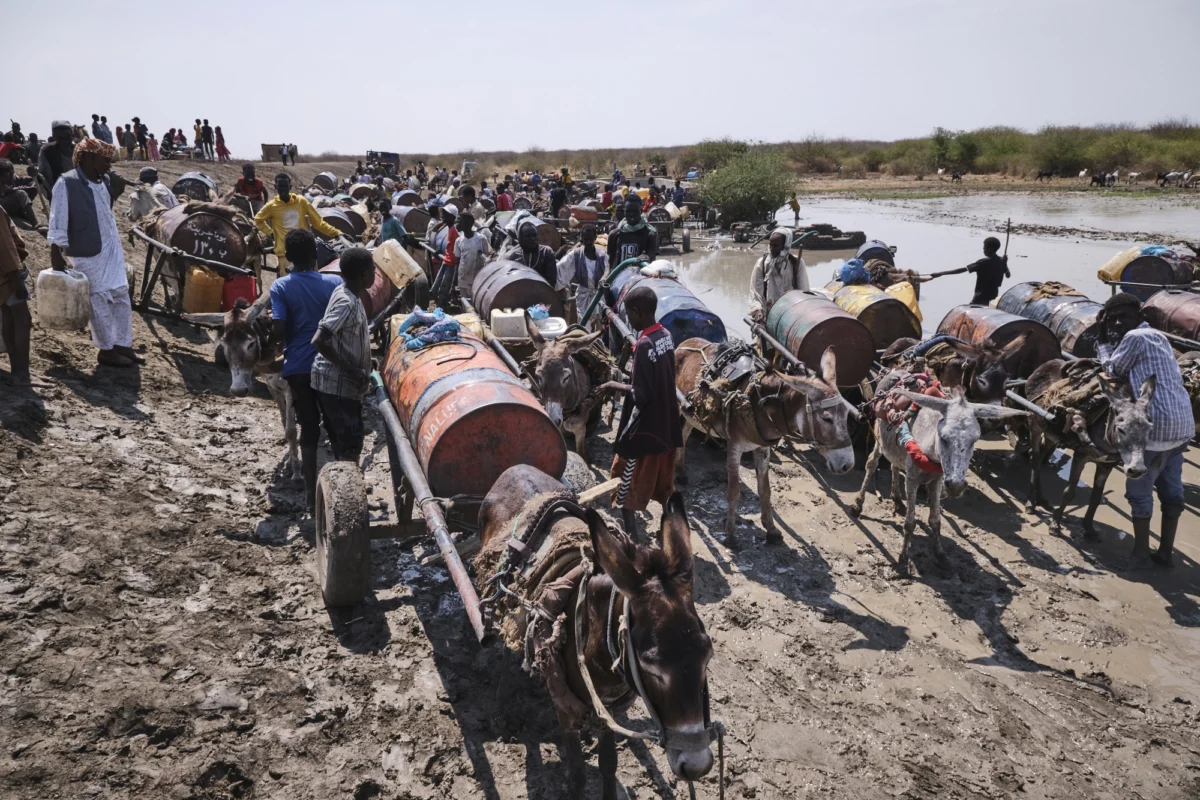
An armed assault on a seasonal cattle camp and an adjacent village in the remote northwest of South Sudan has resulted in the deaths of at least 49 individuals, with another 33 people sustaining injuries, according to recent statements from local officials. The brutal raid, which occurred in the early hours of Thursday, specifically targeted the Machar-Pakuek cattle camp and Mading Juer Boma, both situated within Majak Payam in Tonj North County, Warrap State. This latest eruption of violence underscores the persistent and deadly challenges faced by the world’s youngest nation, grappling with deep-seated inter-communal conflicts exacerbated by resource scarcity and the proliferation of small arms.
Details of the Attack and Immediate Aftermath
The coordinated attack, described by Warrap spokesperson William Wol Mayom Bol as being "perpetuated by an armed cross-border, criminal network," plunged the communities of Machar-Pakuek and Mading Juer Boma into chaos. Eyewitness accounts, though yet to be fully compiled, suggest a rapid and overwhelming assault, leaving little time for residents to defend themselves or their livestock. The significant casualty count, with nearly fifty lives lost and dozens more wounded, highlights the ferocity and indiscriminate nature of the violence. Medical facilities in the region, already stretched thin, are now struggling to cope with the influx of injured individuals, many of whom require urgent care for gunshot wounds and other severe trauma. The local government has swiftly condemned the heinous act, extending "heartfelt condolences to the families that lost loved ones" and making an urgent appeal for restraint to prevent further retaliatory violence, a common and destructive cycle in such conflicts. Furthermore, an immediate plea has been issued to humanitarian organizations, urging them to respond to what has been termed a "humanitarian catastrophe resulting from conflict-induced displacement," as many survivors have been forced to flee their homes, leaving behind their livelihoods and possessions.
A Disturbing Pattern: Recent Chronology of Violence
This latest tragedy is not an isolated incident but rather a grim continuation of a deeply troubling pattern of violence that has plagued Warrap State and other parts of South Sudan. Alarmingly, this raid comes barely three weeks after another equally devastating attack in the very same area, which claimed the lives of 60 people and left 50 wounded. The proximity and similar scale of these events suggest a heightened level of insecurity and a failure to establish lasting peace and protection for vulnerable communities.
The escalation of inter-communal violence has been a growing concern for both national authorities and international observers. Just last year, in response to a surge in violent cattle raids and related conflicts across the country, President Salva Kiir declared a six-month state of emergency. This sweeping measure aimed to empower security forces to disarm communities, restore order, and curb the flow of illicit weapons. While such declarations signify the gravity of the situation, their effectiveness in consistently stemming the tide of violence in remote and ungoverned areas remains a significant challenge.
The international community has also voiced profound concerns. Earlier this month, Anita Kiki Gbeho, the head of the United Nations Mission in South Sudan (UNMISS), publicly expressed alarm over the relentless cycle of communal violence, specifically highlighting hotspots like Warrap State. Her statements often underscore the urgent need for local authorities to address the root causes of these conflicts, strengthen the rule of law, and protect civilian populations caught in the crossfire. UNMISS, with its mandate to protect civilians and support peacebuilding efforts, frequently reports on the dire humanitarian consequences and the persistent challenges to achieving stability in South Sudan.
The Deep Roots of Conflict in South Sudan
To understand the persistent nature of these cattle raids, one must delve into the complex socio-economic and political landscape of South Sudan. The young African nation, which gained independence from Sudan in 2011 after decades of civil war, has struggled to build robust state institutions and consolidate peace. A significant portion of its population adheres to a pastoralist way of life, where cattle are not merely livestock but a central pillar of cultural identity, social status, and economic wealth. Cattle are used for bride price, as a store of value, and for their milk, meat, and hides, making them indispensable to survival and tradition.
This profound cultural significance, however, also makes cattle a primary target and a flashpoint for conflict. The core drivers of these raids are multifaceted:
- Resource Scarcity: South Sudan’s vast, often arid, landscape is increasingly strained by environmental degradation and climate change. Prolonged dry seasons and unpredictable rainfall lead to fierce competition for dwindling grazing lands and access to vital water sources. Herders are forced to move their livestock over greater distances, often encroaching on territories traditionally used by other communities, leading to inevitable clashes.
- Small Arms Proliferation: Decades of civil war have left the country awash with small arms and light weapons. AK-47s and other automatic rifles are readily available, transforming traditional stick fights over cattle or grazing rights into deadly encounters. The ease with which these weapons can be acquired fuels a dangerous arms race between communities seeking to protect their assets or exact revenge.
- Weak Governance and Rule of Law: In many remote areas, the presence of state authority is minimal or entirely absent. This vacuum allows impunity to thrive, as perpetrators often face little to no accountability for their actions. The absence of effective justice mechanisms compels communities to resort to self-help and retaliatory violence, perpetuating a vicious cycle of revenge killings and raids.
- Inter-communal Dynamics: While often framed as criminal acts, many raids have underlying inter-communal dimensions, sometimes exacerbated by ethnic rivalries or historical grievances. These dynamics can be exploited by local leaders or armed groups, further complicating efforts to mediate peace.
- Economic Factors: For some, cattle raiding has become a desperate means of survival or a way to accumulate wealth in an economy ravaged by conflict and underdevelopment. The lure of quick gains from stolen cattle can attract young men, further fueling the violence.
Warrap State: A Volatile Epicenter
Warrap State, located in the Bahr el Ghazal region, has consistently been identified as one of the epicenters of inter-communal violence in South Sudan. Its geographical location, often bordering other states with similar pastoralist communities, contributes to cross-border raiding dynamics. The state is characterized by significant pastoralist populations, and competition for resources in its fertile but limited areas can be particularly intense. The weak state presence in many parts of Warrap means that local chiefs and traditional authorities often bear the brunt of managing conflicts, but their capacity to enforce peace is often limited without robust government support and security intervention. The repeated attacks in Tonj North County highlight a particular vulnerability in this region, demanding focused and sustained efforts from national and international actors.
Official Reactions and Humanitarian Appeals
The statements from Warrap spokesperson William Wol Mayom Bol and the local government reflect the dual challenge of immediate crisis management and long-term peacebuilding. The appeal for restraint is critical, as retaliatory attacks often follow such incidents, leading to an even greater loss of life and further destabilization. The designation of the attackers as an "armed cross-border, criminal network" hints at regional implications, suggesting that the problem is not confined to internal South Sudanese dynamics but potentially involves actors or arms flows from neighboring territories, complicating security responses.
The call for humanitarian organizations to address the "humanitarian catastrophe" is urgent. Displaced populations, particularly women, children, and the elderly, face immediate needs for shelter, food, clean water, and medical care. The trauma inflicted by such violence also necessitates psychosocial support. Humanitarian agencies operating in South Sudan, such as the World Food Programme (WFP), Doctors Without Borders (MSF), and various UN agencies, are often the first responders in these crises, but their resources are perpetually stretched by the country’s ongoing humanitarian needs, compounded by climate shocks and political instability.
Broader Humanitarian and Socio-Economic Impact
The ripple effects of such violent cattle raids extend far beyond the immediate casualties. The "conflict-induced displacement" mentioned by local officials is a chronic issue across South Sudan. Thousands of people are forced to abandon their homes and livelihoods annually, seeking refuge in safer areas or internally displaced persons (IDP) camps. This displacement exacerbates an already dire humanitarian situation, where an estimated two-thirds of the population relies on humanitarian assistance.
The destruction of cattle, which are the primary assets for many families, plunges communities deeper into poverty and food insecurity. Raids disrupt agricultural cycles, destroy community infrastructure, and prevent children from attending school, thereby undermining long-term development. The constant threat of violence creates a pervasive sense of insecurity, hindering economic recovery and state-building efforts. The cycle of violence also drains resources that could otherwise be allocated to essential services like healthcare, education, and infrastructure development.
Challenges to Peace and Stability
The recurring violence in Warrap and other states poses significant challenges to the implementation of the Revitalized Agreement on the Resolution of the Conflict in South Sudan (R-ARCSS), signed in 2018. While the R-ARCSS primarily focuses on political power-sharing and the integration of armed forces, persistent inter-communal violence undermines the overall peace process by creating localized instability and diverting attention and resources from national reforms. It erodes trust between communities and between citizens and the state, making the task of building a cohesive national identity even more arduous.
Furthermore, the cross-border nature of some attacks raises concerns about regional stability. If armed groups are indeed operating across national boundaries, it necessitates greater cooperation between South Sudan and its neighbors to control arms trafficking and enhance border security. Without comprehensive regional approaches, localized conflicts risk spilling over and destabilizing an already fragile region.
The Path Forward: Calls for Sustainable Solutions
Addressing the deeply entrenched issue of cattle raiding and inter-communal violence in South Sudan requires a multifaceted and sustained approach. Immediate security responses, including targeted disarmament campaigns and increased deployment of security forces to vulnerable areas, are crucial for protecting civilians. However, these must be complemented by long-term strategies that tackle the root causes:
- Strengthening Rule of Law and Justice: Establishing effective and accessible justice mechanisms, both formal and traditional, is paramount to holding perpetrators accountable and breaking the cycle of impunity and revenge.
- Resource Management and Climate Adaptation: Developing sustainable land and water management practices, coupled with climate change adaptation strategies, can help reduce competition for scarce resources.
- Alternative Livelihoods: Investing in alternative economic opportunities and diversified livelihoods can reduce dependency on cattle and offer young people alternatives to engaging in raiding.
- Peacebuilding and Reconciliation: Supporting community-led peace dialogues, reconciliation initiatives, and conflict resolution mechanisms is essential for healing historical wounds and fostering peaceful coexistence.
- Disarmament and Demobilization: Robust, voluntary, and well-managed disarmament programs, coupled with effective control of national borders to prevent arms influx, are vital.
- State-Building and Service Delivery: Strengthening government presence and capacity in remote areas, along with the provision of basic services, can build trust and demonstrate the state’s ability to protect its citizens.
The latest raid in Warrap State is a stark reminder of the immense human cost of unresolved conflict and the urgent need for comprehensive solutions in South Sudan. The international community, alongside the national government, must redouble efforts to protect civilians, address the drivers of violence, and support the arduous journey towards lasting peace and development for the South Sudanese people.
