

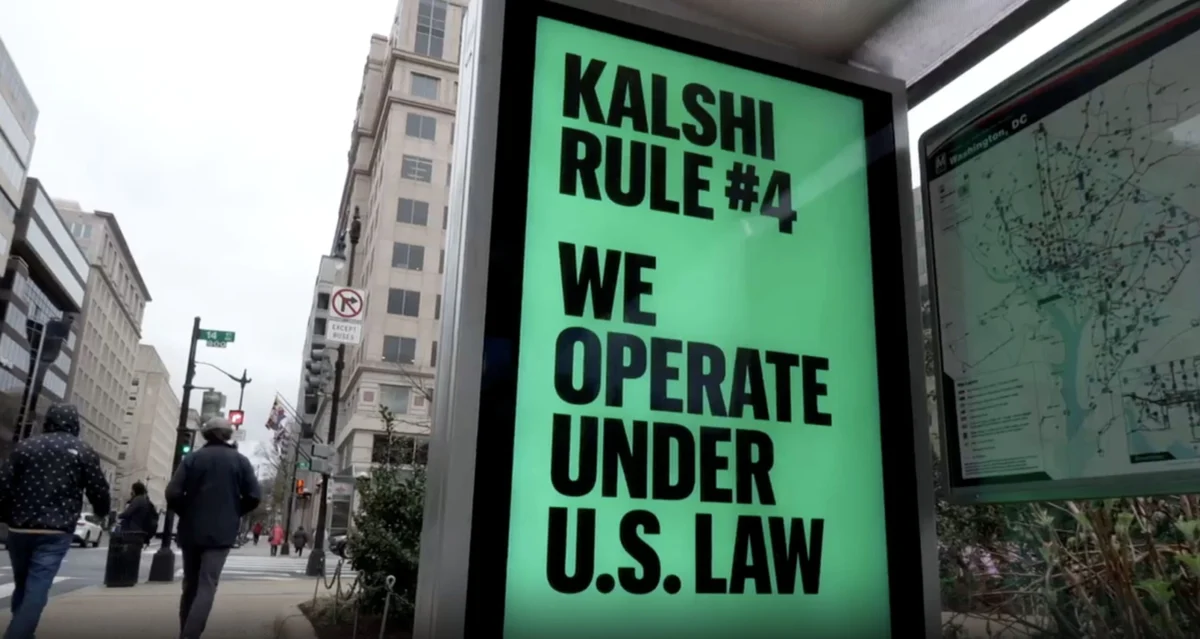
The 9th U.S. Circuit Court of Appeals has delivered a significant blow to prediction market platforms, rejecting requests for injunctive relief against the Nevada Gaming Control Board and asserting that sports-related event contracts are gambling, not federally regulated derivatives. This landmark decision, rendered on August 28, 2026, directly contradicts an earlier ruling by the 3rd U.S. Circuit Court of Appeals, creating a pronounced "circuit split" that almost guarantees the contentious issue will be resolved by the U.S. Supreme Court. The ruling has immediate implications for the burgeoning prediction market industry, which includes major players like Kalshi, Crypto.com, and Robinhood, while simultaneously bolstering the position of traditional sports betting operators.
Understanding Prediction Markets and the Regulatory Divide
Prediction markets are innovative online platforms that allow users to buy and sell "event contracts" whose value is tied to the outcome of real-world events. These events can range from economic indicators and political elections to, controversially, sports results. Proponents of prediction markets, including the platforms themselves and their federal regulator, the Commodity Futures Trading Commission (CFTC), argue that these event contracts are a form of financial derivative, specifically "swaps," and thus fall under the exclusive regulatory purview of the CFTC as defined by the Commodity Exchange Act (CEA). They contend that these markets offer a unique mechanism for price discovery and risk management, akin to traditional futures and options markets.
However, state gaming regulators, led by Nevada and supported by 43 other states, view sports-related event contracts as thinly veiled sports betting. They argue that regardless of the financial terminology used, the fundamental activity—wagering on the outcome of a sporting event for monetary gain—is gambling and should be subject to state-level gaming laws and oversight. This fundamental disagreement has ignited a fierce jurisdictional battle, pitting federal financial regulators against state gambling authorities, each claiming exclusive right to regulate a rapidly growing segment of the digital economy.
The Nevada Conflict: A Chronology of Legal Scrutiny
The conflict escalated in Nevada, a state with a long history and sophisticated regulatory framework for gambling. The Nevada Gaming Control Board initiated actions against prediction market platforms like Kalshi and Crypto.com, asserting that their sports-related event contract offerings constituted illegal gambling operating outside the state’s licensed and regulated gaming ecosystem. This stance led to the platforms seeking injunctive relief, essentially asking federal courts to prevent Nevada from halting their operations. Robinhood, which also features event contracts on its trading platform, similarly sought injunctive relief, finding itself embroiled in the same legal quagmire.
The platforms’ legal strategy hinged on the argument of federal preemption. They contended that because the CFTC asserted exclusive jurisdiction over all event contracts as swaps, state regulations were superseded. The CFTC itself has been an active participant in this legal battle, even suing nine states to defend what it perceives as its sole right to establish rules for prediction markets. This aggressive stance underscores the agency’s commitment to regulating these instruments as legitimate financial products, believing them to be a vital component of modern financial markets. The stakes are high, not only for the companies involved but also for the future of financial innovation and the delineation of regulatory power in the United States.
The Ninth Circuit’s Decisive Ruling
In its August 28, 2026 opinion, the 9th Circuit Court of Appeals unequivocally rejected the platforms’ arguments, stating, "The sports event contracts were not ‘swaps’ because they were sports bets." This ruling effectively dismantles the platforms’ claim of federal preemption for sports-related contracts within the Ninth Circuit’s jurisdiction, which includes several western states. The court’s decision centered on the nature of the underlying event and the direct wagering element, rather than solely on the contractual structure. It implied that simply labeling a transaction as an "event contract" or "swap" does not transform an activity that is fundamentally gambling into a federally regulated financial instrument.
Alcinia Whiters, deputy communications director for the Nevada Attorney General’s office, hailed the ruling as a major victory. In a statement, Whiters asserted, "Kalshi sought to sidestep Nevada’s gaming laws by claiming its sports wagering products were federally regulated financial instruments beyond the reach of state regulators. The Ninth Circuit rejected that argument and made clear what we have maintained from the beginning: sports betting does not become something else simply because a company calls it an ‘event contract’… Our office is proud to have defended Nevada’s authority." This statement encapsulates the states’ perspective, emphasizing their role in consumer protection and maintaining the integrity of their regulated gaming industries.
The CFTC’s Stance and Vehement Disagreement
The CFTC, however, expressed strong disagreement with the Ninth Circuit’s interpretation. A spokesperson for the commission reiterated its long-held position to CNBC, stating, "A derivative contract structured as a swap is a swap regardless of the underlying subject matter — the only exceptions in statute are onions and movie box office receipts." This refers to specific, narrow exclusions codified in the Commodity Exchange Act, which the CFTC interprets as defining the exhaustive list of exceptions to its broad jurisdiction over swaps. The spokesperson continued, "The Ninth Circuit erred today when it invented a new and atextual exception to the CEA," criticizing the court for effectively creating a carve-out that the agency believes is not supported by the statutory language.
The CFTC’s argument hinges on the idea that the structure of the financial instrument determines its regulatory classification, not the nature of the underlying event, provided it doesn’t fall under specific statutory exclusions. From the CFTC’s perspective, this ruling undermines its authority and creates an inconsistent regulatory landscape for financial derivatives. The agency’s commitment to its interpretation is further evidenced by its proactive legal challenges against states attempting to regulate prediction markets as gambling.
The Critical Circuit Split: A Clear Path to the Supreme Court
The significance of the 9th Circuit’s ruling is amplified by its direct contradiction of an earlier decision from the 3rd U.S. Circuit Court of Appeals. In early April 2026, the 3rd Circuit, in a separate case (likely also involving Kalshi or similar platforms), ruled that only the CFTC has the jurisdiction to regulate sports-related event contracts. This created what legal experts refer to as a "circuit split"—a situation where different federal appeals courts issue conflicting rulings on the same legal question.
Joshua Mitts, a professor at Columbia Law School, aptly summarized the situation: "This is a classic circuit split. Ultimately, this is the kind of legal controversy or legal difference of opinion which will make its way to the Supreme Court." A circuit split is one of the primary reasons the U.S. Supreme Court agrees to hear a case, as it indicates a need for a uniform legal interpretation across the country. Without such clarification, companies operating nationally face an impossible patchwork of contradictory regulations, creating legal uncertainty and hindering interstate commerce.
Industry Reactions and Market Implications
The immediate aftermath of the 9th Circuit’s decision saw varied reactions across the industry. Robinhood, a prominent player in the event contract space, promptly announced its intention to appeal the decision. A spokesperson for the firm stated, "Every eligible customer should have access to these markets, which are federally regulated by the CFTC and offered through our CFTC-registered Futures Commission Merchant." This reiterates Robinhood’s commitment to offering these products under the federal regulatory framework and highlights their belief in the benefits these markets provide to their users. Kalshi and Crypto.com did not immediately respond to requests for comment, but given the implications for their business models, it is highly probable they will join Robinhood in pursuing further legal avenues, likely petitioning the Supreme Court for review.
Conversely, the ruling brought a palpable sense of relief and optimism to traditional online sportsbooks. Shares of DraftKings jumped 7%, while Flutter Entertainment, the parent company of FanDuel, saw its stock rise by more than 6%. Both companies have seen their valuations impacted over the past year due to concerns that prediction markets could disrupt the established sports betting industry. The 9th Circuit’s decision, by categorizing sports-related event contracts as gambling, potentially levels the playing field, pushing these new entrants into the same regulatory framework as existing operators. Paradoxically, both DraftKings and Flutter have been exploring options to launch their own prediction market exchanges, indicating that while they welcome the regulatory clarity, they also recognize the potential of these markets.
Broader Implications and the Path to the Supreme Court
The legal battle over prediction markets touches upon fundamental questions of regulatory authority, consumer protection, and the future of financial innovation. Should the Supreme Court decide to take up the case, its ruling will have far-reaching implications:
- Regulatory Framework: A Supreme Court decision would definitively establish whether prediction markets, particularly those tied to sports, fall under federal financial regulation or state gambling laws. This clarity is crucial for all stakeholders.
- Consumer Protection: Different regulatory regimes imply different levels of consumer safeguards. State gaming boards often focus on responsible gambling, fair play, and anti-money laundering, while the CFTC emphasizes market integrity, transparency, and risk disclosure for financial instruments. The ultimate ruling will determine which set of protections applies.
- Innovation vs. Regulation: The outcome will significantly influence the trajectory of financial technology. If prediction markets are broadly classified as gambling, it could stifle innovation in this space, subjecting new platforms to more stringent and diverse state-level licensing requirements. If they are deemed financial instruments, it could encourage further development under a unified federal framework.
- State Revenue: If prediction markets are regulated as gambling, states could potentially generate significant tax revenue, similar to traditional sports betting. Conversely, if they remain under CFTC jurisdiction, states would lose out on this potential revenue stream.
- Federal Preemption: The case represents a classic clash between federal and state powers, specifically concerning the scope of federal preemption under the Commodity Exchange Act. The Supreme Court’s decision will have broader implications for how new technologies and markets are regulated in a system of dual sovereignty.
The current landscape, characterized by conflicting appellate rulings, is unsustainable for an industry striving for national reach and regulatory certainty. The expectation among legal experts is that one or more of the aggrieved parties—Kalshi, Crypto.com, Robinhood, or even the CFTC itself—will petition the Supreme Court for a writ of certiorari, requesting the high court to review the 9th Circuit’s decision. Given the clear circuit split and the significant legal and economic questions involved, it is highly probable that the Supreme Court will grant review, setting the stage for a landmark decision that will shape the future of prediction markets in the United States for decades to come. The outcome will not only define the regulatory identity of these platforms but also reaffirm the boundaries of federal and state authority in the evolving digital economy.
