

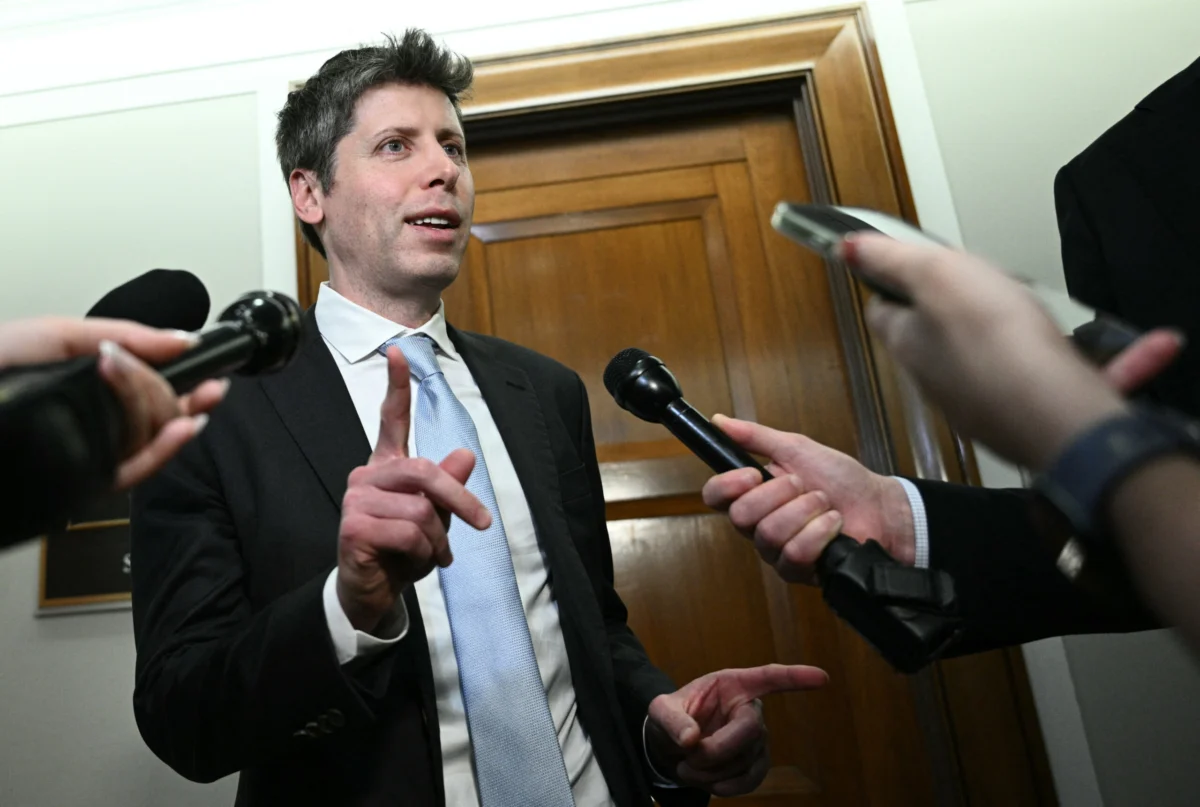
OpenAI CEO Sam Altman confirmed on Wednesday that he has reviewed the proposed framework for the implementation of President Donald Trump’s executive order on artificial intelligence, signaling a deepening coordination between the world’s leading AI laboratory and the federal government. As part of a high-stakes diplomatic mission to Washington, D.C., Altman is scheduled to meet with White House Chief of Staff Susie Wiles, a pivotal figure in the administration’s "AI brain trust" and a key architect of the president’s technology policy. The visit comes at a critical juncture for the industry, as the August 1 deadline approaches for federal agencies to establish concrete protocols for evaluating the safety, security, and national competitiveness of next-generation AI models.
The engagement between Altman and Wiles underscores the Trump administration’s shift toward a more hands-on, albeit deregulatory-leaning, approach to the burgeoning sector. While the administration has signaled a desire to roll back some of the more prescriptive requirements of previous executive actions, the June executive order signed by President Trump established a new paradigm of "voluntary cooperation" between the private sector and the state. Under this order, leading AI developers are encouraged to provide the government with access to their most advanced models prior to public release, allowing for a preemptive assessment of potential risks related to cybersecurity, biological threats, and national security.
The Washington Summit: A Confluence of Tech and Power
Altman’s presence on Capitol Hill this week is part of a broader effort by OpenAI to shape the narrative around the "AI race" and secure federal support for the massive infrastructure projects required to sustain American dominance in the field. Beyond his meeting with Wiles, Altman has engaged in a series of closed-door briefings with senior administration officials, economists, and a bipartisan group of lawmakers. Among them was Senator Ted Cruz (R-Texas), the ranking Republican on the Senate Commerce Committee, who has been a vocal advocate for maintaining American technological hegemony while resisting what he characterizes as "regulatory overreach."
Following their meeting, Altman noted that his discussions with Senator Cruz focused heavily on the strategic requirements for the United States to remain the global leader in artificial intelligence. This includes not only the development of the algorithms themselves but also the underlying physical layer: the data centers, semiconductor supply chains, and energy infrastructure necessary to power the next generation of large language models (LLMs). The timing of these meetings is significant, as OpenAI prepares to debut its next major model, which industry analysts expect will represent a significant leap in reasoning capabilities and autonomous problem-solving.
Altman is not the only silicon valley heavyweight walking the halls of Congress this week. Nvidia CEO Jensen Huang is also in Washington to discuss the role of open-source models and the preservation of the American hardware advantage. The simultaneous presence of the leaders of the world’s most valuable chipmaker and its most prominent AI software company highlights the urgency of the policy decisions currently being debated in the West Wing.
The June Executive Order and the August 1 Deadline
The framework Altman reviewed is the direct result of President Trump’s June executive order, which marked a departure from the "AI Bill of Rights" approach of the previous administration. Trump’s order focuses on a "National Security First" doctrine, emphasizing that AI development is a core component of American defense and economic strategy. The order gave federal agencies exactly 60 days to develop the practical mechanisms for model evaluations—a deadline that expires on August 1.

The proposed framework aims to solve the logistical challenge of how the government can "red-team" or stress-test proprietary models without stifling innovation or compromising intellectual property. While the order was initially criticized by some for being "light on details," the framework currently being reviewed by Altman and other industry leaders is expected to clarify the specific benchmarks the government will use to measure a model’s risk profile.
Key areas of focus within the framework include:
- Cybersecurity Resilience: Assessing whether a model can be used to automate the creation of zero-day exploits or enhance the capabilities of state-sponsored hacking groups.
- Chemical and Biological Safeguards: Ensuring that AI models do not provide actionable instructions for the synthesis of regulated substances or the development of bioweapons.
- Model Integrity: Evaluating the susceptibility of AI systems to "jailbreaking" or manipulation by foreign adversaries.
The "voluntary" nature of the model-sharing agreement remains a point of contention. While OpenAI and Google DeepMind have expressed a willingness to cooperate, others in the industry, particularly proponents of open-weight models, argue that such requirements could create a "regulatory moat" that benefits established giants at the expense of startups and the open-source community.
Geopolitical Stakes: The Global AI Race
Central to the discussions between Altman and the Trump administration is the looming shadow of China’s AI ambitions. The White House has made it clear that it views the development of artificial general intelligence (AGI) as a modern-day Manhattan Project. During his meetings, Altman reportedly emphasized the need for a "coherent national strategy" to ensure that the U.S. remains ahead of the Chinese Communist Party (CCP) in the deployment of compute-intensive models.
The Trump administration’s approach has been characterized by a push for "compute dominance." This involves not only domestic regulation but also aggressive export controls to prevent advanced H100 and Blackwell chips from reaching Beijing. However, Altman and other tech leaders are also pushing for a domestic "Marshall Plan" for AI, which would include federal subsidies for energy-intensive data centers and a streamlining of the permitting process for nuclear and renewable energy projects to power them.
The administration’s "AI brain trust," led by Wiles and other senior advisors, is reportedly weighing the trade-offs between open-source transparency and national security. While open-source models like Meta’s Llama series allow for faster innovation, there are concerns that they could inadvertently provide a roadmap for adversaries to replicate American breakthroughs. This tension was a primary topic in Jensen Huang’s meetings with lawmakers, as Nvidia’s chips power both the closed-source labs like OpenAI and the global open-source community.
The "AI Kill Switch" Debate
As the legislative and executive branches converge on a regulatory path, the concept of an "AI kill switch" has emerged as a focal point of debate on Capitol Hill. The term refers to a theoretical mechanism that would allow the government or a developer to remotely deactivate an AI system if it began to exhibit "unaligned" or catastrophic behaviors.

OpenAI and Google DeepMind have both testified before Congress regarding their internal safety protocols, but lawmakers remain divided on whether such a safeguard should be mandated by law. Some Senate Democrats have proposed legislation that would require developers of "frontier models" to include a kill switch, while many Republicans, including Senator Cruz, have expressed skepticism, fearing that such a requirement could be used by the government to censor AI or interfere with private enterprise.
Altman has publicly supported the idea of "safety guardrails" but has been more cautious regarding government-mandated deactivation protocols, suggesting instead that the industry should focus on "safety-by-design." The framework currently under review at the White House is expected to address these safety concerns, though it remains to be seen if it will favor industry-led self-regulation or more stringent federal oversight.
Economic Implications and Future Outlook
The outcome of Altman’s meetings and the finalization of the August 1 framework will have profound implications for the global economy. According to recent data from Goldman Sachs, AI-related investment is projected to reach $200 billion globally by 2025, with a significant portion of that capital concentrated in the United States. The Trump administration’s ability to provide a stable, predictable regulatory environment will be a key factor in whether that investment continues to accelerate.
For OpenAI, the stakes are equally high. The company is currently in the midst of a transition from a non-profit-governed entity to a more traditional for-profit structure, a move intended to facilitate the massive fundraising required for its "Stargate" data center project—a planned $100 billion supercomputer. Ensuring that the White House is aligned with its vision of "responsible scaling" is essential for OpenAI to maintain its lead in the face of stiff competition from Anthropic, Meta, and Google.
As the August 1 deadline approaches, the tech industry and the federal government are entering a new era of "co-opetition." While the administration seeks to harness AI for national power, companies like OpenAI are seeking the freedom to innovate at a breakneck pace. The meeting between Sam Altman and Susie Wiles may well be remembered as the moment when the blueprint for the American AI century was first put into practice.
The framework reviewed by Altman this week represents more than just a set of technical guidelines; it is a statement of intent. It signals that the United States intends to treat AI not just as a commercial product, but as a strategic asset that requires a unique blend of private-sector ingenuity and state-level protection. Whether this "voluntary" framework will be enough to mitigate the risks of the most powerful technology ever created remains a question that only the coming years—and the models they bring—will answer.
