

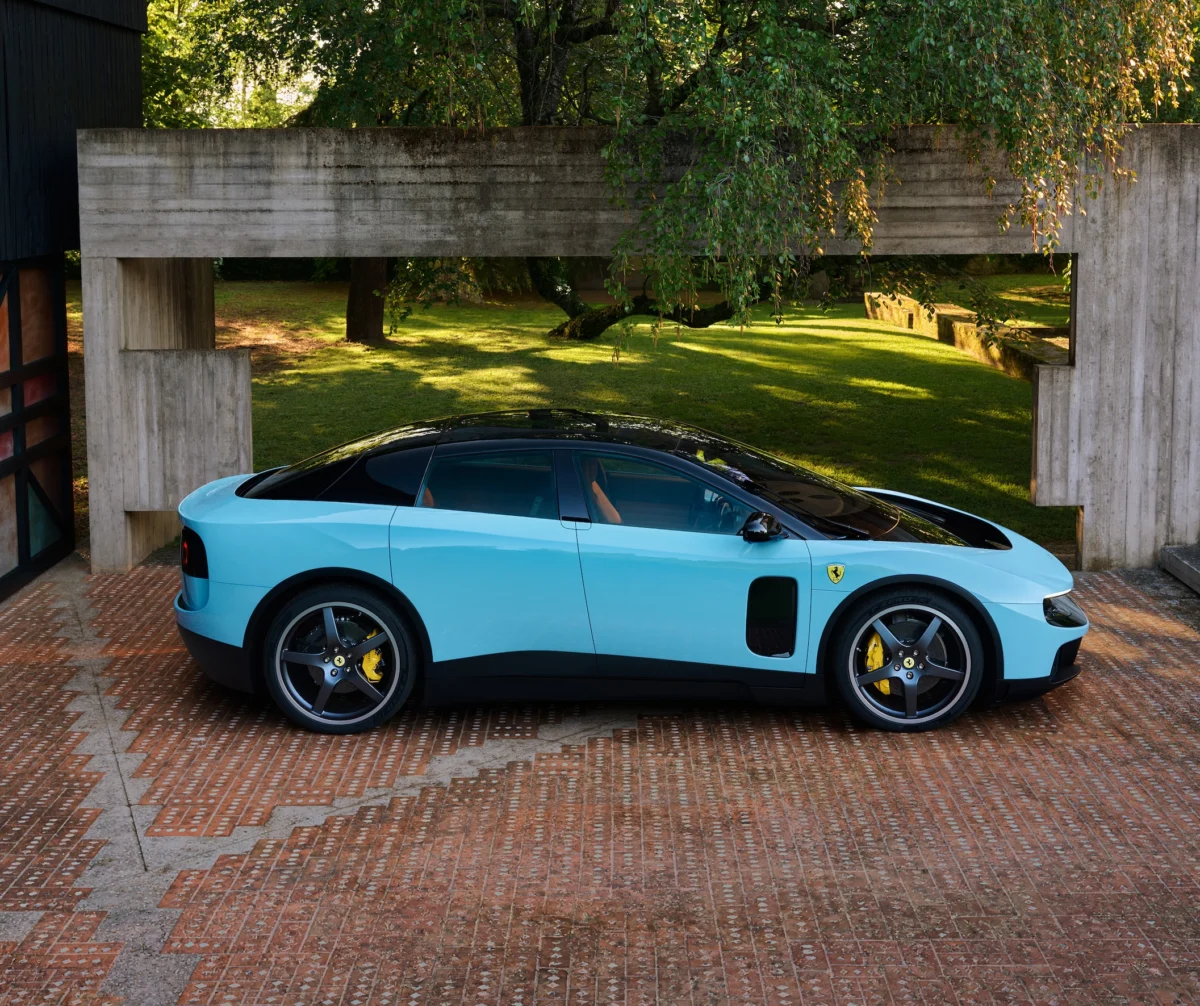
The automotive industry often witnesses a disconnect between public sentiment on social media and the actual purchasing behavior of high-net-worth individuals. When Ferrari unveiled the Luce, its inaugural battery-electric vehicle (EV), in May, the initial reception across digital platforms was overwhelmingly critical. Industry observers, enthusiasts, and even former company leadership expressed skepticism regarding the vehicle’s wedge-shaped aesthetic and its ability to compete in a rapidly evolving global EV market. However, recent financial data and sales reports indicate that the "armchair executives" may have misjudged the market’s appetite for an electric prancing horse. According to reports corroborated by the Financial Times, Ferrari has successfully reached its annual sales target for the Luce in just two months, moving nearly 500 units of the €555,000 ($630,000) grand tourer.
The Initial Reception and Market Volatility
The reveal of the Ferrari Luce was a pivotal moment in the 77-year history of the Maranello-based manufacturer. Moving away from the high-revving internal combustion engines (ICE) that defined its legacy, Ferrari entered the electric era with a design that departed significantly from its traditional visual language. The Luce, a five-seater designed in collaboration with Jony Ive and his creative firm LoveFrom, featured a sharp, minimalist "wedge" profile.
The internet reaction was swift and largely derogatory. Critics on platforms such as Reddit and X (formerly Twitter) compared the Luce’s silhouette to more pedestrian vehicles, specifically drawing parallels to the Nissan Leaf. Concerns were also raised regarding the competitive threat from Chinese manufacturers, with skeptics arguing that brands like BYD’s Yangwang or Geely’s Zeekr could offer superior performance metrics at a fraction of the price. The negativity was not limited to anonymous users; former Ferrari Chairman Luca Cordero di Montezemolo publicly voiced his concerns regarding the departure from Ferrari’s core identity.
This wave of criticism had immediate financial repercussions. On the day following the reveal, Ferrari’s stock (RACE) plummeted by 8%, reflecting investor anxiety that the company’s first foray into electrification might be a strategic misstep. The prevailing narrative suggested that Ferrari had lost its way, trading its mechanical soul for a high-priced technological experiment.
Sales Performance and the China Factor
Despite the digital outcry and the temporary dip in stock valuation, the actual sales figures tell a different story. Ferrari’s target for the Luce was approximately 500 units for the first year of production—a modest figure by mass-market standards but a significant volume for a vehicle priced at over $600,000. Achieving this goal within eight weeks suggests a robust demand that transcends aesthetic critiques.
A significant portion of this success can be attributed to the Chinese market. Reports indicate that at least 20% of the initial Luce orders originated from China, where the appetite for luxury EVs remains high. In June, the Luce launched in China with a starting price of approximately $586,600; all 88 units allocated for the initial regional launch were sold out almost immediately.
Market analysts suggest that the Luce was "tailor-made" for the Chinese demographic, which favors sleek, four-door configurations and cutting-edge technology over the traditional engine acoustics valued by European and North American purists. For the Chinese elite, the Luce represents the ultimate status symbol: a vehicle that combines the prestige of the Ferrari brand with the modern requirements of electric mobility and practical seating for five.
Design Collaboration with Jony Ive and LoveFrom
The aesthetic of the Luce is the result of a multi-year partnership between Ferrari and LoveFrom, the design collective led by former Apple design chief Jony Ive and Marc Newson. The collaboration aimed to reimagine what a Ferrari could be in a post-ICE world. Ive, known for the minimalist and functionalist philosophy that defined the iPhone and MacBook, brought a similar discipline to the Luce.
The "wedge" design that drew so much ire online was a deliberate choice to optimize aerodynamic efficiency while providing a spacious interior cabin—a necessity for a five-seater. While some viewed the design as a betrayal of Ferrari’s "organic" curves, others see it as a return to the avant-garde experimentation seen in the 1970s with models like the 308 GT4 or the Ferrari Modulo concept.
The disconnect between online images and the physical presence of the car has also been noted. Professional automotive reviewers who have interacted with the vehicle in person suggest that the Luce’s proportions and material quality are far more impressive than they appear on a smartphone screen. For Ferrari’s existing clientele—many of whom were invited to private viewings—the tactile experience and the "Prancing Horse" badge outweighed the criticisms found in internet comment sections.
Technical Specifications and Driving Dynamics
While the design remains a point of contention, the mechanical and electronic engineering of the Luce has received praise from early testers. Ferrari’s engineering team was tasked with a difficult objective: ensuring that an electric vehicle, which lacks the auditory drama of a V12, still "feels" like a Ferrari.
The Luce features a sophisticated tri-motor setup that provides all-wheel drive and precise torque vectoring. While Ferrari has been tight-lipped about the exact horsepower figures, performance estimates place the 0-100 km/h (0-62 mph) sprint in the sub-2.5-second range. More importantly, reviewers from outlets such as Top Gear and MotorTrend have noted that the Luce’s handling characteristics maintain the agility and "point-and-shoot" steering that the brand is known for.
To address the lack of engine sound, Ferrari developed a "sound signature" that uses patented technology to amplify the natural frequencies of the electric motors and the drivetrain, creating a visceral feedback loop for the driver without resorting to fake, synthesized engine noises. This attention to the driving experience appears to have been a major selling point for the 500 early adopters.
A Timeline of the Ferrari Luce Development
The path to the Luce began several years ago as Ferrari recognized the inevitability of the energy transition.
- September 2021: Ferrari announces a long-term partnership with Jony Ive and LoveFrom, sparking rumors of a radical new design direction.
- June 2022: During its Capital Markets Day, Ferrari confirms that its first fully electric model will be revealed in 2025 (later moved to early 2024 for the reveal).
- May 2024: The Ferrari Luce is officially unveiled. The stock price drops 8% amid a social media backlash.
- June 2024: The Luce launches in China. All 88 allocated units sell out instantly.
- July 2024: Financial reports confirm that the global sales target of 500 units has been met, just two months after the debut.
Broader Impact on the Luxury Automotive Sector
The success of the Luce carries significant implications for the broader luxury automotive industry. It demonstrates that brand equity—specifically the power of the Ferrari name—is resilient enough to withstand major technological and design shifts.
Ferrari’s customer base is famously loyal and largely price-insensitive. In 2023, the company delivered 13,663 vehicles, a record for the brand. Many Ferrari owners possess collections of five or more vehicles. For these individuals, adding a Luce to their garage is not a choice between a V12 and an EV, but rather an addition of a "daily driver" that offers Ferrari prestige with the convenience of electric power.
Furthermore, the Luce’s performance suggests that the "death of the supercar" due to electrification may be exaggerated. While mass-market EV sales have seen a cooling period in some regions, the ultra-luxury segment continues to operate under different economic rules. As long as a manufacturer can maintain exclusivity and performance, the powertrain seems to be a secondary concern for the world’s wealthiest buyers.
Official Responses and Future Outlook
While Ferrari has not officially commented on the specific sales figures reported by the Financial Times, the company’s recent financial calls have been optimistic. CEO Benedetto Vigna has frequently emphasized that Ferrari will continue to offer a mix of ICE, hybrid, and electric powertrains to meet diverse customer needs.
The company is currently finalizing its "e-building" in Maranello, a dedicated facility for the production of electric motors, battery packs, and power inverters. This infrastructure investment signals that the Luce is just the beginning of a broader electrification strategy.
The success of the Luce, despite its controversial start, serves as a case study in modern brand management. It highlights the divide between the "vocal minority" of the internet and the "silent majority" of actual consumers. For Ferrari, the Luce is no longer a "dud" but a proven revenue generator that secures the company’s foothold in the future of mobility. As the first 500 units begin to reach owners later this year, the industry will be watching closely to see if the Luce can maintain its momentum and further silence its critics through real-world performance.
