

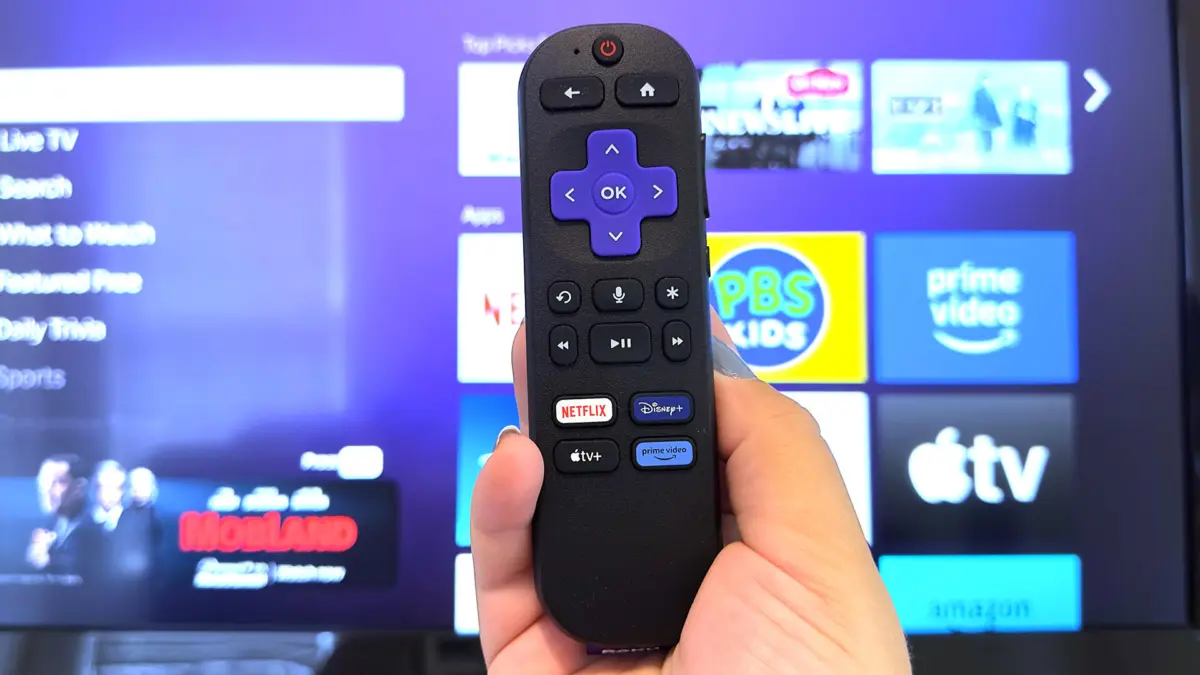
In a definitive shift of corporate strategy, Roku has announced it is withdrawing from the smart home hardware market to concentrate exclusively on its primary streaming platform and advertising business. The decision, first reported by independent journalist Janko Roettgers through his Lowpass newsletter, marks the end of a three-year experiment where the streaming giant attempted to challenge established players like Amazon and Google in the home security and automation space. A Roku spokesperson confirmed the move, stating that the company is "sharpening" its focus on its core mission as the top streaming platform in the United States. As existing inventory of security cameras, smart plugs, and lighting products depletes at major retailers, the company does not plan to replenish stock or introduce new hardware iterations in these categories.
The exit represents a significant pivot for a company that once viewed the smart home as a natural extension of the living room experience. By winding down its hardware sales, Roku aims to streamline its operations and improve financial efficiency, particularly following its recent acquisition by Fox. The spokesperson emphasized that while sales are ending, the company will continue to provide software support and cloud services for existing customers who have already integrated Roku Smart Home products into their residences. This assurance aims to mitigate concerns regarding the "bricking" of devices, a common fear when tech companies shutter hardware divisions.
The Evolution and Short Lifecycle of Roku Smart Home
Roku’s journey into the smart home sector began in late 2022, a move seen by industry analysts as a defensive play against Amazon’s Fire TV and Google’s Nest ecosystems. At the time, Roku sought to leverage its massive user base—which currently exceeds 80 million active accounts—to sell low-cost, high-utility home devices. To expedite its market entry, Roku initially partnered with Wyze, a company known for budget-friendly smart home tech. This partnership allowed Roku to release "white-labeled" versions of Wyze’s cameras, doorbells, and plugs, rebranded with the Roku logo and integrated into a dedicated Roku Smart Home app.
By 2024, the company attempted to deepen this integration by embedding smart home features directly into the Roku operating system. These updates allowed users to view live camera feeds on their televisions, receive motion alerts via picture-in-picture windows while watching movies, and control smart lights through the Roku remote. In early 2025, Roku even took the step of launching its own proprietary hardware, including a new generation of battery-powered security cameras, signaling what many thought was a long-term commitment to the industry.
However, the rapid reversal in late 2025 suggests that the "proprietary" phase of the business failed to achieve the necessary scale. The timeline of Roku’s smart home venture illustrates the immense difficulty of competing in a hardware-saturated market where margins are thin and ecosystem lock-in is dominated by giants with deeper pockets and more comprehensive cloud infrastructures.
Financial Disclosures and the Fox Acquisition Influence
The catalyst for this exit appears to be a combination of financial pragmatism and a shift in ownership priorities. According to recent SEC filings, including the company’s latest 10-Q report, Roku leadership explicitly noted that smart home hardware does not contribute significantly to the company’s two most important metrics: streaming hours and platform revenue. Unlike the Roku Ultra or the Roku Streaming Stick, which serve as gateways to the company’s ad-supported Roku Channel and third-party subscription fees, a smart plug or a security camera does not drive content consumption.
Industry analysts point to the acquisition of Roku by Fox as a turning point. Under new ownership, the mandate for Roku has shifted toward maximizing its value as a distribution hub for media and advertising. Fox, which has a vested interest in the growth of its own streaming services like Tubi, likely viewed the smart home division as a distraction that drained research and development resources without providing a clear path to high-margin returns.
Furthermore, the global tech landscape has been hampered by rising hardware costs. Recent reports indicate that the price of essential components, such as RAM and specialized AI chips required for modern image recognition in security cameras, has increased by as much as 400% in some sectors. For a company like Roku, which built its brand on affordability, these supply chain pressures made it increasingly difficult to maintain the low price points necessary to compete with Amazon’s Ring or Blink brands.
Current Market Status and Retailer Reactions
Evidence of Roku’s departure from the market is already visible across the retail landscape. On Roku’s official website, the "Smart Home" section has seen a dramatic reduction in availability, with the vast majority of products listed as "Out of Stock." This is not a temporary shortage but a managed depletion of remaining units.
Major retailers have followed suit. At Home Depot and Walmart—two of Roku’s primary physical retail partners—smart home kits and individual cameras have been moved to clearance sections or removed from digital storefronts entirely. Amazon has also seen a decline in Roku-branded smart home listings, with third-party sellers often being the only remaining source for new units. In many cases, retailers are shifting their focus to selling refurbished items to clear out remaining warehouse space.

This coordinated withdrawal suggests that Roku has been planning this exit for several months, likely timing the announcement to coincide with the completion of its internal restructuring. The company has not announced any mass layoffs specifically tied to this move, though it is expected that staff previously dedicated to smart home hardware engineering may be transitioned to the core streaming and OS development teams.
Implications for the Smart Home Ecosystem and Existing Users
For the millions of consumers who purchased Roku cameras and lights, the primary concern is the longevity of the software. Roku has pledged "continued support," which typically implies that the cloud servers required to view camera feeds and the mobile app required to manage devices will remain operational for the foreseeable future. However, "support" rarely includes the rollout of new features.
The exit of a major player like Roku highlights the ongoing volatility of the smart home market. It raises questions about the long-term viability of proprietary ecosystems that are not central to a company’s bottom line. While the Matter protocol—an industry standard designed to make smart home devices cross-compatible—was intended to prevent consumers from being locked into failing ecosystems, Roku’s hardware was only partially integrated into these open standards.
For existing users, the lack of future hardware updates means that as their current cameras age or batteries fail, they will eventually be forced to migrate to a different brand. The integration features that were once a selling point—such as seeing who is at the front door on the TV screen—may eventually become obsolete if the underlying software architecture is not maintained to keep pace with future Roku OS updates.
Analysis: Why "Streaming is King" Won the Internal Battle
The decision to abandon the smart home market is a classic example of a company returning to its "circle of competence." Roku’s strength has always been its user interface and its neutral position in the "streaming wars," offering a platform where Netflix, Disney+, and Max can coexist. By trying to sell hardware that competed with its partners (Amazon and Google), Roku found itself in a precarious position.
From a data perspective, the move makes sense. Roku’s platform revenue—driven by advertising and content distribution—is the engine of its growth. In the last fiscal year, platform revenue grew significantly, while player (hardware) revenue often operated at a loss or near-breakeven to facilitate user acquisition. Smart home hardware, which requires significant customer support and cloud storage costs (often without the recurring subscription revenue that competitors like Ring enjoy), was likely a net negative on the balance sheet.
By exiting this space, Roku can reallocate those funds toward enhancing its ad-tech capabilities and improving the Roku City interface, which has become a valuable piece of digital real estate for advertisers. The company is also expected to invest more heavily in its "Pro Series" TVs, focusing on high-end display technology rather than peripheral gadgets.
The Broader Impact on the Tech Industry
Roku’s exit may signal a broader trend of "de-diversification" in the tech industry. During the low-interest-rate environment of the early 2020s, many tech firms expanded into adjacent markets in search of the next big "ecosystem." As capital has become more expensive and investors have demanded a clearer path to profitability, companies are increasingly cutting experimental divisions.
The smart home market, in particular, is undergoing a consolidation phase. With the rise of AI-driven home automation, the barrier to entry has moved from simple connectivity to advanced edge computing and machine learning. For a company to succeed in 2025 and beyond, it must be willing to invest billions into AI integration—a cost that Roku, now under the Fox umbrella, has determined is not worth the risk.
In conclusion, Roku’s departure from the smart home hardware business is a strategic retreat designed to fortify its position as the leading gatekeeper of streaming content. While it leaves a gap in the budget-friendly security market, it allows Roku to focus on the fierce competition in the streaming space, where it must continue to innovate to maintain its lead over integrated platforms from tech titans. For the consumer, it serves as a reminder that in the world of the "connected home," the hardware is only as reliable as the corporate strategy behind it.
